A Montreal city outing, Saturday, October 24, 2026
Two hours at Gardens of Light Montreal in the Botanical Garden next to Olympic Park, from light patterns in the Japanese Garden to starlight in the First Nations Garden and lanterns in the Chinese Garden, with a stop at a Mount Royal lookout on the way home
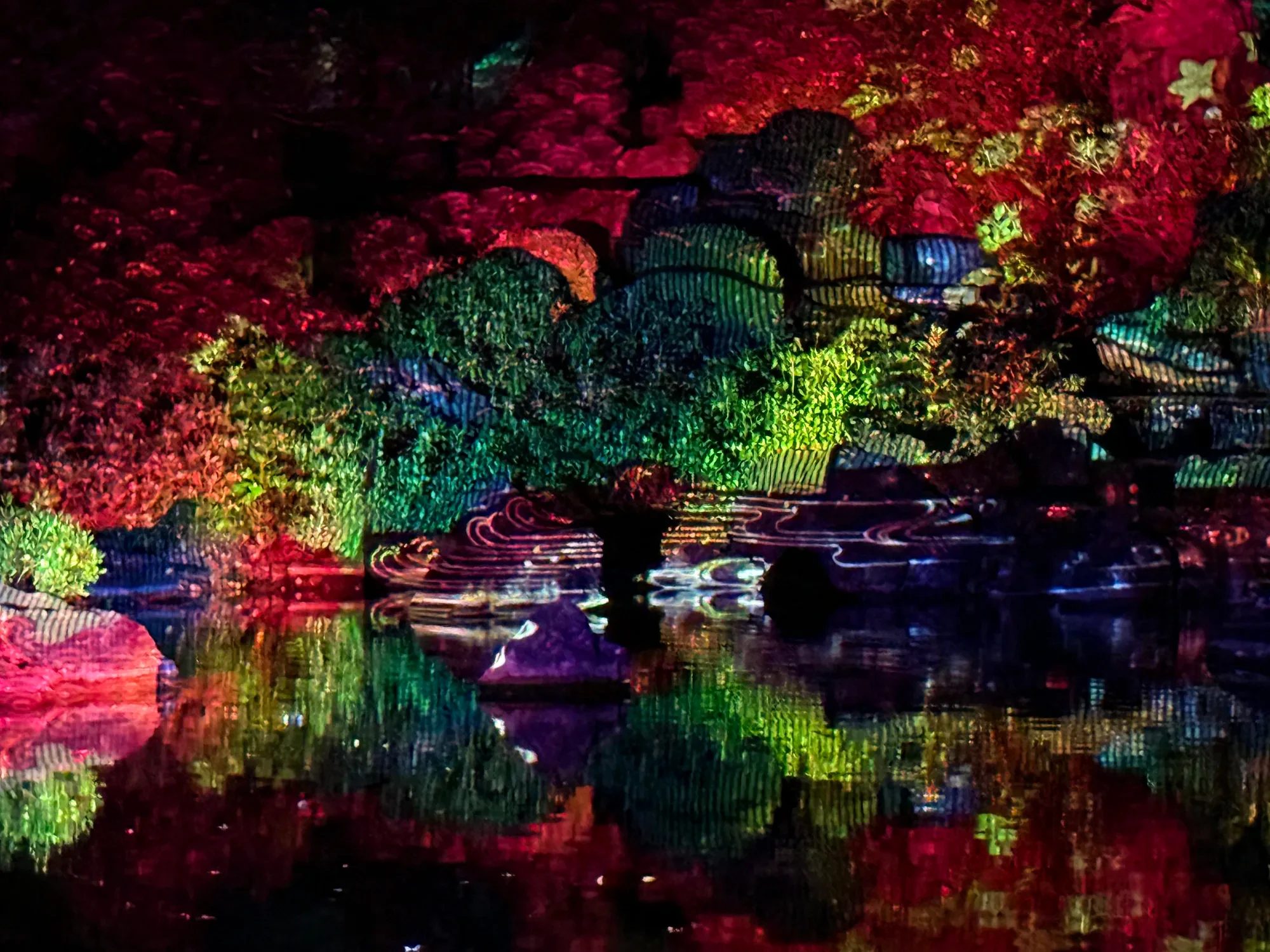
- This postOn a Saturday in late October, with fall color almost gone, we went to Gardens of Light (Jardins de lumière), the Montreal Botanical Garden’s light festival. We got to the gate around sunset, saw giant pumpkins and red fall leaves, then walked through the Japanese Garden, the First Nations Garden and the Chinese Garden as it got dark. On the way home we looked out over the city lights from the Camillien-Houde Lookout on Mount Royal.
- WhereMontreal Botanical Garden 4101 Rue Sherbrooke Est, just north of Olympic Park (Parc olympique)Camillien-Houde Lookout East slope of Mount Royal Park, on Voie Camillien-Houde
- Date and weatherSaturday, October 24, clear. The high was 13.6°C (56.5°F) and the overnight low -0.6°C (31°F). While we walked the garden from 6 to 8 p.m., it dropped from 12°C (54°F) to just over 9°C (48°F), with wind above 20 km/h (12 mph), so we wore light puffer jackets. Sunset was around 5:55 p.m., and a nearly full moon was up.
- StopsGarden entrance and main path 40 minJapanese Garden 15 minFirst Nations Garden 15 minChinese Garden 35 minCamillien-Houde Lookout 10 min
- AdmissionWe got in with a Space for Life (Espace pour la vie) family annual passport. Staff checked ID at the gate. Prices are in the fees section below.
- Who wentThe three of us: my wife, our kid and me
- The eveningSaturday, October 24
- MontrealHomeLeaveDrive east
- 🚗 40 min
- Botanical Garden entranceFall color40 minGiant pumpkins, red oak, musical floor
- 🚶 On foot
- Japanese GardenLight patterns15 minLights on the pond and trees
- 🚶 On foot
- First Nations GardenStarlight15 minRésonance
- 🚶 On foot
- Chinese GardenLanterns35 minPanda, cranes, chickens, bonsai
- 🚗 Out at 7:45 p.m., there 40 min later
- Camillien-Houde LookoutCity lights10 minMount Royal
Contents
Montreal Botanical Garden and Gardens of Light
Gardens of Light in Montreal takes place at the Montreal Botanical Garden (Jardin botanique de Montréal), which sits just north of Olympic Park (Parc olympique), home of the 1976 Olympics, across Rue Sherbrooke. Mayor Camillien Houde founded it in 1931 after long efforts by the botanist Brother Marie-Victorin (Frère Marie-Victorin). Its roughly 75 hectares (185 acres) hold themed gardens and greenhouses, including the Japanese Garden, the First Nations Garden and the Chinese Garden.
The garden is part of Space for Life (Espace pour la vie), the group of nature museums run by the City of Montreal. Four of them, the Biodôme, the Insectarium, the Planetarium and the Botanical Garden, are clustered around Olympic Park. The fifth, the Biosphère, is off on its own in Parc Jean-Drapeau, an island park. We bought a family annual passport last summer, visited all five, and have been back to the Biodôme and the Botanical Garden since.
Gardens of Light (Jardins de lumière) is the garden’s yearly fall-evening festival, when its three cultural gardens are dressed up with light and sound. The 2026 edition, the 14th, ran from September 3 to November 1. We went because we wanted one more walk through the garden before the fall color was gone, and the night event happened to be in full swing.
Things to do
Montreal city tours
The Botanical Garden is one of the five Espace pour la vie museums. We visited the other four, the Biodome, Planetarium, Insectarium and Biosphère, over one summer on an annual pass, and wrote it up in our Montreal Biodome and Insectarium post.
Sunset at the garden gate, next to Olympic Park
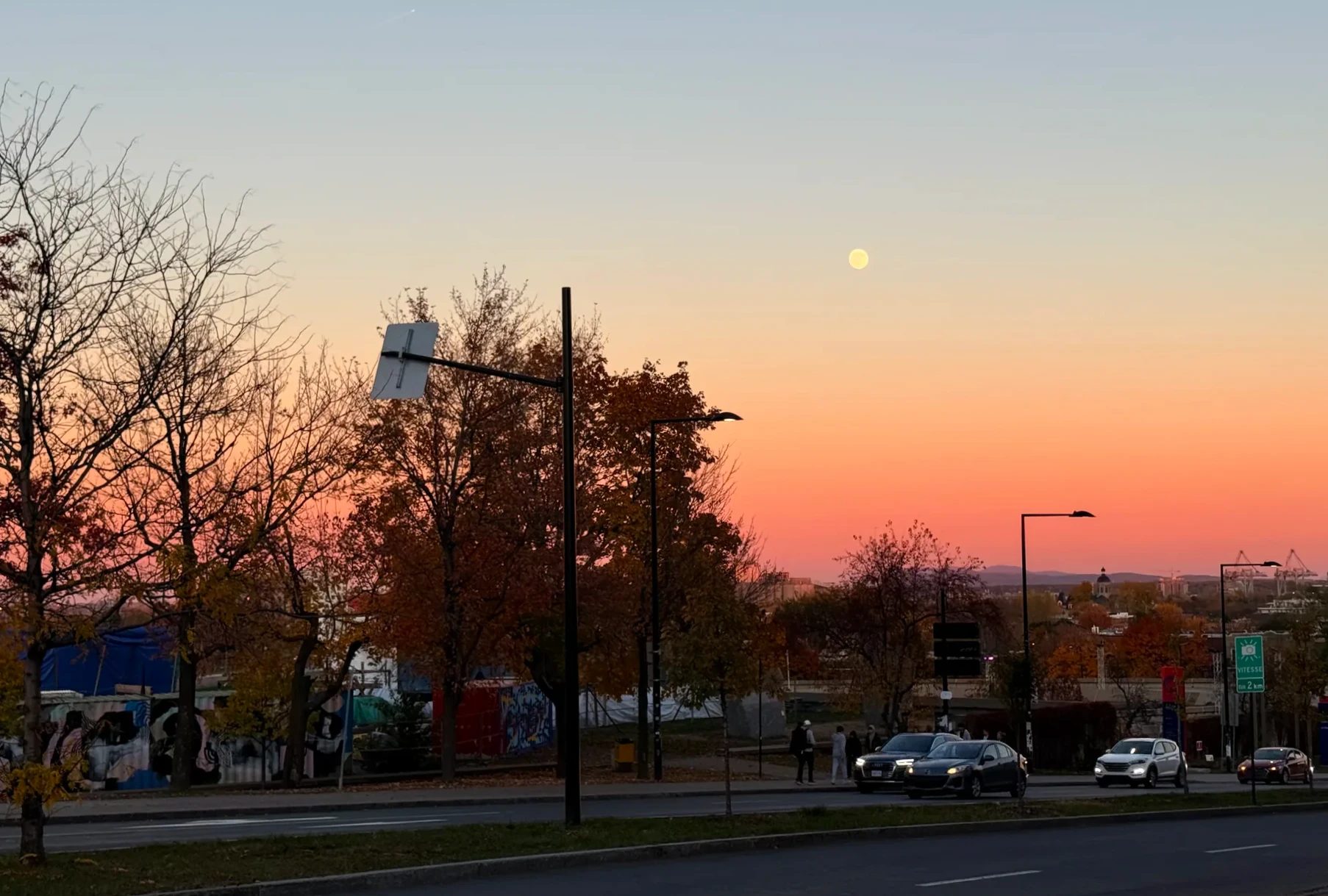
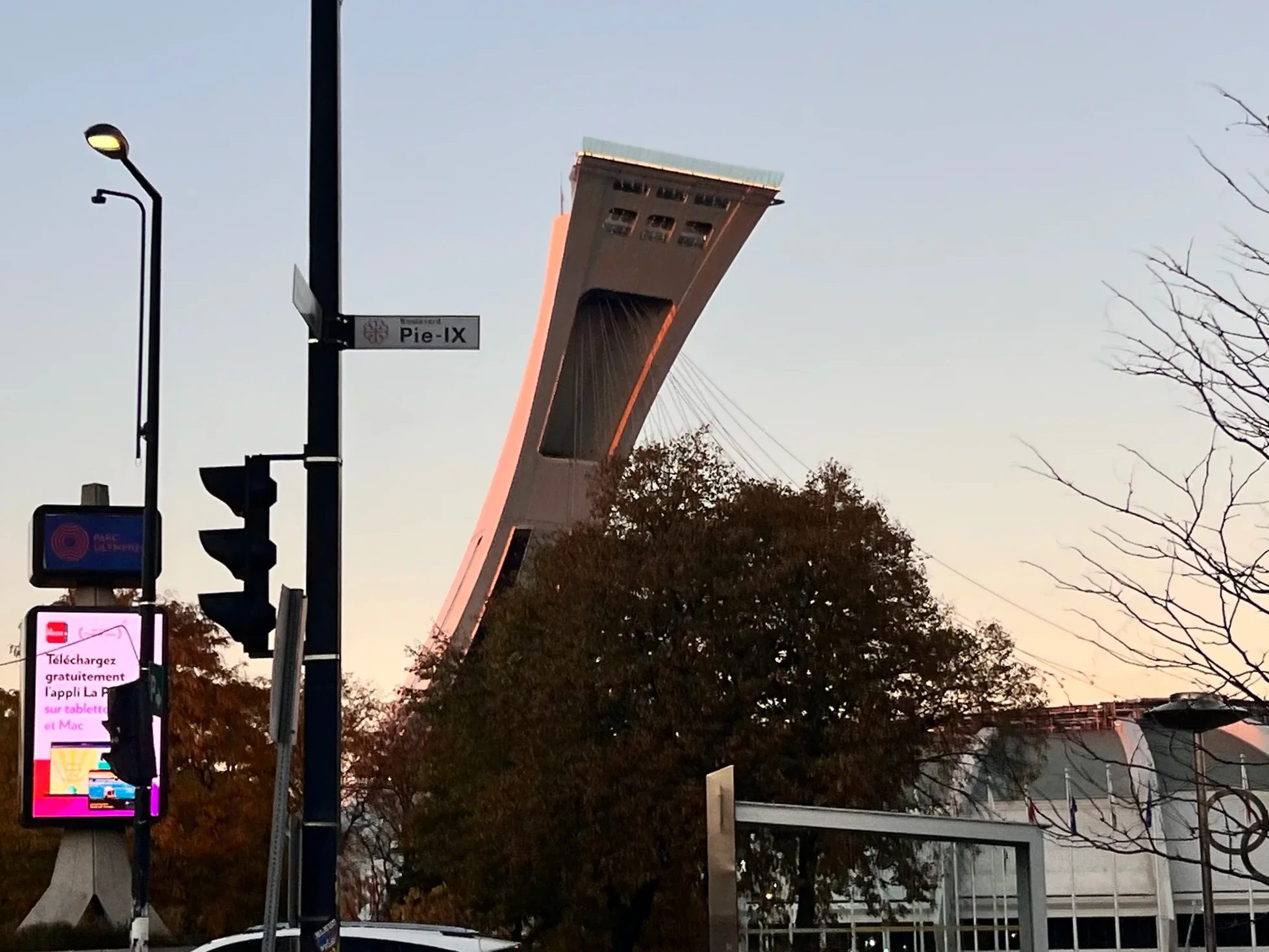
We left home around 5:10 p.m. on Saturday. The weather was lovely and Montreal was in the thick of fall. Winter wasn’t far off, so we wanted to get outside before the sun went down. When we reached Olympic Park around 5:50 p.m., a red sunset had spread across the sky, with the stadium’s leaning tower standing in the middle of it.
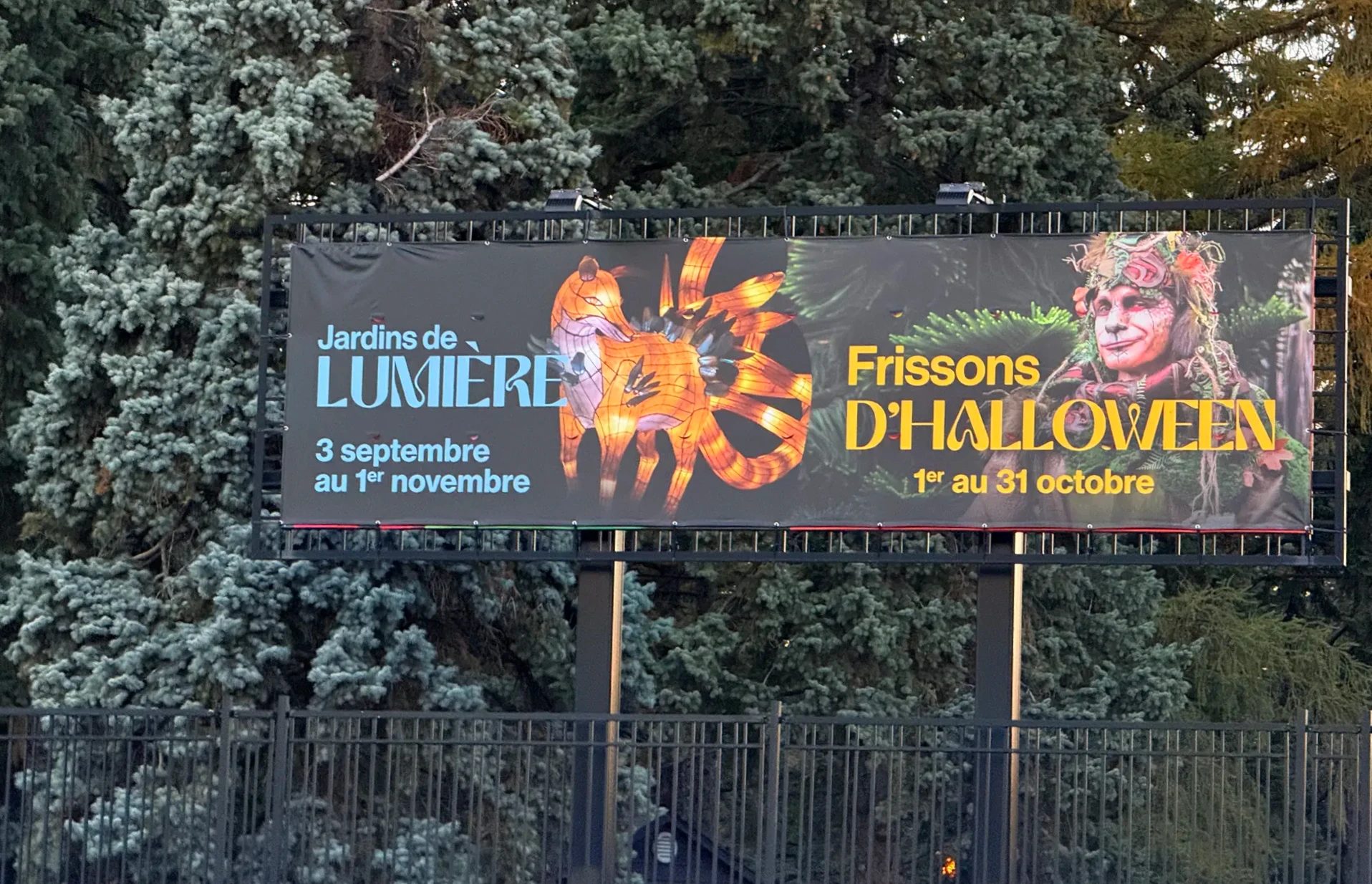
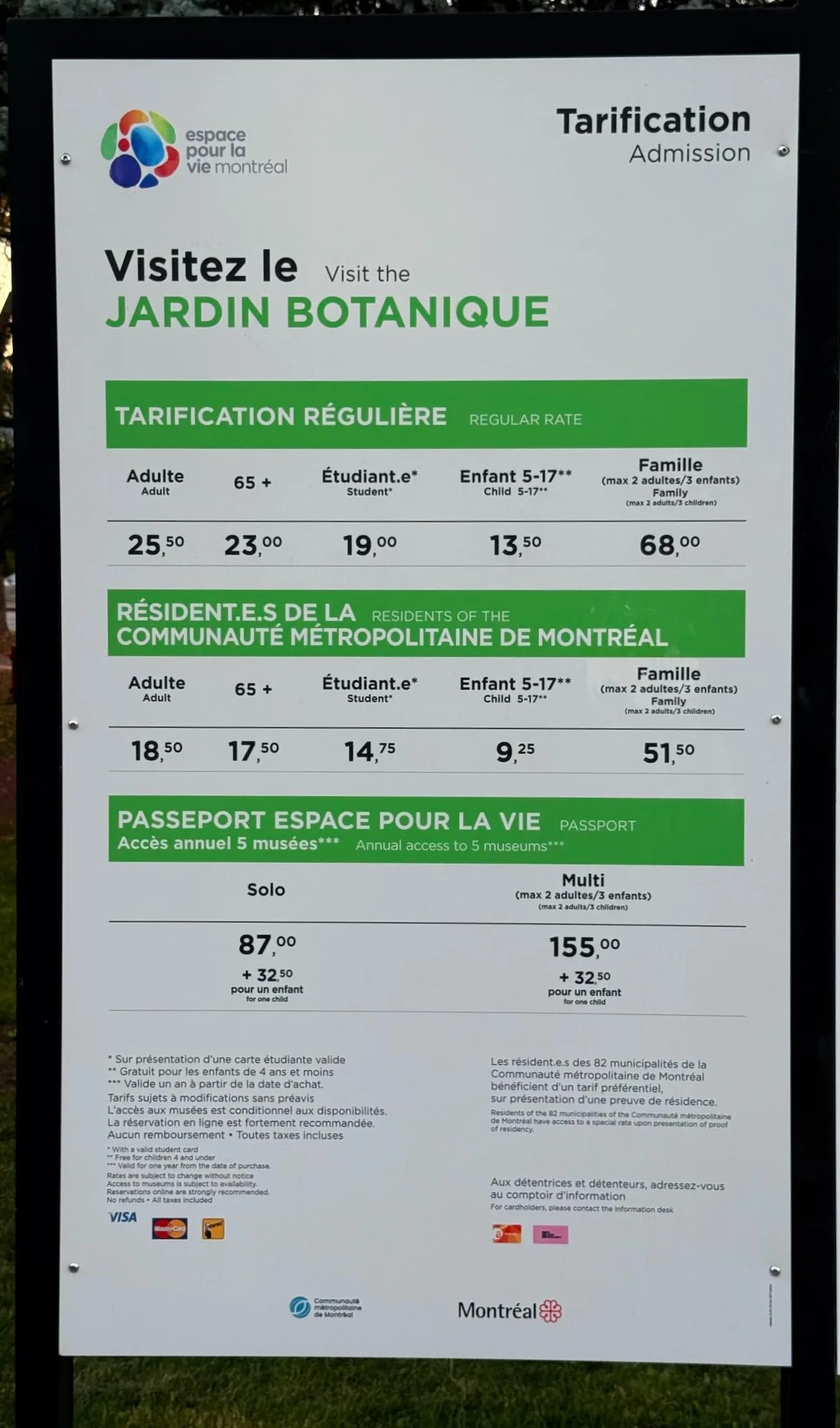
At the main gate hung banners for Gardens of Light and for Frissons d’Halloween (“Halloween Thrills”), the garden’s Halloween event that runs all of October. On the way in, we took a look at the garden map and the price board.
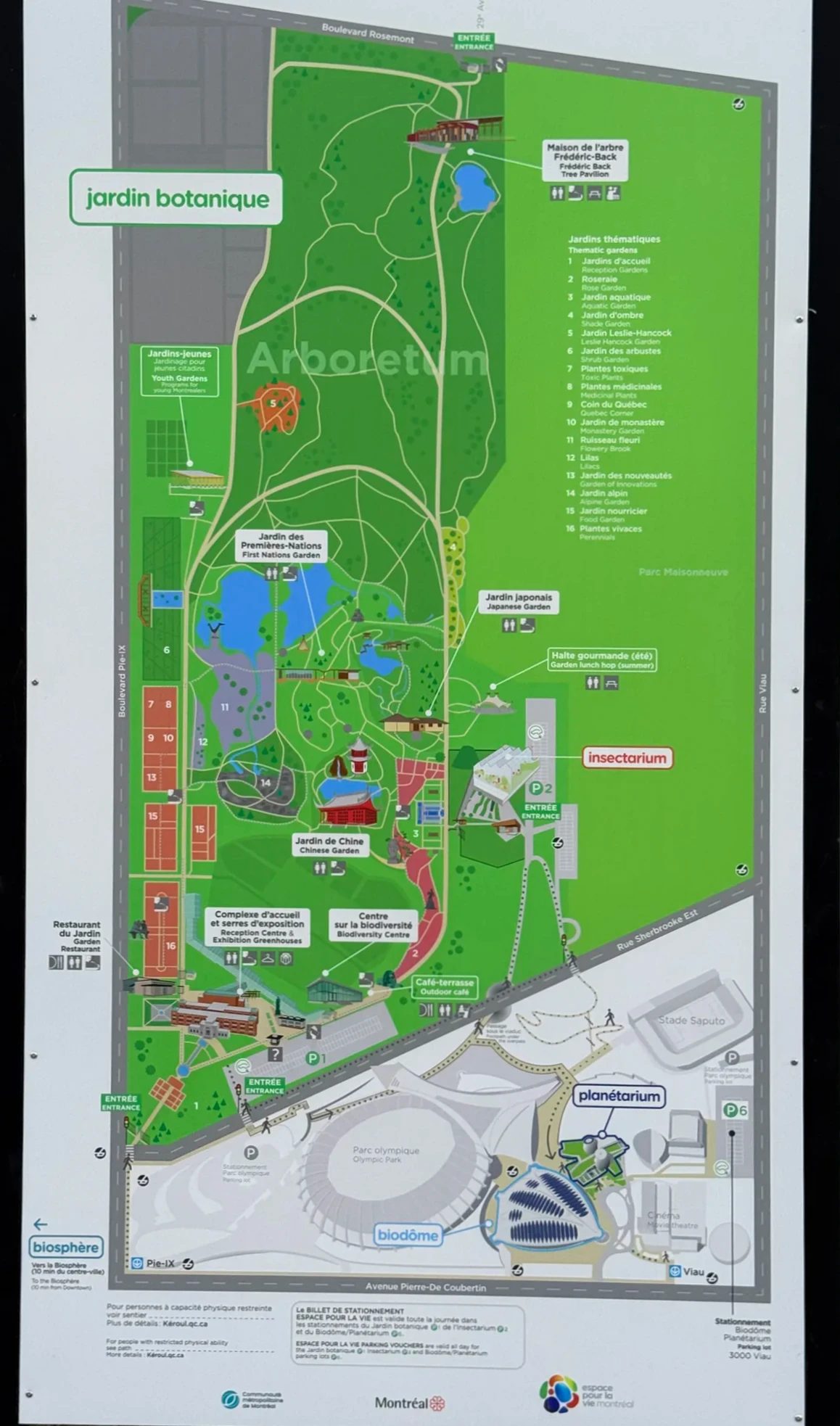
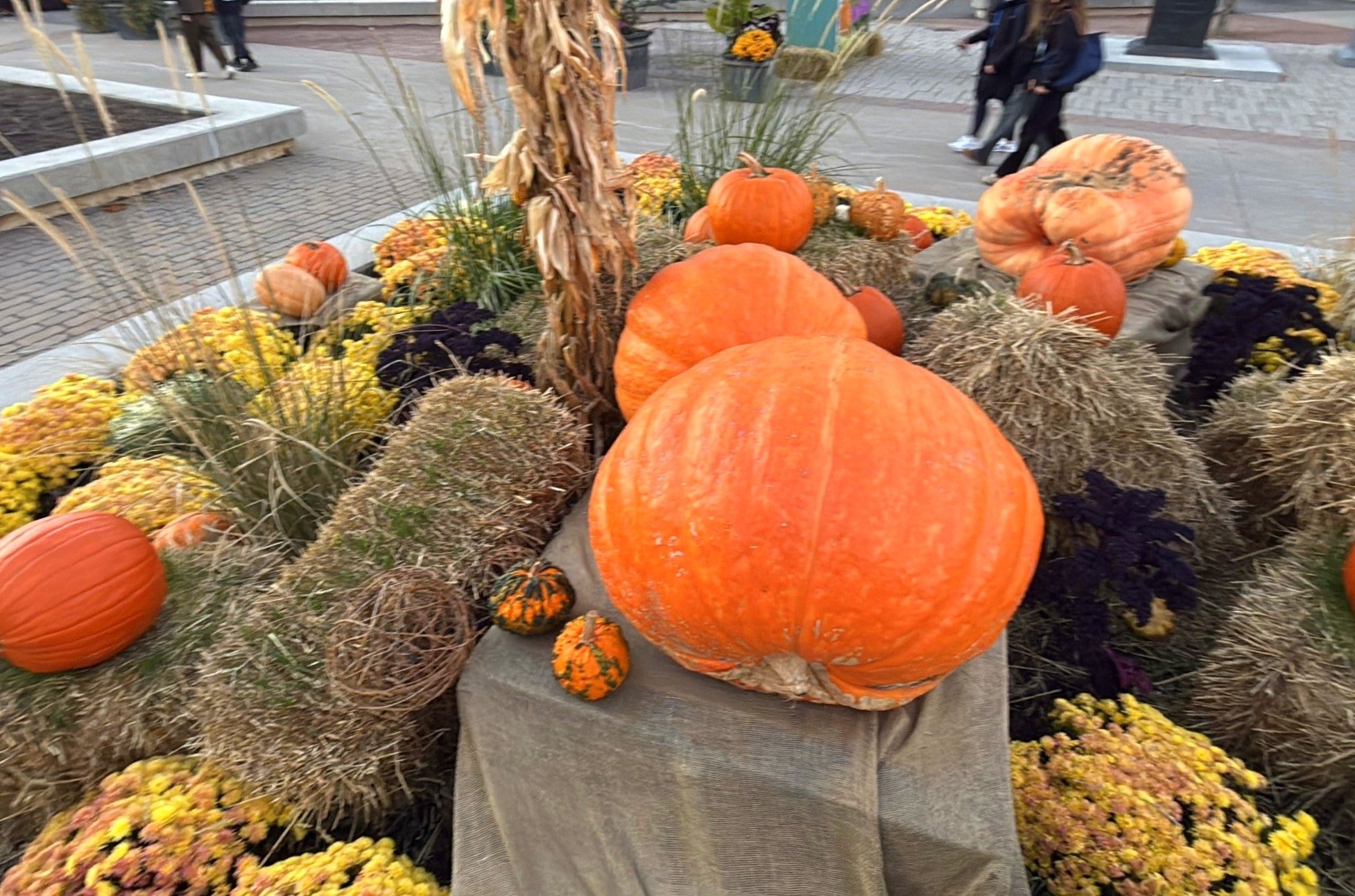
The first thing we saw inside was a set of giant pumpkins, so big they hardly looked real, sitting among hay bales and chrysanthemums. They were fun to look at, and we stopped to take a few pictures in front of them.
A red oak and the David Suzuki plaque
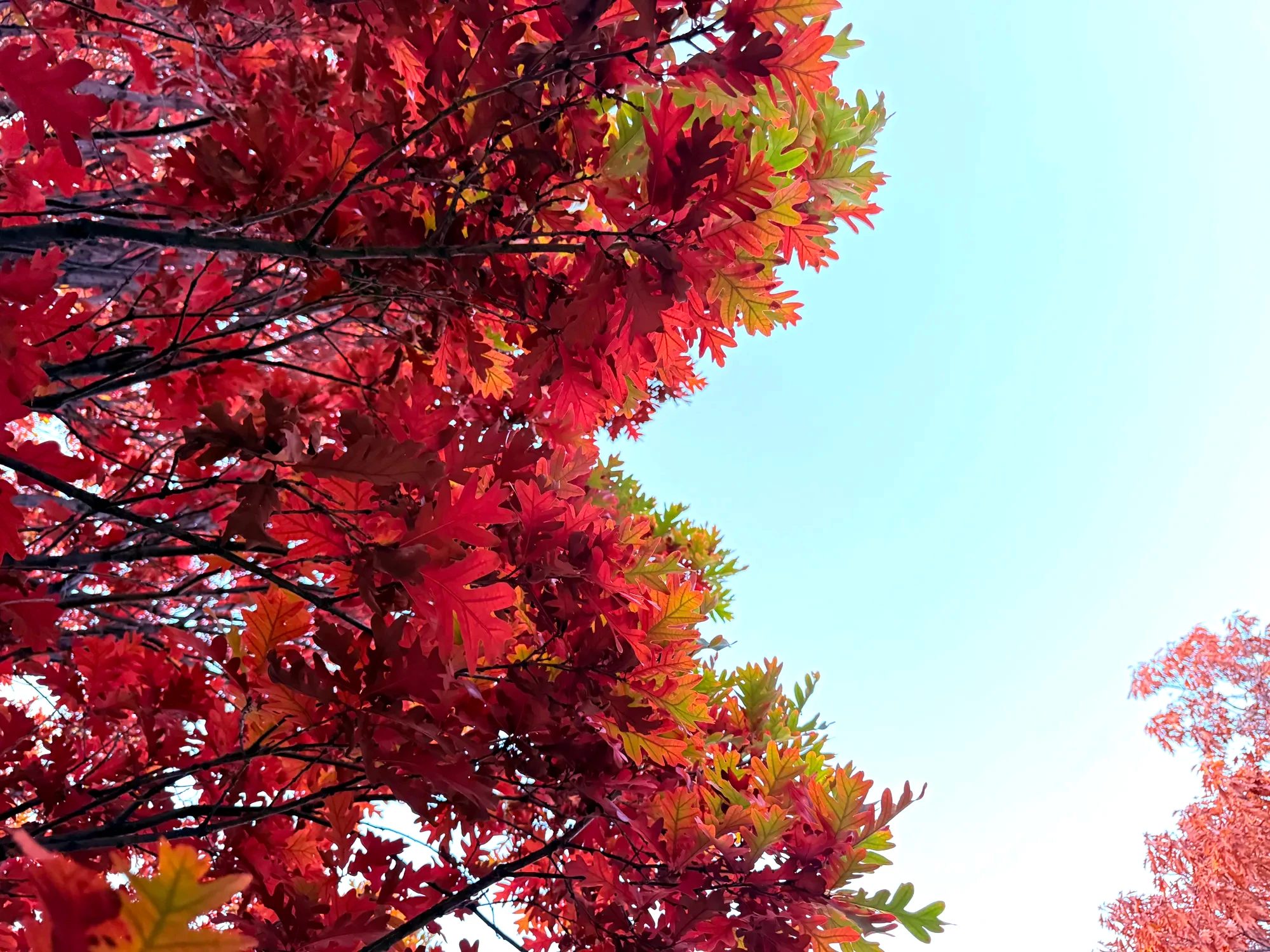
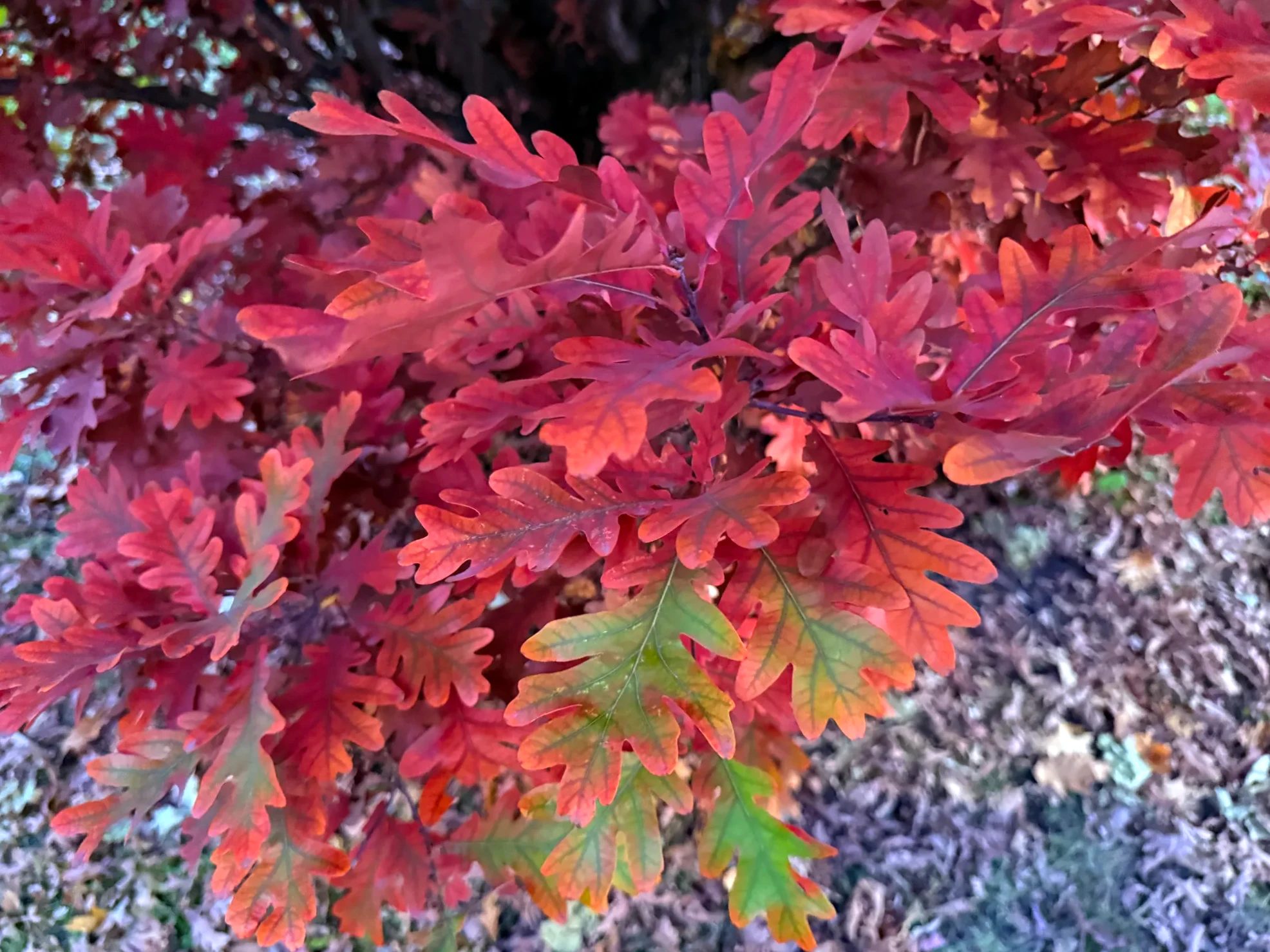
On the main path, one acorn-bearing oak had turned a startling red. Among the deep-red leaves were others still partly green, reddening from the tips inward. Seeing the leaves caught halfway through the change made the tree even more beautiful.
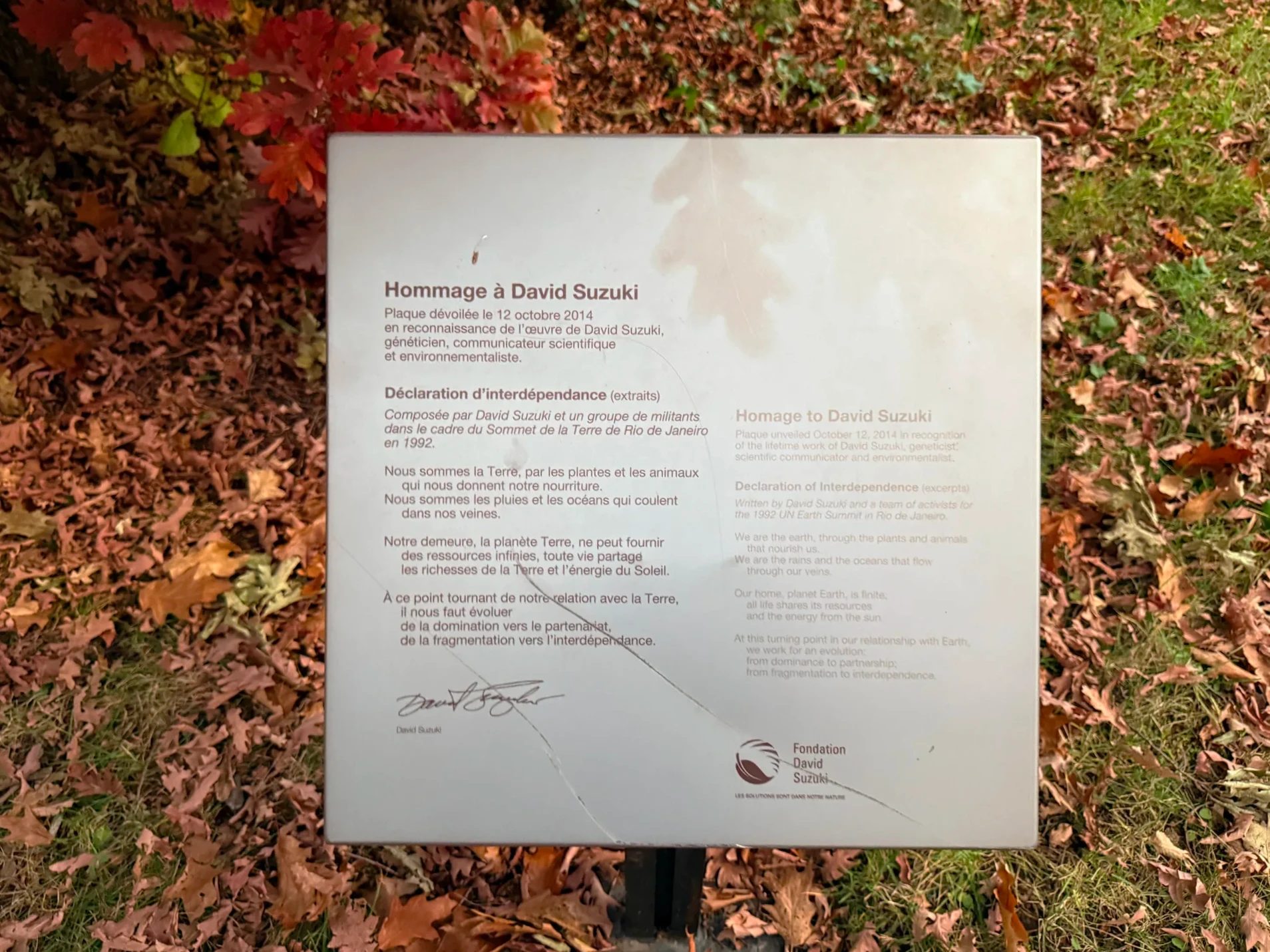
Under the tree stands a plaque honoring David Suzuki, the Canadian geneticist, science broadcaster and environmental activist. It was put up on October 12, 2014. In French and English, it carries a passage from the “Declaration of Interdependence,” which he wrote with colleagues for the 1992 Earth Summit in Rio. It opens with “We are the Earth, through the plants and animals that nourish us” and closes with the idea that our relationship with the planet has to change from domination to partnership.
A playground path and a floor that plays music
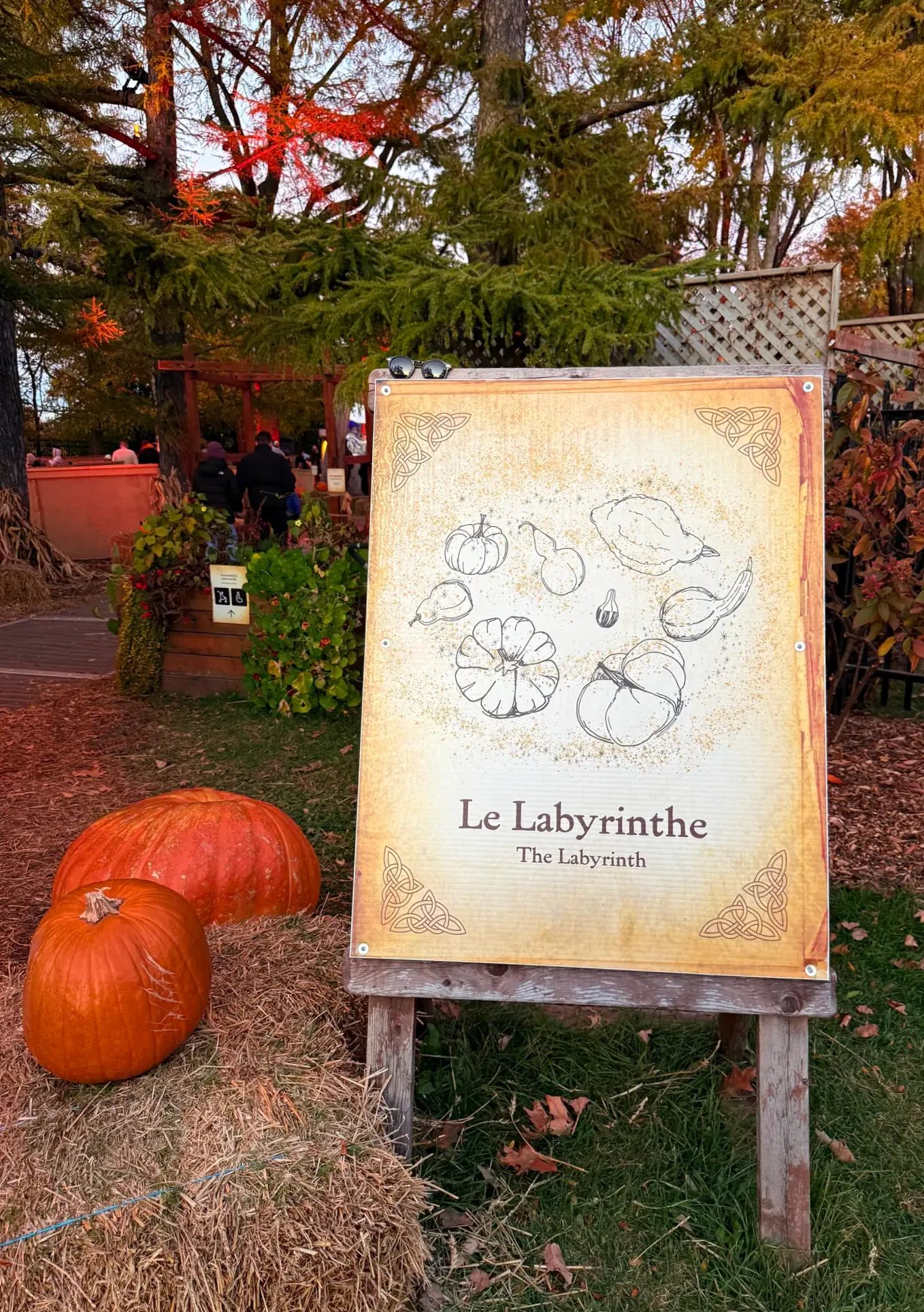
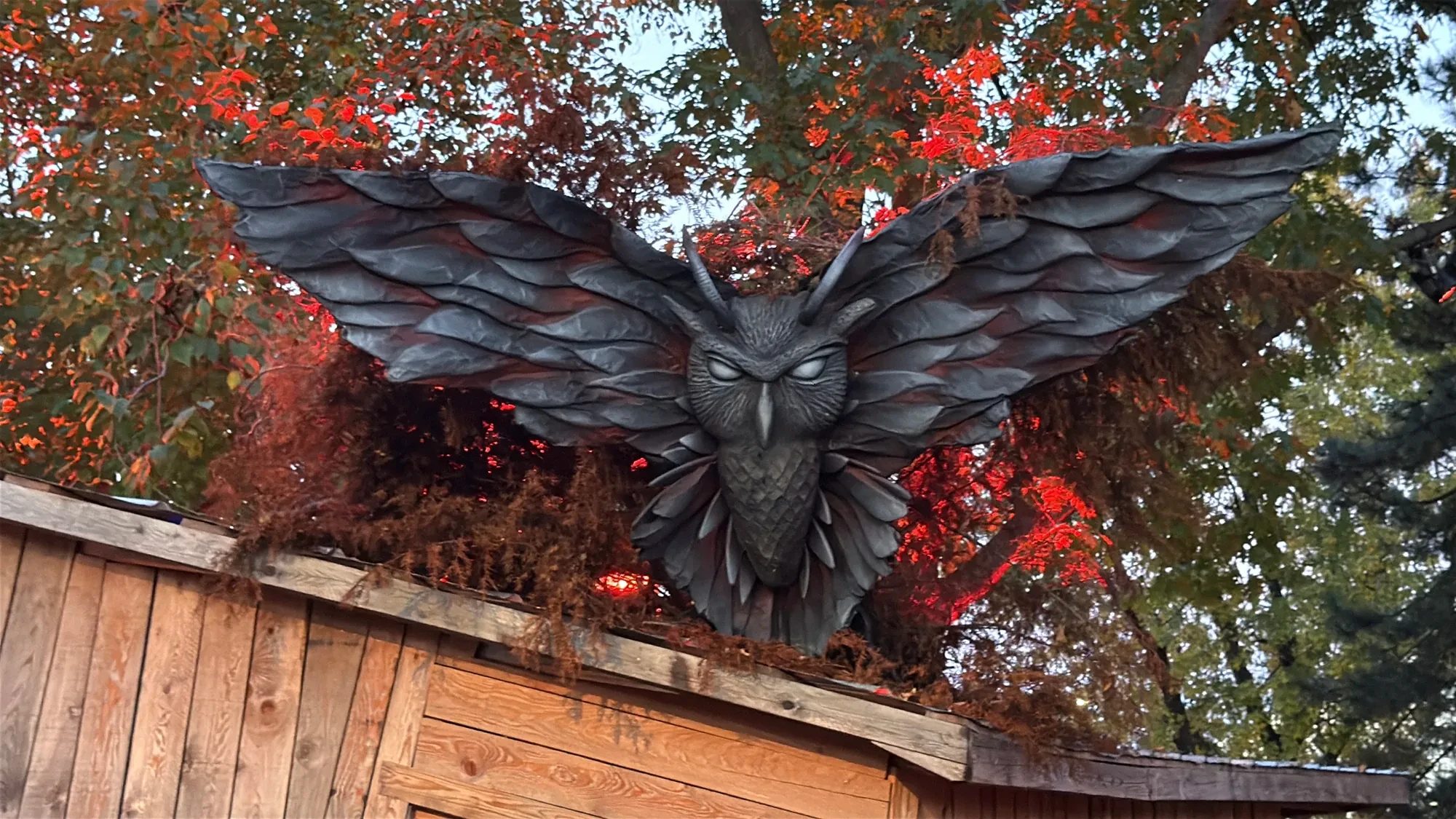
Near the entrance, a sign marks Le Labyrinthe, one of the Frissons d’Halloween activities. The premise: it’s the magic maze of a wizard named Kalbacius, and visitors are told to look for the creatures hiding inside and not to be fooled by its illusions. An owl sculpture perches along the winding path, and kids were running around on the red wood chips that cover the ground.
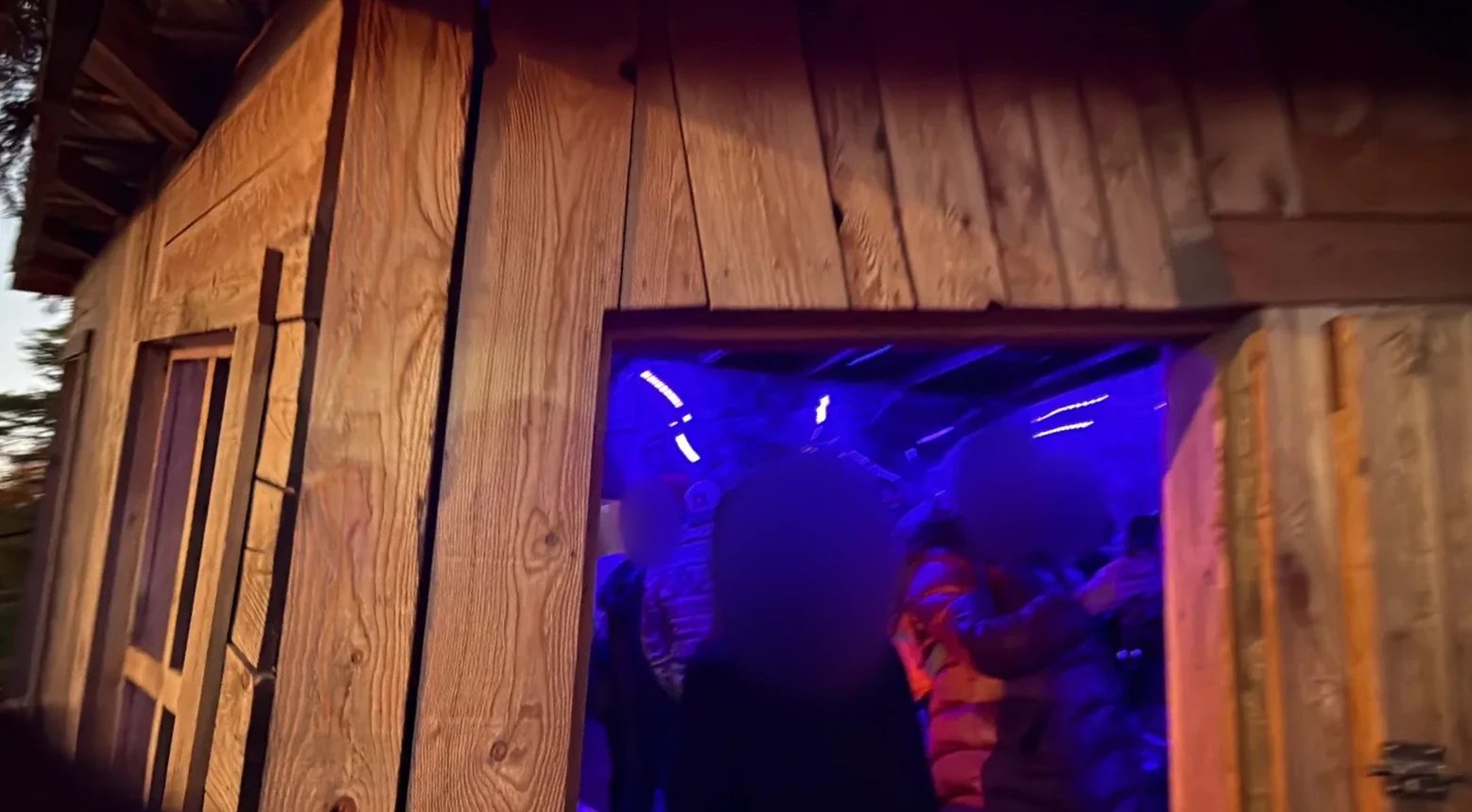
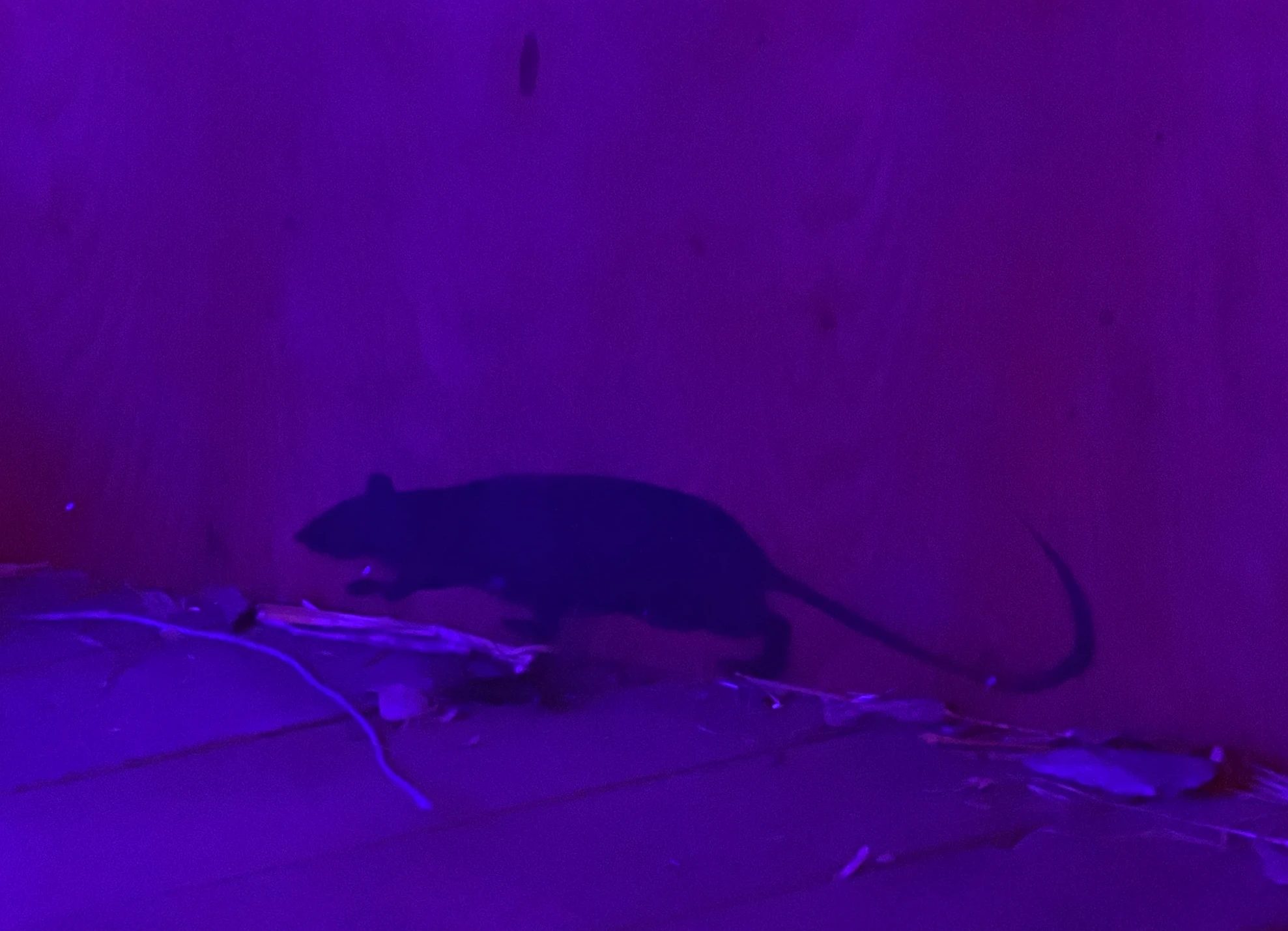
Partway along the path is a wooden hut that’s purple inside. Mirrors and black lights (ultraviolet lamps) make anything that fluoresces stand out brightly in the dark, and a mouse drawing is hidden on one wall. We looked at each other and laughed for a good while. Teeth glowed white, except for a crowned tooth, which didn’t glow at all and showed up as a dark gap. Glasses went dark, as if we were wearing sunglasses. Natural teeth fluoresce under UV light, but crown materials often don’t, and lenses with a UV-blocking coating absorb the light, so they look dark. White clothes and white shoelaces with optical brighteners glow too, so it’s fun to guess what will light up before you go in.
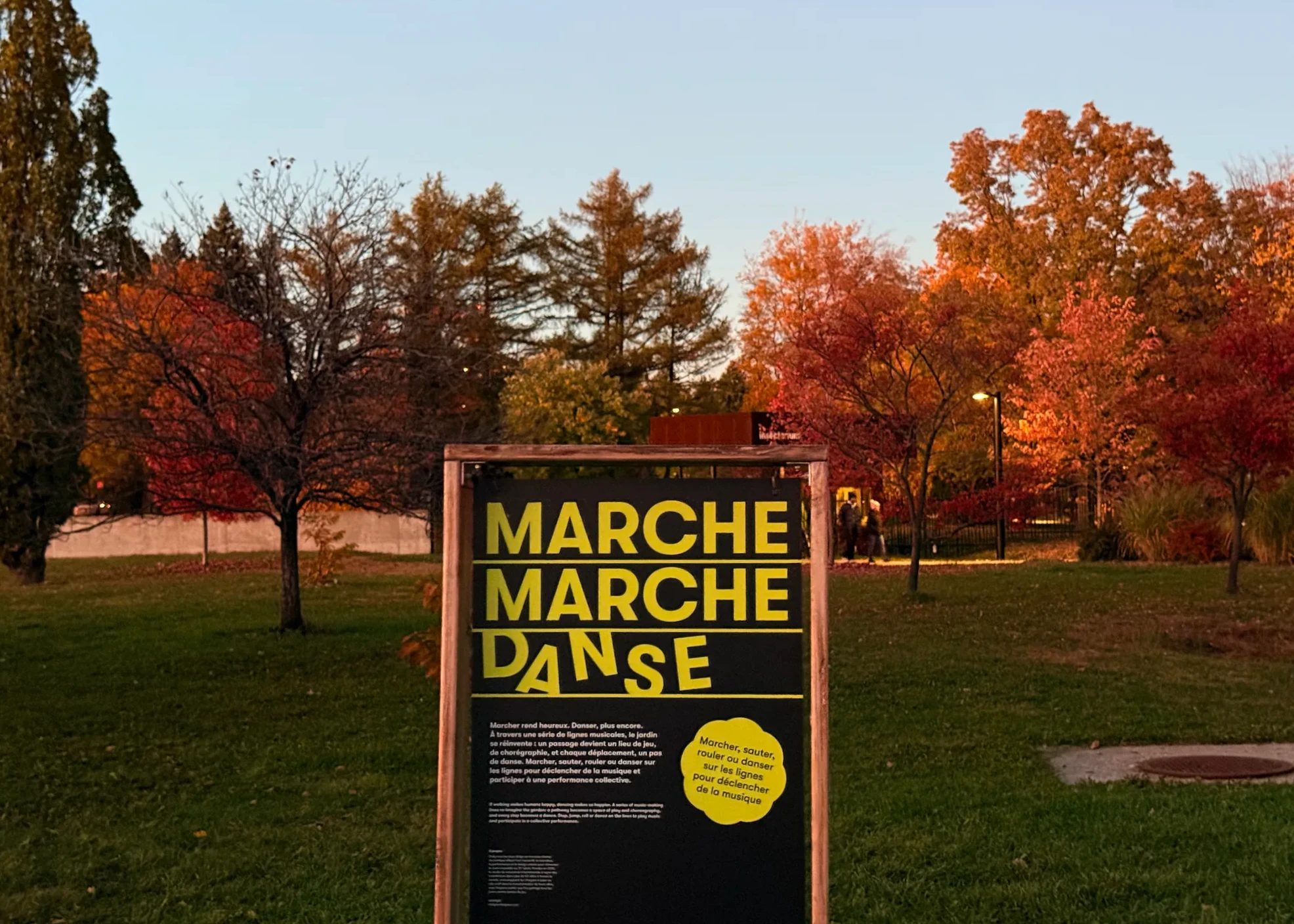
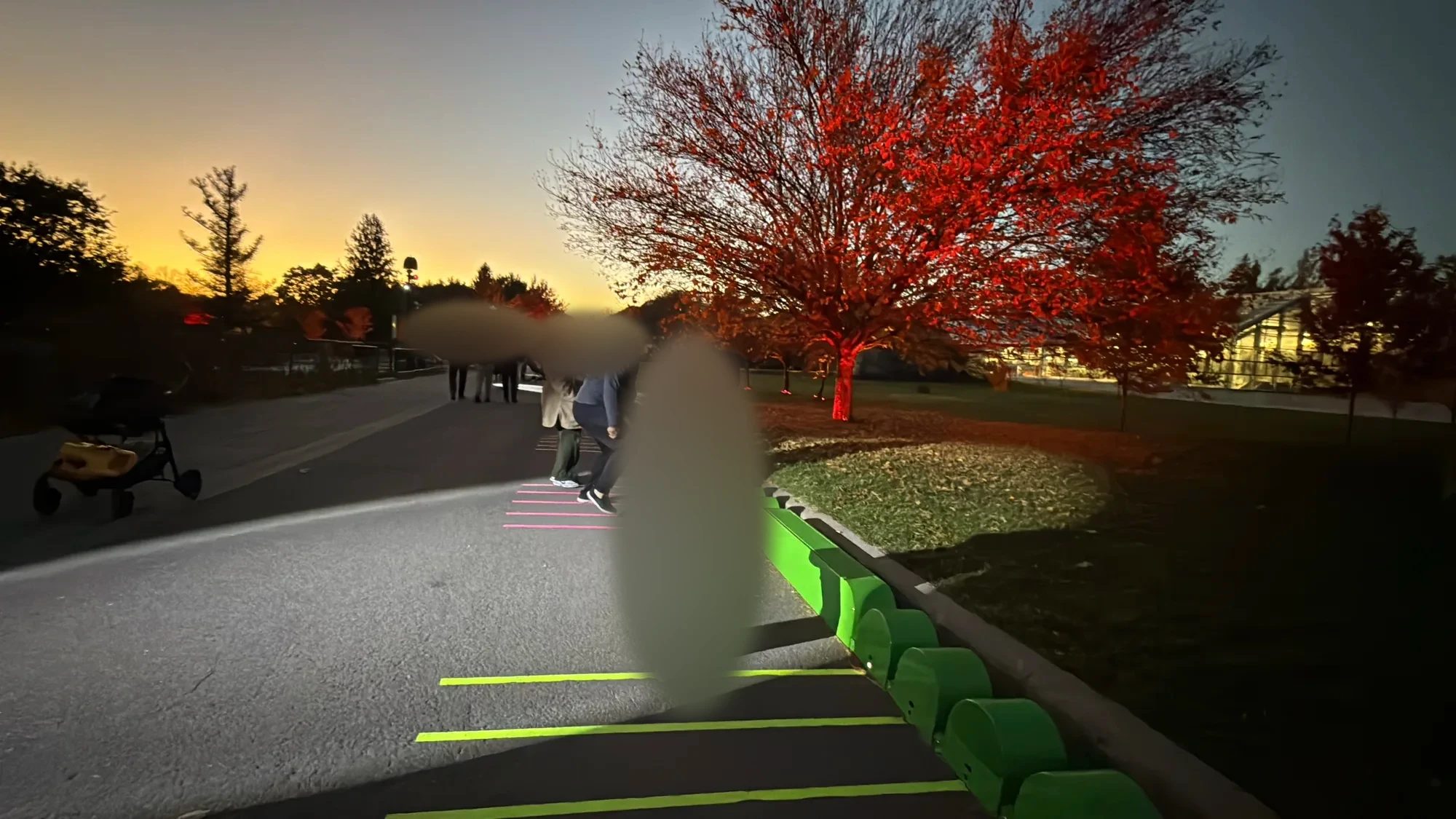
Back on the main path, a sign reads Marche Marche Danse (“walk, walk, dance”). A green strip runs along the edge of the path, and walking on it plays music that follows your steps. Our kid loved it. From the end of the strip you can see the Olympic Stadium tower.
Fall leaves under red light and a blue sky
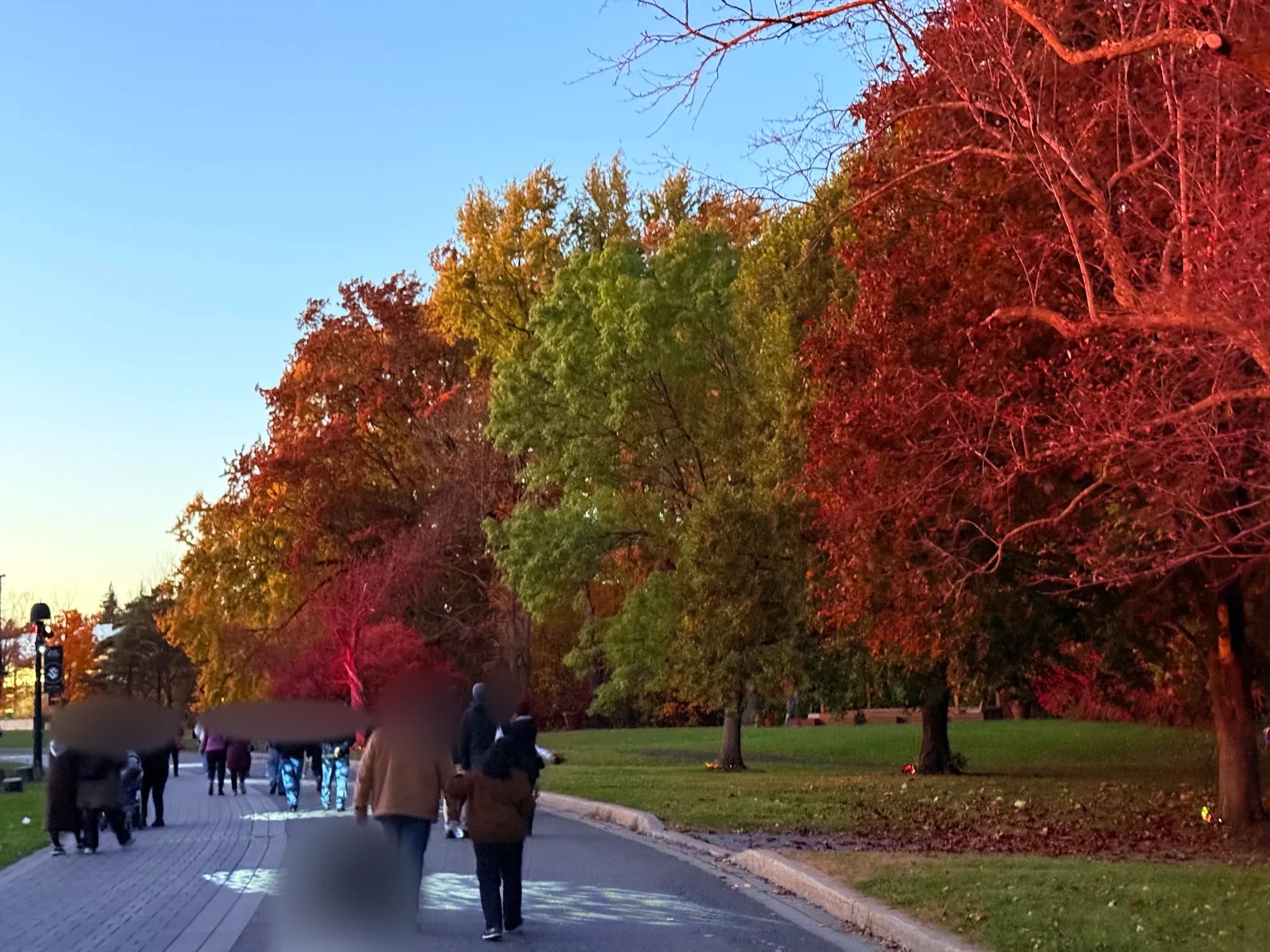
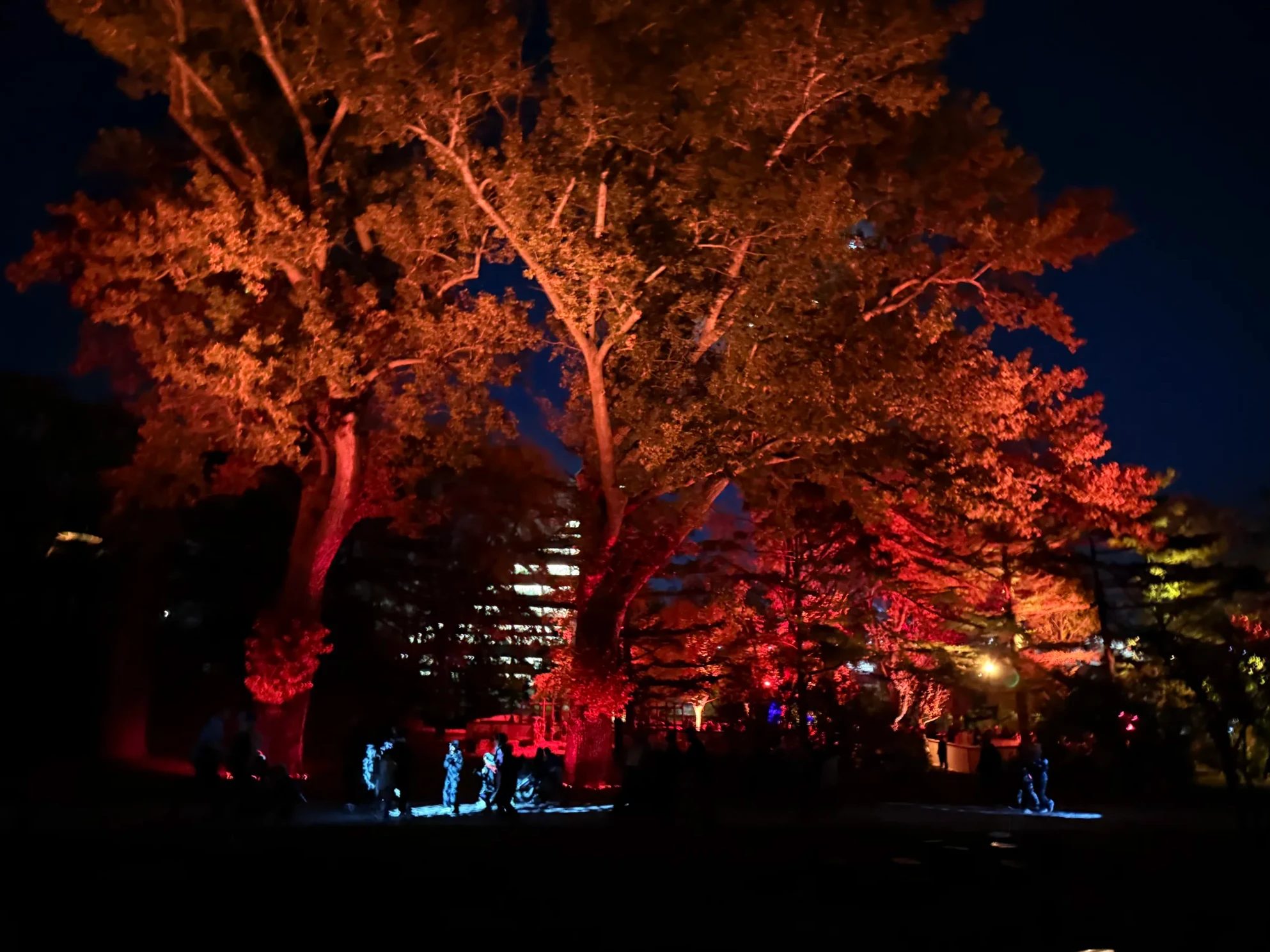
After 6 p.m. the sun slowly went down. We had walked this path before, but tonight every maple had a red light trained on it. Adding red light to fall color struck me as a clever touch, and above all it was pretty. Under the darkening blue sky, the red-lit leaves looked like something seen through a night-vision camera, a view you don’t get on an ordinary evening.
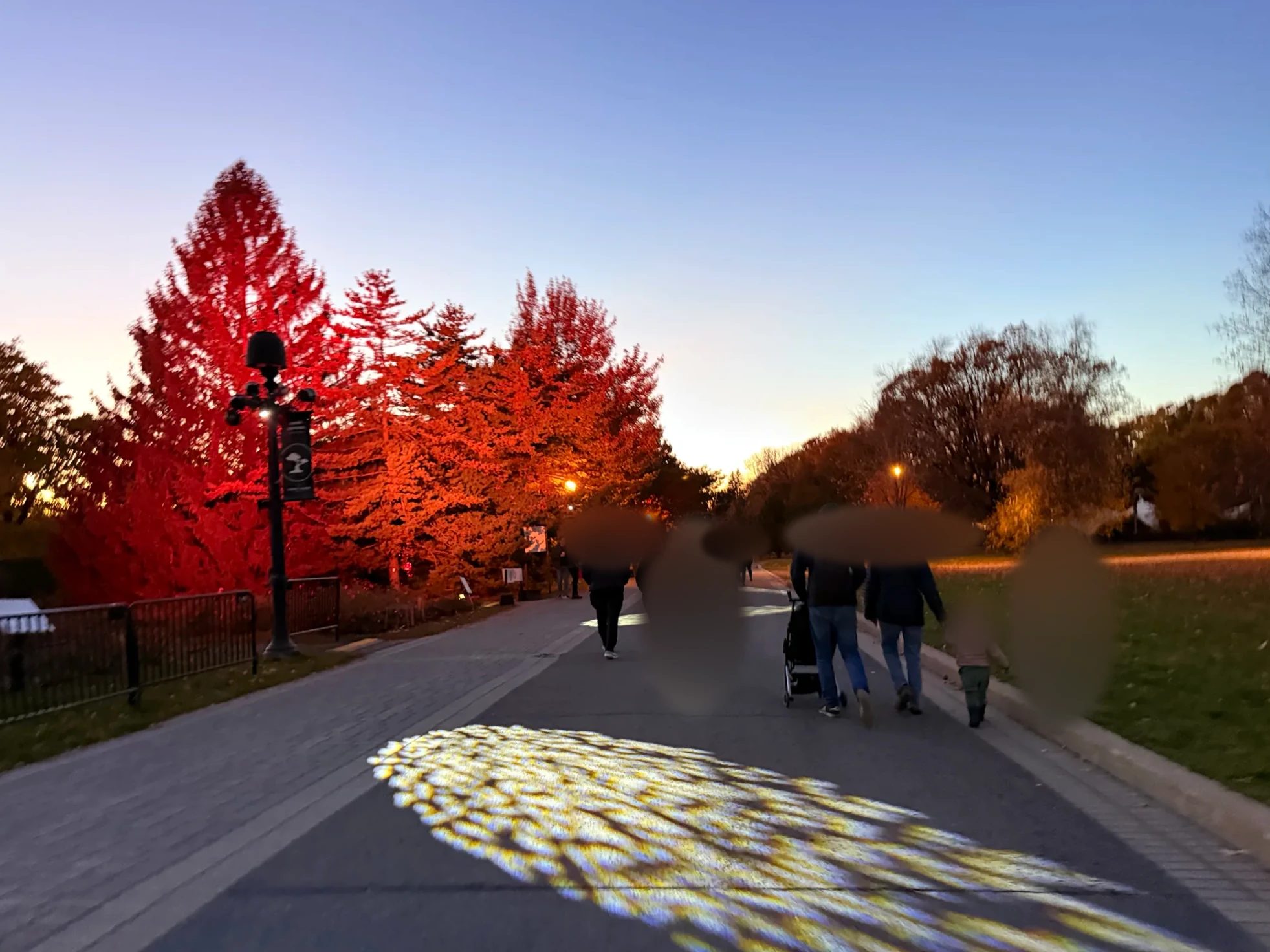
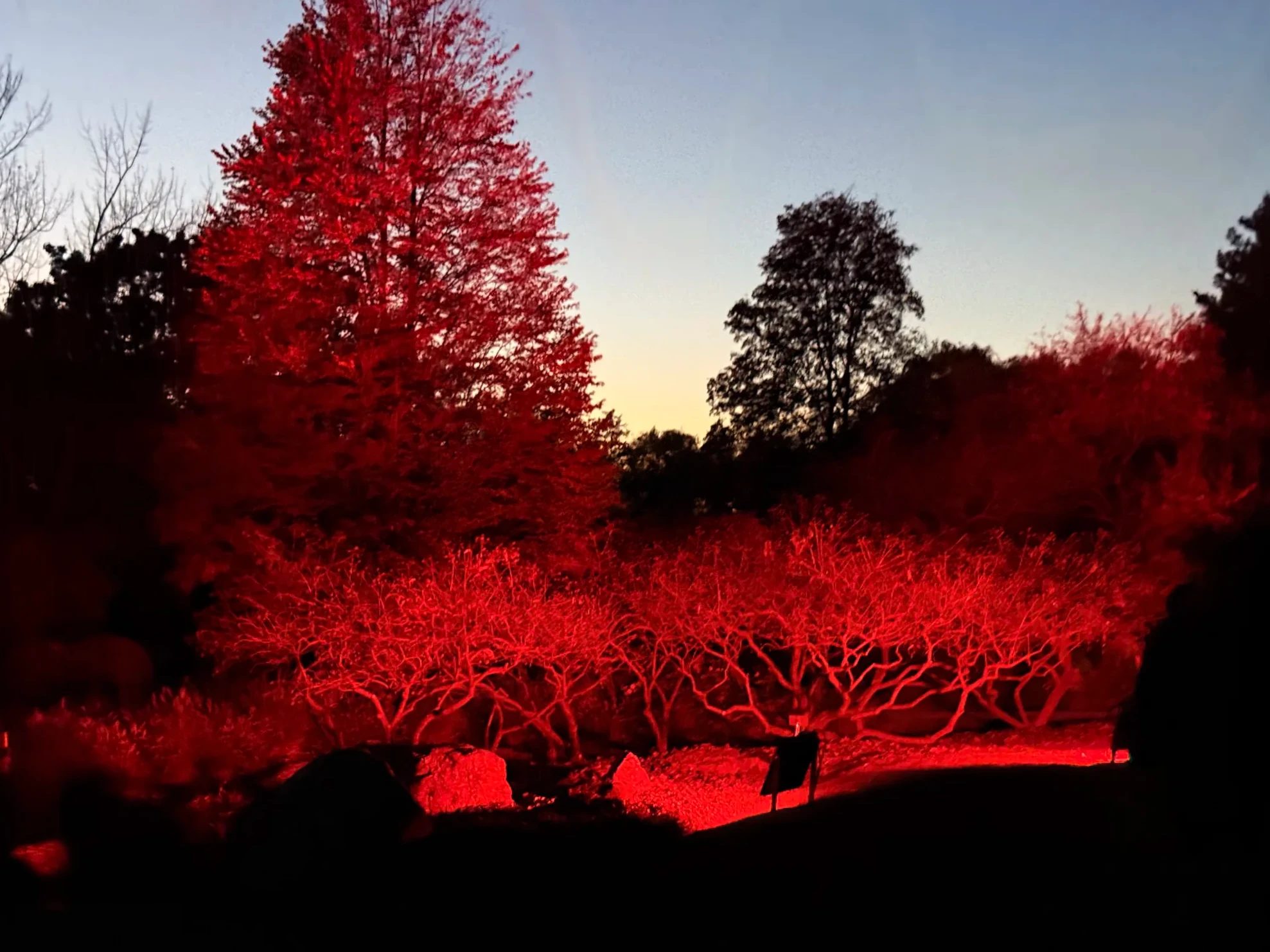
Near the entrance to the Japanese Garden, moving lights played over plants that were standing perfectly still, so they seemed to stir and ripple. My family and the people around us all marveled at it.
Japanese Garden: light patterns on the trees
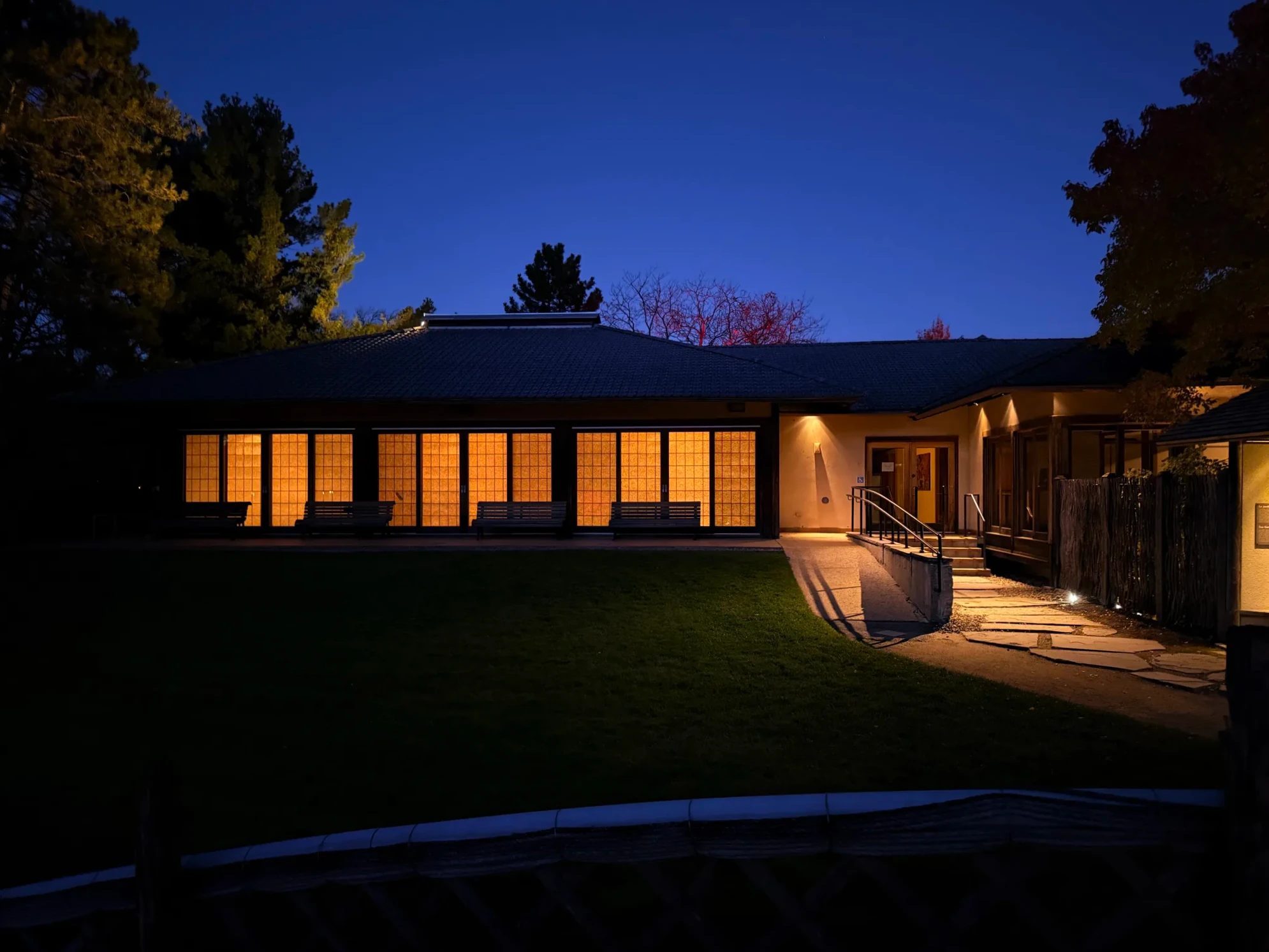
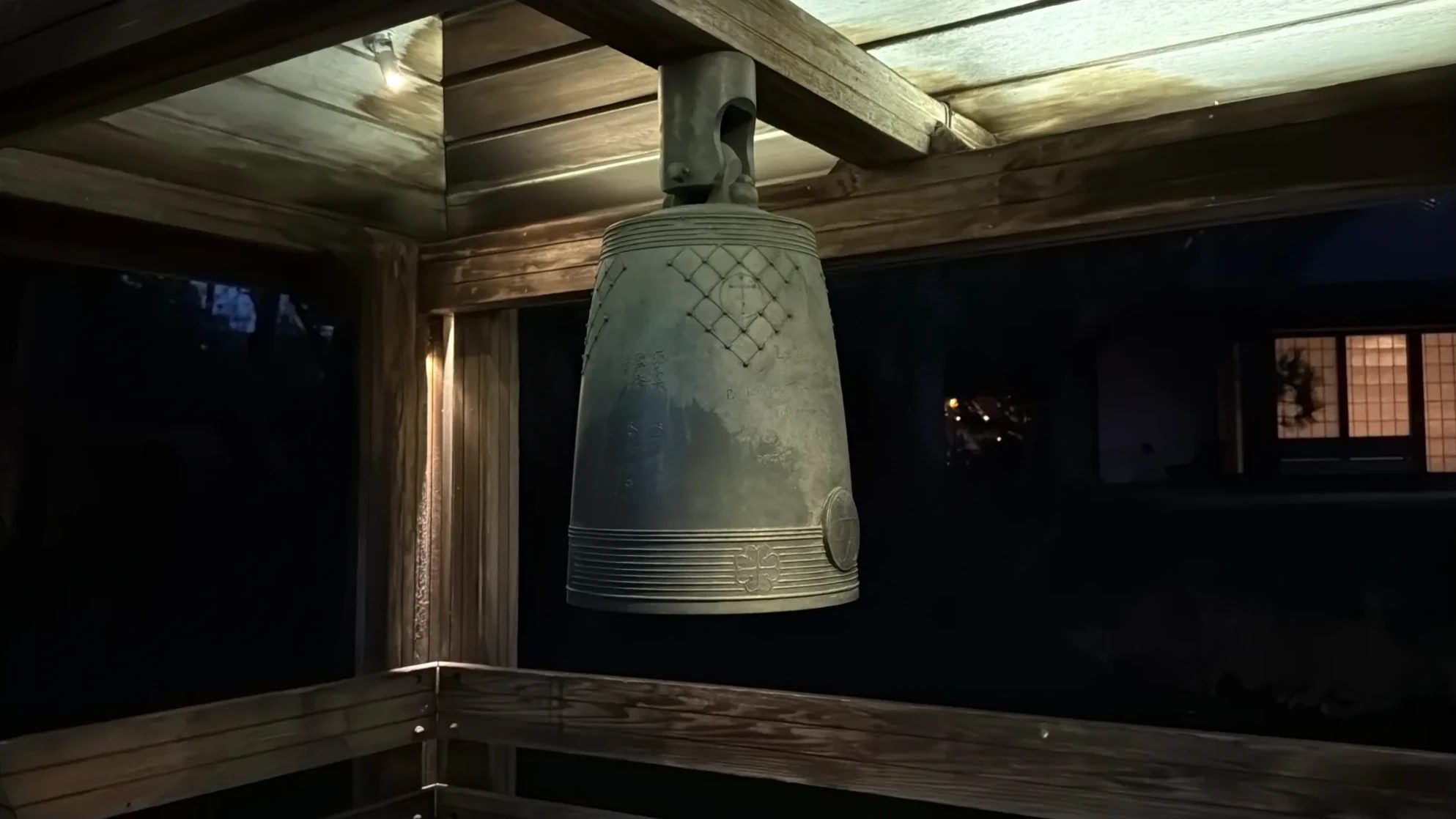
We reached the Japanese Garden (Jardin japonais) around 6:30 p.m. The lit-up Japanese Pavilion (Pavillon japonais), a bell and the pond came into view one after another. The garden opened in 1988, and this year’s Gardens of Light theme here was yūgen (幽玄), a Japanese aesthetic term for a subtle, profound beauty.
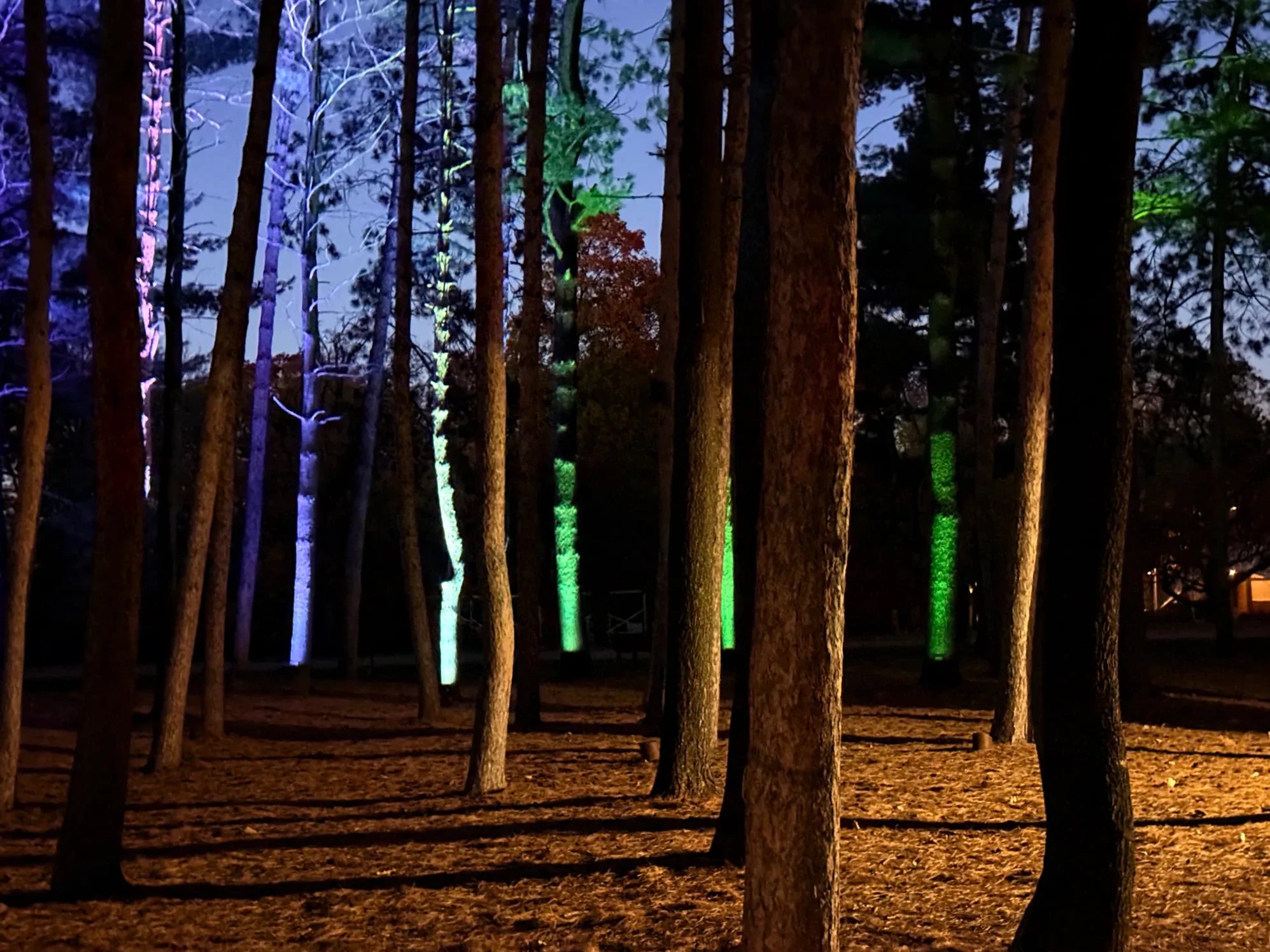
In a long stand of pines, every trunk was lit blue and green. We said it felt a little spooky, like a Hidebehind might turn up. The Hidebehind is a forest creature from North American lumberjack folklore; it always hides behind a tree, so no one has ever gotten a good look at one.
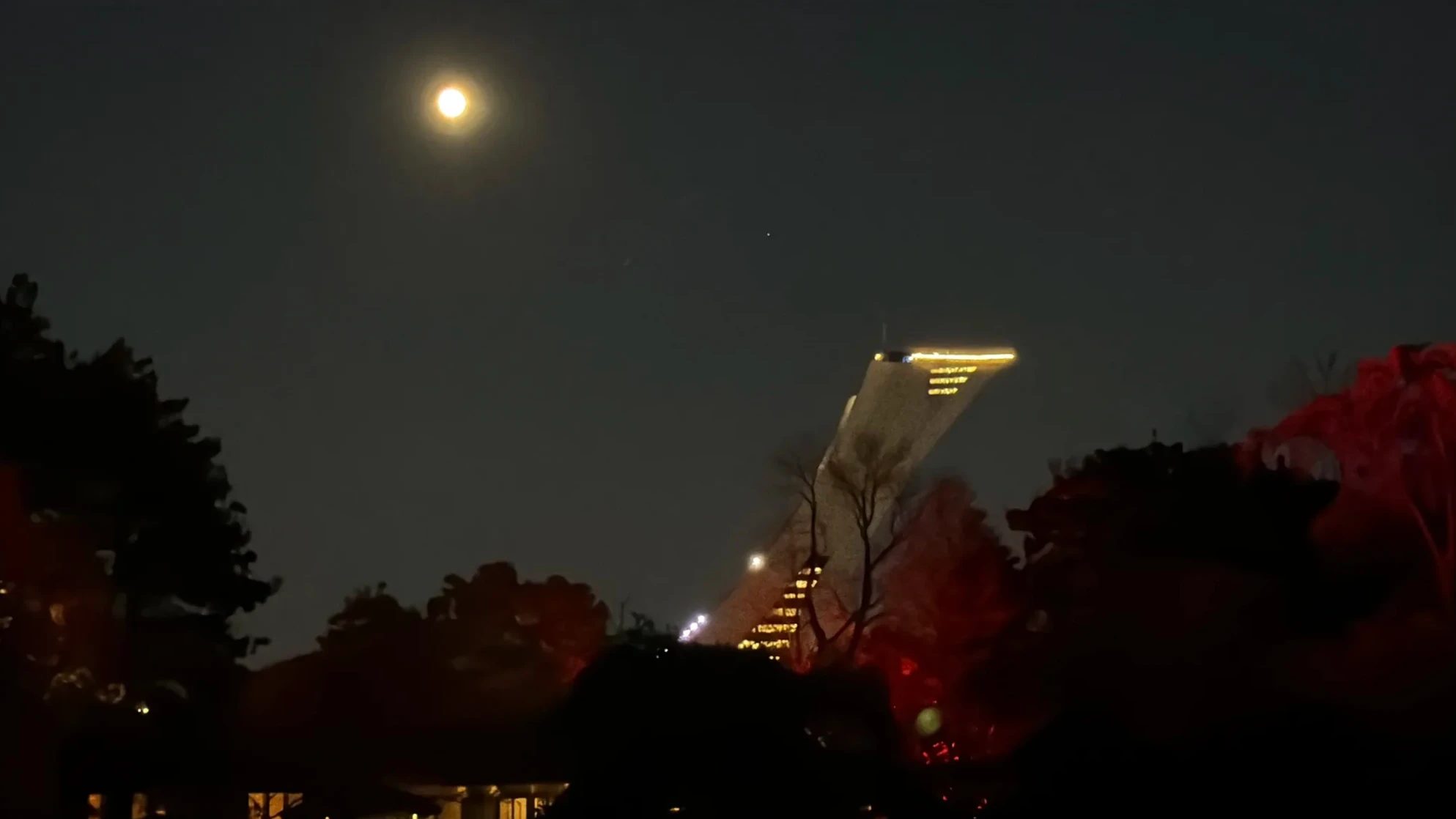
Black signs reading Suite du parcours (“next stretch of the route”) stand all along the route, so as long as you follow the arrows, you won’t lose the path. Looking up as we walked, we saw a round moon above the stadium tower.
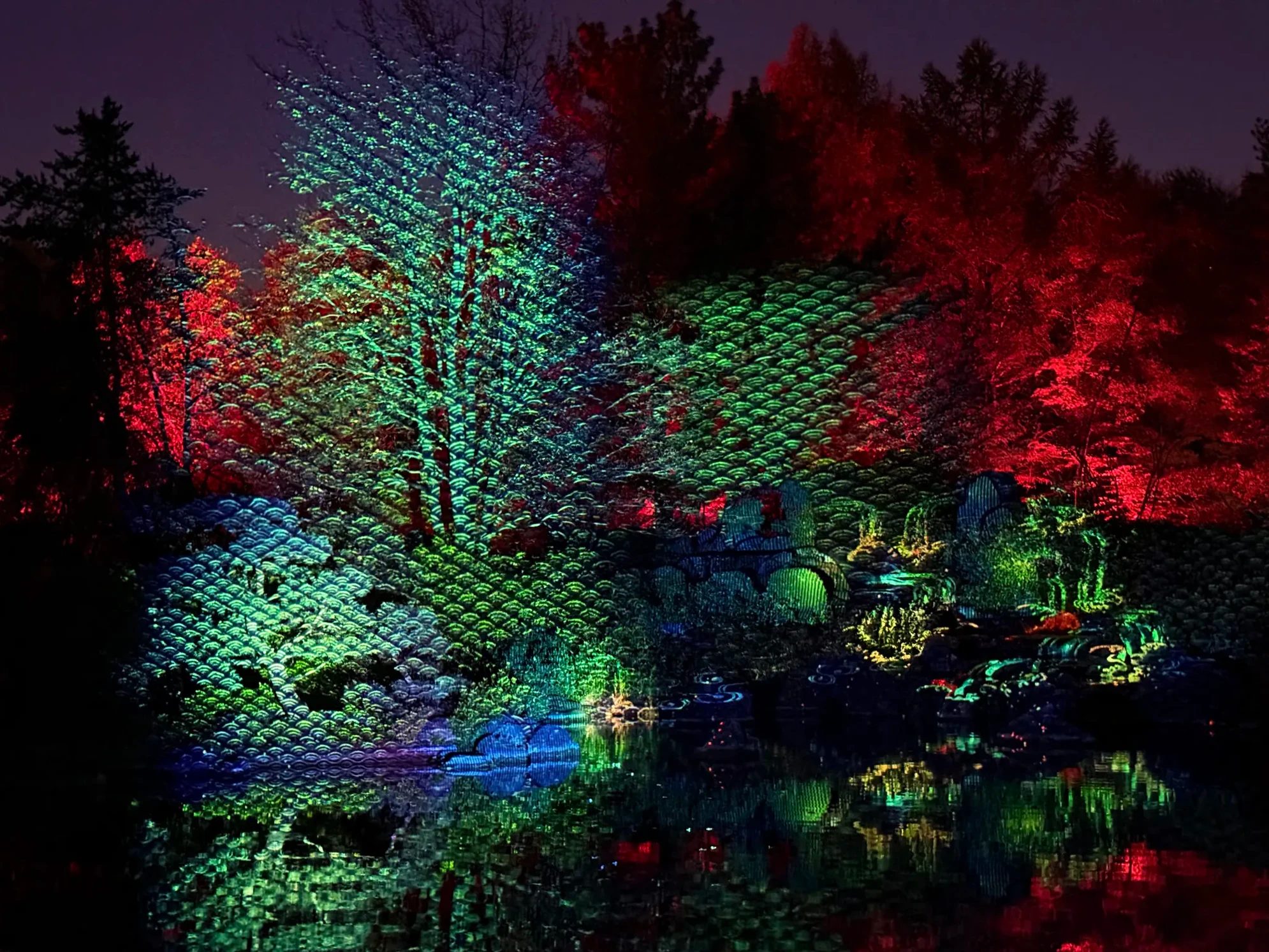
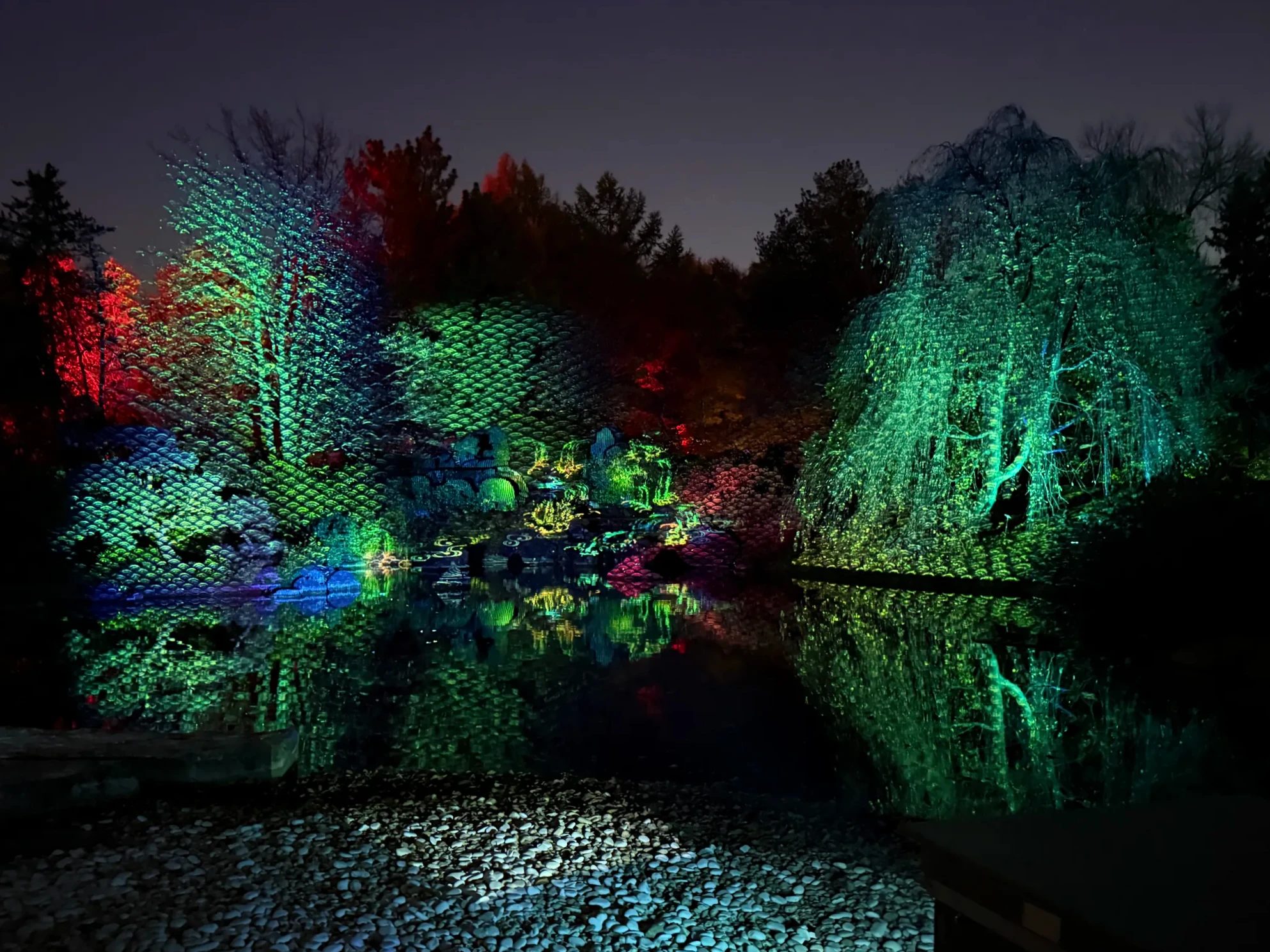
At the pond, lights projected a net-like pattern onto the trees along the water, and the light shifted slowly from one color to the next. It was intense and beautiful, unlike anything we’d seen elsewhere. I thought it alone would be worth the trip.
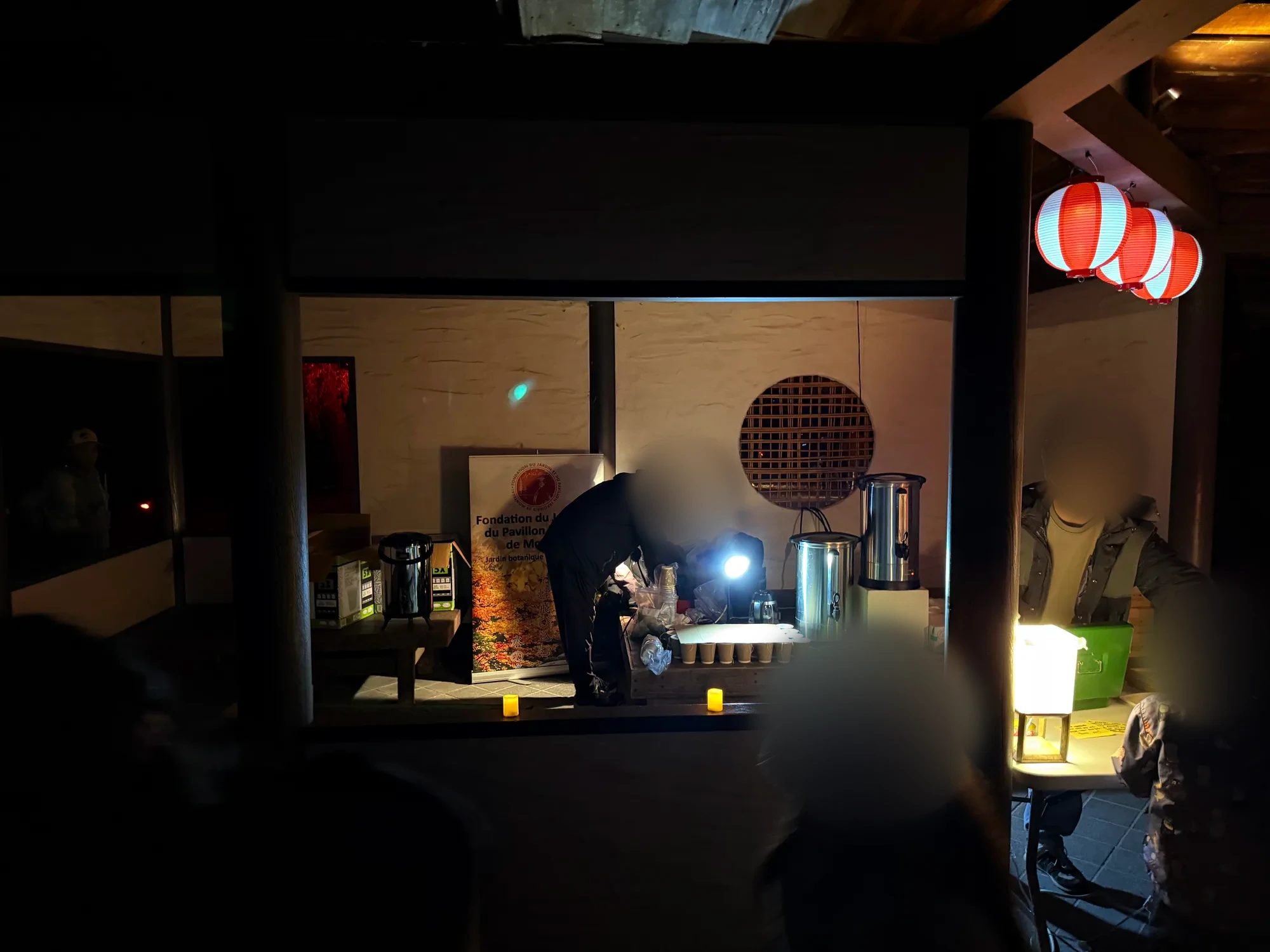
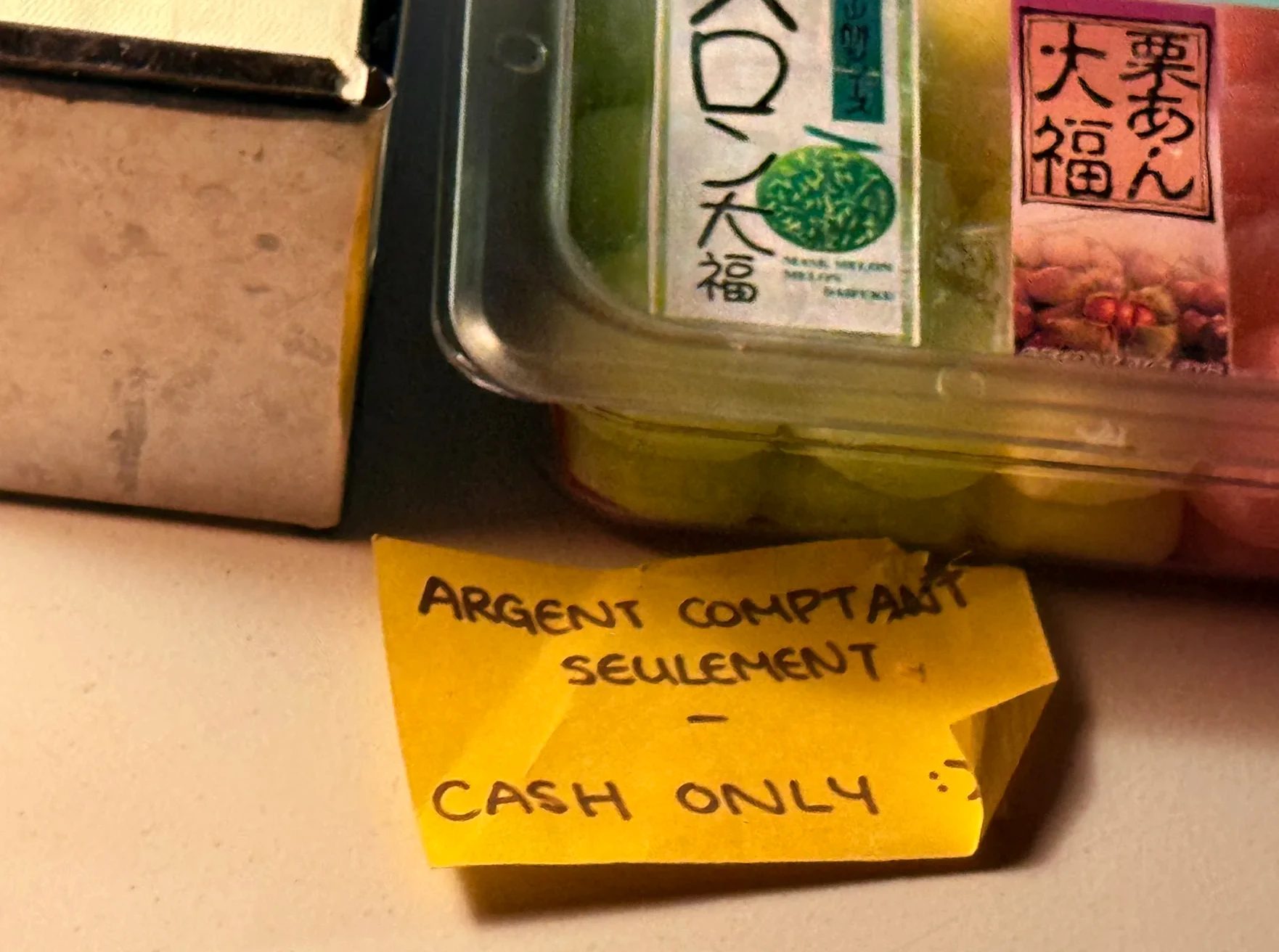
Past the pond, near the teahouse, is a small snack stand selling Japanese treats: dorayaki (pancakes sandwiching a sweet filling), mochi (rice cakes), yuzu drinks and cookies. We were already in line when we noticed a note saying it was cash only, so we skipped it and walked on to the next garden. If you want a snack, bring a little Canadian cash.
First Nations Garden: starlight in the trees
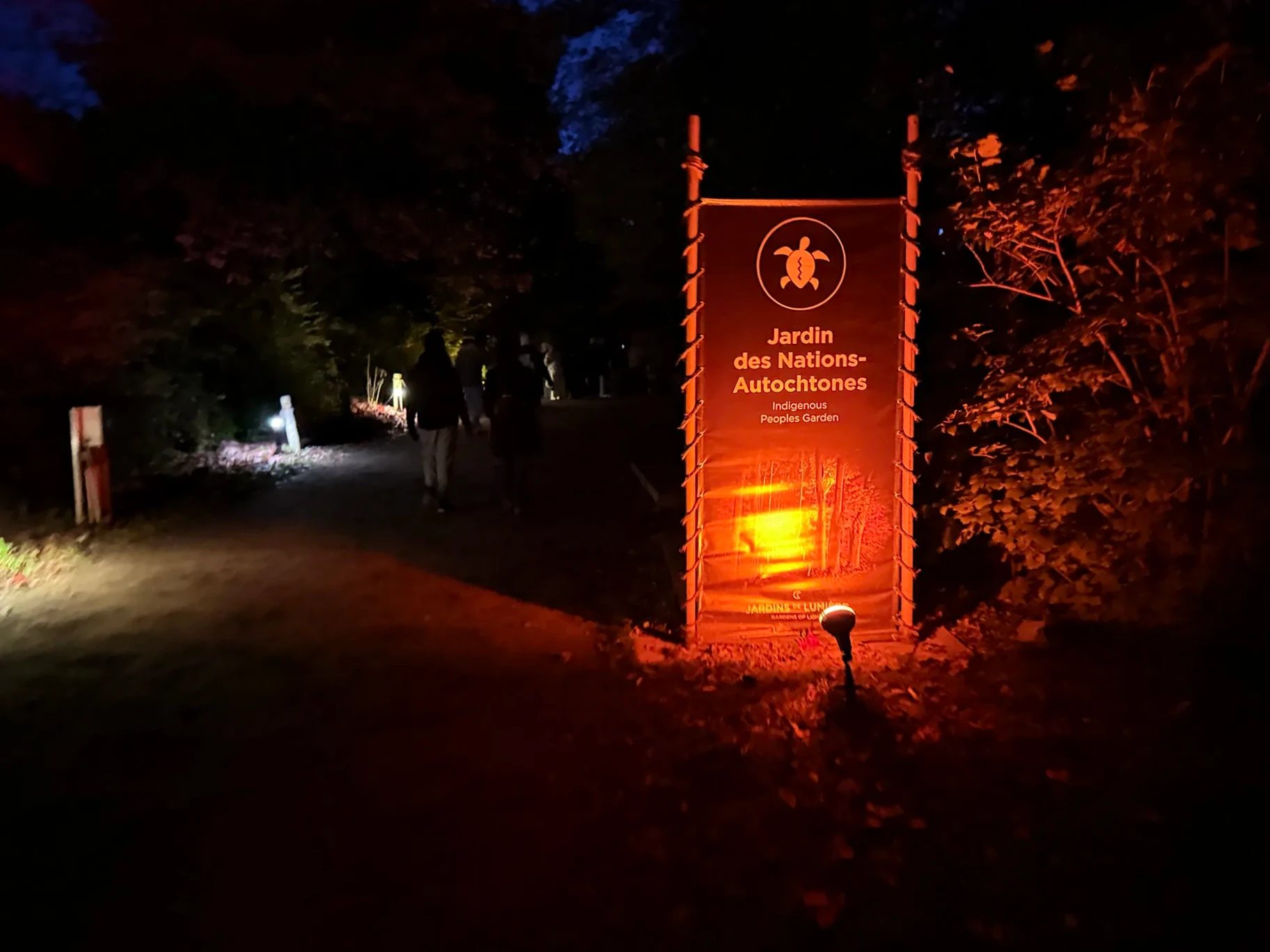
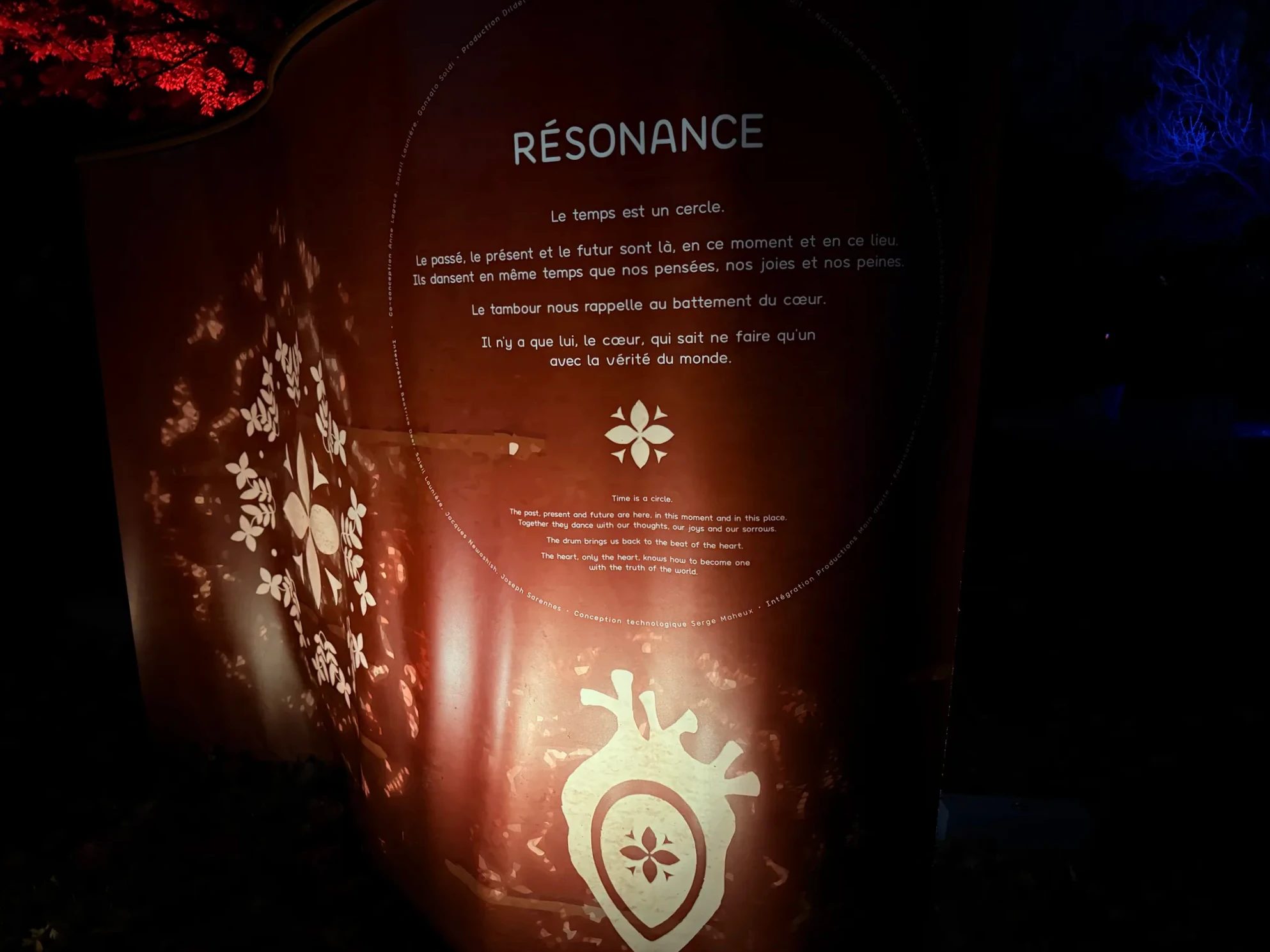
Around 6:45 p.m. we crossed into the First Nations Garden (Jardin des Premières-Nations). The garden turned 25 this year, and for the festival it has been completely redone with a new piece called Résonance (“resonance”). It tells the knowledge, stories and traditions of Indigenous communities in five scenes, with voices and glowing patterns answering each other along the way.
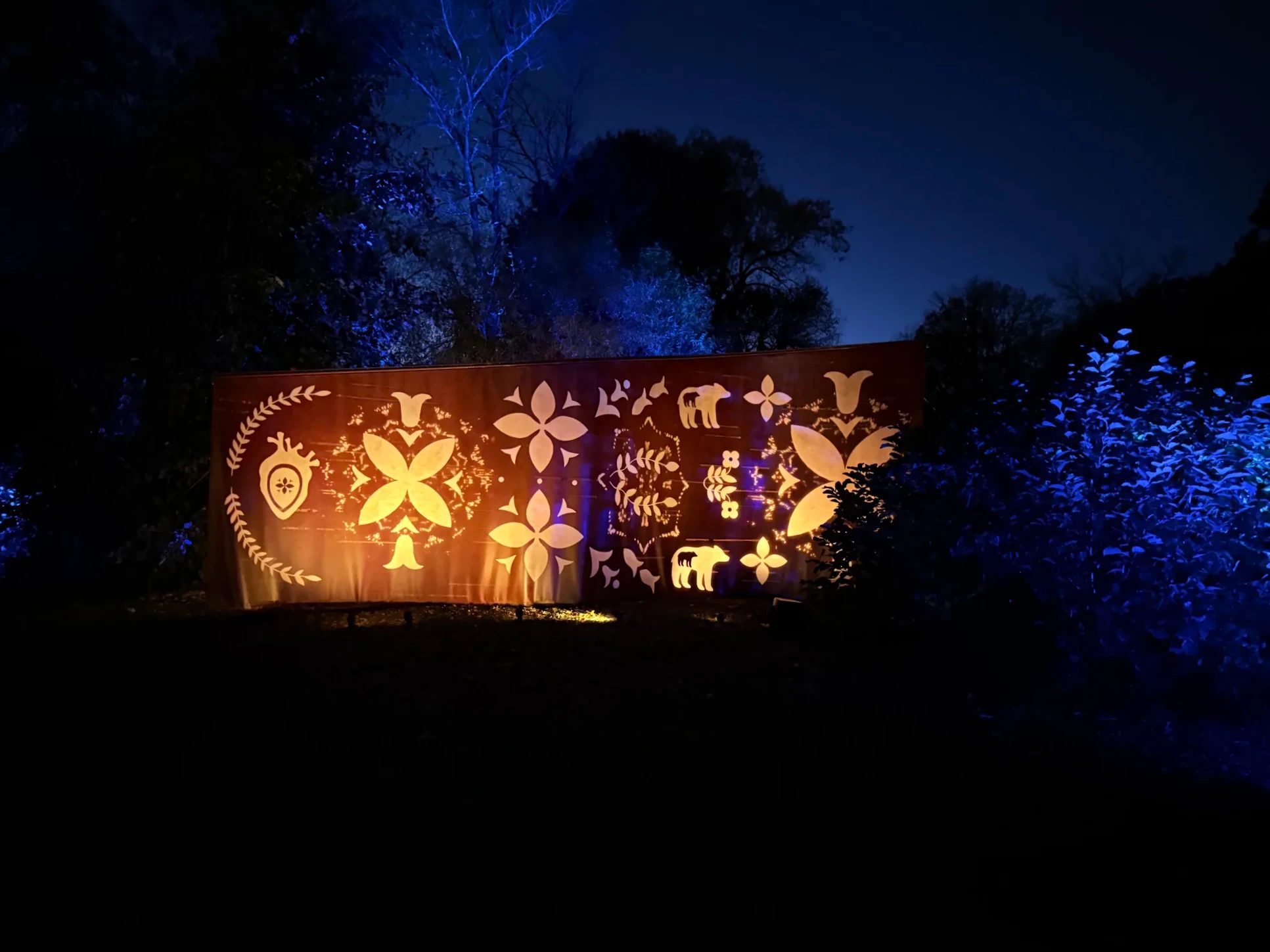
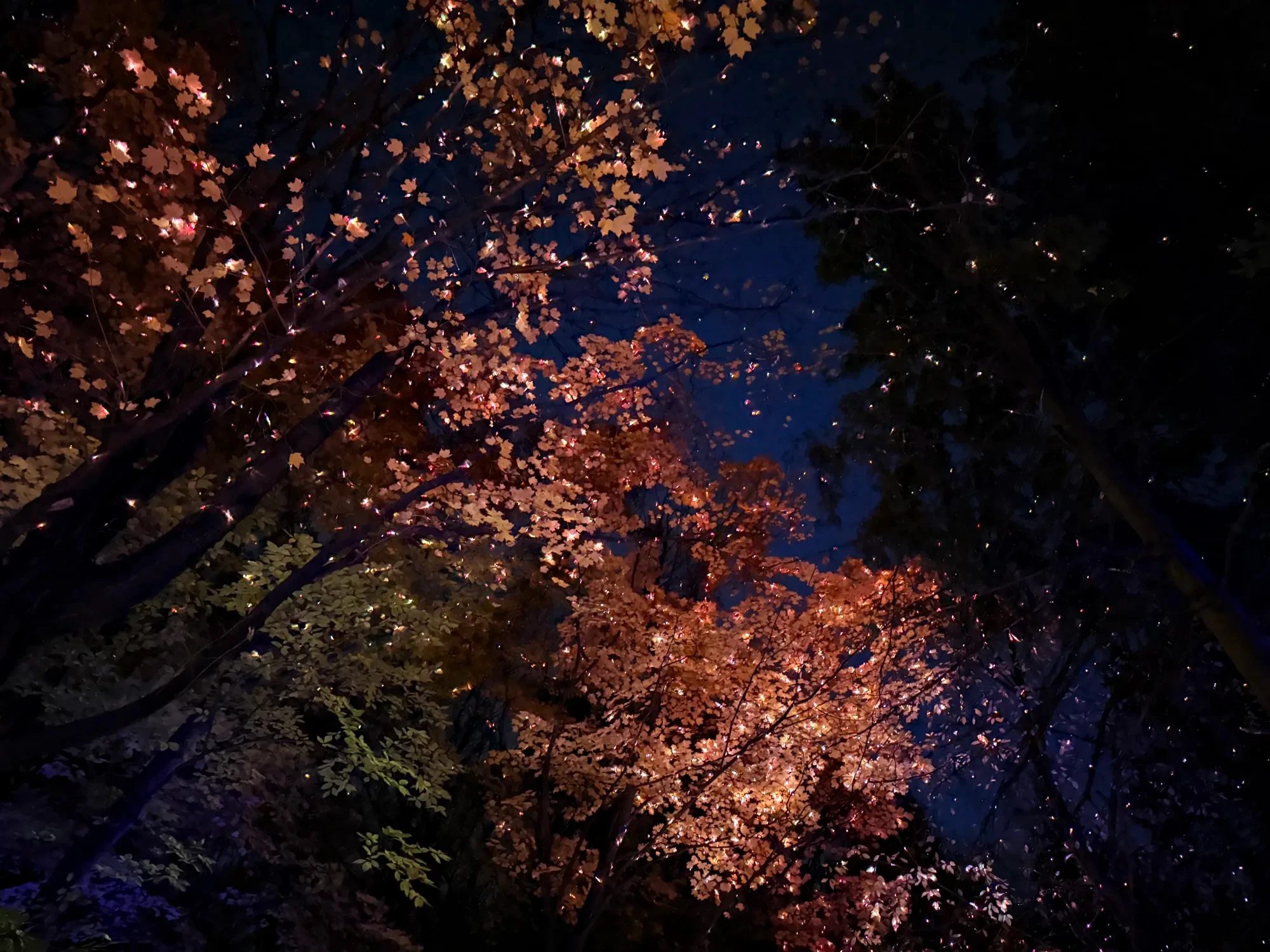
Up, sideways, down: wherever we looked, something had been done well. The most beautiful part, though, was the small lights strung up in the trees. Dots of light hung between the branches, like fireflies rising into the sky.

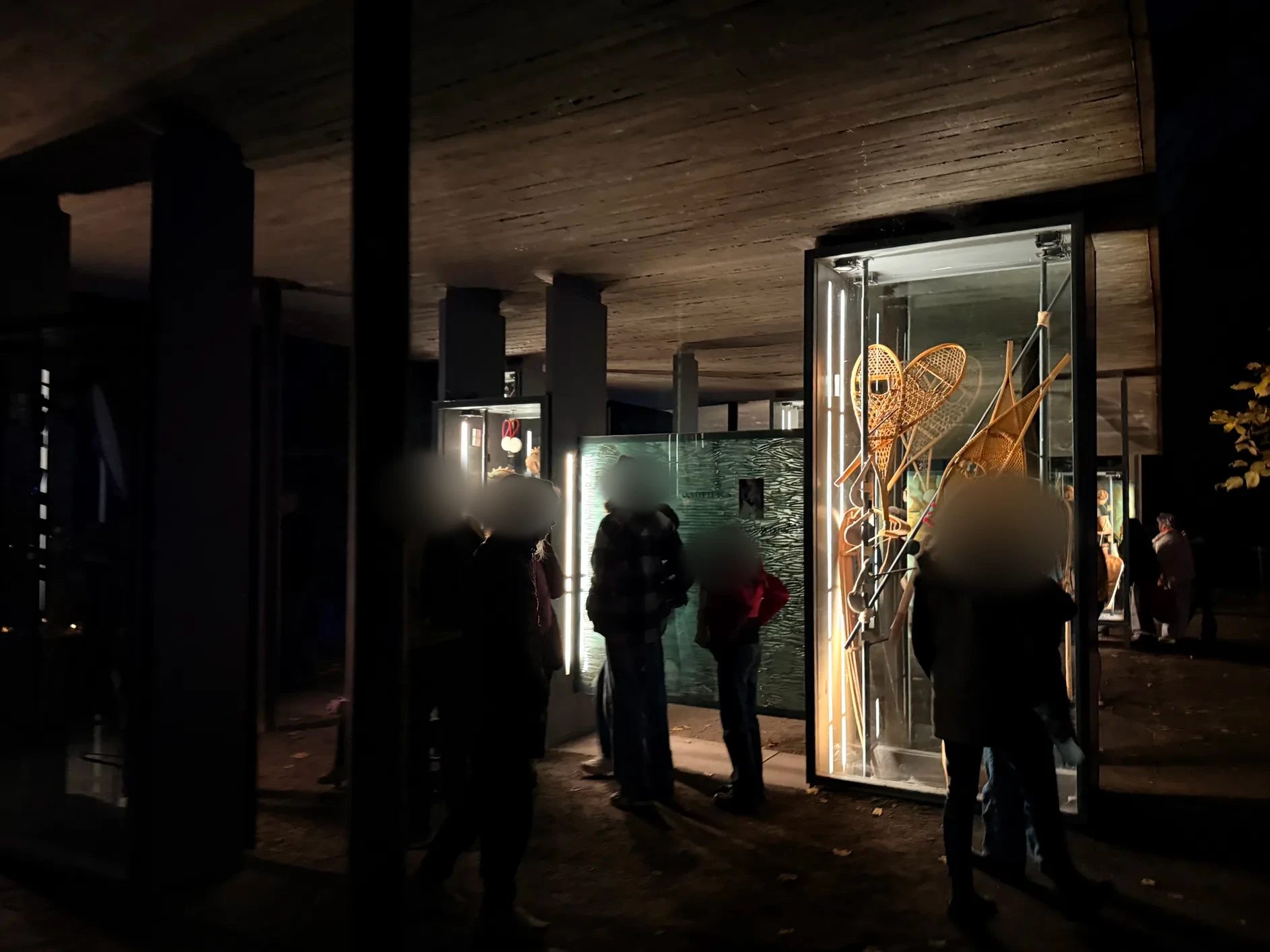
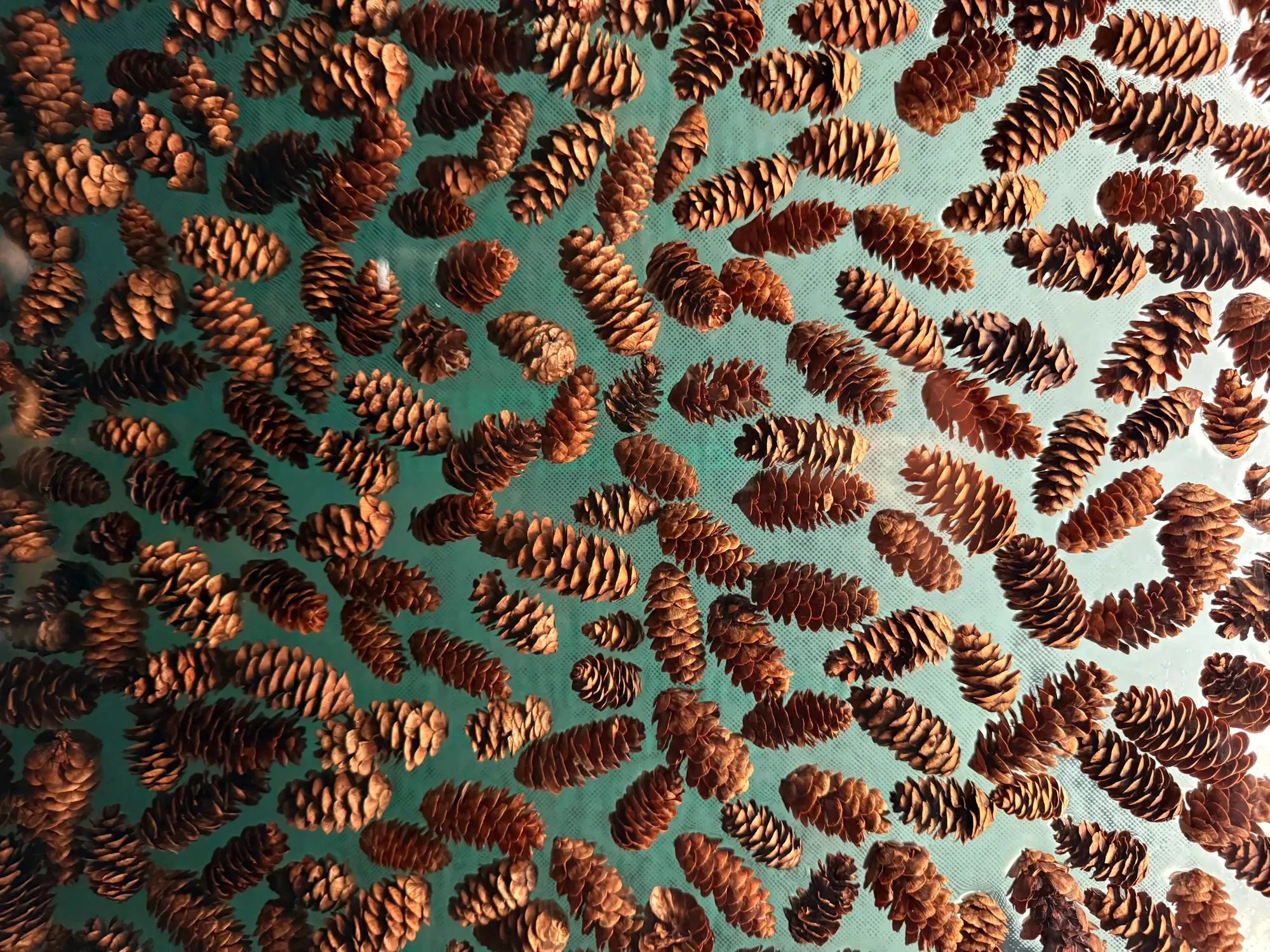
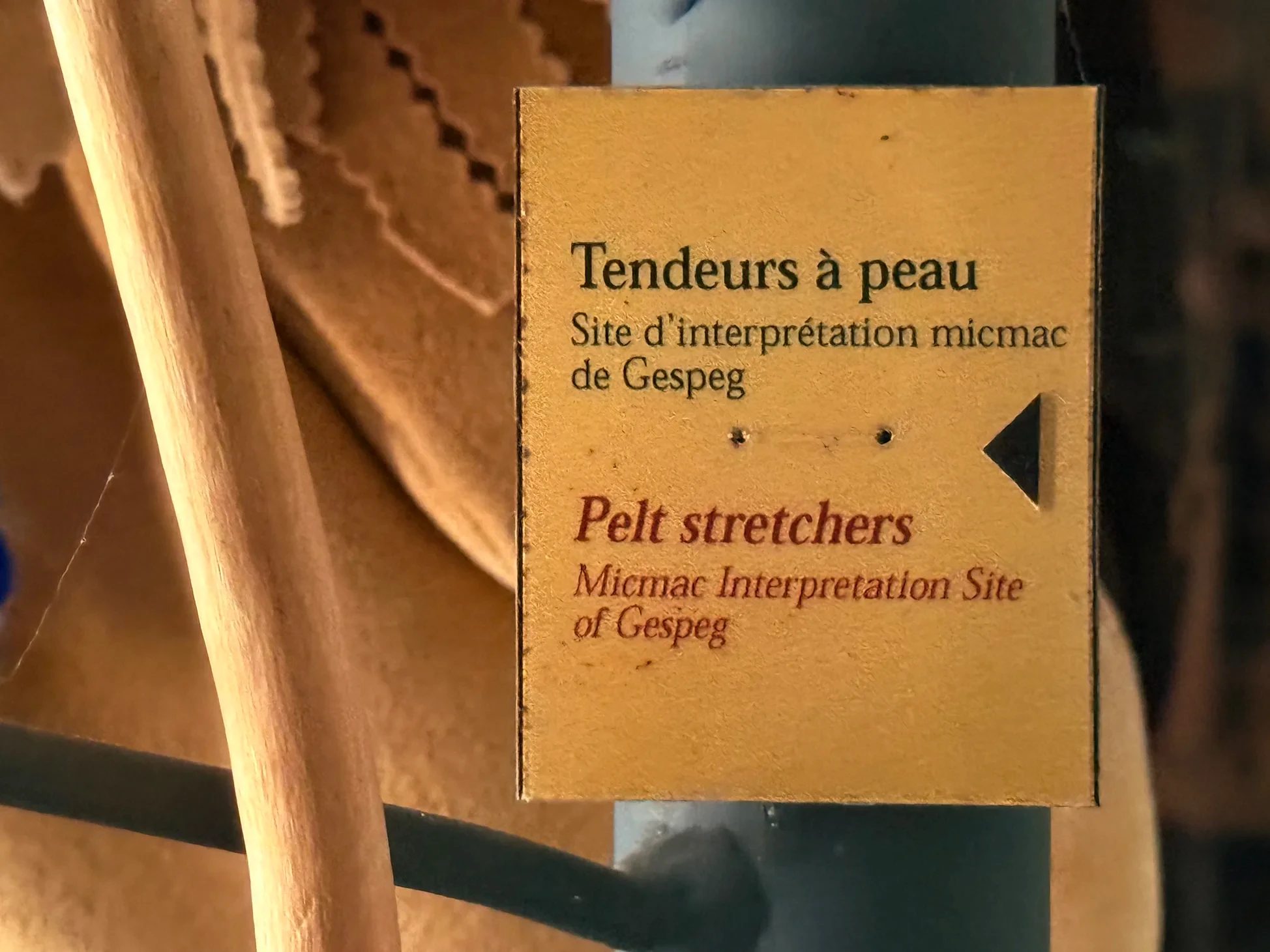
Inside the garden’s pavilion, everyday tools that Indigenous peoples once used are on display, each with a name and a short description. One was a wooden frame for stretching and drying animal hides, labeled Tendeurs à peau (“hide stretchers”). Our kid studied it with real interest. Next to it was a display case with pine cones and tree seeds covering the whole wall.
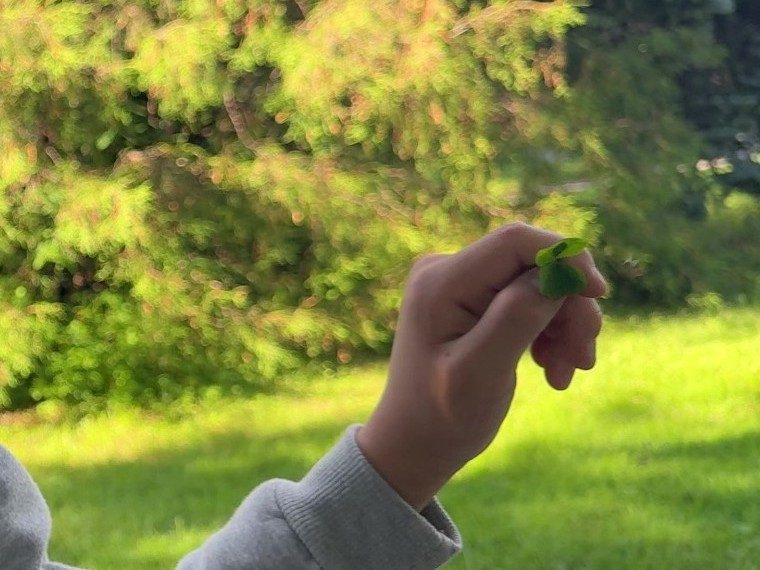
We had been to this garden in summer, too. It was June, when the days are long, so we walked it in full daylight, and I remember it being a little hot. Our kid found a four-leaf clover on the lawn, and my parents were with us that time. Same place, but at night it felt completely different. I hadn’t expected them to dress it up this well.
Chinese Garden lanterns
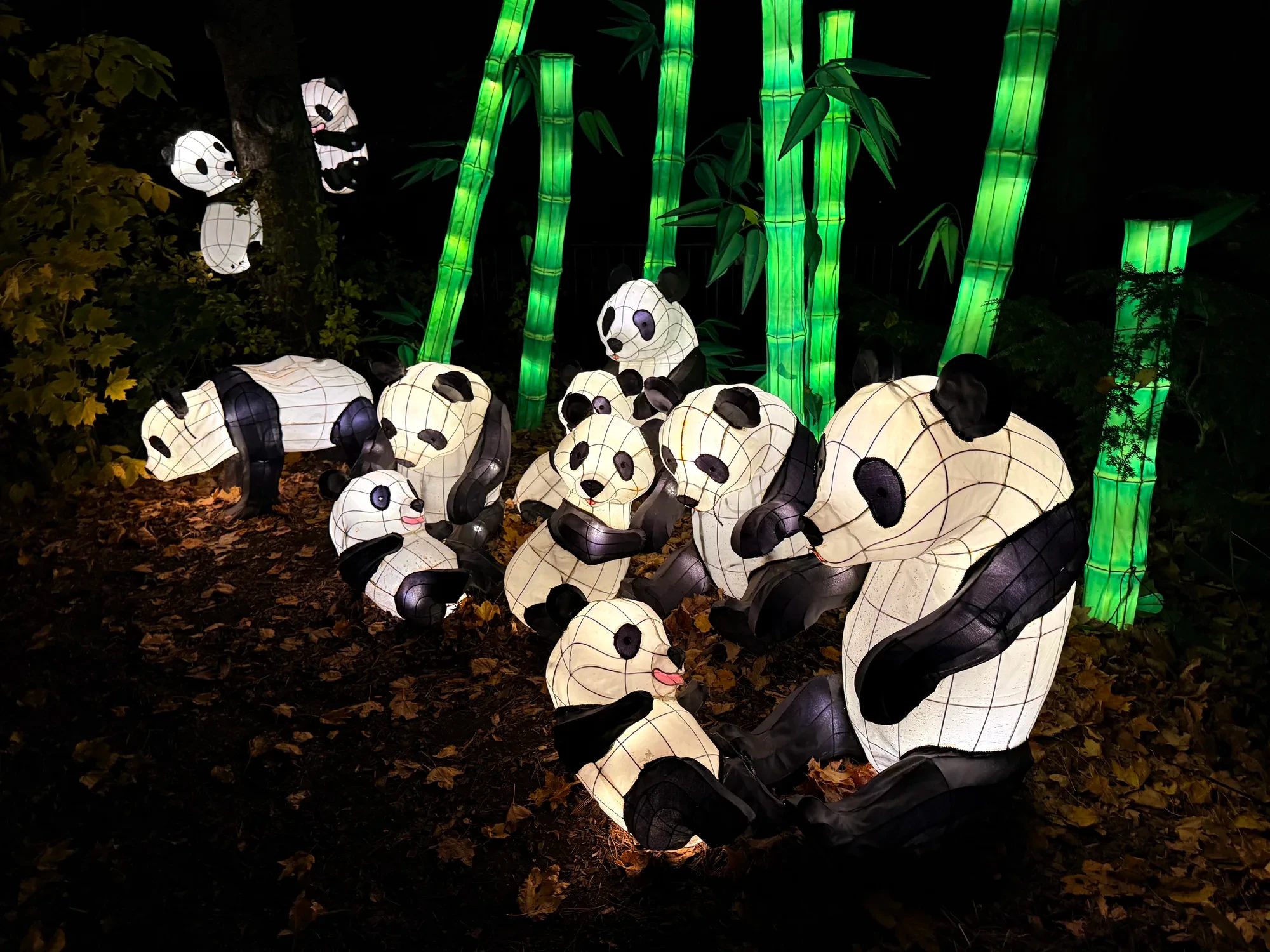
Around 7 p.m. we reached the Chinese Garden (Jardin de Chine), where bamboo-shaped lights lit the path. Below them came a parade of lanterns: a panda, cranes, chickens, a giraffe, butterflies. Our kid has raised chickens before, so the chicken lanterns got an especially happy welcome.
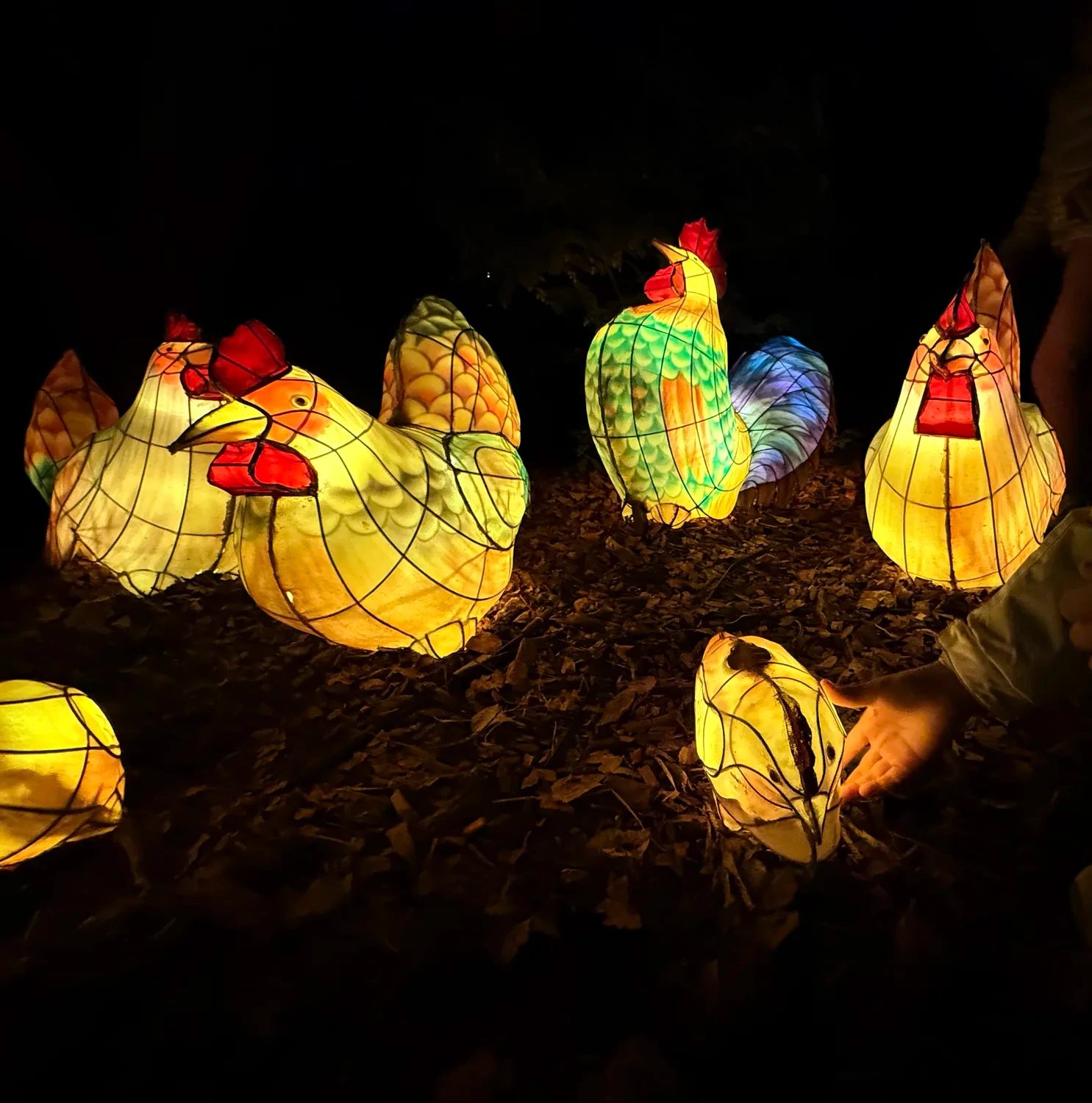
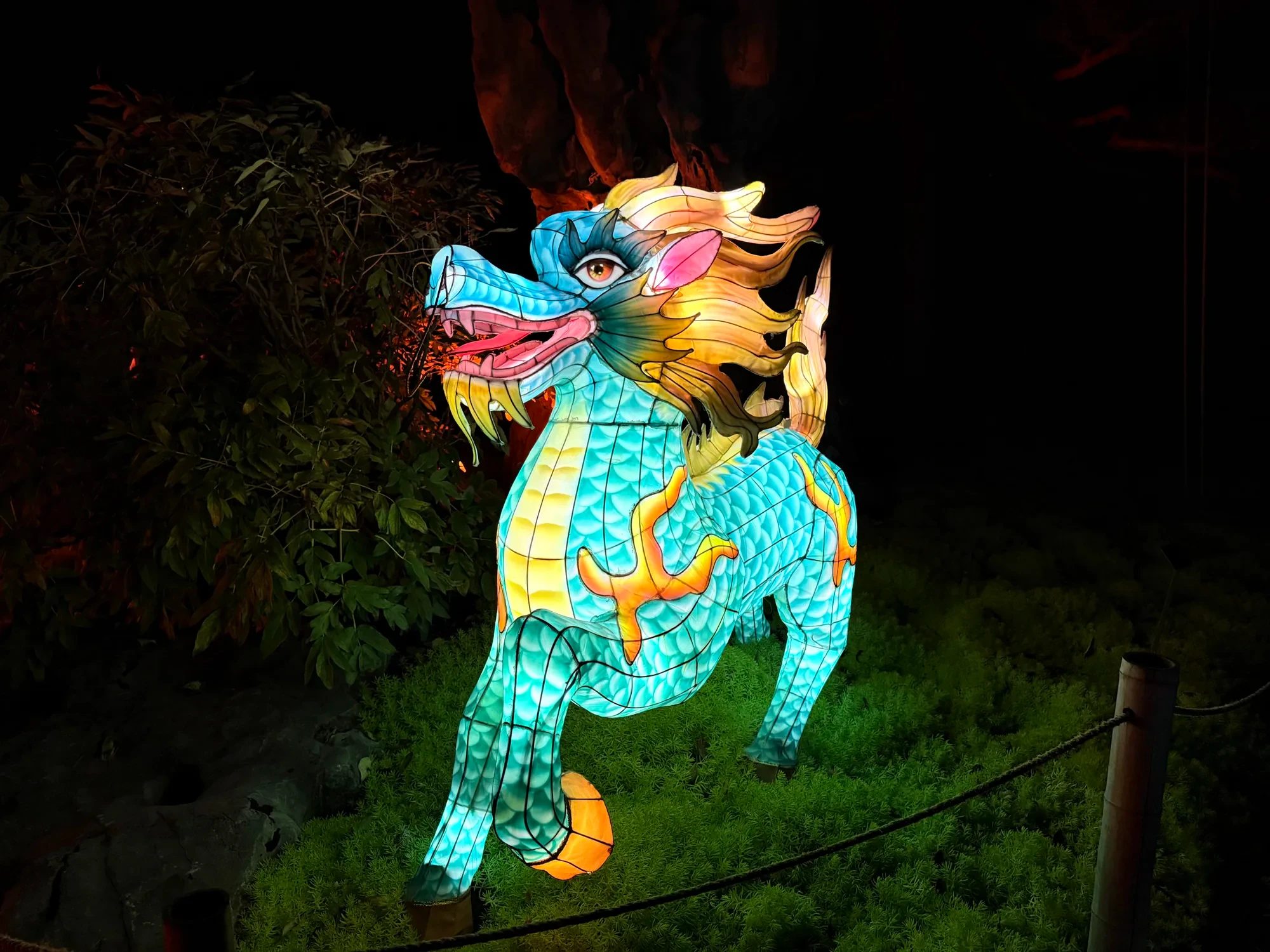
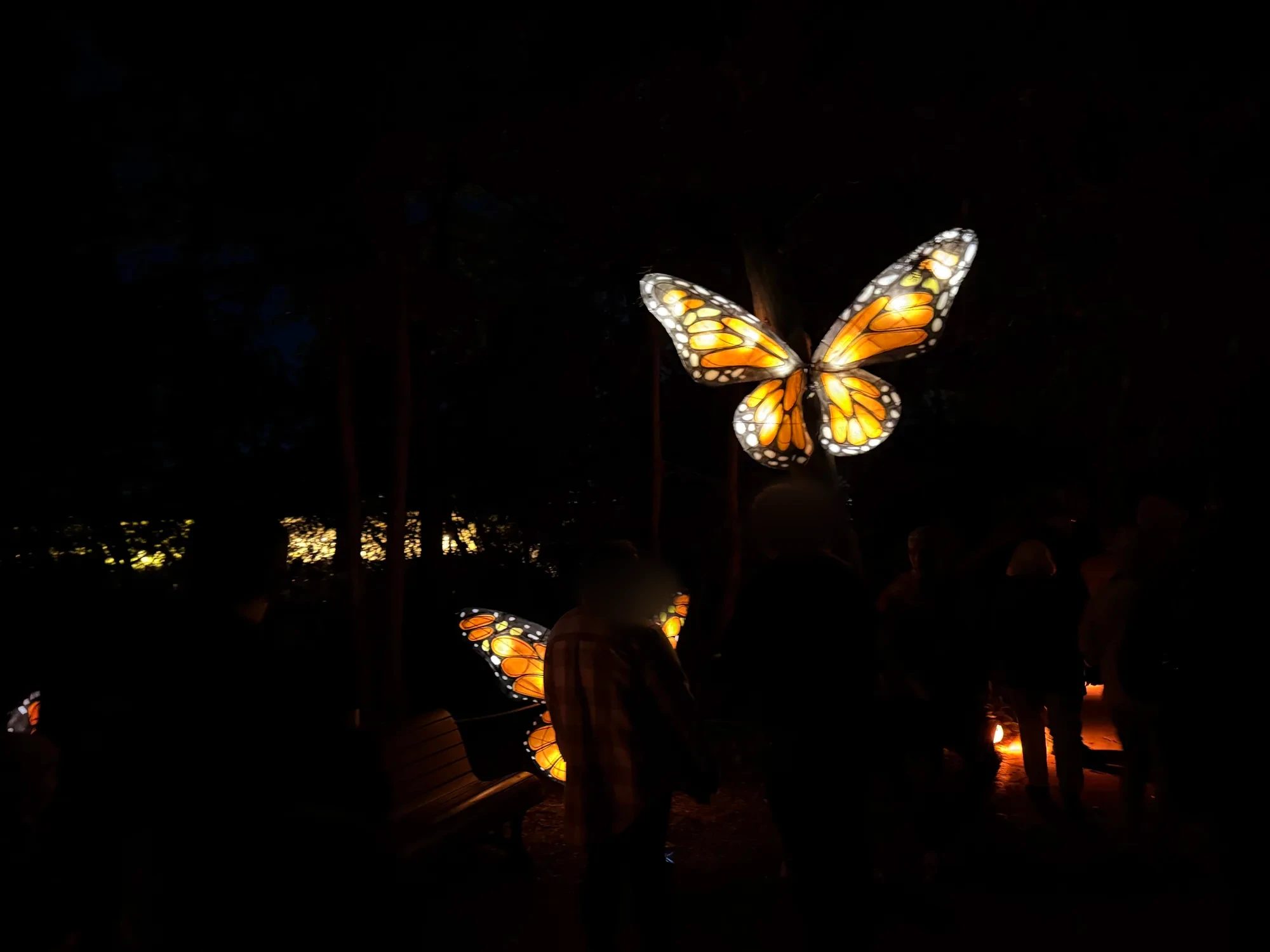
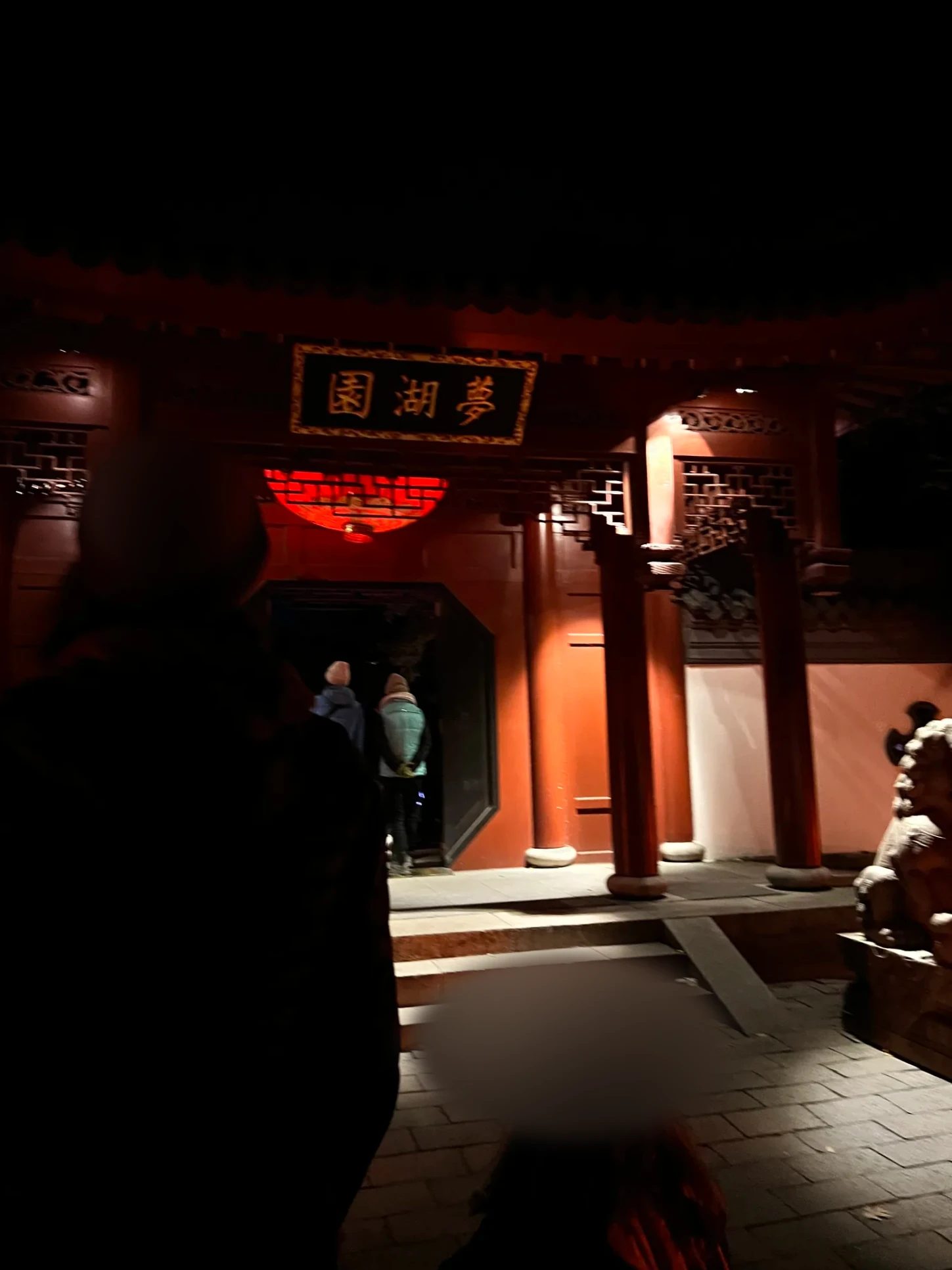
The Chinese Garden was built in 1990 and 1991 by 50 craftsmen from Shanghai. The name over the gate reads 夢湖園, “Dream Lake Garden.” Past the gate, on the way to the pavilion, lanterns hung from every eave.
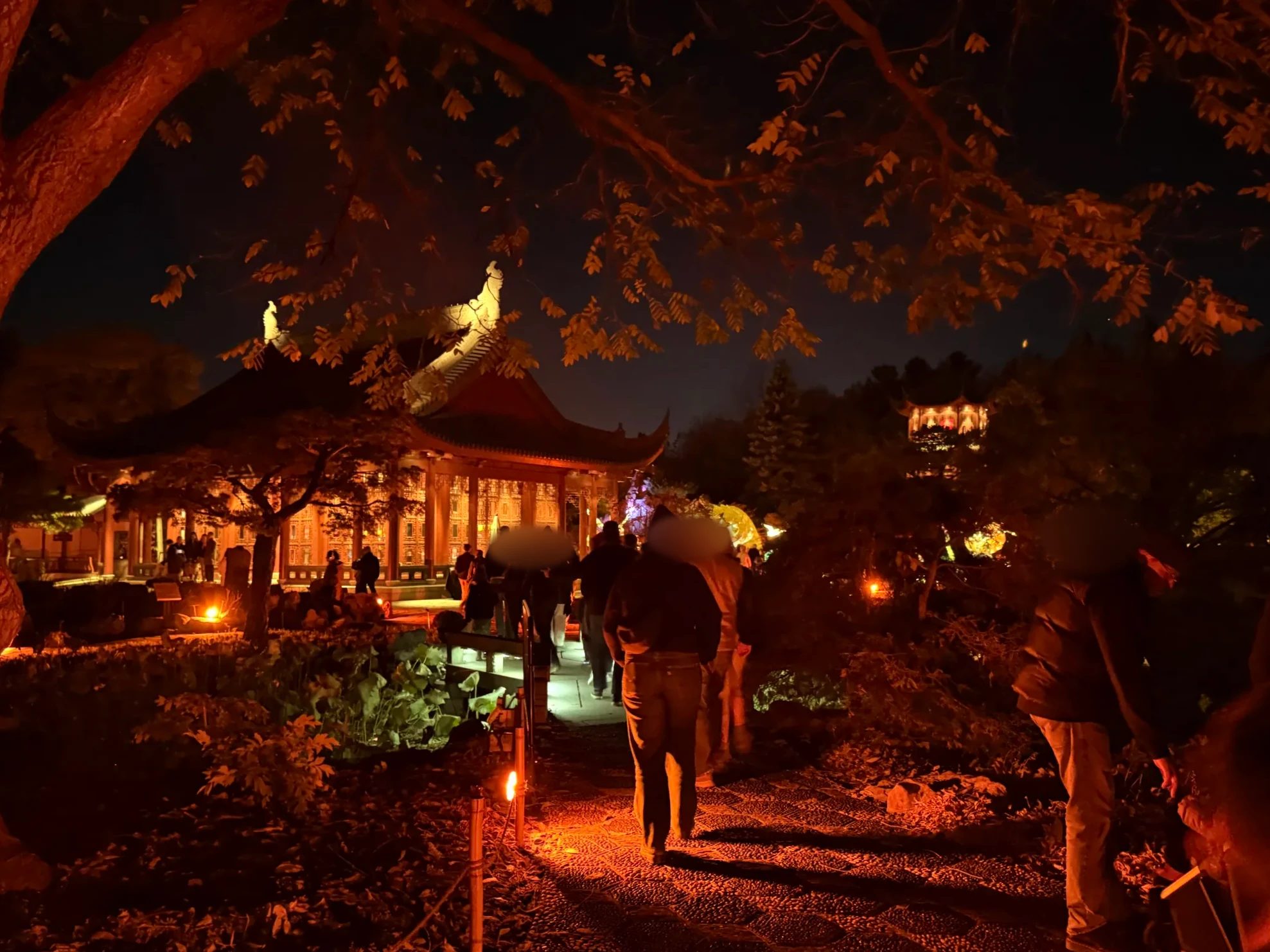
On one of the garden buildings, a video projection showed legendary creatures and landscapes from the Classic of Mountains and Seas (山海經), an ancient Chinese book of mythical geography. A huge fox walked across the wall.
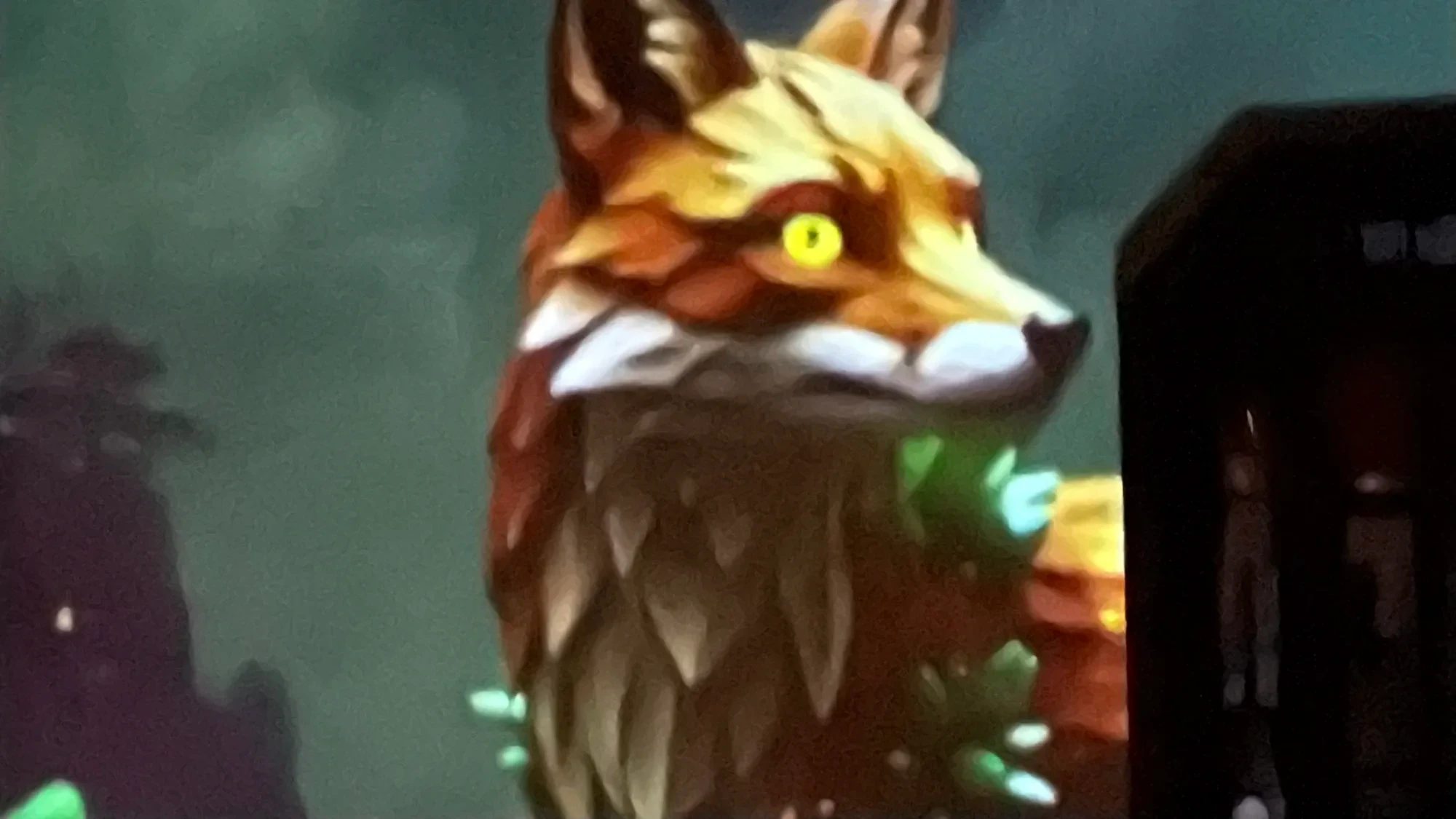
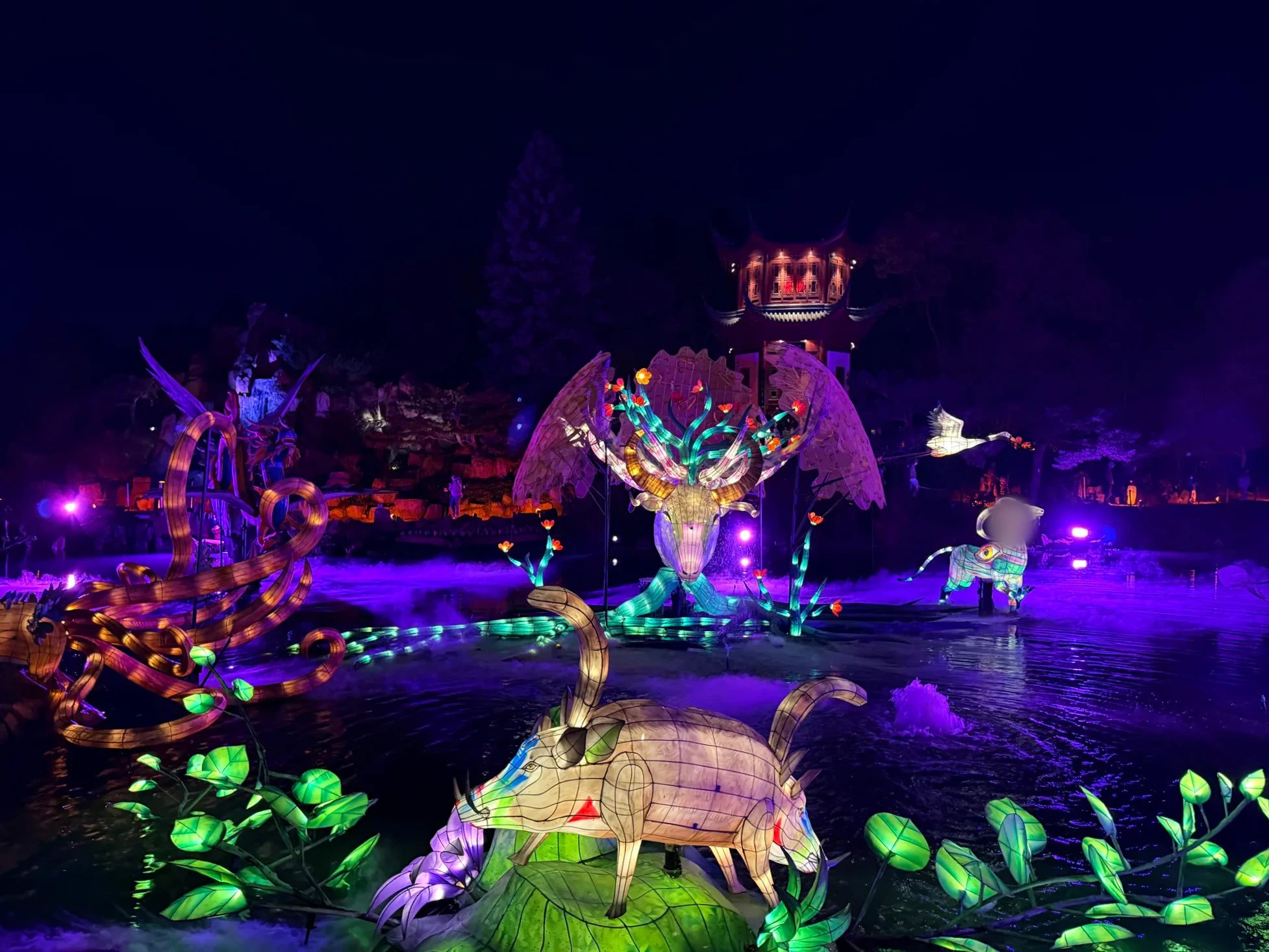
Large lanterns floated on the lake. Their light was mirrored on the surface of Dream Lake, and people had gathered along the shore.
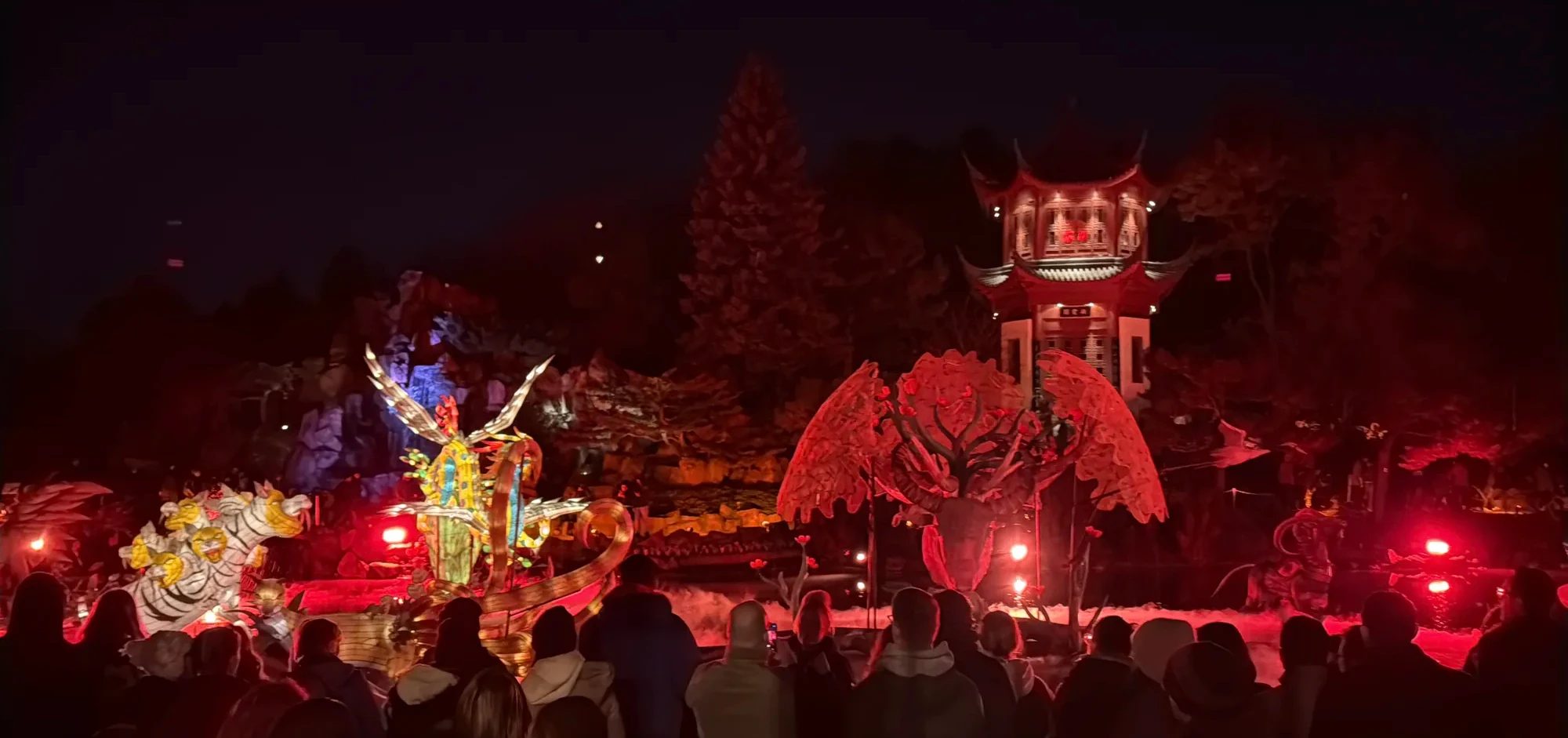
We had stood by this same lake in daylight on June 21. That time we were on the north shore; this time we were on the south shore, about 80 m (260 ft) away, so the views don’t match exactly, but it’s the same lake. By day it was a calm garden, a red pavilion reflected in green water. At night, lanterns and red light filled the lake.
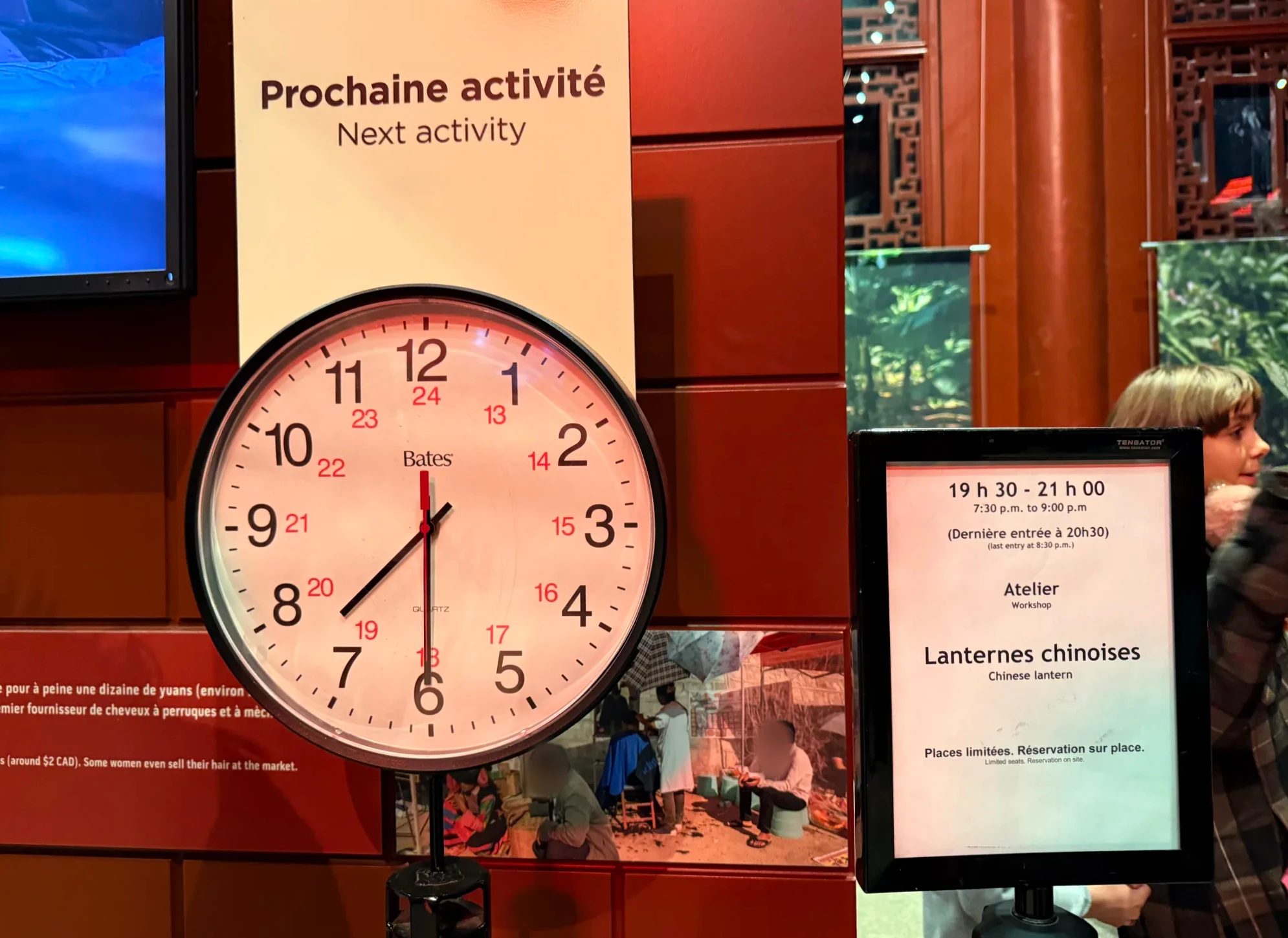
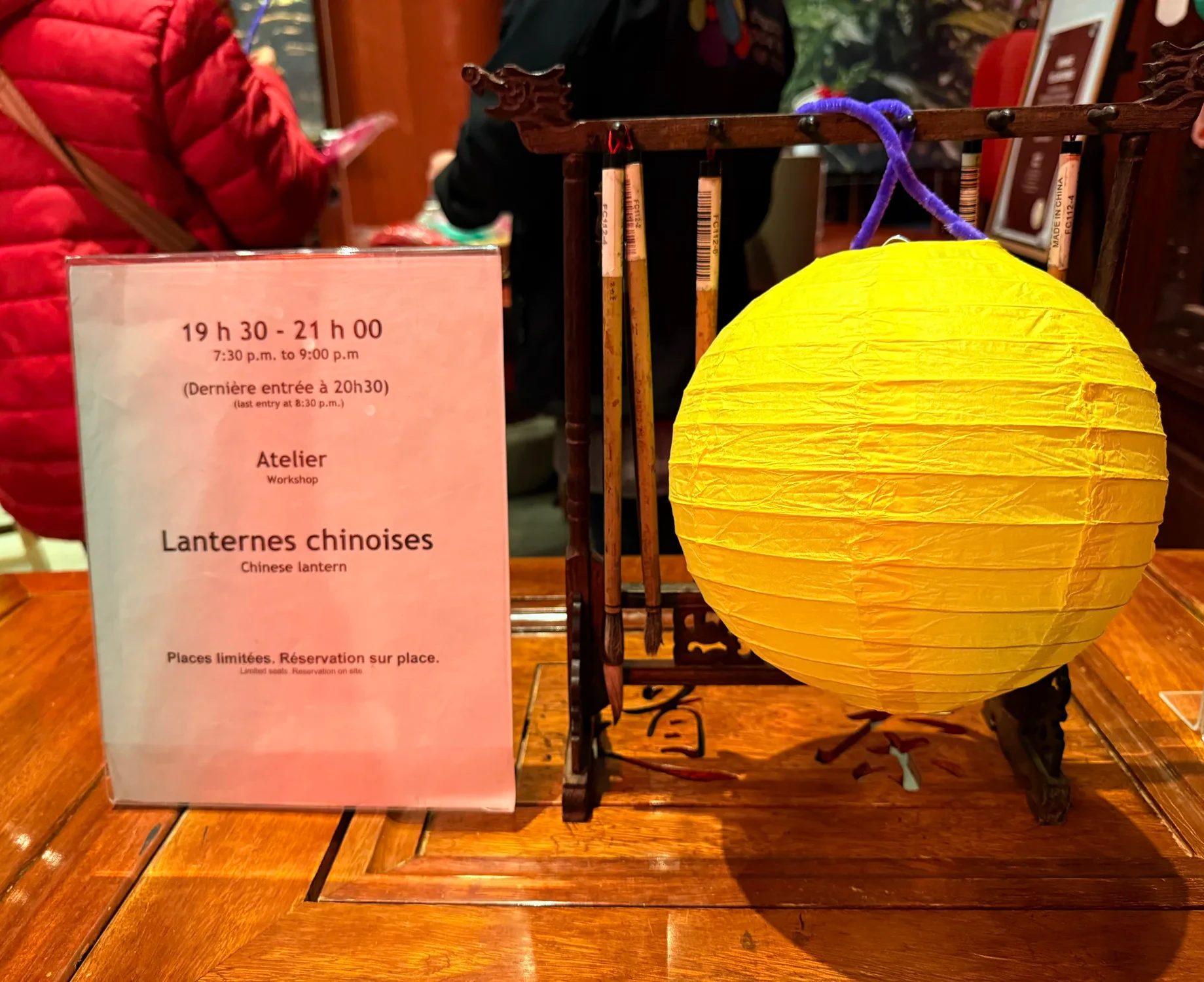
One of the garden buildings hosts a lantern-making workshop (Atelier Lanternes chinoises). It runs from 7:30 to 9 p.m. (last entry 8:30 p.m.), and with only a few seats, you have to pick up a reservation ticket on site. When we got there, the 7:30 slot was full and only 8:30 was left. We weren’t planning to stay that late, so we just looked around this time. If you want to make a lantern yourself, get your reservation ticket as soon as you enter the Chinese Garden.
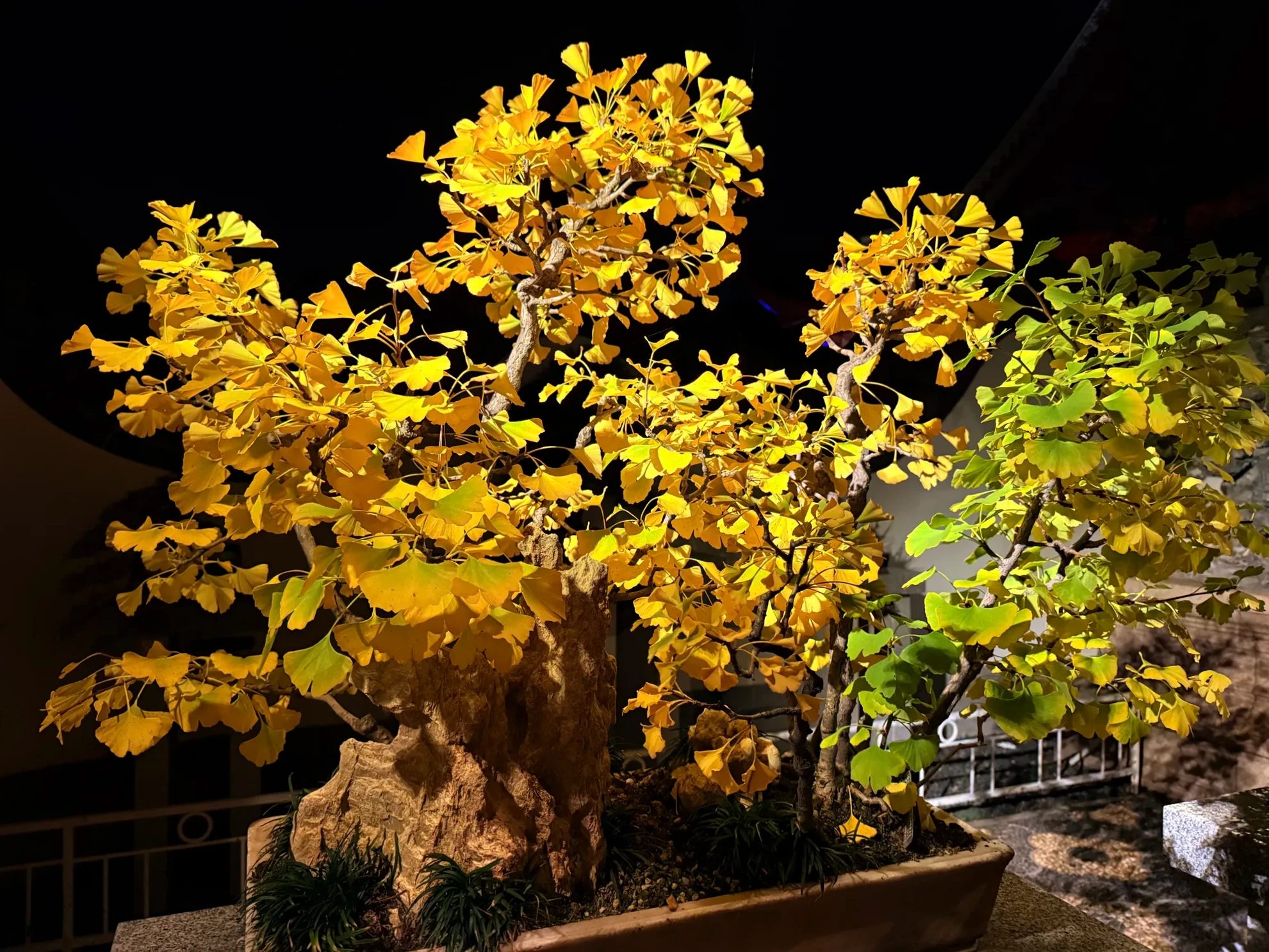
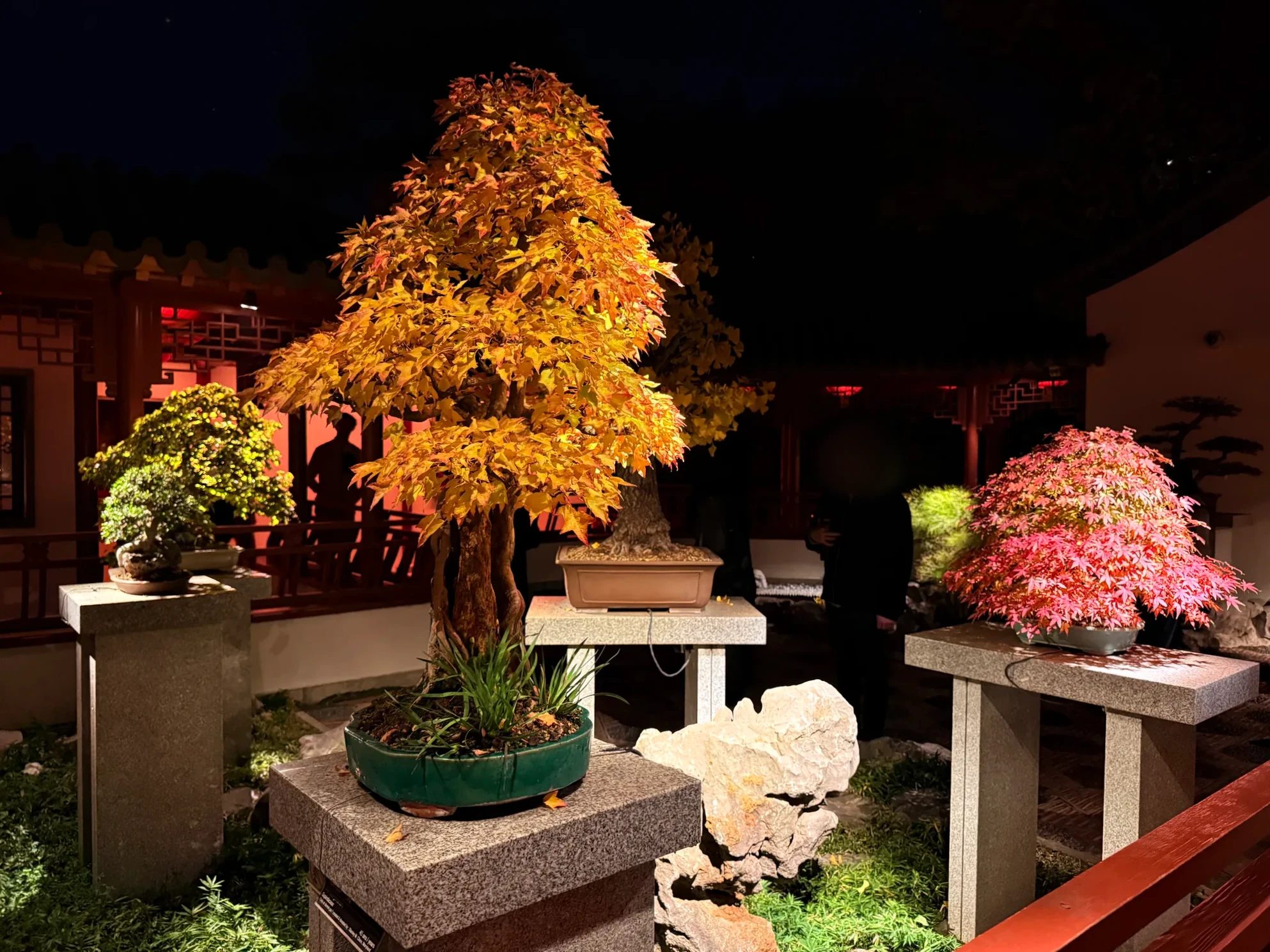
Along one side of the garden stood a row of bonsai (in China the art is called penjing, 盆景). We have a bonsai tree at home, and our kid said the one that left the biggest impression that night was a ginkgo bonsai turned yellow.
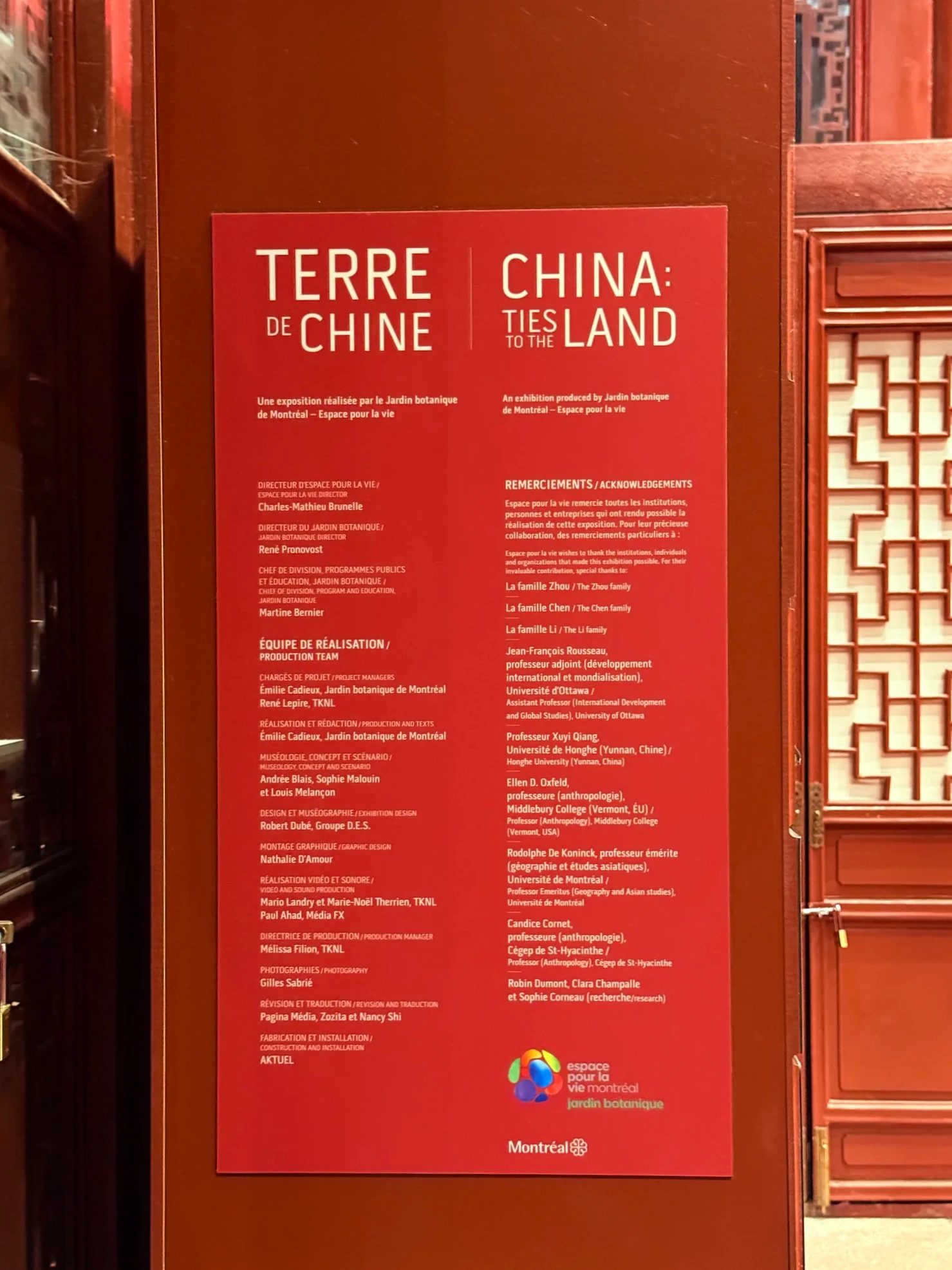
Inside the garden building there was also an exhibition, Terre de Chine (“Land of China”), about China’s nature and people.
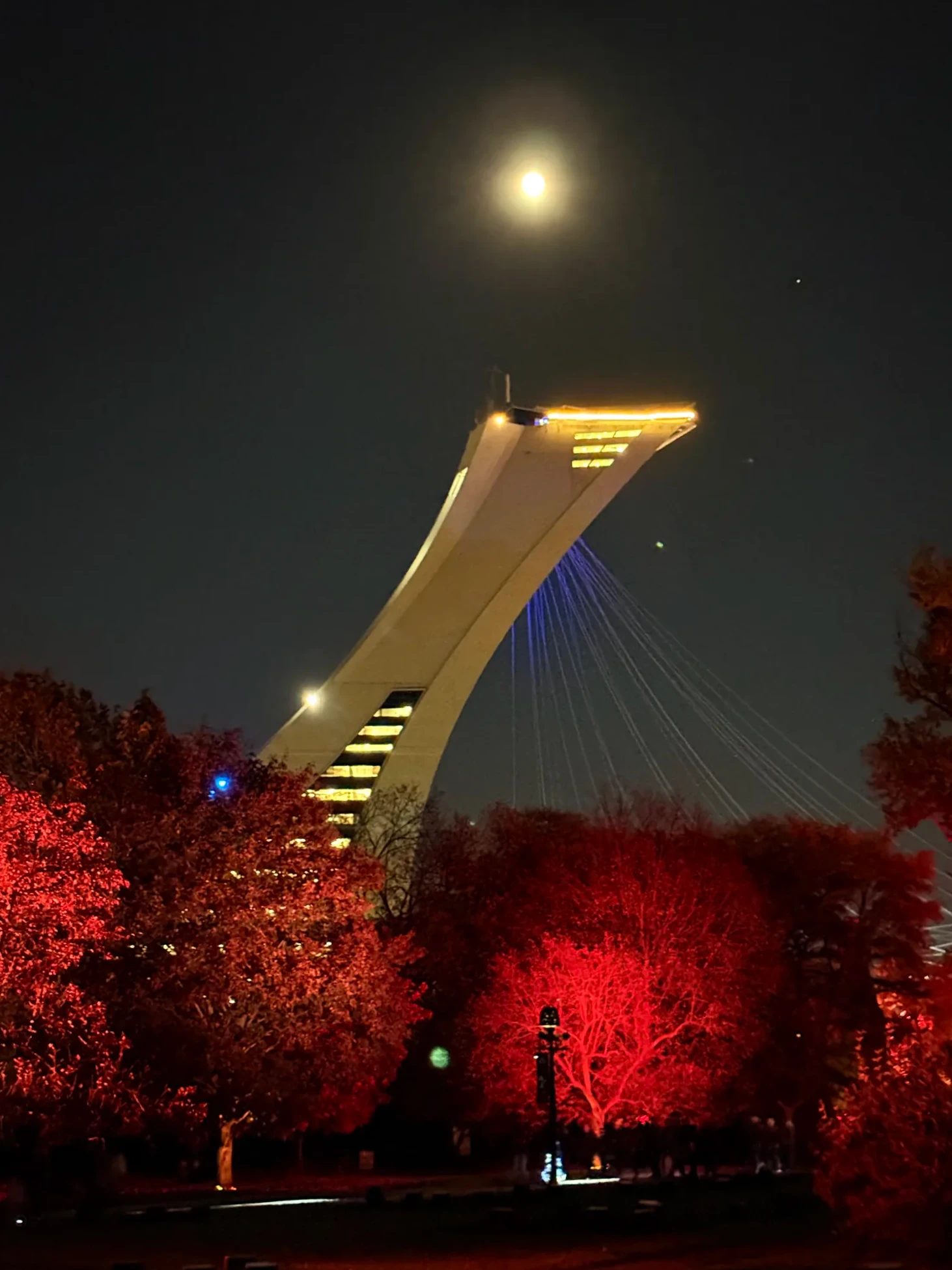
Red trees and the moon under the leaning tower
After the lanterns we walked toward the exit. Under the Olympic Stadium’s leaning tower stood a tree lit red. Above it hung a nearly full moon and a few stars, and that was a lovely sight too. The tower is called the Montreal Tower (Tour de Montréal). At 165 m (541 ft) tall and tilted at 45 degrees, it is counted as the tallest inclined tower in the world.
Helicopter tour
Montreal from the air
We came out around 7:45 p.m., and plenty of people were still on their way in. The weekend, probably. By the end we had walked about 5,000 steps, close to 4 km (2.5 mi). Good exercise.
Camillien-Houde Lookout on Mount Royal
On the way home we drove over Mount Royal (Mont-Royal). In the grass beside the road, two raccoons were ambling past. When we came in the summer, the lookout had been full of raccoons, so our kid wanted to stop, and since it was on our way, we pulled in at the Camillien-Houde Lookout (Belvédère Camillien-Houde). It was about 8:30 p.m.
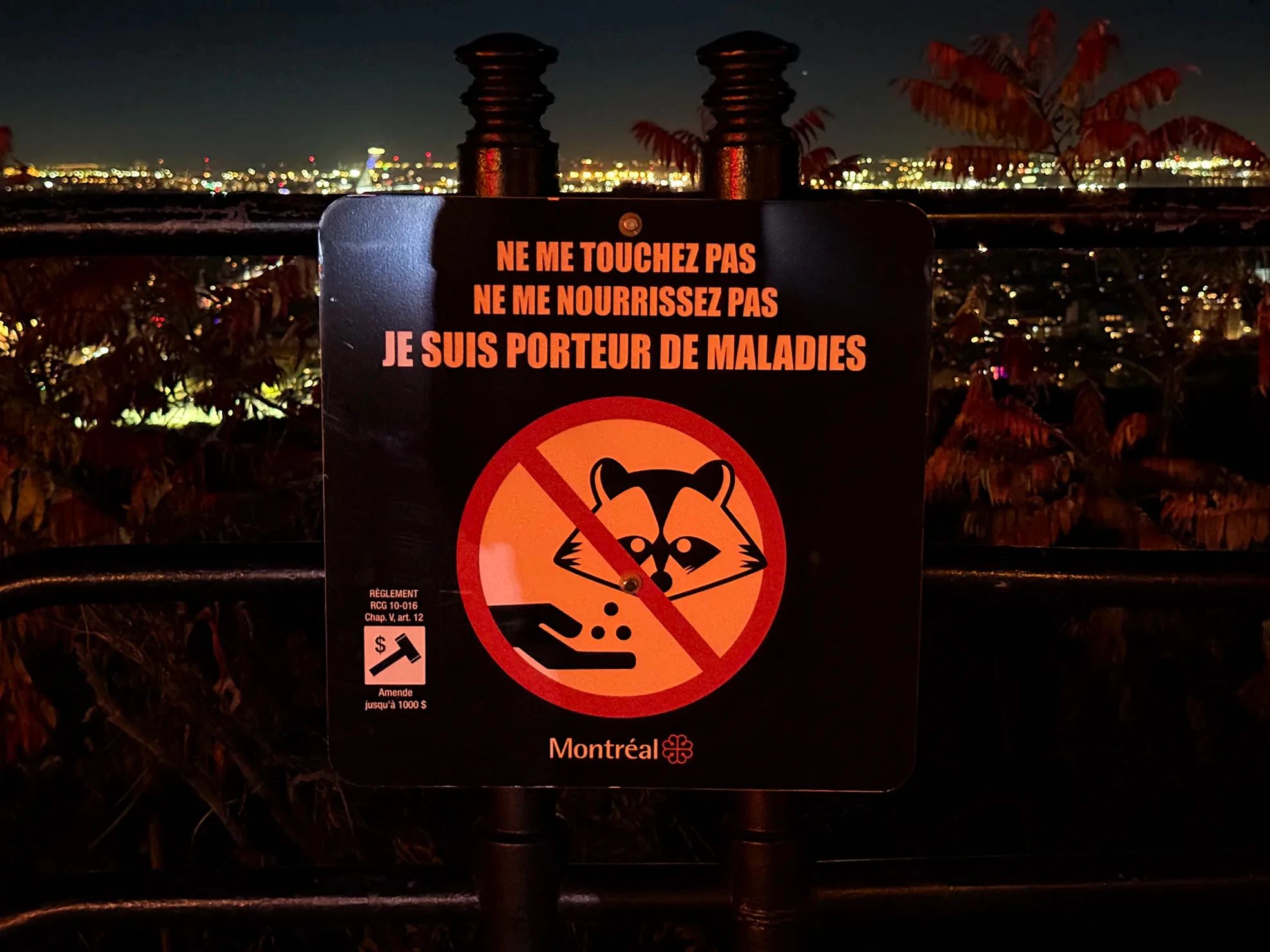
The lookout is named after the same mayor who founded the Botanical Garden, Camillien Houde. That night there were no raccoons at the lookout. A raccoon sign on the railing reads: “Don’t touch me, don’t feed me, I carry diseases.” Underneath, it says the fine under the park bylaw (RCG 10-016) is up to C$1,000. The City of Montreal also says feeding wild animals carries a fine of at least C$300.
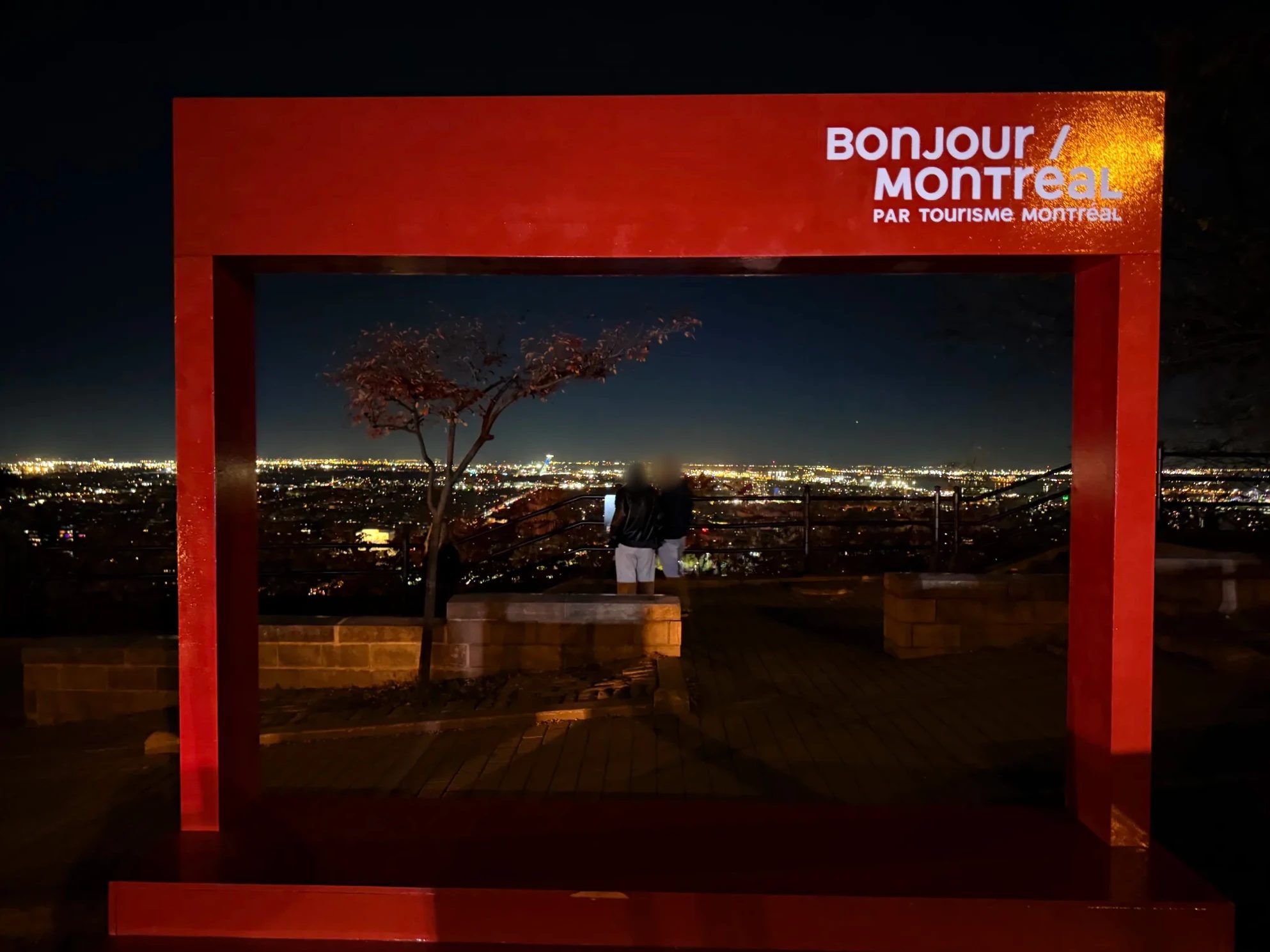
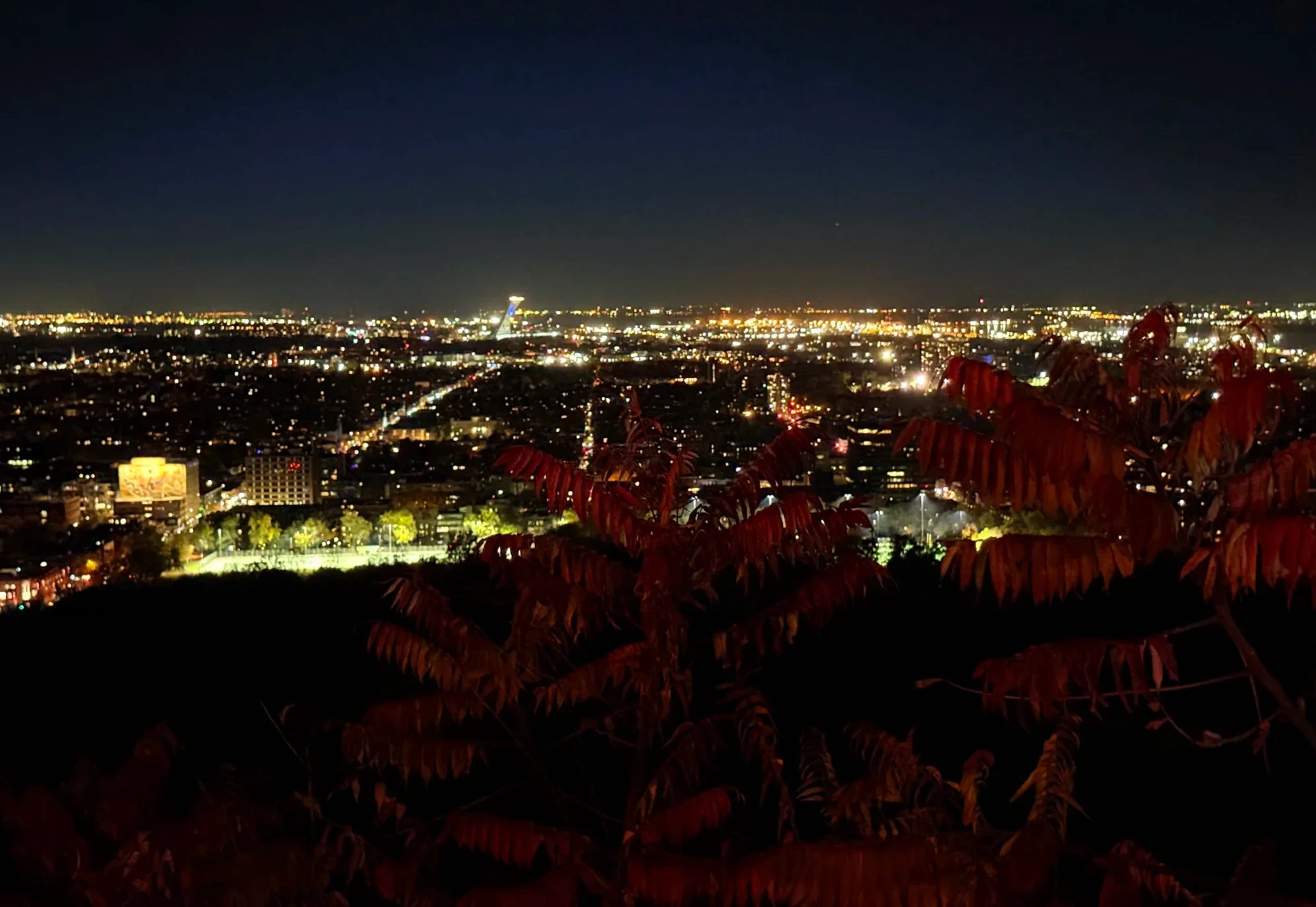
We looked out over the east side of Montreal at night through the “Bonjour Montréal” frame, then headed home.
Good to know
Gardens of Light hours (2026)
- Sept. 3–177:30–9 p.m.
- Sept. 18–Oct. 37–9 p.m.
- Oct. 4–206:30–9 p.m.
- Oct. 21–Nov. 16–9 p.m.
- Lantern workshopIn the Chinese Garden, 7:30–9 p.m., last entry 8:30 p.m.Spots are limited; you sign up on site.
Fees (posted at the garden, as of October 24, 2026)
- RegularAdult C$25.5065 and over C$23.00Student C$19.00Ages 5–17 C$13.50Family (2 adults, up to 3 kids) C$68.00
- Greater Montreal residentsAdult C$18.50Family C$51.50ID showing your address required.
- Space for Life PassportIndividual C$87.00Multi (2 adults, up to 3 kids) C$155.00Entry to all five sites for a year.
- FreeAges 4 and under
Tickets and entry
- Timed ticketsThe official line is to book a timed ticket in advance. That applies to Passport holders and to kids 0–4 as well.When we tried to book late that afternoon, only the next day onward was open. We showed our annual Passport, staff checked our ID at the gate, and they let us in. On earlier visits, too, the Passport usually got us in without a booking. That’s not guaranteed, though, so if booking is open, it’s safer to do it.
- Other museumsWe used the same Passport elsewhere. The Insectarium and Planetarium ask you to book ahead. The Planetarium took same-day bookings, but seats are few, so book. At the Biodôme we just showed the Passport and walked in.
- Le LabyrintheOct. 1–31, Sun.–Thu. 9 a.m.–5 p.m., Fri.–Sat. 9 a.m.–9 p.m.A Halloween maze with the UV cabin. Come on a Friday or Saturday and you can see it along with Gardens of Light.
- Daytime entry includedYour ticket also covers the garden during the day. The outdoor gardens are cleared at 6 p.m., and you come back in through the main gate at the time on your ticket. The greenhouses stay open until 9 p.m.
- IDStaff checked ID at the gate when we entered with the Passport.
- Finding your wayInside, just follow the Suite du parcours signs and you’ll walk the Japanese, First Nations and Chinese gardens in that order.
- ParkingWe parked on a nearby street after checking the posted hours. We used the garden’s own lot once before, and it was on the pricey side.The Olympic Park lot next door charges C$6 per 15 minutes on non-event days, up to C$27 a day. On game or show days it goes up to C$30–60, cards only.
- What to wearLate October evenings drop below 10°C (50°F), with wind. A light puffer jacket was enough.
- FoodThe snack stand in the Japanese Garden took cash only.
- Walking distanceFrom the entrance through all three gardens and back out is close to 4 km (2.5 mi).
FAQ
Do I need to book if I have an annual Passport?
Officially, yes. Passport holders are asked to get a timed ticket too. When we tried late that afternoon, booking was only open from the next day, but we got in by showing the Passport and ID. If booking is open, doing it ahead saves you the worry.
Where do I park?
There’s the garden’s lot and the Olympic Park lot right next door, but both are on the pricey side. The Olympic Park lot tops out at C$27 a day. We parked on a nearby street after checking the posted hours. You can also walk from Pie-IX station on the green line.
What should I wear?
In late October, a light puffer jacket. The high the day we went was 13.6°C (56.5°F), but it fell to a little over 9°C (48°F) while we walked, and it was windy. You’re outside for more than two hours, so bring one more layer than the daytime temperature suggests.
What time should I go?
To see both the fall colors and the lights, arrive a little before sunset. In late October the sun sets before 6 p.m. and the festival starts at 6 p.m., so you can go straight from leaves in the last light to gardens turning dark.
How long does it take?
From the entrance, along the main path and through the three gardens back out, took us about two hours. Allow roughly another hour for the lantern workshop.
Is it good for kids?
Yes. Le Labyrinthe and the UV cabin near the entrance, the floor that plays music as you walk, the animal lanterns: there’s something for kids the whole way. The paths are dark and it’s a fair amount of walking, though, so wear comfortable shoes.
Final thoughts
We had walked this garden in summer daylight. This time we walked it from sunset into the night. Leaves under red light, patterns of light moving over the pond-side trees, starlight in the branches, lanterns on the lake: the same garden looked like a completely different place. They really know how to use light here, and I’d happily come back just for the lighting.
Day tours
Staying a few days in Montreal
The Botanical Garden and Olympic Park are an easy ride from downtown on the metro’s green line, so staying downtown works fine.
Where to stay
Downtown Montreal hotels
Location and getting there
The Botanical Garden sits just north of Olympic Park, within walking distance of Pie-IX station on the metro’s green line. If you drive, the cheapest option is a nearby street spot, after checking the posted hours. The Camillien-Houde Lookout is on the east slope of Mount Royal, an easy stop as you drive up the mountain road. We reached it about 40 minutes after leaving the garden exit.
- Montreal Botanical Garden4101 Rue Sherbrooke Est, Montréal
- Camillien-Houde LookoutVoie Camillien-Houde, Montréal
What we needed for this outing
Tickets
- Space for Life PassportWe used the family annual Passport we bought last summer. The official instructions say to book a timed ticket. When we tried late that afternoon, booking was open only from the next day, so we got in with the Passport and ID.
- Single ticketsNo Passport? Buy a Botanical Garden ticket on its own. It covers Gardens of Light and the garden by day.On the garden’s price board: adults C$25.50, 65 and over C$23.00, students C$19.00, ages 5–17 C$13.50, family (2 adults, up to 3 kids) C$68.00, and free for ages 4 and under.Greater Montreal residents pay C$18.50 for an adult or C$51.50 for a family, with ID showing their address. Book a timed ticket on the official Space for Life website.
What to bring
- IDStaff checked it at the gate when we entered with the Passport.
- Cash in Canadian dollarsThe snack stand in the Japanese Garden took cash only.
- A light puffer jacketIt dropped to a little over 9°C (48°F) while we walked, and it was windy.
- Comfortable shoesWe walked close to 4 km (2.5 mi) on dark garden paths.
Getting to Montreal
Flights to Montreal
Planning
Canada guidebook
Sources
- City of Montreal press release, Gardens of Light 2026, 14th edition (accessed October 25, 2026)
- Space for Life calendar, Gardens of Light hours (accessed October 25, 2026)
- City of Montreal, fines for feeding wild animals (accessed October 25, 2026)
- Wikipedia, Olympic Stadium (Montreal) and the Montreal Tower
- Space for Life calendar, Frissons d’Halloween and Le Labyrinthe (accessed October 25, 2026)
- Olympic Park, parking rates (accessed October 25, 2026)
- Environment and Climate Change Canada historical weather data, Montréal-Trudeau International Airport station, October 24 (accessed October 25, 2026)
- Botanical Garden gate price board, lantern workshop sign and David Suzuki plaque (seen on site, October 24, 2026)
Not in the list? Search it yourself
Places to stay nearby, on a map
Affiliate link: if you book through this search, the blog earns a commission at no extra cost to you. Results open in a new tab. About affiliate links
Discover more from Elsewhere, Mostly
Subscribe and get new posts sent straight to your inbox.