elsewheremostly · Sainte-Anne-de-la-Pérade, Quebec · Friday night, January 9, to Saturday morning, January 10, 2026
Quebec ice fishing is easier than it sounds. You don’t drill a hole, haul a sled or sit on an overturned bucket. Outfitters on the frozen Sainte-Anne River rent out heated huts (cabanes à pêche, in French) with a rectangle already cut in the ice, and a wood stove. Ours had about 20 lines rigged and ready. You show up, bait a hook with pork liver and wait for tomcod.
We went on a Friday night in January 2026, my wife, our kid and I, from 8 p.m. to 6 a.m. If you’re looking for ice fishing near Montreal, this village of huts is about 180 km (112 mi) from the city. Our kid barely sat down all night. We caught 50 fish, one every 12 minutes or so, released about 10 and took about 40 home.
Below: what the night was like, what it costs (2025-26 prices), how to book, how far it is from Montreal, Quebec City and Trois-Rivières, and what we did with all that fish.
At a glance
- This tripFriday, January 9, 2026, 8 p.m. to 6 a.m. in a hut on the frozen Sainte-Anne River. We drove from Montreal.
- WhereSainte-Anne-de-la-Pérade, Quebec, on the Sainte-Anne River Map at the bottom
- Fishing hoursNight shift 8 p.m. to 6 a.m.Day shift 8 a.m. to 6 p.m.
- TemperatureTrois-Rivières averaged about -6°C (21°F) by day and -13°C (9°F) at night in January 2026
- Catch50 Atlantic tomcod (poulamon in French)About 10 released, about 40 kept
- How we ate itPan-friedMaeuntang, a spicy Korean fish stewDori-baengbaeng, crisp fried fish in chili sauce
- Price2025-26 weekday: C$30 adultsC$15 ages 6 to 12C$90 minimum per hut
- Who wentTwo adults and our kid
Our route
- Downtown MontrealLeft at 4 p.m. on Friday
- Hut in Sainte-Anne-de-la-PéradeArrived 8:10 p.m., left a little after 6 a.m.
- Downtown MontrealBack at 8:35 a.m. on Saturday
Contents
A village built on the ice
We left downtown Montreal around 4 p.m. on Friday and ate a quick dinner on the way. We reached the outfitter we’d booked at about 8:10 p.m. Sainte-Anne-de-la-Pérade is roughly 180 km (112 mi) northeast of Montreal, two to two and a half hours by car without traffic. From Quebec City it’s about 90 km (56 mi) southwest, 1 hour 15 minutes. From Trois-Rivières it’s about 45 km (28 mi) northeast, 35 minutes.
The outfitter’s office was already out on the ice, with its name on a sign on the roof. I was a little nervous driving onto a river at first.
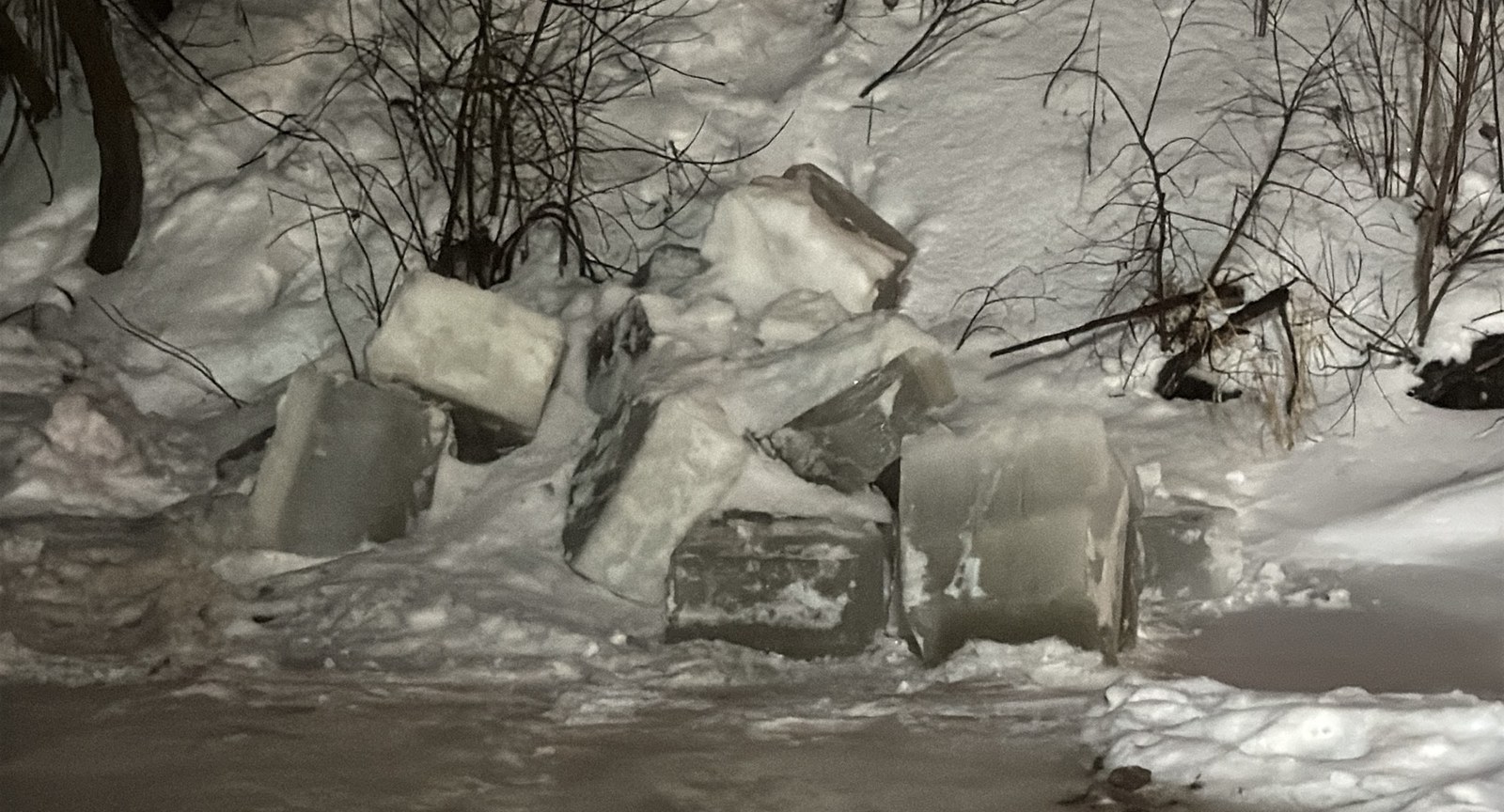
Blocks of ice cut out of the fishing holes were piled along the bank, about half as tall as our kid. As far as I can tell, the season only opens once the ice is about that thick.
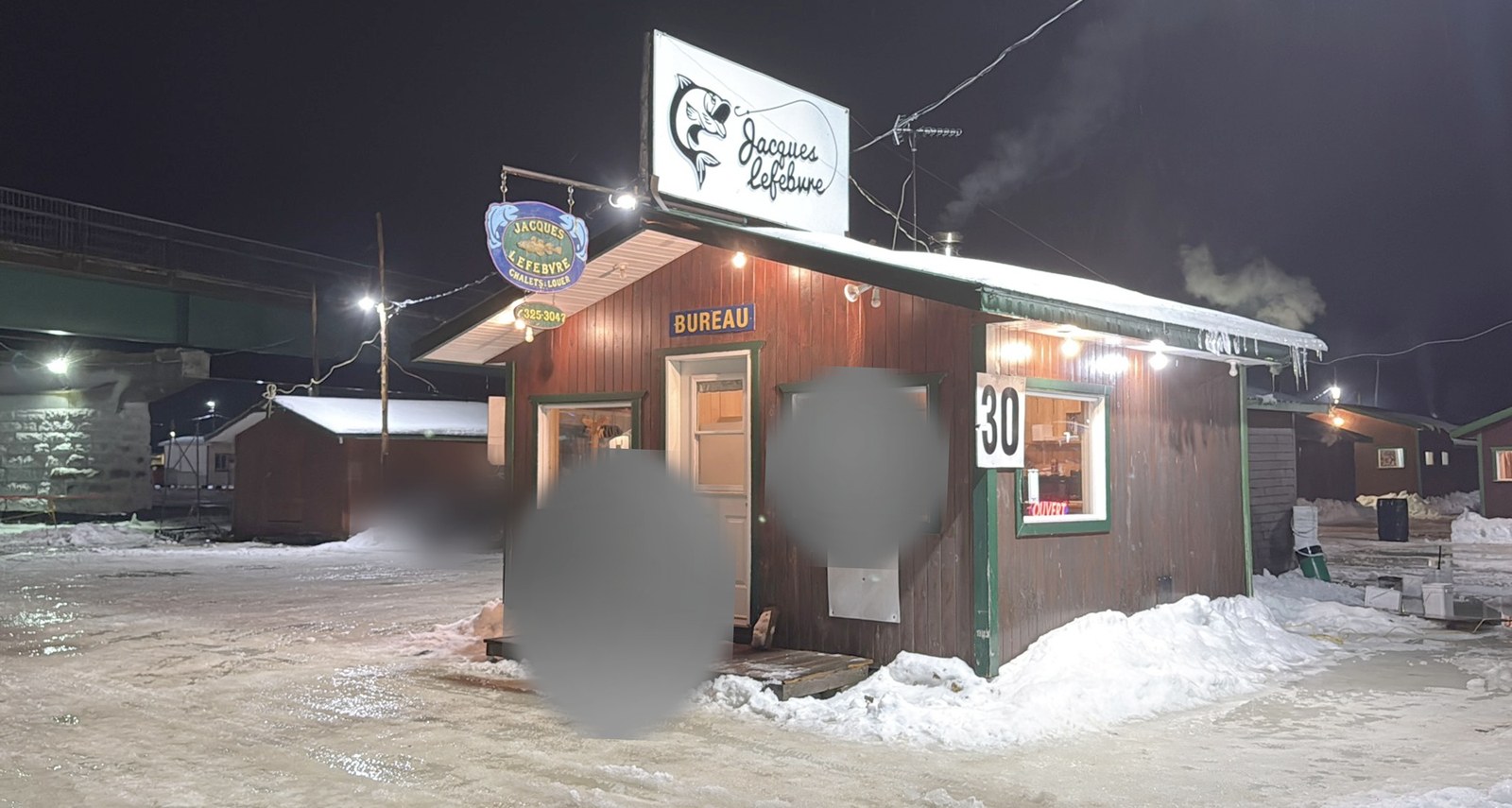
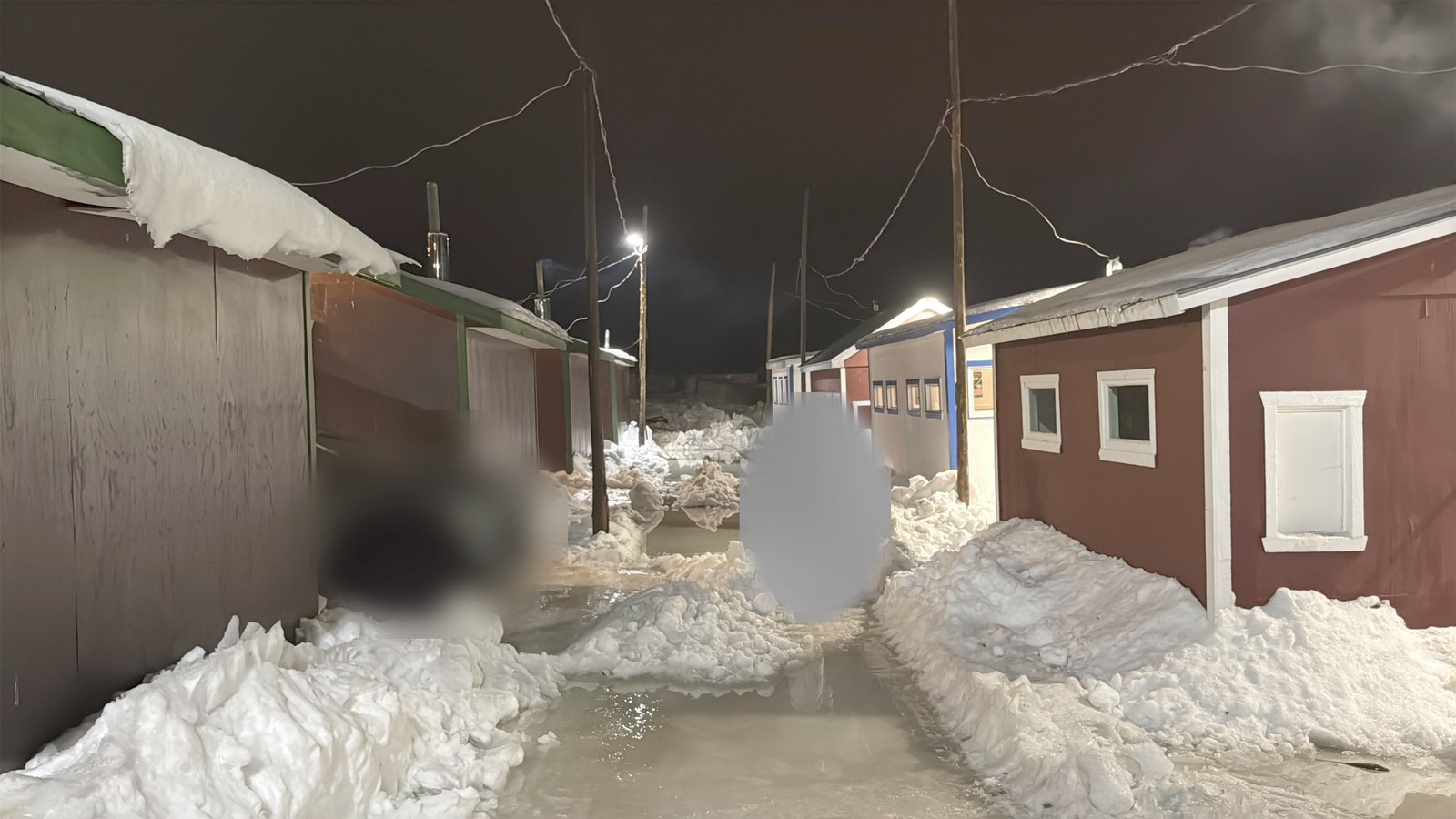
Hundreds of temporary huts stood on the frozen Sainte-Anne River (rivière Sainte-Anne), enough to look like a village. Plowed lanes ran between them, with a lamp on every utility pole.
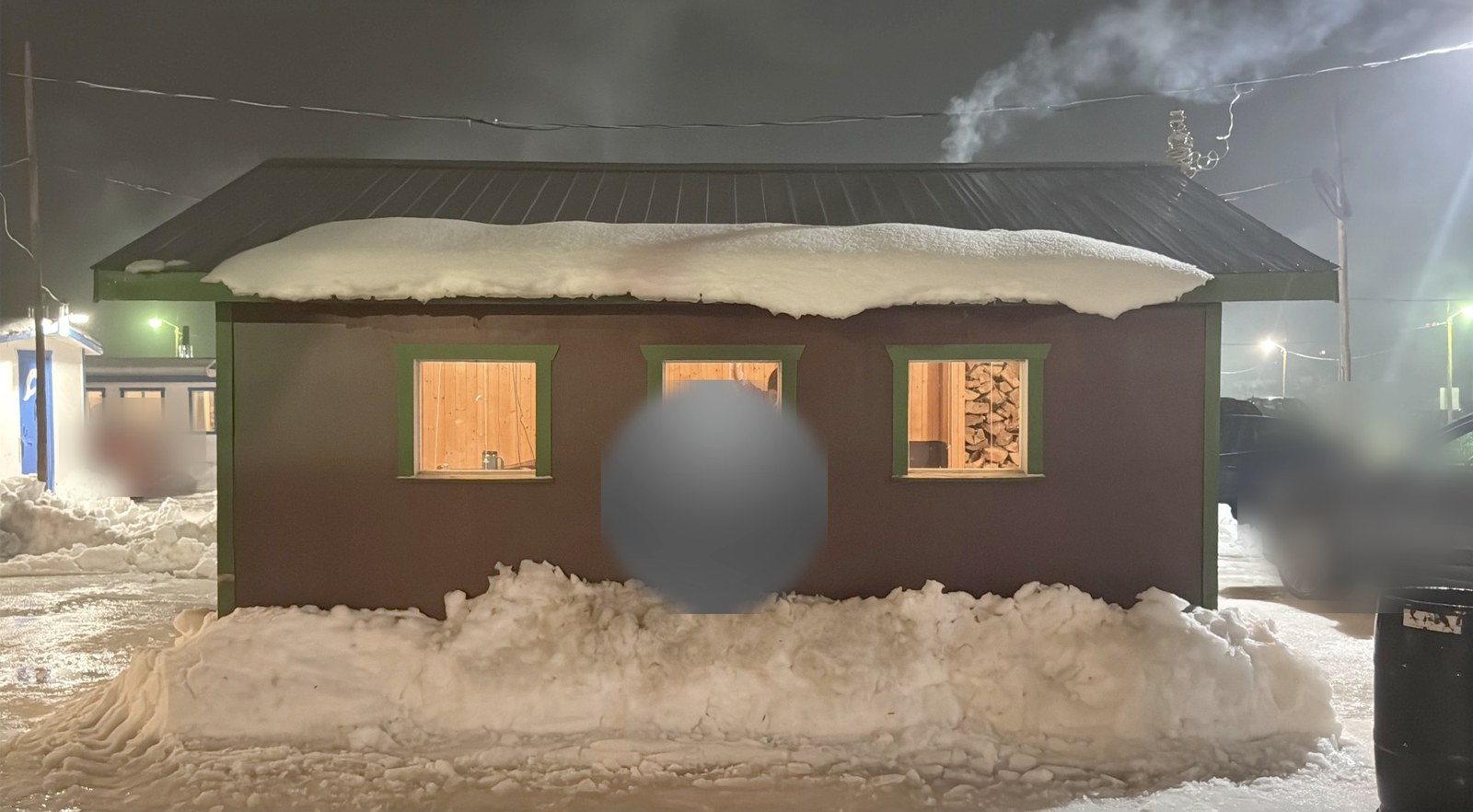
Our hut had dark brown walls, green window frames and a white door, with snow on the roof. Three windows along the long wall glowed orange, and smoke rose from the chimney.
This was the 88th season of ice fishing here. The outfitters belong to a single association, whose site lists 17 or more of them. The association coordinates safety on the ice, hut placement, rules and price guidelines.
The fish is the Atlantic tomcod, also called frostfish, and poulamon in French. At least one local outfitter’s English page spells it Tommy cod.
Inside the hut
The story goes that in the winter of 1938 a man cutting ice found a swarm of tomcod gathering at a hole he’d opened in the river. Word reached Montreal and Quebec City, and by the 1940s people were coming to stock up on winter food. By the 1950s the huts numbered close to 1,000 and formed a village on the ice. In the 1980s commercial fishing at the river’s mouth cut the count to around 230 huts, and a ban on commercial fishing followed in 1992. In the winter of 2023, 19 outfitters ran about 400 huts.
Today it’s closer to a midwinter family outing. The biggest huts hold up to 25 people, and families and groups of friends book them for get-togethers. There is also a tomcod ice-fishing festival on winter weekends. The 2026 program covered the weekends from January 31 to February 15. Québec Vacances lists the 2027 edition as January 30 to February 14, but the official site hadn’t posted 2027 dates when I checked. An industry spokesperson put the 2025-26 season at about 100,000 visitors.
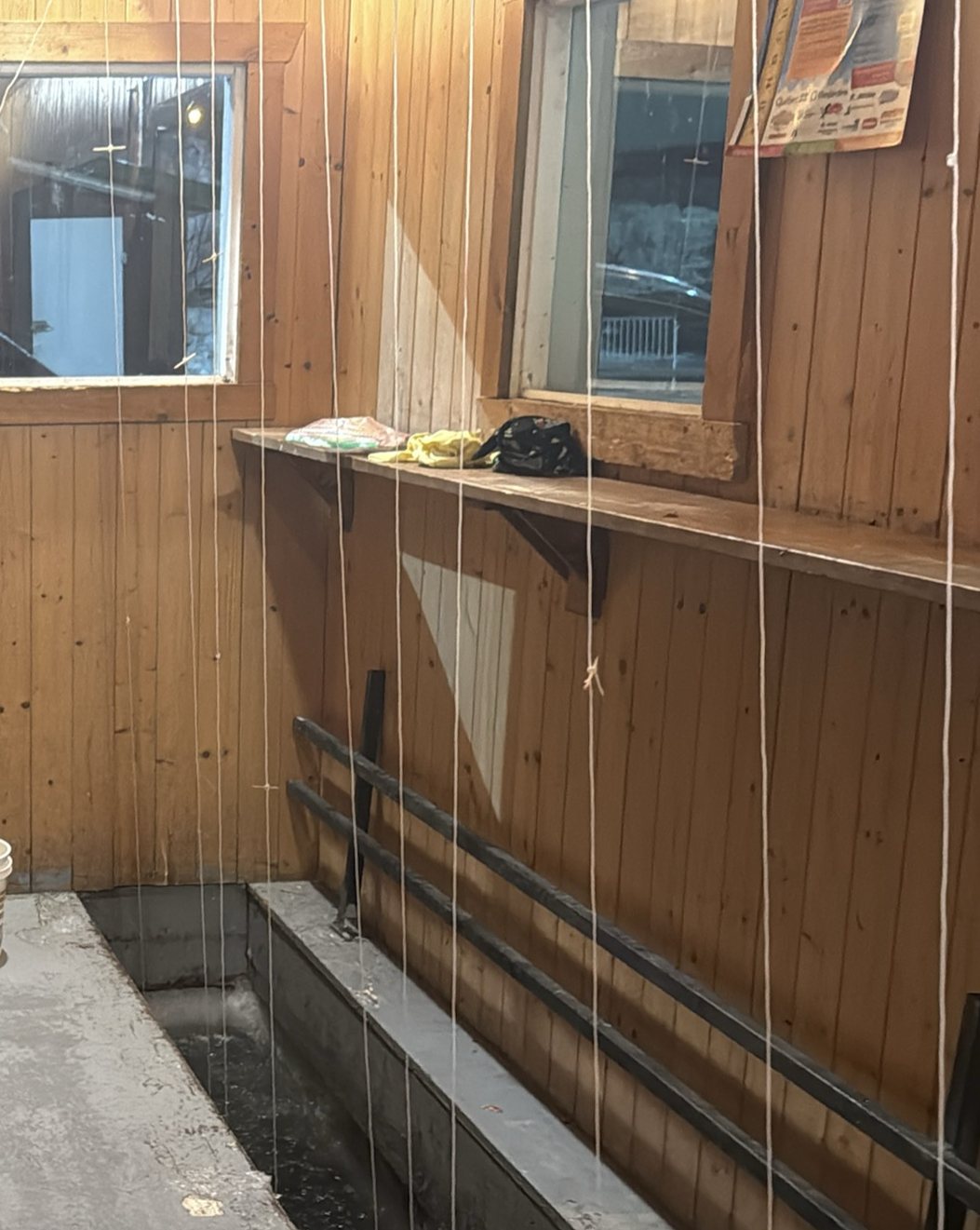
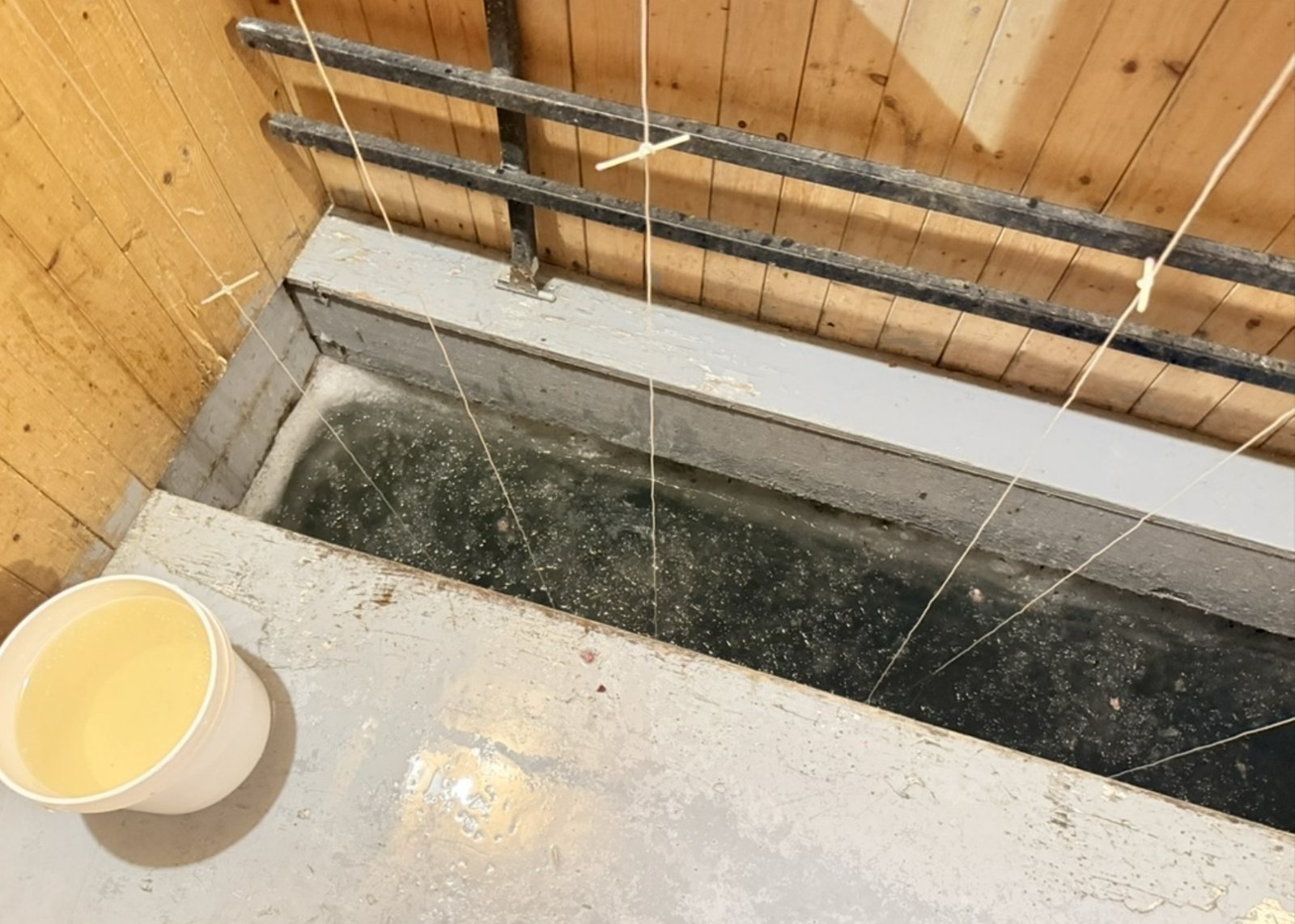
Inside our hut, a long rectangle had been cut out of the ice floor, with river water a few dozen centimeters (a foot or so) below. About 20 hand lines were set up over it. Long openings ran along the windows, and lines hung from the ceiling over the holes. The ceiling had lights too.
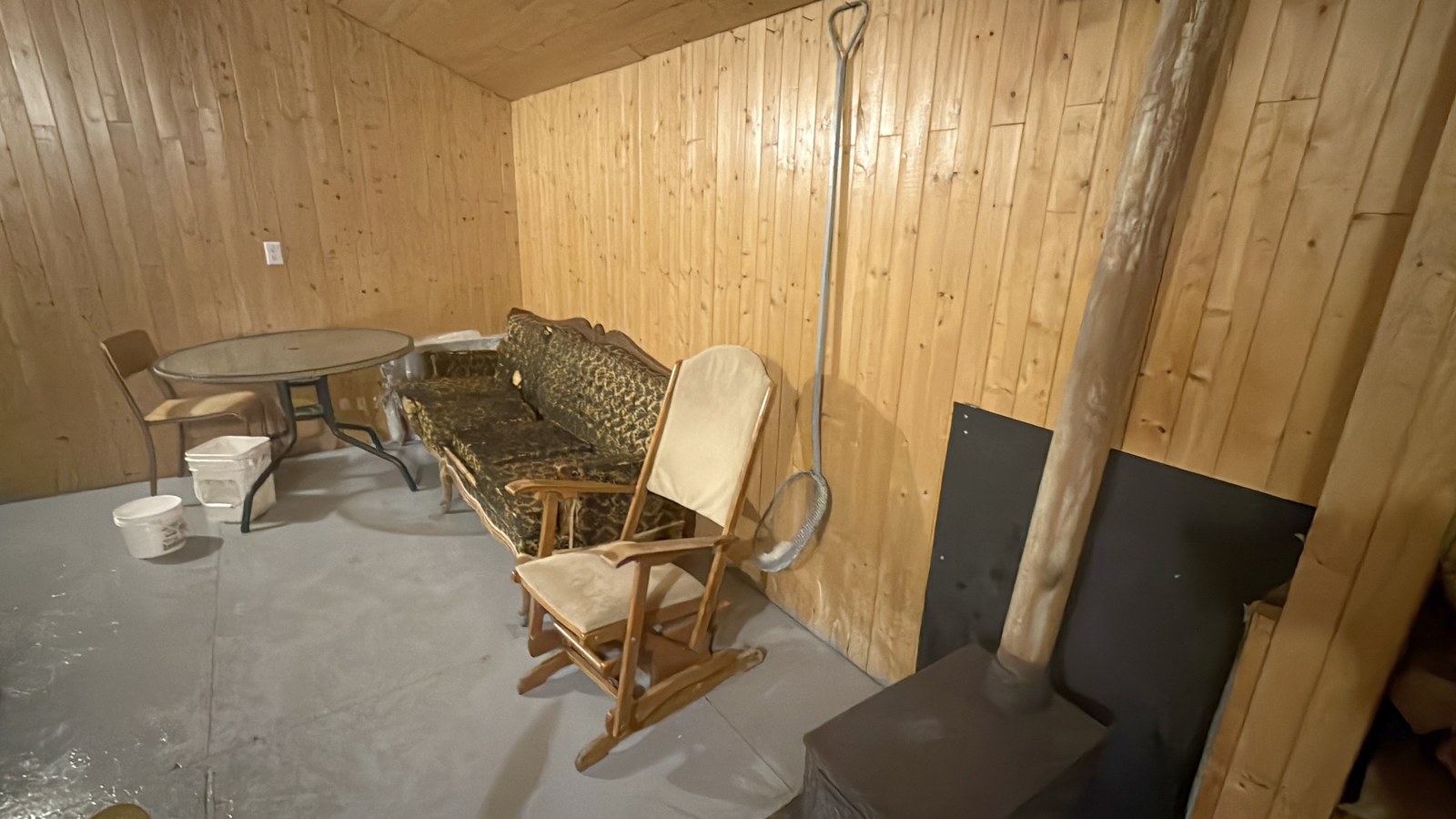
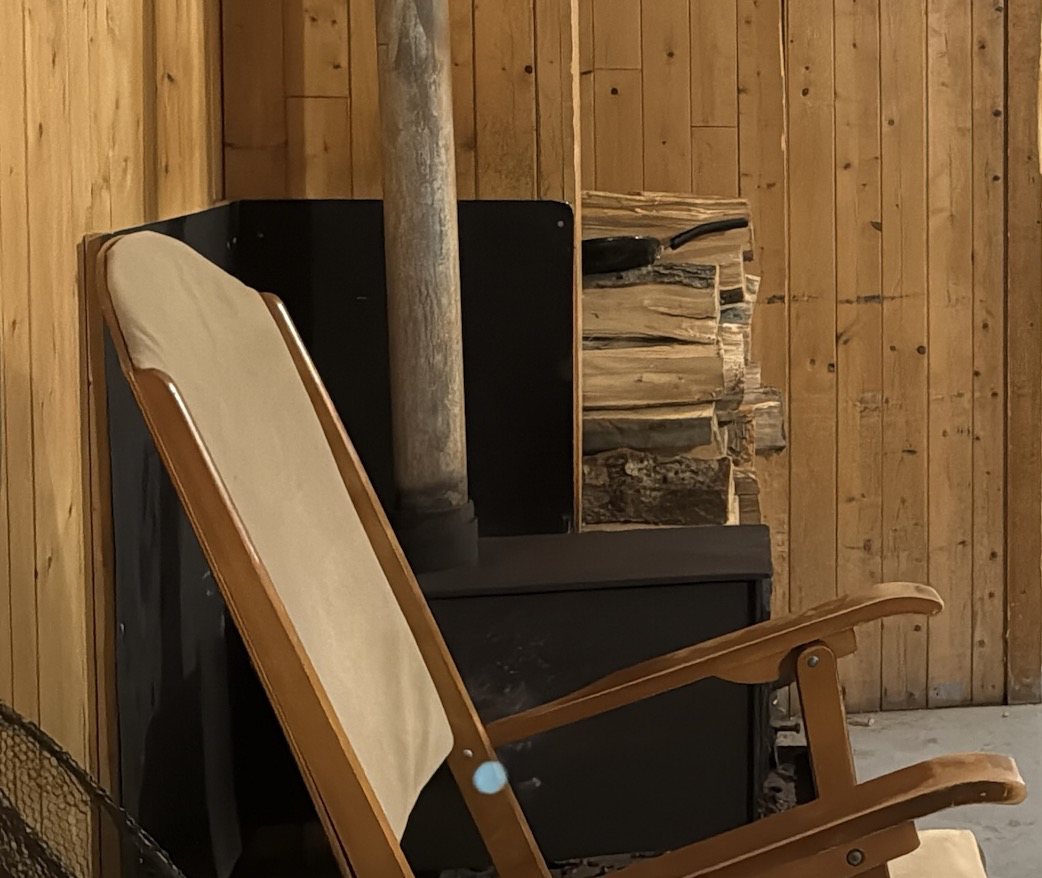
The stove is a black cast-iron wood burner with a flue running up to the ceiling and firewood stacked beside it. There were sofas and chairs with patterned upholstery, a table and electricity. It was warm, not cold at all. The restrooms were clean shared ones outside.
A poster on the wall explained the method: put small pieces of pork liver on each hook and change the bait every five minutes.
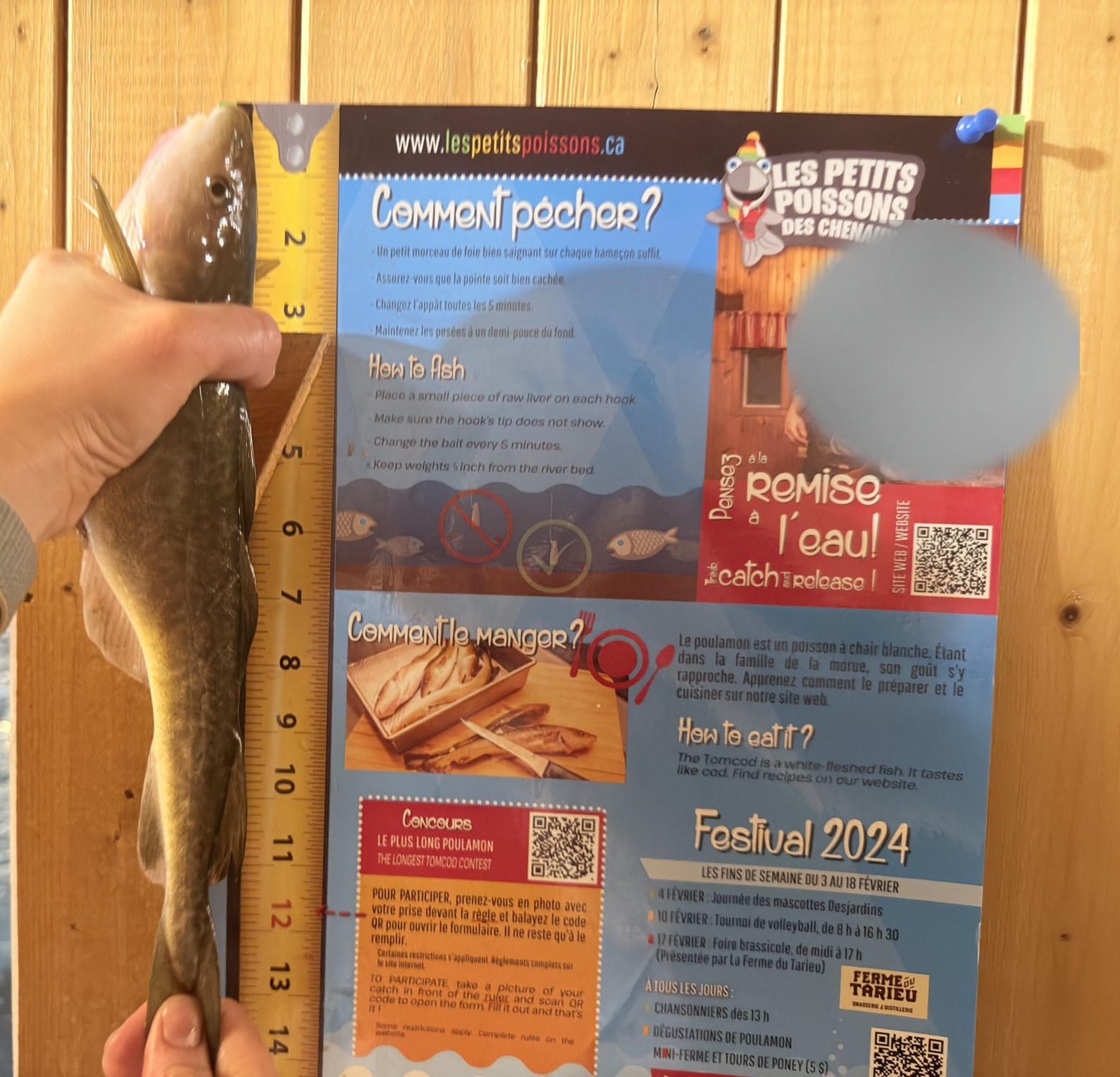
Since it was our first time, I wondered how the fire and the electricity worked. We brought plenty of food and didn’t finish it. Next time I’d bring more to do inside the hut.
8 p.m. to 6 a.m.
We took the night shift, 8 p.m. to 6 a.m. The outfitter runs two shifts a day, daytime and night. Night worked after school, and we’d heard the tomcod bite better in the dark. We arrived a little after eight, so we started a bit late, but the fish bit well.
The outfitter supplied the bait, pork liver and shrimp. Our first fish came in under an hour. Over about 10 hours we caught 50, roughly one every 12 minutes.
Our kid hardly sat down. Standing, they rebaited the hooks, pulled up the fish, took them off and dropped them in the bucket, over and over, all night. The fish were smooth and bigger than I expected. We kept them in a bucket packed with ice. We let the smallest ones go and took the rest home.
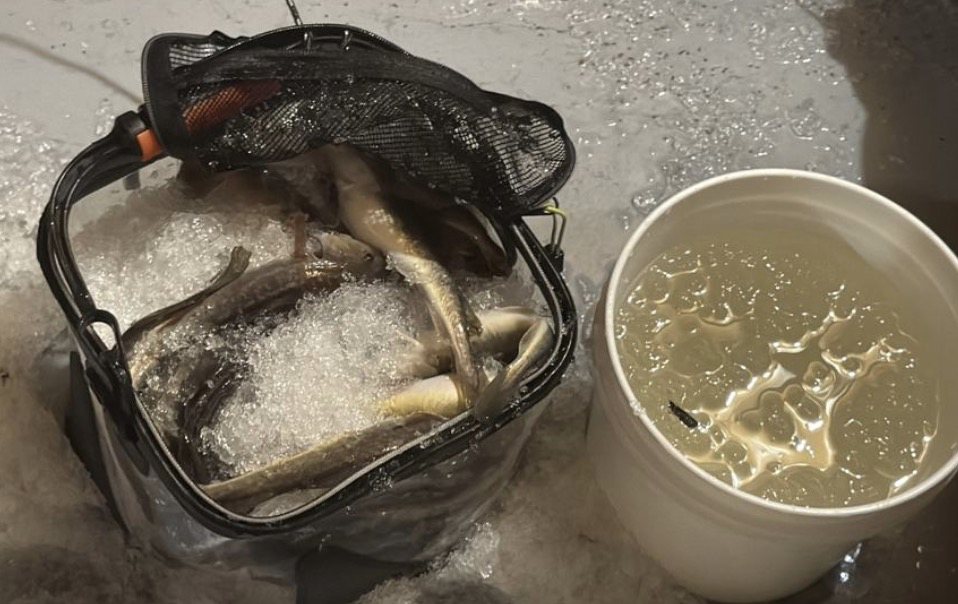
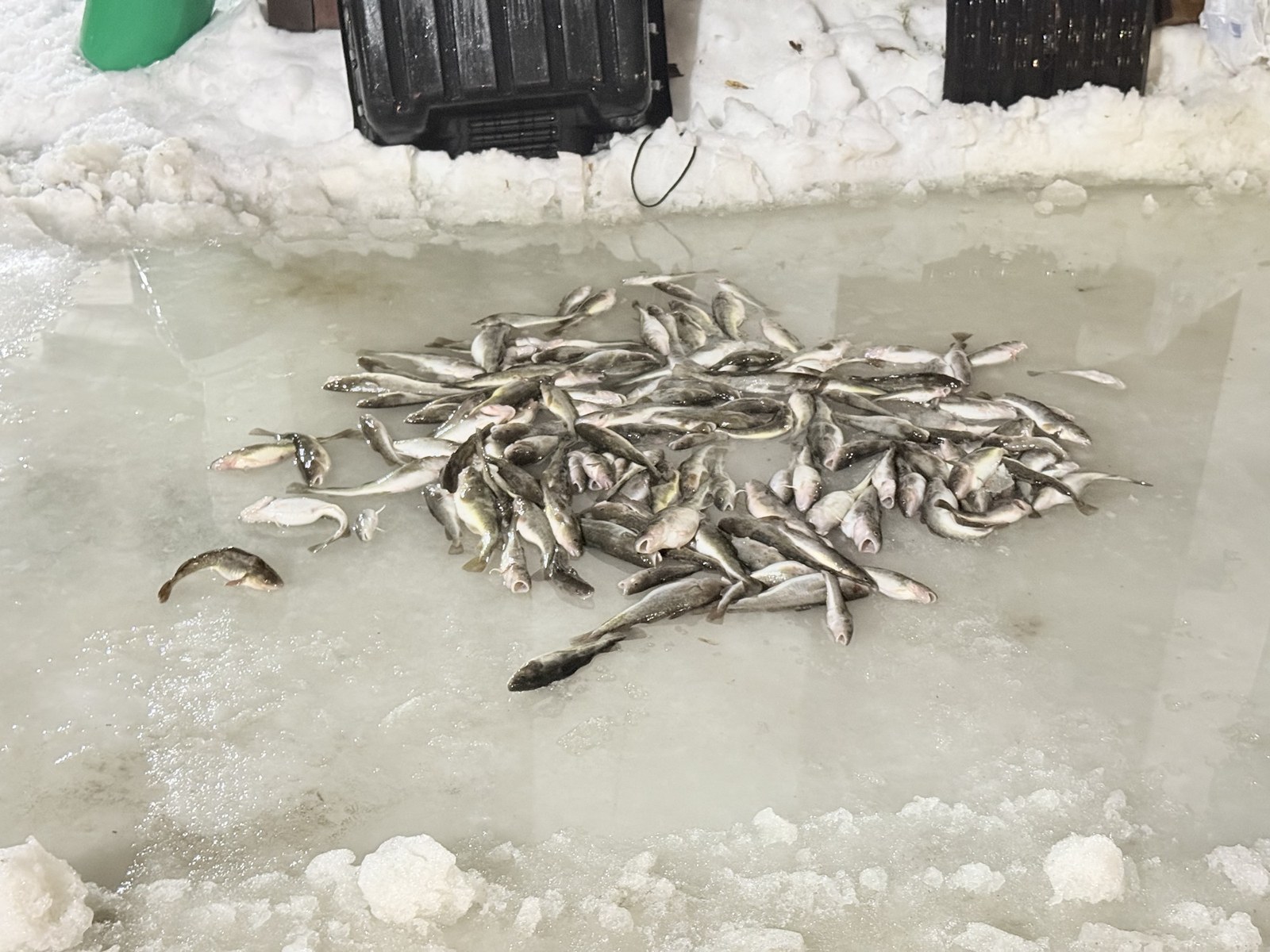
Other groups spread their catch out on the ice outside their huts. The association’s guidance is to put fish outside right away so they freeze and stay fresh.
My wife stayed by our kid’s side and dozed for a bit. I slept on the sofa for a while.
Straight home at dawn
We left a little after 6 a.m. Before the trip we’d thought about stopping in Quebec City or a park nearby afterward. But everyone was exhausted, and we wanted the fish home while they were fresh, so we drove straight back.
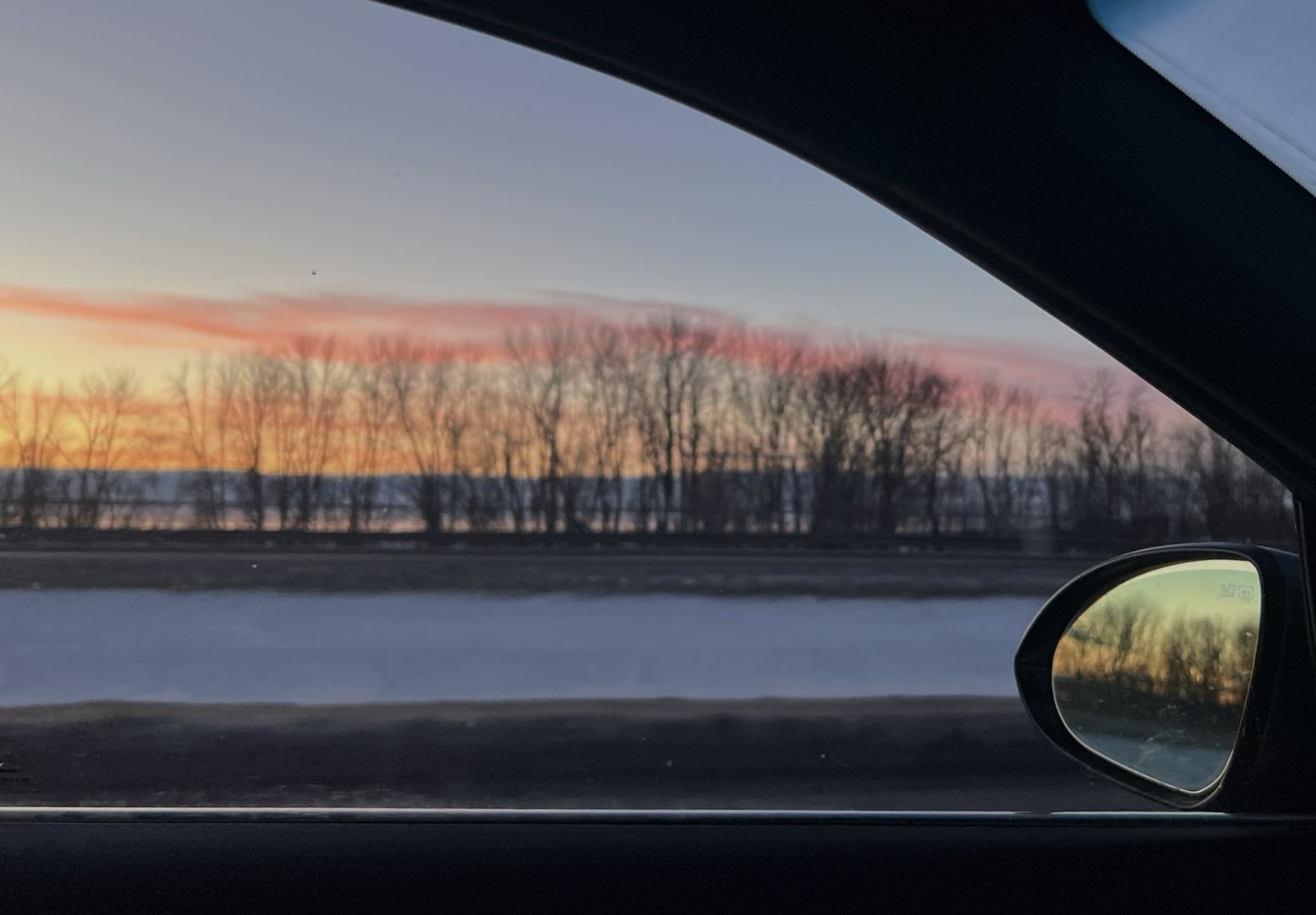
Our kid said “let’s go get breakfast,” then fell fast asleep as soon as we got in the car. My wife was out before sunrise. We reached downtown Montreal around 8:35 a.m. I was the one driving, and I was glad I’d slept a little on the sofa.
Cleaning and cooking the catch
At home we had a bucket full of fish. Cleaning them was easier than most fish, but it had been a long time, and my wife and I yelped more than once. Next time we’ll take our kid’s advice and bring home just a few.
As I cleaned them, I found that many were full of roe. I hadn’t noticed when we caught them. The association’s official guidance says there is no catch limit, so we brought fish home and ate them.
We started with pan-fried fish. Then, because river fish in Korea usually means maeuntang, a spicy fish stew, I bought the ingredients and made a pot.
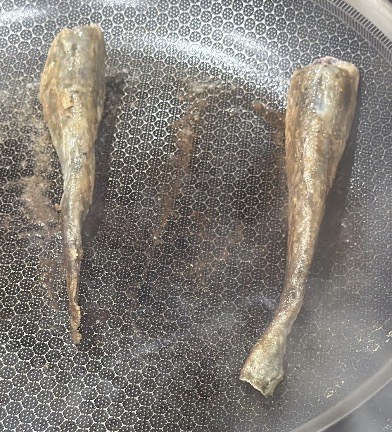
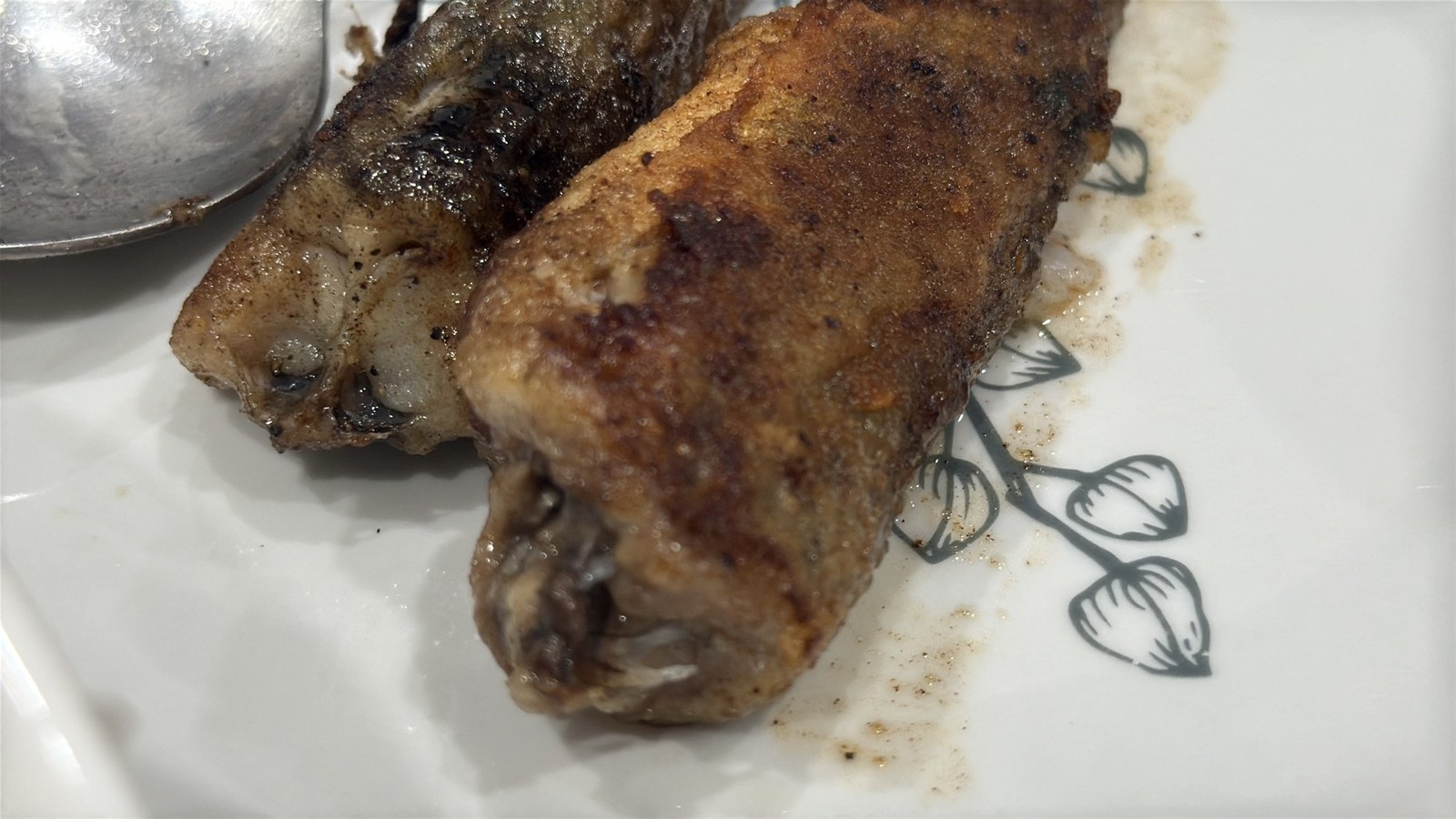
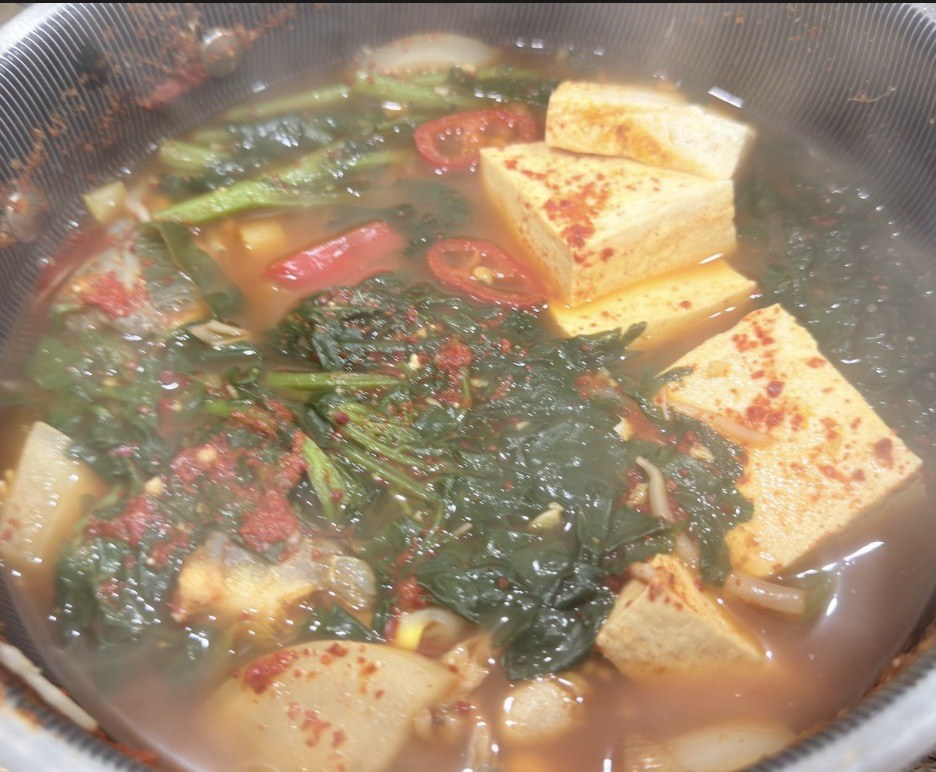
The fried fish and the stew were both as good as we’d heard.
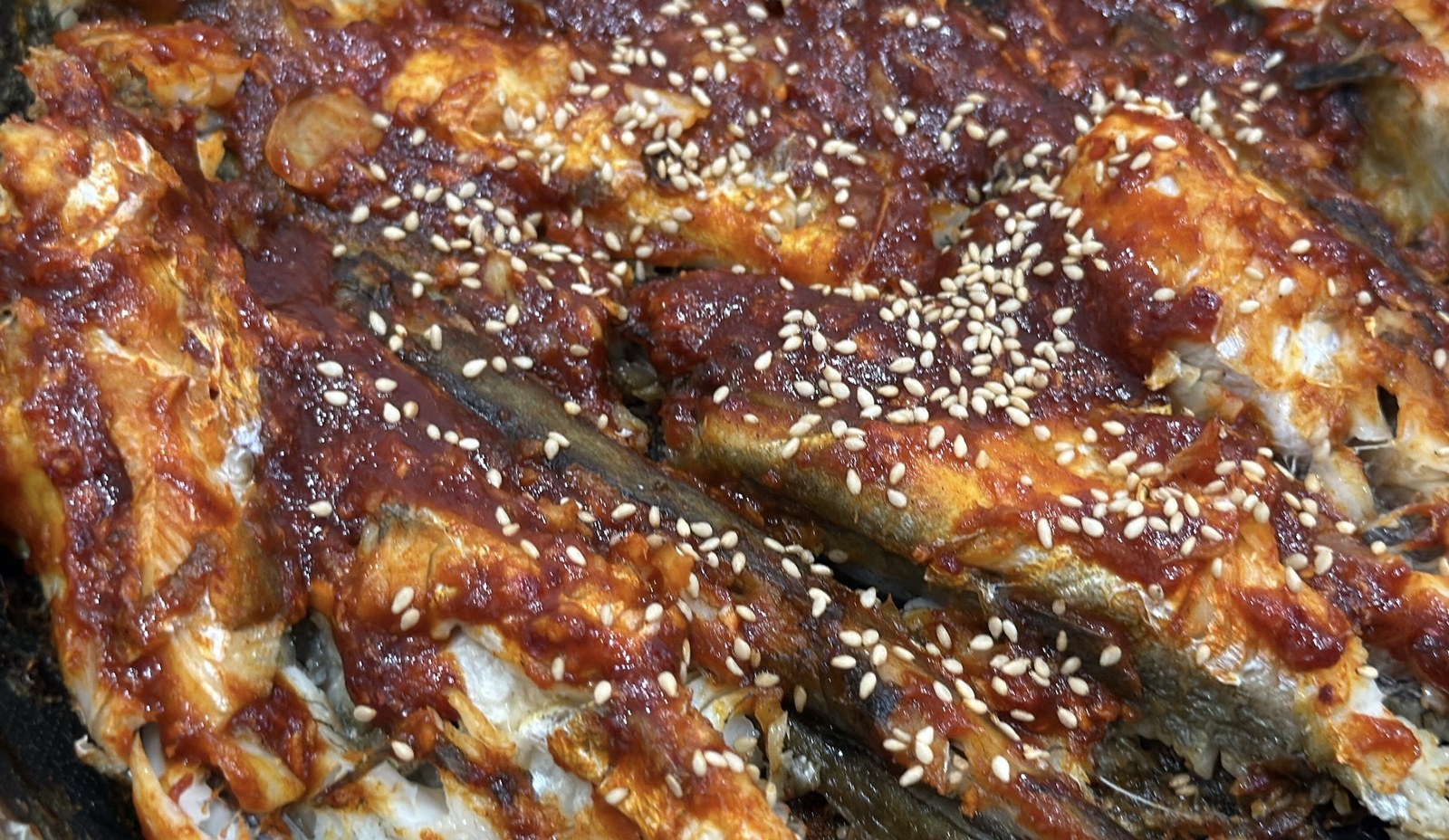
A little over a month later I made dori-baengbaeng. It’s a Korean dish from Okcheon, on the Geum River, in which finger-sized freshwater fish are fried crisp and coated in a chili-paste sauce. The fish are laid out in a circle, which is where the name comes from. I looked up a recipe online and made it. It was delicious, and easy to eat.
Booking and prices
My wife booked by phone. The outfitter’s site and the association’s site both have booking details. Shifts run 8 a.m. to 6 p.m. and 8 p.m. to 6 a.m., and the huts are open seven days a week during the season.
We picked a Friday-night shift because the weekday rate runs through Friday evening, and because the timing worked with our kid’s school day. We drove ourselves. Prices below are for the 2025-26 season, as of October 18, 2026, from the association’s site (Canadian dollars, taxes included).
Prices
- WeekdaysSunday evening through Friday eveningAdults C$30Ages 6 to 12 C$15Ages 0 to 5 free
- WeekendsSaturday daytime through Sunday daytimeAdults C$40Ages 6 to 12 C$20Ages 0 to 5 free
- Minimum per hutDecember 26 to January 4: C$160, weekdays and weekendsFrom January 5, weekdays: C$90From January 5, weekends: C$160
- IncludedThe hutFishing gearUnlimited pork-liver baitFirewood for heatThe fish you catch
- Fishing licenseNot required.
- 2025-26 seasonDecember 26 to February 15, depending on ice conditions.
- 2026-27 seasonThe association’s site says it reopens on December 26, 2026. Prices weren’t posted yet.
- BookingAssociation: 418 325-2475, info@lespetitspoissons.caOur outfitter, Centre de pêche Jacques Lefebvre: 418 325-3047
The season is short, late December to mid-February. Dates and prices change from year to year, so check the official sites before you book.
We booked directly and drove ourselves, so I can’t point you to a tour that goes out to the huts. These day tours from Montreal and Quebec City don’t go to the huts, but they could round out a winter trip. Check the dates and season on the booking page, since winter operation varies.
Local plans
Day tours from Montreal and Quebec City
Before you go
The hut is warm, but it’s still cold if you walk around outside. Quebec ice fishing only runs in midwinter, when the ice is thick enough, as far as I can tell. We brought blankets. If you plan to spend a lot of time outside the hut, battery-heated gloves or a heated vest are worth packing.
Trois-Rivières averaged about -6°C (21°F) by day and -13°C (9°F) at night in January 2026 (source).
To bring the catch home fresh, we used a bucket packed with ice and put the fish straight in. A cooler with wheels is easier to drag across the ice.
Is it worth it?
- Best forFamilies with kids who like doing things with their hands.
- Skip ifYou need a full night’s sleep. I got some sleep on a sofa.
- CostC$90 minimum per hut on weekdays this past season; weekdays are C$30 per adult and C$15 for ages 6 to 12.
- What we’d bringBlankets, a bucket for ice and fish, and more to do inside the hut
Frequently asked questions
Where can you go ice fishing near Montreal?
We went to Sainte-Anne-de-la-Pérade, about 180 km (112 mi) northeast of Montreal, 2 to 2.5 hours by car. In French, Quebecers call it pêche blanche or pêche sur glace.
Do you need a fishing license for ice fishing in Quebec?
The official site says you don’t.
Can you keep the fish?
The fish you catch are included in the price, and there is no catch limit. We took ours home and ate them.
Is an all-night session cold or hard?
The stove kept the hut warm. My wife dozed for a bit and I slept on the sofa. Our kid fished standing up all night.
When does the ice fishing season end?
The season is short. The 2025-26 season ran from December 26 to February 15, depending on ice conditions. When I looked into going again, the season had already ended. The association’s site says the next season reopens on December 26, 2026.
What this trip needed
Packing
- BlanketsOutside the hut it’s still cold.
- FoodWe brought plenty and didn’t finish it.
- A bucketPacked with ice, it carried the fish home fresh.
Booking
- Hut and time slotWe booked by phone and chose the 8 p.m. to 6 a.m. shift.
If you’re flying in, here are flights to Montreal and rental cars. We drove up from Montreal.
Getting there
Flights to Montreal and rental cars
After a night of fishing, the whole family was wiped out, so we didn’t go back right away. When I looked into going again, the season had already ended, which was a shame. We plan to go again this winter. Our kid keeps asking when.
Related posts
- More QuebecA Fall Day Trip From Montreal: Jacques-Cartier National Park, Montmorency Falls and Quebec City
Getting there
Sainte-Anne-de-la-Pérade is a small town in central Quebec on the north shore of the St. Lawrence River, between Montreal and Quebec City and a little east of Trois-Rivières. The huts stand on the ice of the Sainte-Anne River, which runs past town and into the St. Lawrence. From downtown Montreal it’s about 180 km (112 mi), 2 to 2.5 hours by car. From Quebec City it’s about 90 km (56 mi), 1 hour 15 minutes. From Trois-Rivières it’s about 45 km (28 mi), 35 minutes (route calculation, traffic excluded, October 18, 2026). We left downtown Montreal around 4 p.m. and took about four hours to arrive, dinner included. On the way back we left a little after 6 a.m. and it took about 2 hours 20 minutes.
- OutfitterCentre de pêche Jacques Lefebvre230 Rue Sainte-Anne, Sainte-Anne-de-la-PéradeSee it on Google Maps
Sources
- Association prices page, techniques and rules page, festival program page (October 18, 2026)
- Mange ton Saint-Laurent, history of the fishery, CAPSA tomcod document, Quebec Vacances ice-fishing village overview, Noovo, 2025-26 season (October 18, 2026)
- CTV News, January 11, 2026; Seoul Shinmun, November 5, 2015 (dori-baengbaeng, in Korean)
Not in the list? Search it yourself
Places to stay nearby, on a map
Affiliate link: if you book through this search, the blog earns a commission at no extra cost to you. Results open in a new tab. About affiliate links
Discover more from Elsewhere, Mostly
Subscribe and get new posts sent straight to your inbox.