In this post Our last full day in Porto and the day we left. On March 29, under a blue sky for the first time in a while, we walked Infante Dom Henrique Garden and the Ribeira waterfront, toured Porto Cathedral and the Episcopal Palace, crossed the upper deck of the Dom Luís I Bridge and had dinner in Gaia. We ended the night with a fado show in Porto, and on March 30 we flew to Brussels at midday.
- WhenFriday, March 29, 2024, day 13 of our tripSaturday, March 30, 2024, day 14, the day we left Porto
- Route for the dayMarch 29
- A walk through the center, pastel de nata and coffeeFoodThe first clear day in a while, with street performers out
- 🚶 On foot
- Infante Dom Henrique Garden and the Ribeira waterfrontSightsWatching gulls, then down to the river
- 🚶 On foot, uphill
- A hilltop café overlooking the DouroBreakMy Coffee Porto: hot chocolate and port wine
- 🚶 On foot
- Porto Cathedral and the Episcopal PalaceSightsAbout 50 minutesA Romanesque church and a museum with a view of the Douro
- 🚶 On foot, over the upper deck of the Dom Luís I Bridge
- Gaia: dinner at the Italian restaurant Mamma BellaFoodDinner and a stroll along the river
- 🚕 Taxi
- Fado showSights1 hourA semi-basement venue
- 🚕 Taxi
- NorteShoppingShoppingA late dinner and groceries
- Porto AirportTransitFlight to Brussels, after some time at the airport playground
- AdmissionPaidThe cloister and museum at Porto Cathedral, the Episcopal Palace and the fado showFreeThe nave of Porto Cathedral, Infante Dom Henrique Garden and the Ribeira waterfront, the upper deck of the Dom Luís I Bridge
- BookingWe booked the fado show in advance
- WeatherMarch 29: high of 14°C (57°F), the first blue sky in a while, then rain again in the afternoon and at night
- WhoTwo adults and one kid
- Where we sleptAn Airbnb apartment in Porto, night 5 of 5
In this post
Our last day, and a blue sky at last
Friday, March 29, was our last full day in Porto, and it ended with a Porto fado show. The apartment window showed clear sky that morning, and we set out hoping for blue for the first time in a while. The unfamiliar streets had become familiar, and the city that had seemed a little plain at first had grown on us, so we were already feeling wistful.
With the sky clear, the street performers and artists who had been missing all week came out, and people on walking tours were finally visible too. We bought a few cork souvenirs as we walked through the center. We picked up coffee at the Starbucks on Rua dos Clérigos and, nearby, our first pastel de nata from Manteigaria in a while.
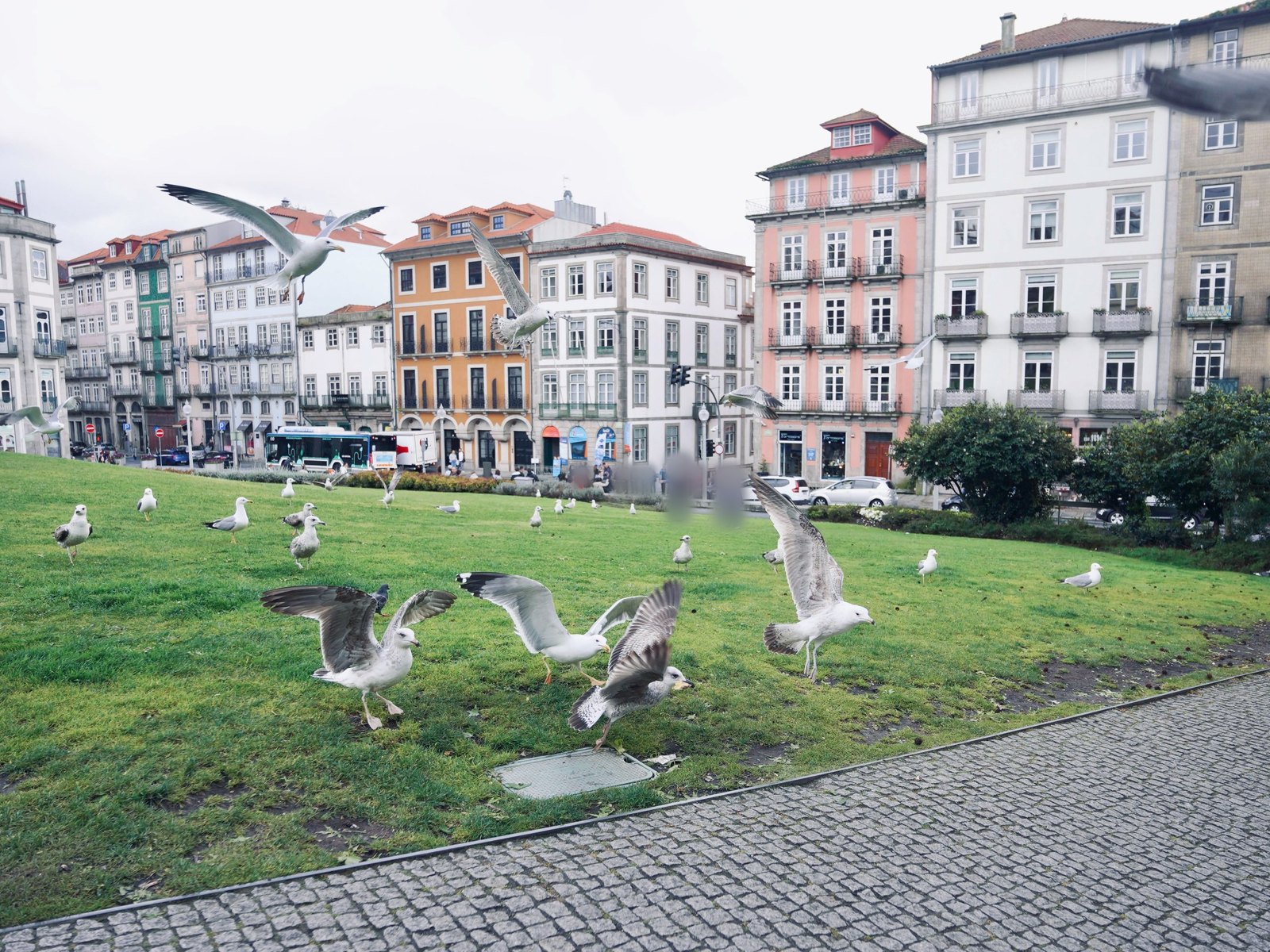
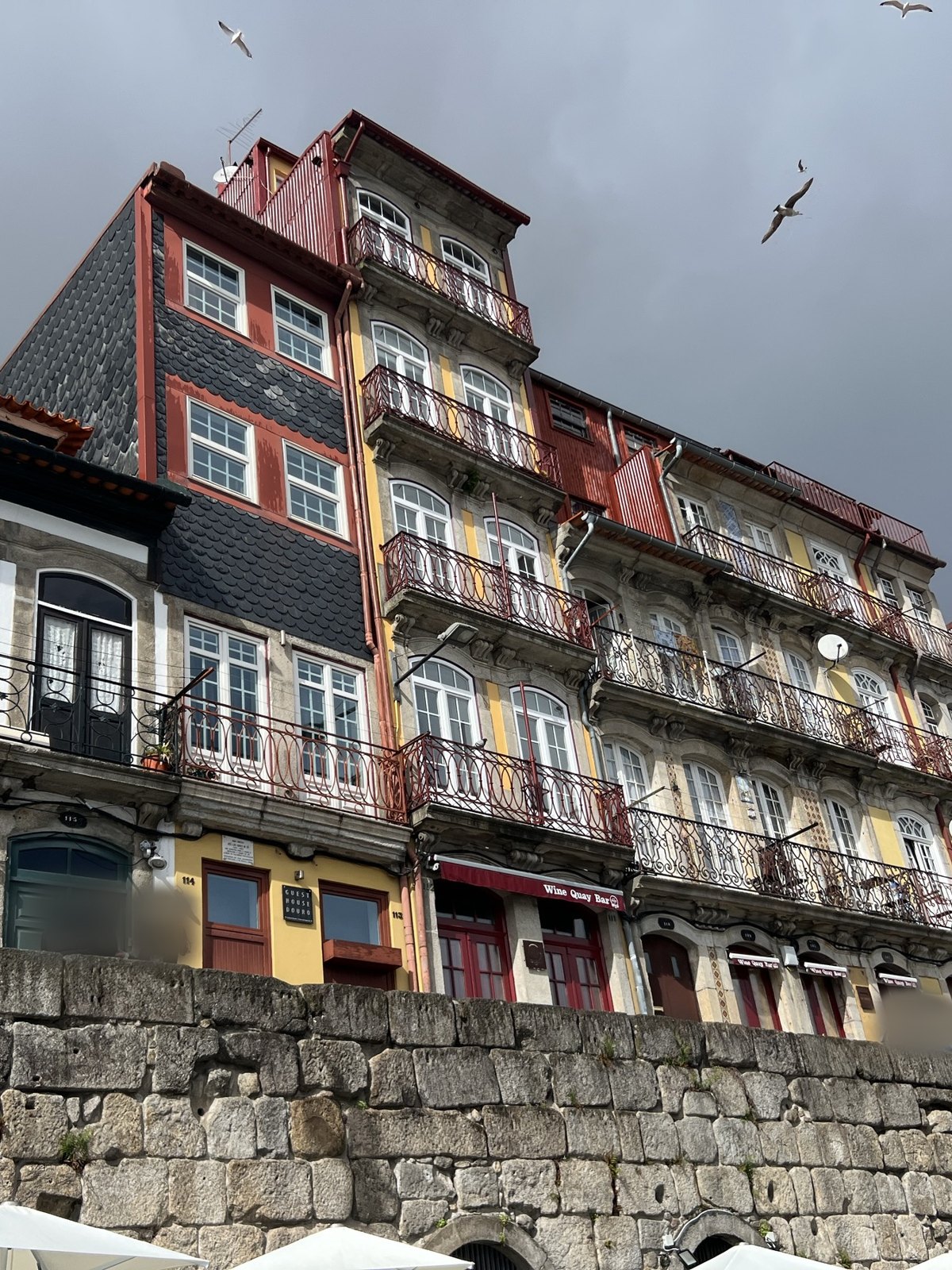
In the Infante Dom Henrique Garden (Jardim do Infante Dom Henrique) by the river we met gulls. The garden, above Ribeira, is surrounded by the Ferreira Borges Market and the Palácio da Bolsa (Stock Exchange Palace), with a statue of Prince Henry the Navigator at its center. Our kid watched the gulls take off and land for a long time. With the sun out, the grass and the old buildings looked much richer in color. Down on the Ribeira waterfront, the colorful houses we had been looking at from across the river were just as charming up close.
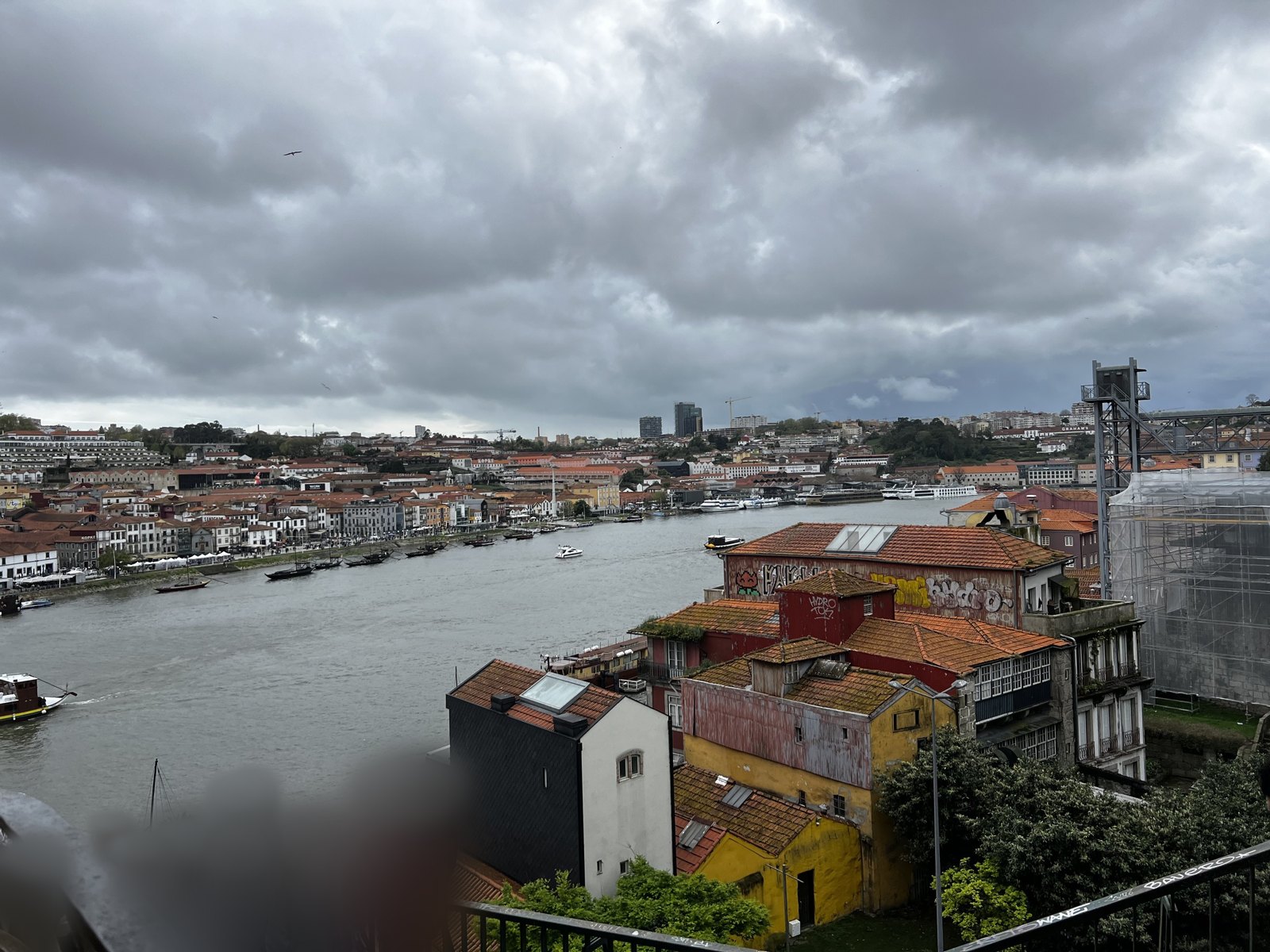
To get from under the Dom Luís I Bridge up to Porto Cathedral, we had to climb another hill. As we were catching our breath, we spotted a small café with a view of the Douro and Gaia, My Coffee Porto, and went in. It was chilly, so we sat at the empty outdoor tables. Our kid had hot chocolate, and my wife and I decided to enjoy one more glass of port before leaving.
Porto Cathedral and the Episcopal Palace
On the way to the cathedral it rained and stopped, again and again. My wife and I traded notes on architectural styles as we walked into Porto Cathedral (Sé do Porto).
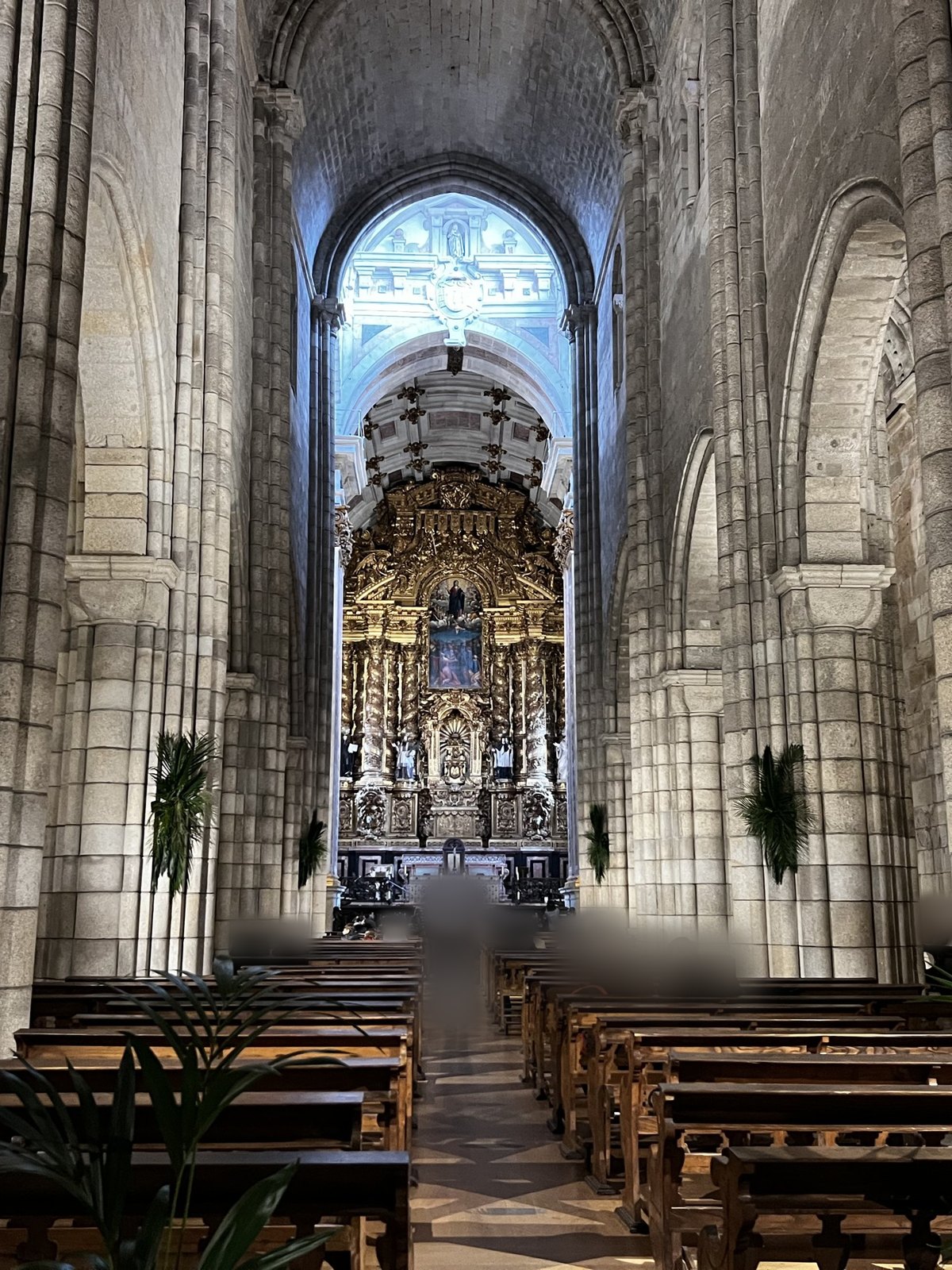
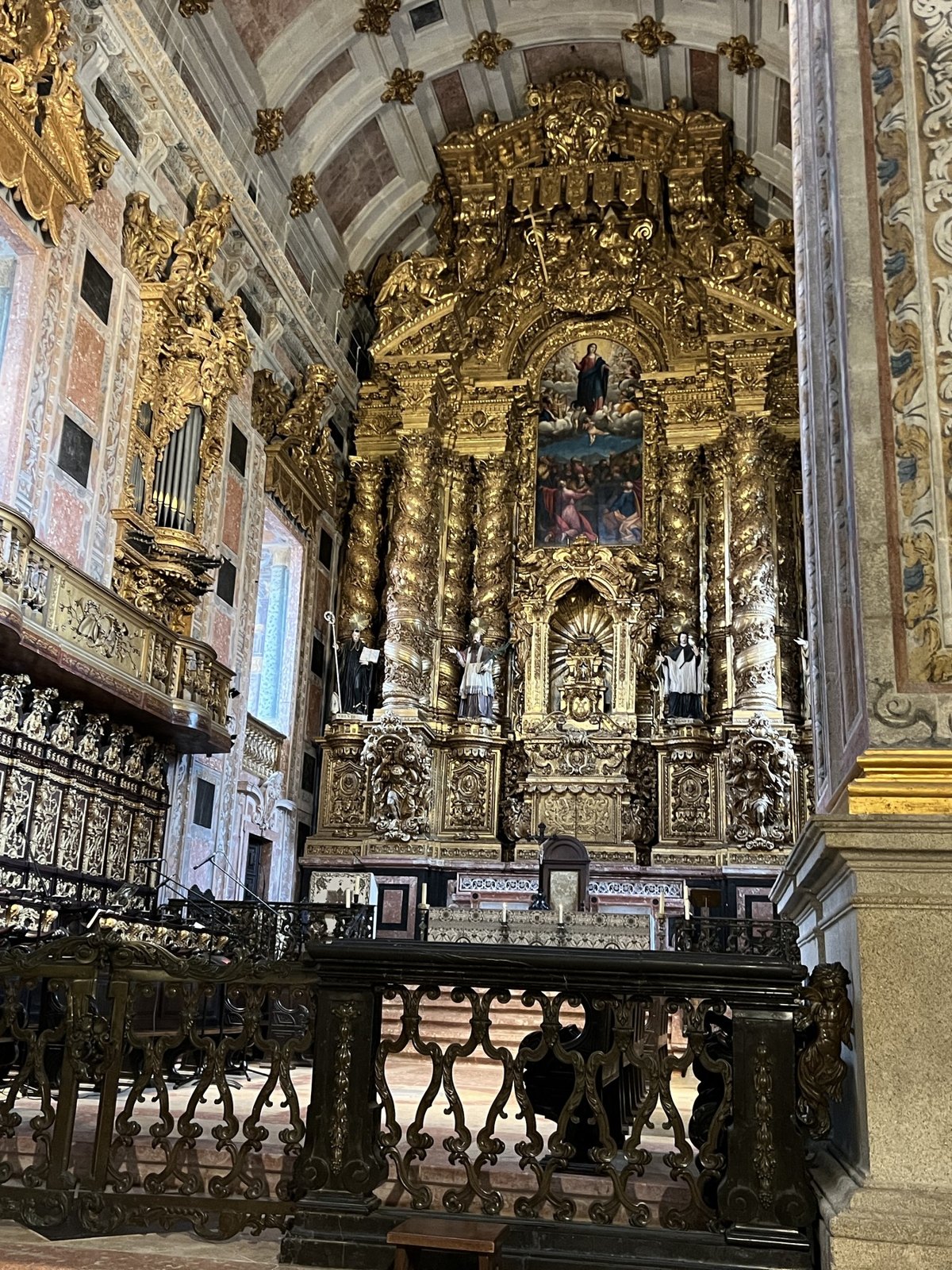
Construction of Porto Cathedral began in the 12th century in the Romanesque style. The facade has a 12th-century rose window, and the crenellations along the top make it look like a fortress. The nave, with thick granite columns and rounded arches rising high, was fairly dark, which made the gilded altar at the far end stand out more. The main chapel was built in 1610, and the gilded altarpiece dates from the first half of the 18th century. The paintings on the chapel walls are by the architect Nicolau Nasoni, who also built the loggia (an open gallery) on the side of the church in 1736. The Gothic cloister was begun in the late 14th century, and it holds seven large 18th-century azulejo panels illustrating the Song of Songs from the Old Testament.
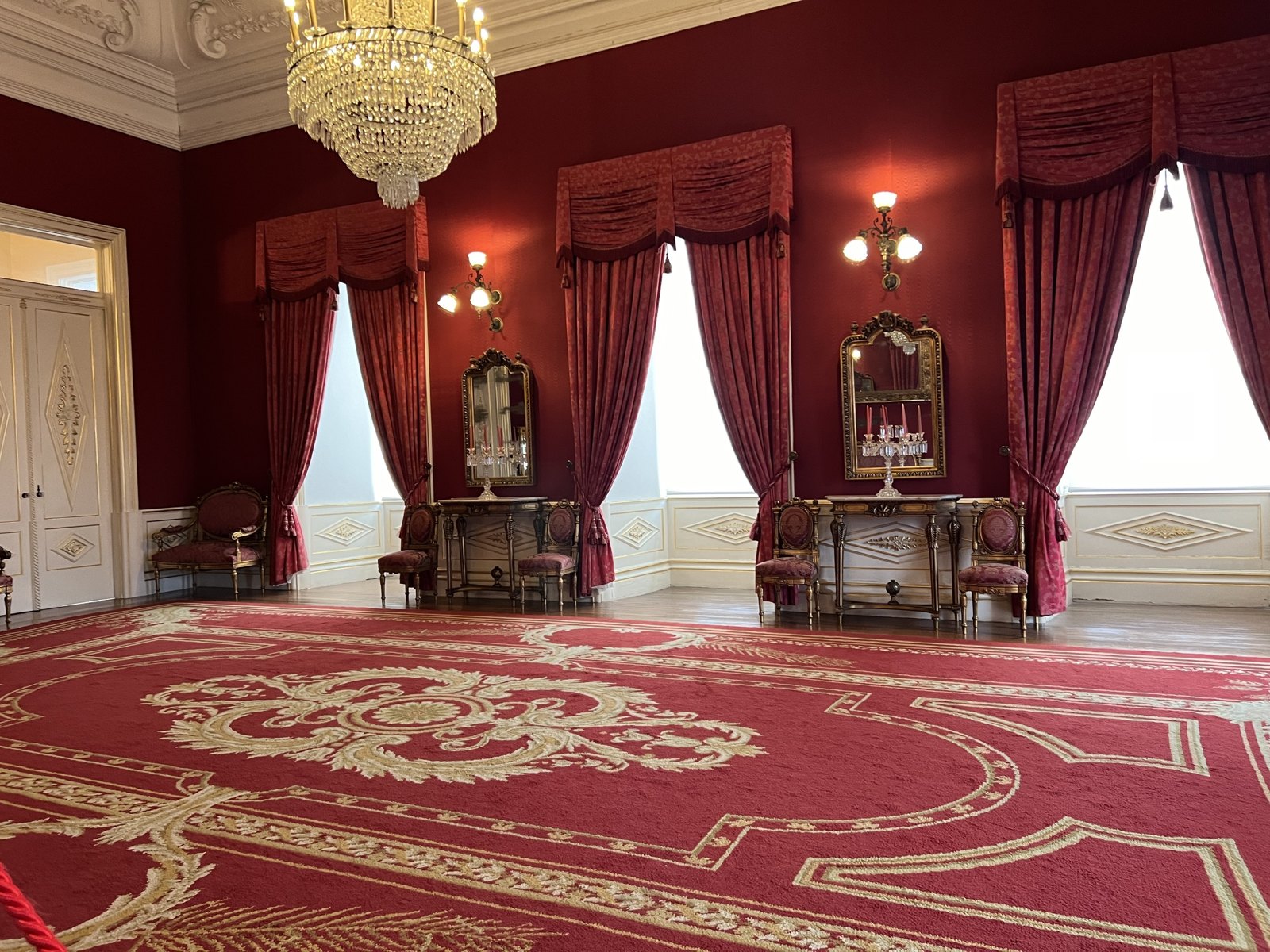
After the cathedral we went into the Episcopal Palace (Paço Episcopal) next door. The bishop of Porto has had a residence on this spot since the 12th century, and the present building was extensively remodeled in the late 18th century under Bishop D. Frei João Rafael de Mendonça (1771–1793). From 1916 to 1957 the city hall used it, and since 2016 it has been open as a museum. You climb a grand neoclassical staircase, pass palace-style rooms hung with portraits of past bishops and a dining room set with silverware, and end at a view of the Douro. A large room with red walls, crystal chandeliers and gilt mirrors left an impression, and through the windows we could see the river and the bridge. The tower with a view over the city was closed because of a Mass that day, so we saved it for another visit.
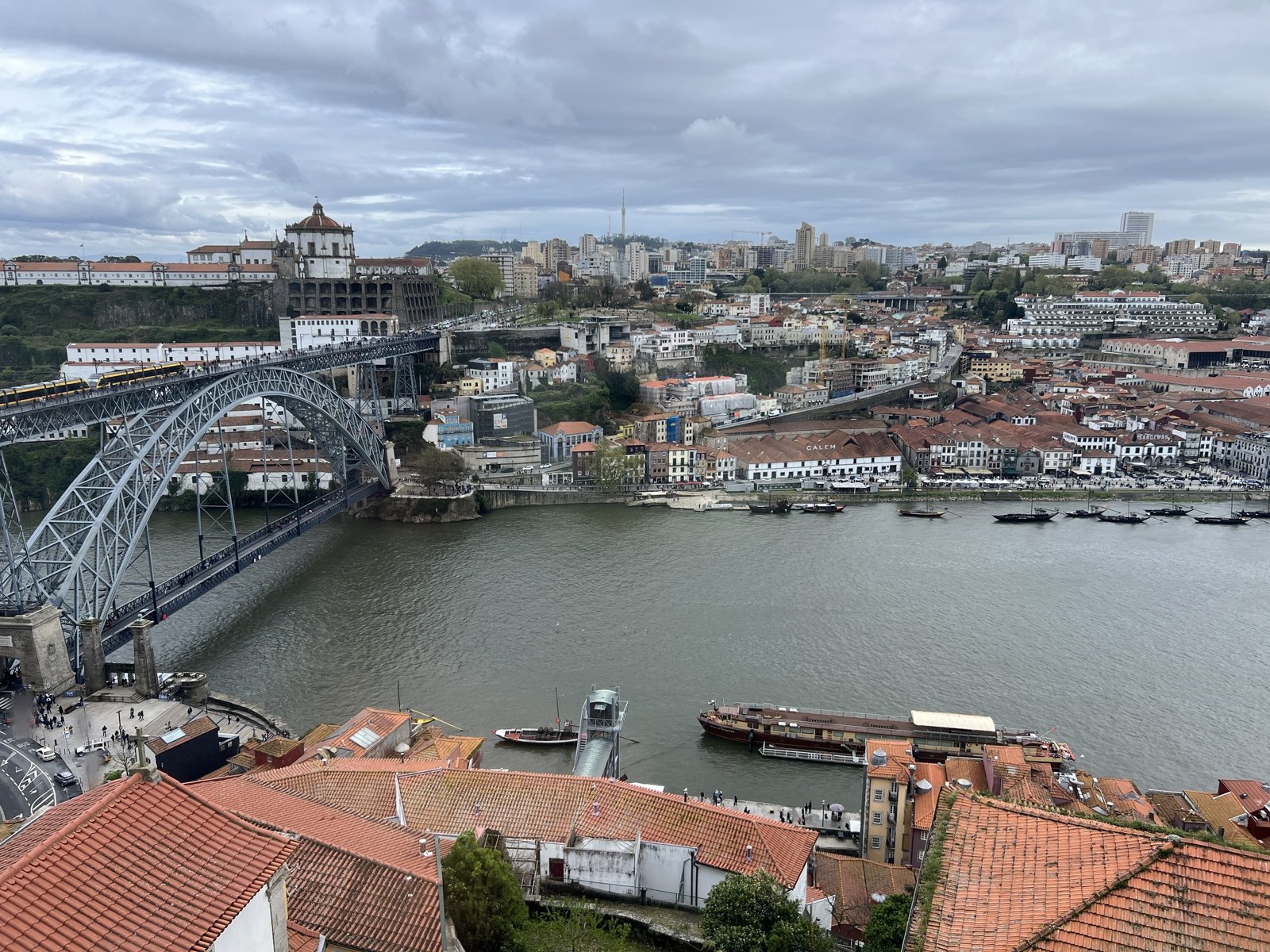
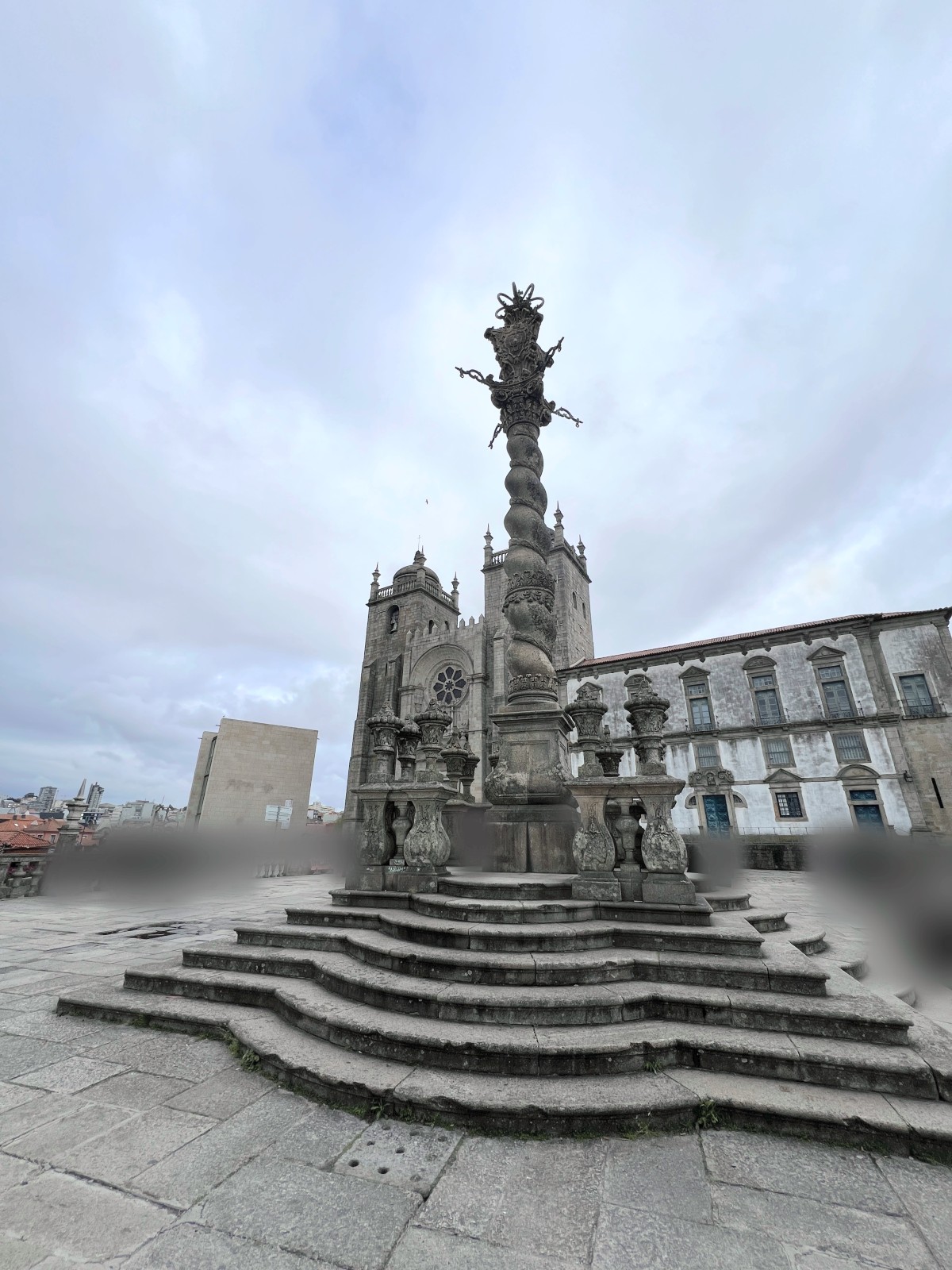
In the square in front of the cathedral stands a stone pillar, a pelourinho (pillory). It is a symbol of the city’s right to govern itself, and in the past criminals were tied to it and punished. This one is a 1945 reconstruction based on a 1797 drawing. The buildings around it were torn down in 1940 to create today’s square. From the end of the square we could see the city’s dense orange rooftops below.
The path we walked ran from Ribeira to the cathedral and then to the upper deck of the Dom Luís I Bridge. There are also walking tours that cover the whole historic center.
A walking tour in Porto
A guided walk can tie these stops together. This tour includes a visit to Livraria Lello, and admission fees at other sights are usually extra.
Getting there
From the Ribeira waterfront we walked up the hill. Stairs and slopes keep coming, so pick a place to rest on the way. The cathedral stands on the hill right above the upper deck of the Dom Luís I Bridge, so after seeing it you can cross to Gaia on the upper deck.
Tickets and hours
The nave is free. The cloister, museum and Episcopal Palace need separate tickets. Prices and hours are in the table in “Before you go” below.
How long we stayed
From arriving at the cathedral square to leaving the Episcopal Palace, we spent about 50 minutes.
Good to know
- During Mass, the tower or some areas may be closed. The same official page lists Mass at 11 a.m.
- The square in front of the cathedral is a viewpoint in itself, with a wide view over the city.
Dinner in Gaia: Mamma Bella and the riverside
This time we crossed the upper deck of the Dom Luís I Bridge on foot into Gaia (Vila Nova de Gaia). On the winding way down from the high hill to the riverfront, orange-roofed houses and the view of Porto across the river followed us the whole way. On the Gaia hill we also saw the Gaia Cable Car (Teleférico de Gaia), which opened in April 2011 and is about 560 m (1,800 ft) long, going up and down toward the waterfront.
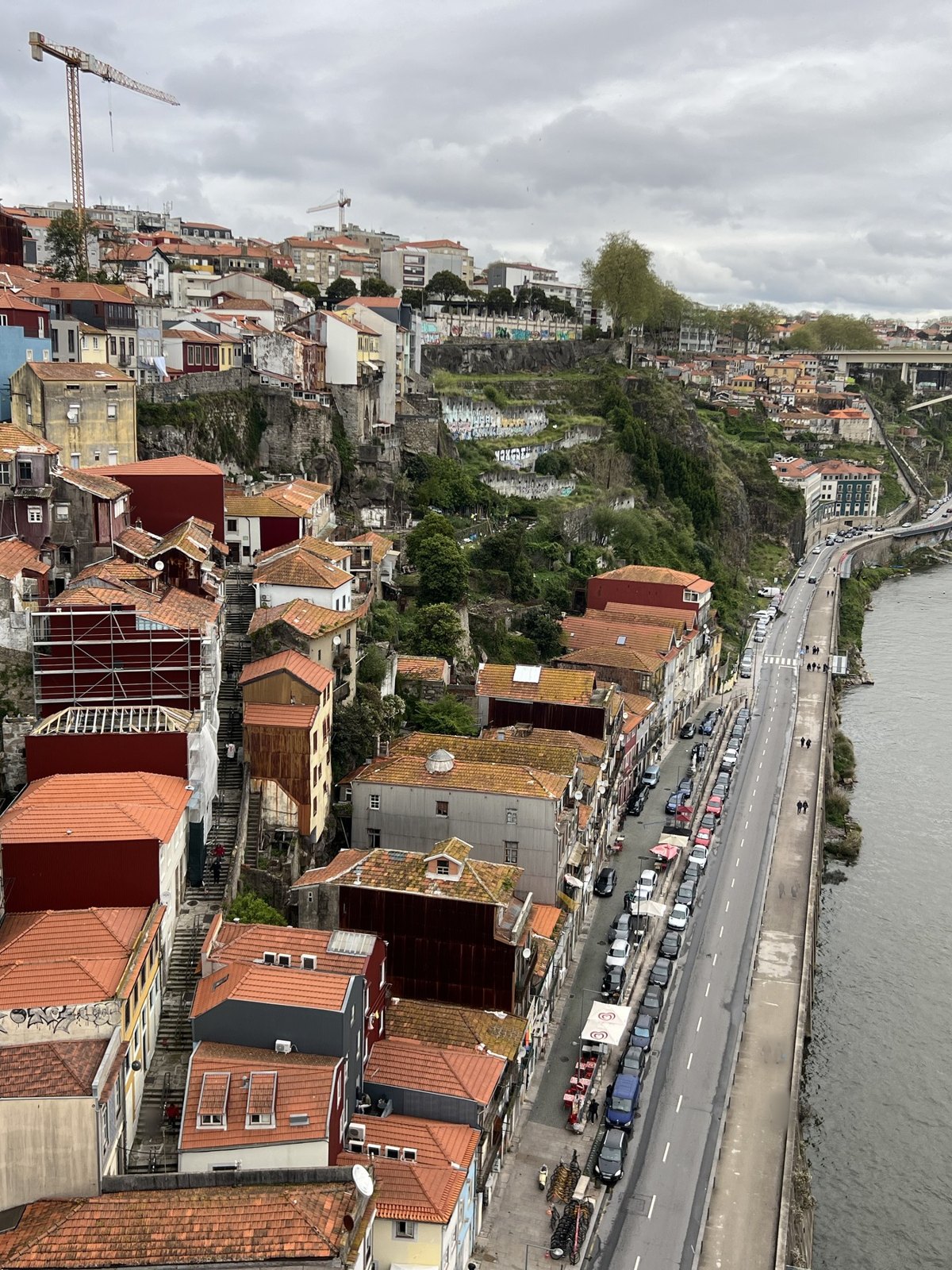
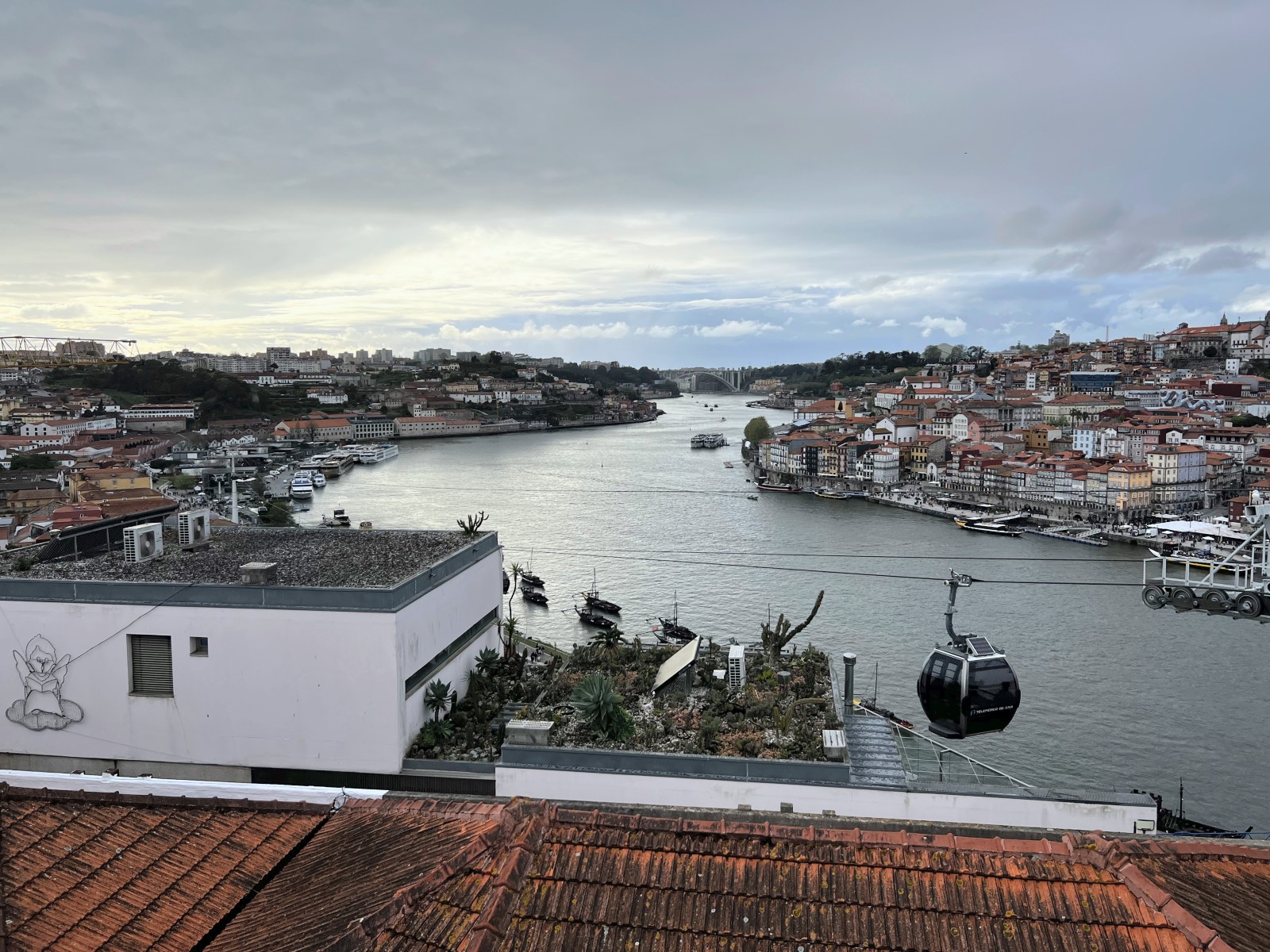
On the way down we went into an Italian restaurant, Mamma Bella, and had pizza and pasta for dinner. Colorful paintings hung on the walls, and the tables had bottles of spicy chili oil.
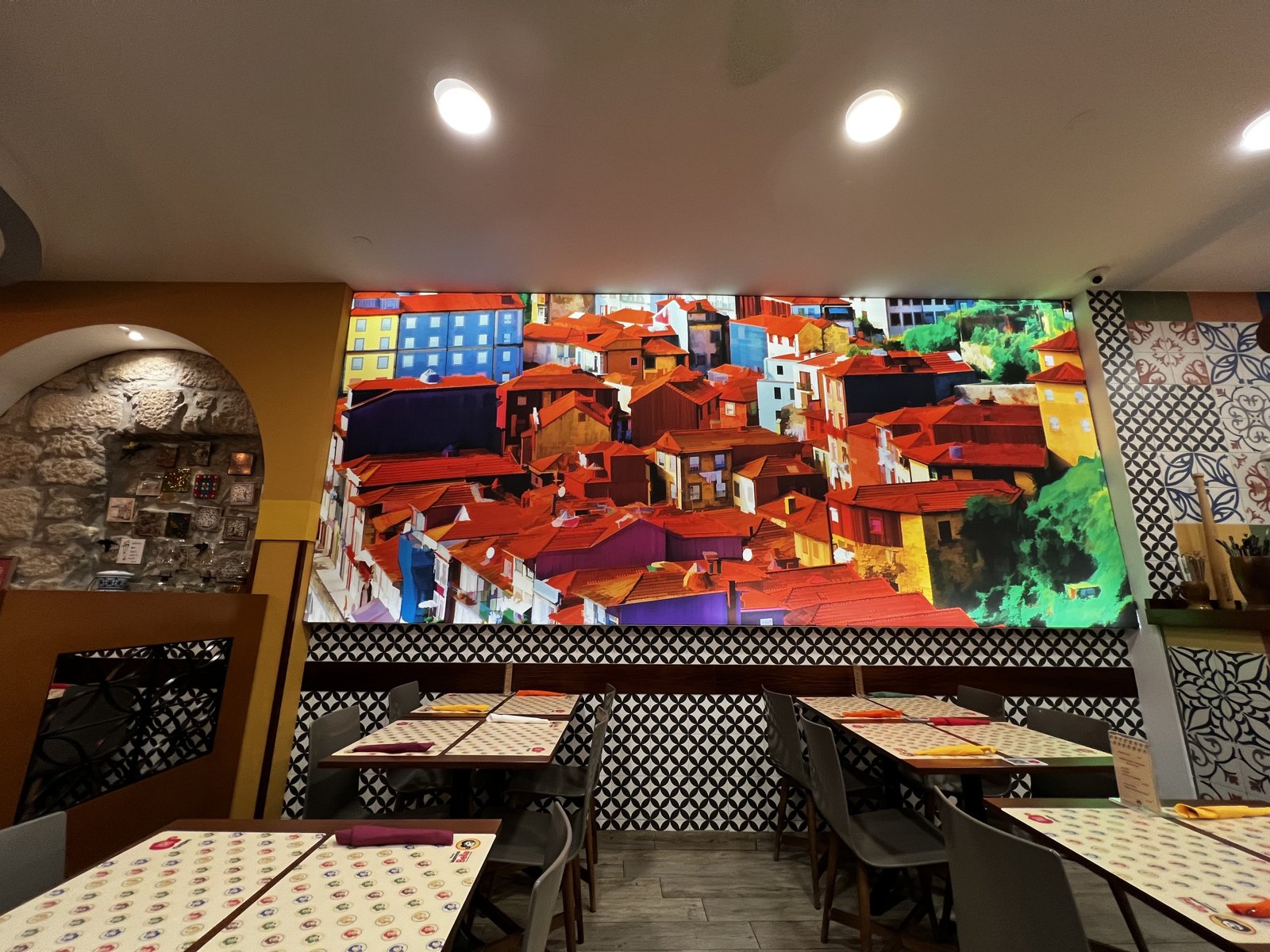
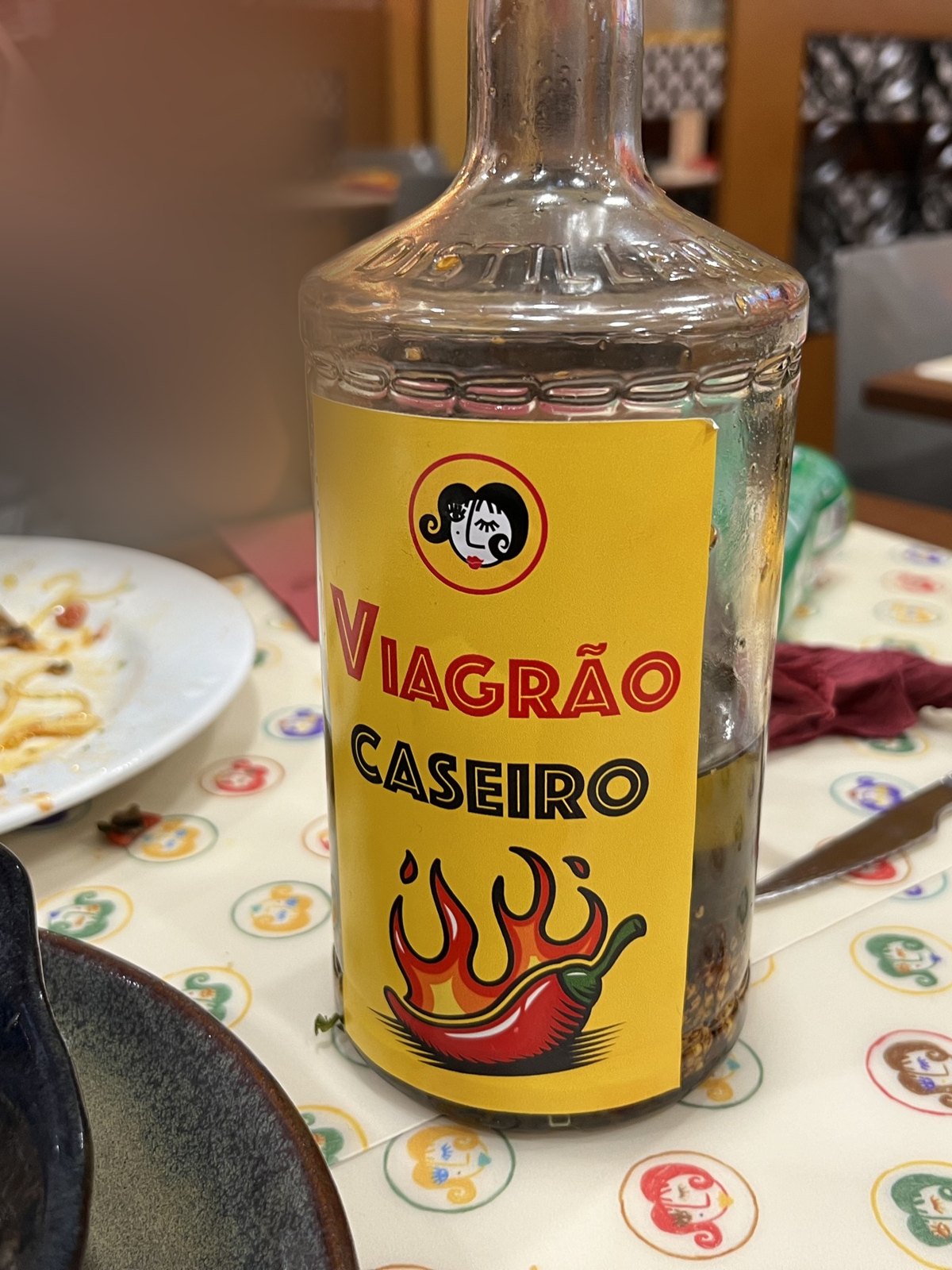
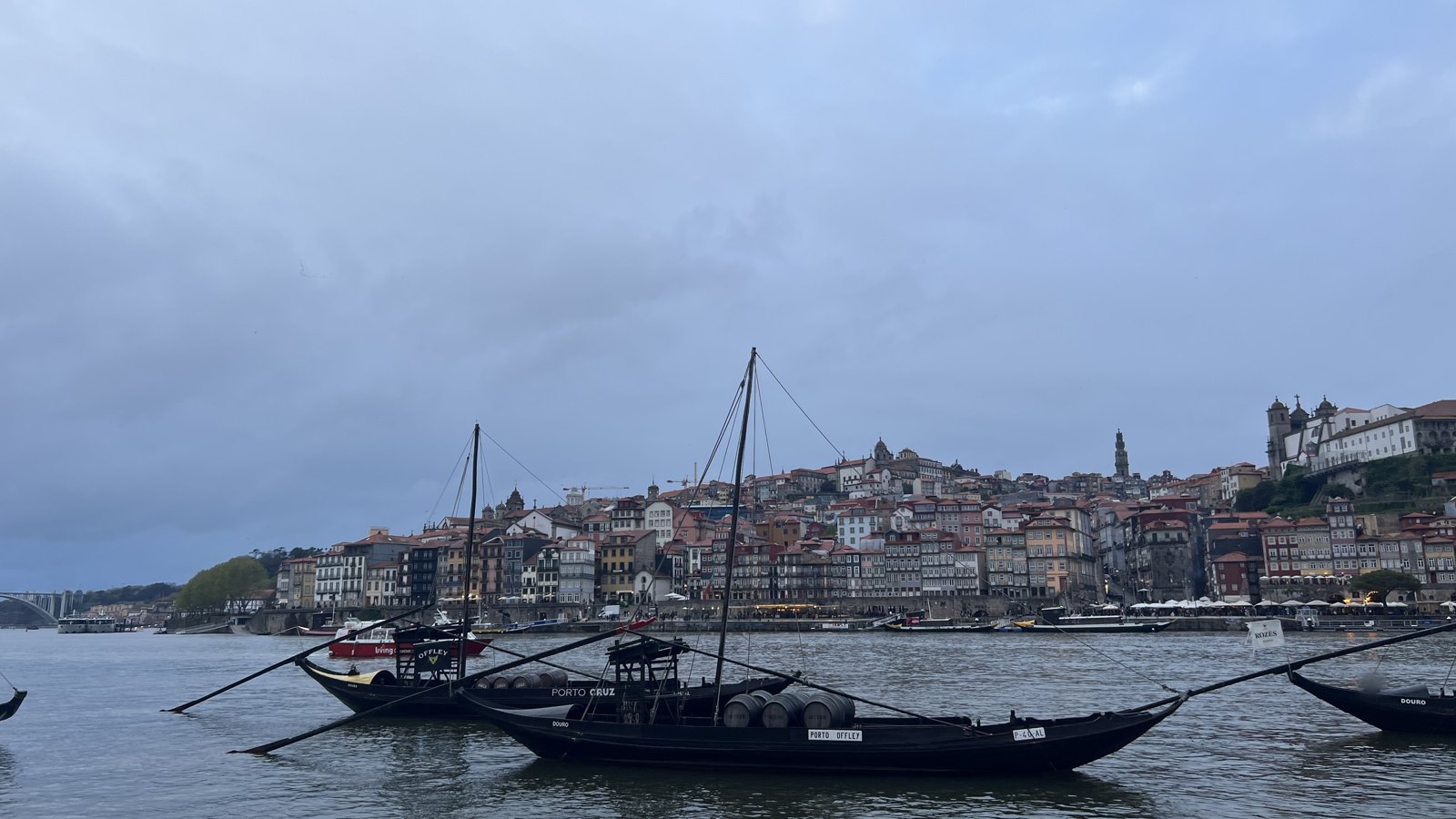
After dinner we walked down to the river. Rabelo boats, which once carried wine barrels, floated on the water. We waited for the clouds to clear until sunset, but our last evening sky stayed full of cloud.
A Porto fado show on our last night
After dinner we took a taxi to the fado venue we had booked, A Casa do Fado São João Novo. According to the booking site, it stands on the site of the old pantry of the 16th-century São João Novo monastery church, in a semi-basement below the sacristy. Fado is a Portuguese popular music that began in 19th-century Lisbon. It often sings of saudade, a longing and wistfulness, and it was added to UNESCO’s Intangible Cultural Heritage list in 2011. The singer is called a fadista, and the accompaniment comes from the Portuguese guitar (guitarra portuguesa), a 12-string, pear-shaped instrument, and a regular guitar (viola). People who had been to Portugal before had told us not to miss a fado show.
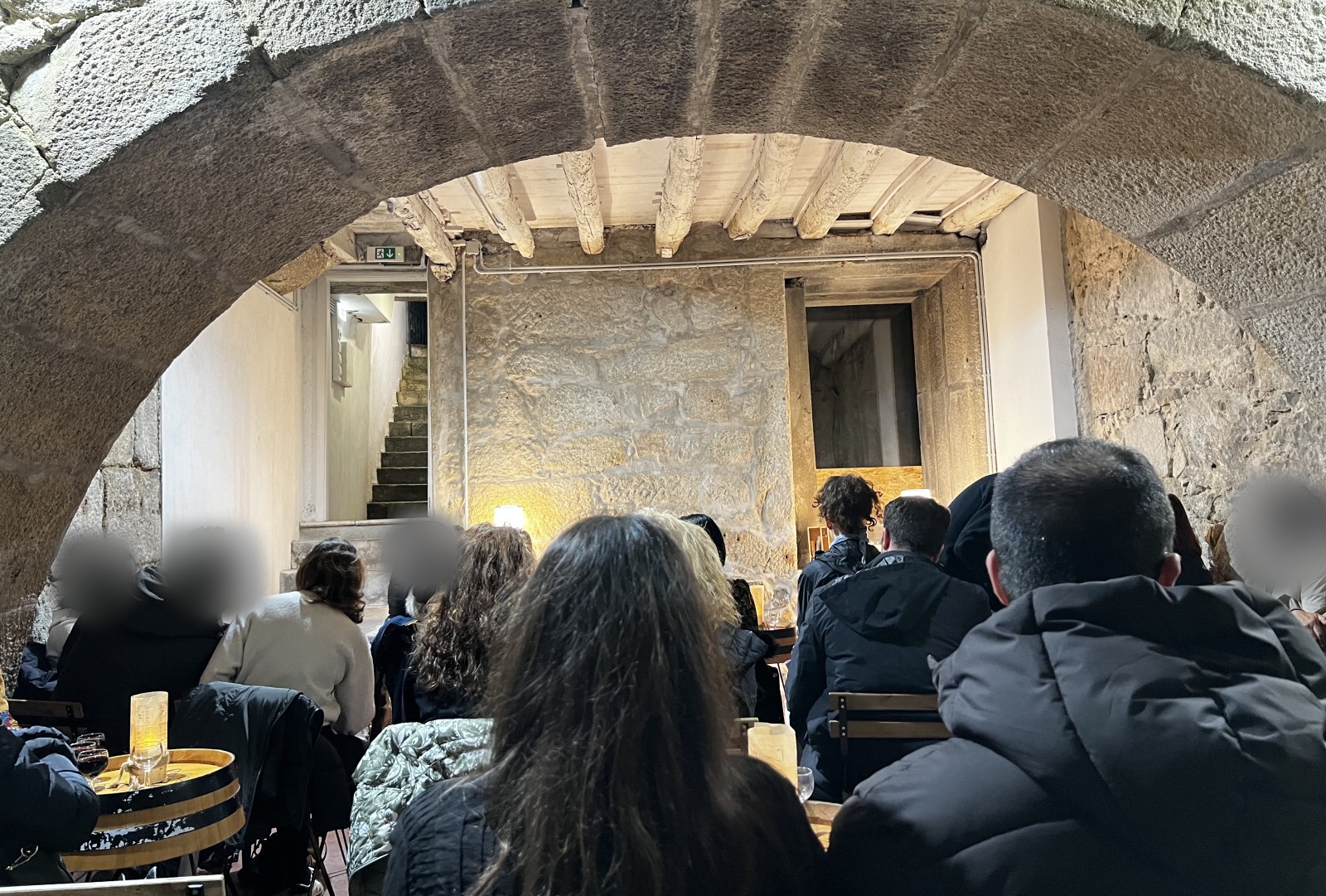
We arrived about 15 minutes before the show, but plenty of people were there already, so we sat fairly far back. Under the arched stone ceiling it felt cozy. During the show, the adults got a glass of port wine and our kid got bottled water. The venue told us we could take photos and videos freely.
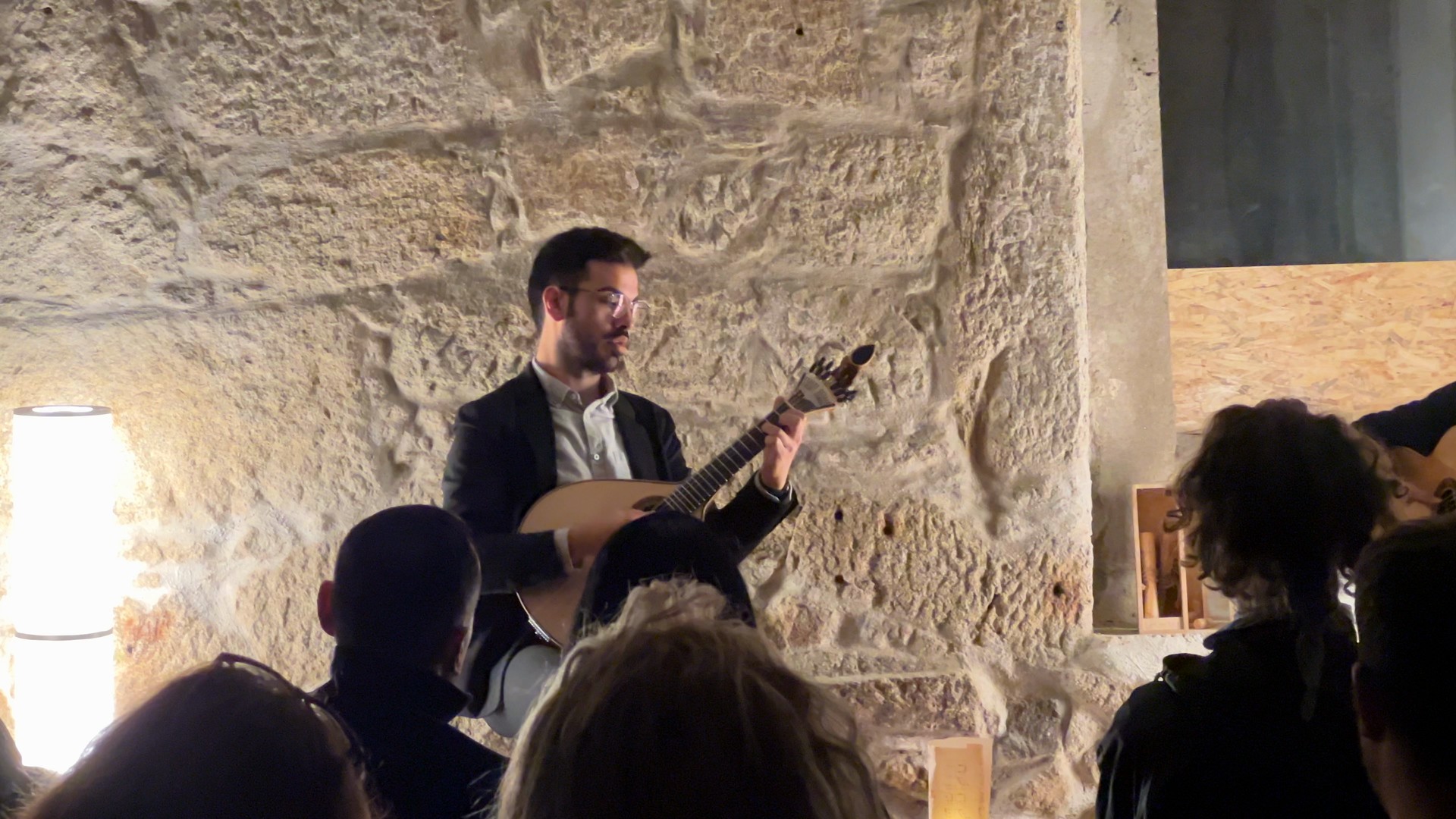
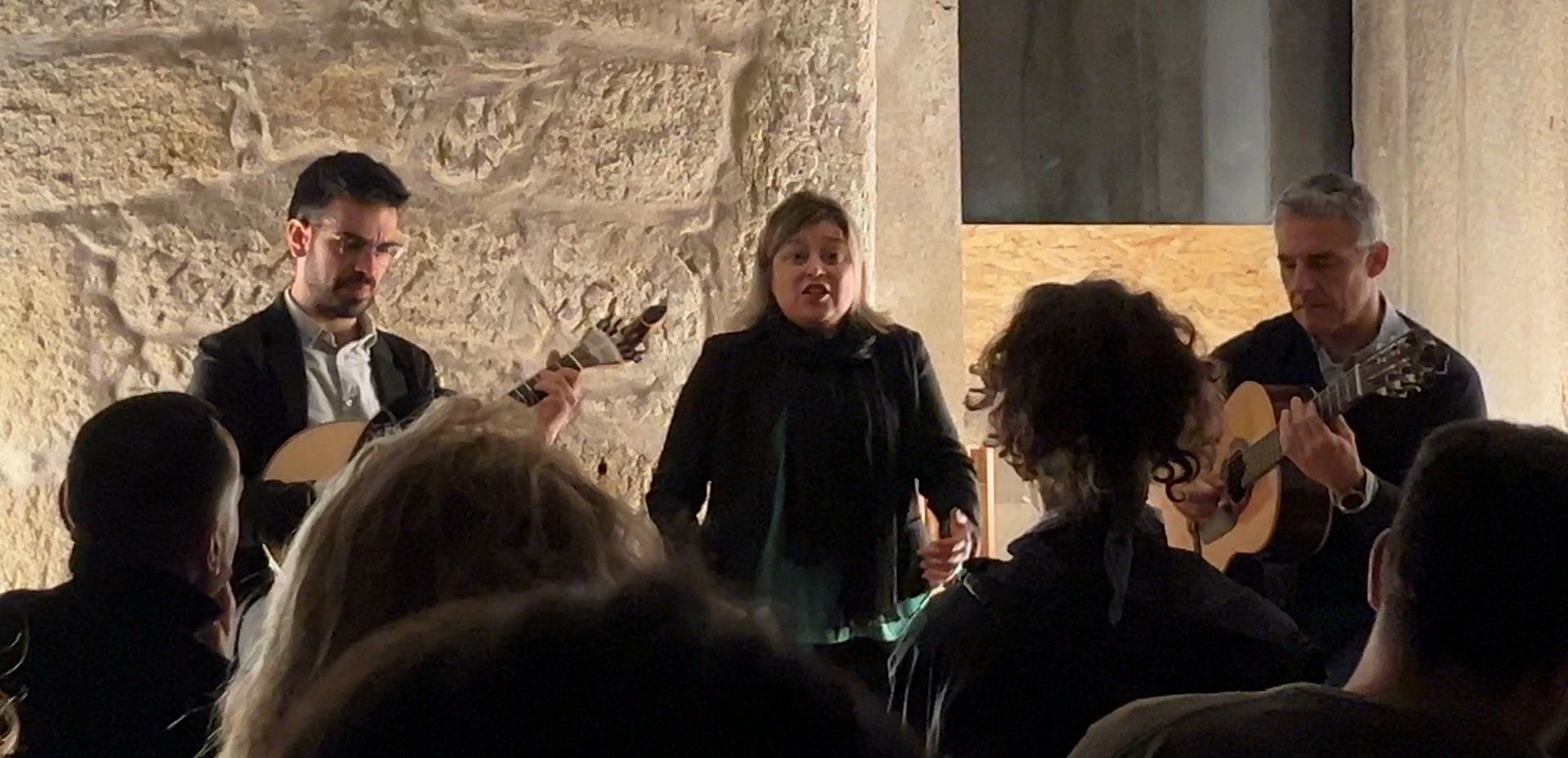
The guitarists started first, and a good while later the singer, the fadista, walked in through the entrance and went up to the stage. Before the show our kid had been bouncing around, but after watching the beginning for a bit, our kid fell fast asleep. Later, reading the diary entry for that day, my wife and I laughed until we couldn’t breathe.
“First there were people playing guitars. They practiced for a long time. Suddenly a woman came in. I thought, ‘She is really late.’ But then after she got on the stage she sang so loudly my ears almost burst. To me it just sounded like this: ‘Aaaah ooo-ooo-aa-oo.’ But the sound was funny, so it was fun. (After that I slept.)”
To our kid, the guitar playing sounded like practice, and the singer who walked in from the entrance looked like an audience member who was late. Honestly, I had wondered the same thing at first. Our kid left out the part about falling asleep, and added it later in parentheses.
Even back home, our kid asked us to put on fado before bed. The songs are fairly calm and the lyrics are impossible to follow, so I can see how it makes you sleepy. It was a show that stuck with us.
We chose the date and time on a booking site. Some shows are staged as a talk or a concert.
Fado shows in Porto
The Casa do Fado show we booked, plus a concert with commentary and a show in a guitar shop. The venue and what is included vary by listing.
Booking and price
We booked the Porto: Live Fado Show with Glass of Port Wine, an English-language show, ahead of time: two adults and one kid, €38 in total, bought on March 28. It came to $41.20 charged to our card (March 2024).
Getting there
We took a taxi from the Gaia waterfront to the venue. It cost $5.62 (March 2024).
How long we stayed
We walked into the venue around 7:15 p.m. The show started at 7:30 and ran for an hour. In the semi-basement of an old building, it was warm and cozy.
Good to know
- The booking page says to arrive at the meeting point 30 minutes before the show. We arrived 15 minutes before and sat fairly far back, which was a good distance and still cozy to watch from.
- The songs are calm and the show is in the evening, so young children may fall asleep. If you bring a child, feed them a solid dinner first.
- Whether photos and video are allowed differs by venue. At the one we went to, they told us to shoot freely.
After the show: NorteShopping
After the show we took a taxi again to NorteShopping, a mall on the edge of Porto, for a late dinner and groceries, and that wrapped up our last night in Porto. What we ate and bought is in a separate post on food in Portugal. It was pouring when we left the mall.
March 30: the day we left Porto
We left Porto on a 12:55 p.m. flight on Saturday, March 30. After some time with our kid at the airport playground, we headed to Brussels. I’ll cover Brussels in the next post.
Before you go
Prices and hours
| Place | Admission | Hours |
|---|---|---|
| Porto Cathedral nave | Free | Summer 9:00 a.m. – 6:30 p.m. Winter 9:00 a.m. – 5:30 p.m. Closed on Christmas Day and Easter. |
| Cloister and museum | €3–4 | Same as the nave. |
| Episcopal Palace | No price on the official page | Summer 9:00 a.m. – 1:00 p.m., 2:00 – 6:00 p.m. (last entry 12:30 and 5:30 p.m.) Winter 9:00 a.m. – 1:30 p.m., 2:00 – 5:30 p.m. (last entry 1:00 and 5:00 p.m.) |
Checked October 2026. Hours are from the official website of the Diocese of Porto. Travel sites list the cloister and museum admission as either €3 or €4, so it is best to confirm at the door.
Costs for the day
| Place | What | Amount (USD) |
|---|---|---|
| Starbucks, Rua dos Clérigos | March 29, coffee | 4.22 |
| Manteigaria | March 29, pastel de nata | 2.82 |
| My Coffee Porto | March 29, hot chocolate and port wine | 6.50 |
| Porto Cathedral and Episcopal Palace | March 29, admission tickets | 8.99 |
| Mamma Bella | March 29, dinner, pizza and pasta | 28.16 |
| Taxi (Bolt) | March 29, Gaia waterfront to the fado venue | 5.62 |
| Fado show (booked in advance) | Charged March 28, two adults and one kid | 41.20 |
| Taxi (Bolt) | March 29, fado venue to NorteShopping | 7.40 |
| Taxi (Bolt) | March 29, evening, mall to the apartment (billed March 30) | 5.15 |
Amounts charged to our card, tax included, March 2024 prices. The NorteShopping charge on the night of March 29 is in the food post.
TermsWords used in this post
The city across the Douro River from Porto. Port wine lodges line its waterfront.
A stone pillar in a square that stands for a town’s right to govern itself. Criminals were once tied to it and punished.
Portuguese popular music sung to guitar accompaniment, added to UNESCO’s Intangible Cultural Heritage list in 2011
A fado singer
The 12-string, pear-shaped guitar that accompanies fado
A Portuguese word for a mix of longing and wistfulness, a feeling fado often sings about
Q&A at a glance
Until what time can you visit Porto Cathedral?
According to the Diocese of Porto’s official website, the church, museum and cloister are open from 9:00 a.m. to 6:30 p.m. in summer and 9:00 a.m. to 5:30 p.m. in winter (checked October 2026). We went in at around 4:30 p.m. On days with Mass, you may not be able to climb the tower.
Is a fado show okay for kids?
Our kid fell asleep partway through, but wrote about it happily in the diary that night and even asked for fado at bedtime back home. The show is in the evening and the songs are calm, so young children can get sleepy. It helps to feed them a good dinner first and dress them comfortably.
Do you need to book a fado show in Porto in advance?
We chose a date and time on a booking site and booked ahead. When we arrived, the room was already fairly full. If you want a front-row seat, arrive early.
What is the weather like in Porto in late March?
On March 29, the day we went, the high was 14°C (57°F) and the sky was blue for the first time in a while, but rain came back from the afternoon. The weather swung back and forth even within a day, so it is easier to carry an umbrella in your bag.
Wrap-up
- Time spentMarch 29: the cathedral and Episcopal Palace from around 4:30 p.m., the fado show from 7:30 p.m.
- CostCathedral and palace tickets, the fado show, taxis, and everything we ate and drank are in the cost table above (March 2024 prices)
- If we went backIf we saw a fado show again, we would book ahead, as we did this time.
The sound of fado echoing under a stone ceiling filled our last night in Porto. Our kid fell asleep during the show but still asked for fado at bedtime back home, so for our family, the last night in Porto will be remembered as the fado show.
The longer we stayed in Porto, the more we liked it. The weather was the one letdown on this trip.
Even with the weather, the trip made us feel many times over how livable Portugal is. Looking back, I miss it, and I think of more things I wish we had done.
Planning your Porto trip
Where to stay in Porto, by type
We spent five nights in an apartment. Even within Porto, the setup differs by type of stay.
Planning a trip to Portugal?
Compare flights and rental cars here, and pick up a guidebook to read before you go.
Sources checked 5
- Diocese of Porto official website, Porto Cathedral Hours, closing days, Mass times, and dates for the rose window, main chapel, altar, cloister, azulejos and Nasoni’s loggia (checked October 2026)
- Diocese of Porto, visiting the Episcopal Palace (Paço Episcopal) What the visit covers, hours, history of the building (checked October 2026)
- UNESCO Intangible Cultural Heritage, fado (2011): the official listing (checked October 2026)
- Visit Porto (Porto City Council), Pelourinho da Sé Demolition of surrounding buildings in 1940, installation in 1945, the 1797 drawing (checked October 2026)
- OGIMET weather station daily summaries: Porto (08545), March 2024
Not in the list? Search it yourself
Places to stay nearby, on a map
Affiliate link: if you book through this search, the blog earns a commission at no extra cost to you. Results open in a new tab. About affiliate links
Discover more from Elsewhere, Mostly
Subscribe and get new posts sent straight to your inbox.