In this post Our first afternoon in Porto, on foot, after we returned the rental car on March 26. We saw the azulejo-covered side wall of Carmo Church, the University of Porto’s main building, the line outside Livraria Lello and a shop full of sardine tins, then the tile panels inside São Bento Station. We crossed the upper deck of the Dom Luís I Bridge just before a storm rolled in.
- WhenTuesday, March 26, 2024, day 10 of our trip
- Route for the day
- Europcar, Porto city locationTransitWe returned the rental car, took a taxi to the apartment and had lunch there
- 🚕 Taxi to the apartment
- Carmo Church side wall and the University of Porto main buildingSightsA blue-tiled wall and a hallway hung with moon-like spheres
- 🚶 On foot
- Livraria Lello and the sardine-tin shopSightsThe bookstore line was too long, so we stayed outside; we only browsed the tin shop
- 🚶 On foot
- São Bento StationSightsAzulejo tiles covering the walls of the main hall
- 🚶 On foot, nearly 30 minutes with stops at the street stalls
- Dom Luís I Bridge, upper deckSightsWalked across to Gaia, with a storm hitting midway
- 🚕 Taxi back to the apartment, over the Infante Dom Henrique Bridge
- NorteShoppingShoppingClothes shopping
- AdmissionPaidLivraria Lello (we didn’t go in)FreeThe Carmo Church side wall, the University of Porto museum (when we visited), São Bento Station and the Dom Luís I Bridge
- WeatherMarch 26: high of 14°C (57°F), 5°C (41°F) in the morning, about 20 mm (0.8 in) of rain, and a storm while we crossed the bridge
- WhoTwo adults and one kid
- Where we sleptAn Airbnb apartment in Porto, night 2 of 5
In this post
Returning the rental car and starting on foot
The morning after we reached Porto, we returned the rental car we had driven for six days. Driving in a city we mostly wanted to explore on foot sounded like a headache, so we gave it back. We did a big grocery run early, dropped everything at the apartment, and handed the car over at the Europcar city location around 11. Then we called a taxi with Bolt, a ride-hailing app, went back to the apartment and cooked lunch. I covered the rental car in a separate post about getting around Portugal, and the supermarket stops in one about food.
Late in the afternoon we finally set out for the old town. As in Lisbon, we had no plan and just followed our feet. This is what our kid wrote about Porto in the diary that night.
“The whole city was so cute.”
Our first afternoon in Porto was one line across the old town, from Carmo Church to São Bento Station, then down to the river and over the upper deck of the Dom Luís I Bridge to Gaia.
The azulejos of Carmo Church and the University of Porto’s main building
The first thing that caught my eye was a whole building wall covered in blue tiles, called azulejos. It is the side wall of Carmo Church (Igreja do Carmo). The church itself is an 18th-century building, put up between 1756 and 1768, but the tiles on its side wall were added much later, in 1912. They show scenes from the story of how the Carmelite order began and from Mount Carmel, and they were fired at a factory in Gaia, across the river. Blue pictures on a white background run from top to bottom, and the people standing at the traffic light below looked tiny.
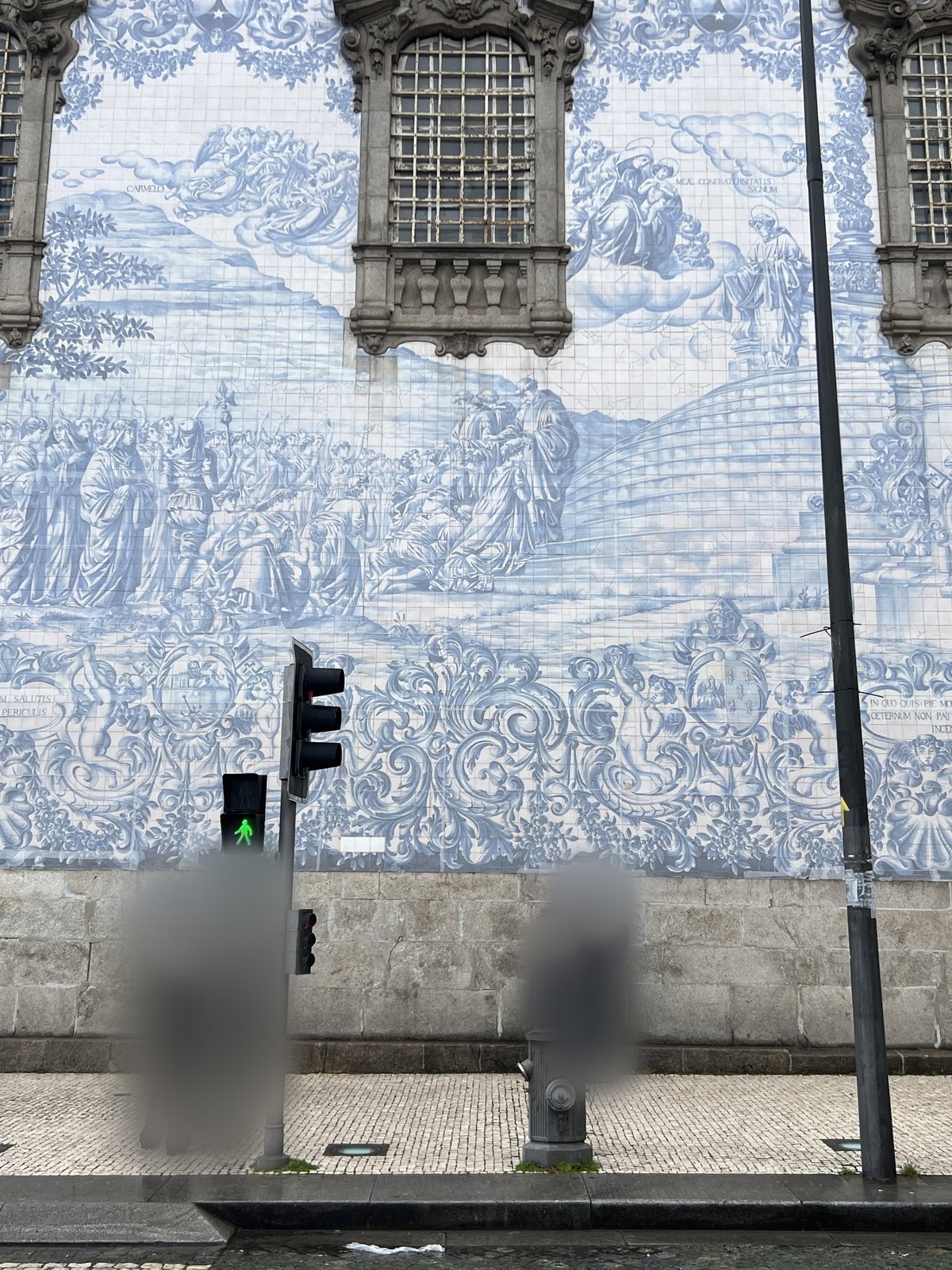
Right next to it stands Carmelitas Church (Igreja das Carmelitas), and between the two churches is a narrow house only 1 to 1.5 m (3 to 5 ft) wide. The story goes that it was built so the walls of the two orders would never touch. Both churches became national monuments together in 2013.
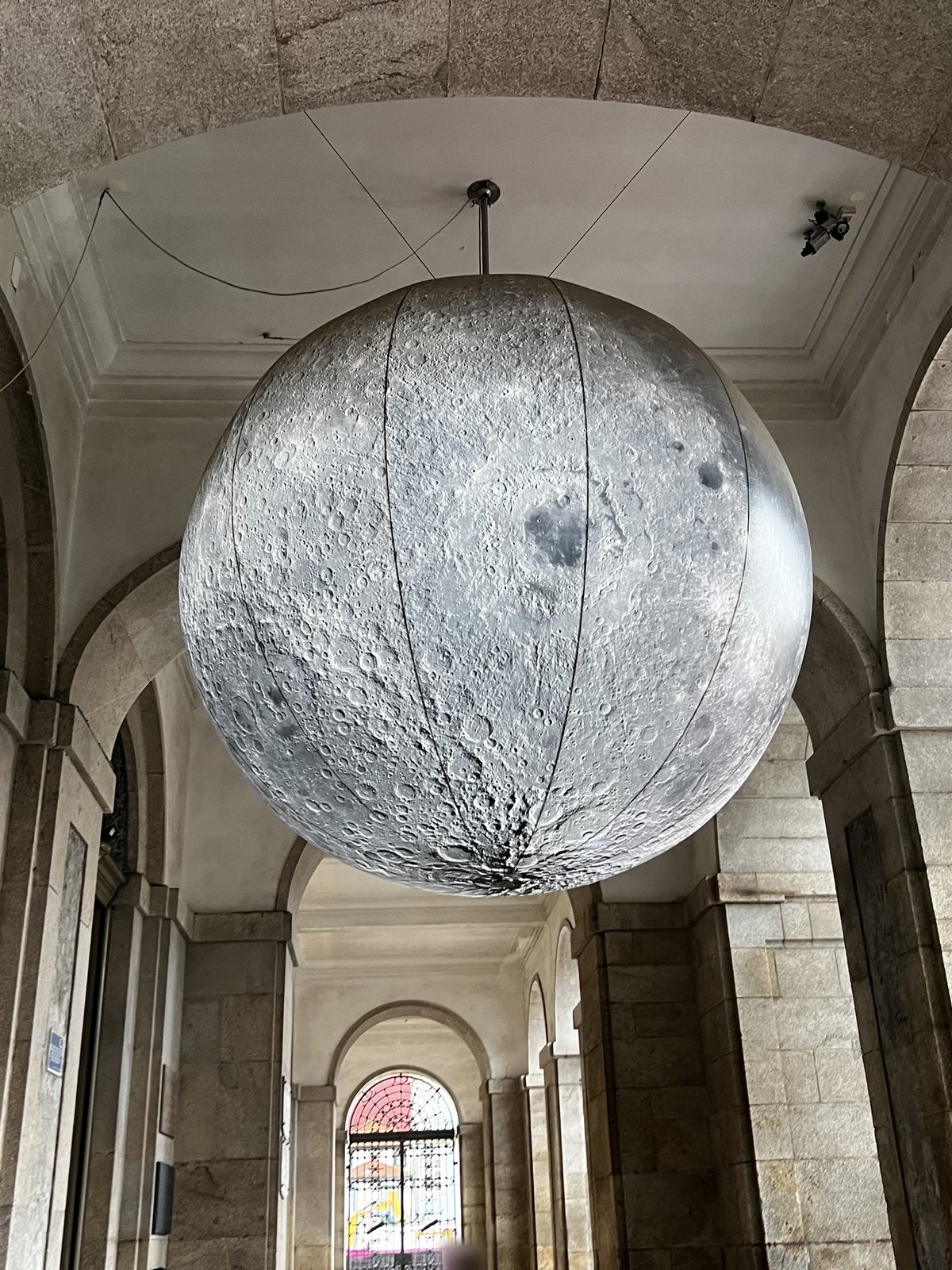
Nearby is a square with a fountain, and beside it the main building of the University of Porto (Universidade do Porto, called the Reitoria). The building began as an orphans’ school. From 1803 it housed the Royal Academy of Navigation and Commerce, and from 1837 the Polytechnic Academy, and it became the university’s main building when the university was founded in 1911. Today the University of Porto’s natural history and science museum uses it as a base. We dropped in on the way, and the quick look at the exhibits was free. In the arched hall at the entrance, big spheres printed with photos of the moon’s surface hung from the ceiling.
One exhibit set an old ladder and a broken glass between two chairs, with a line in Portuguese painted large on the wall. It meant something like “even if everything around us can break, the two of us will be safe in love.” The exhibits that followed were about art and creative expression.
Souvenir shops lined the lanes, and our kid pulled us into a few of them.
Livraria Lello from the outside, and a sardine-tin shop
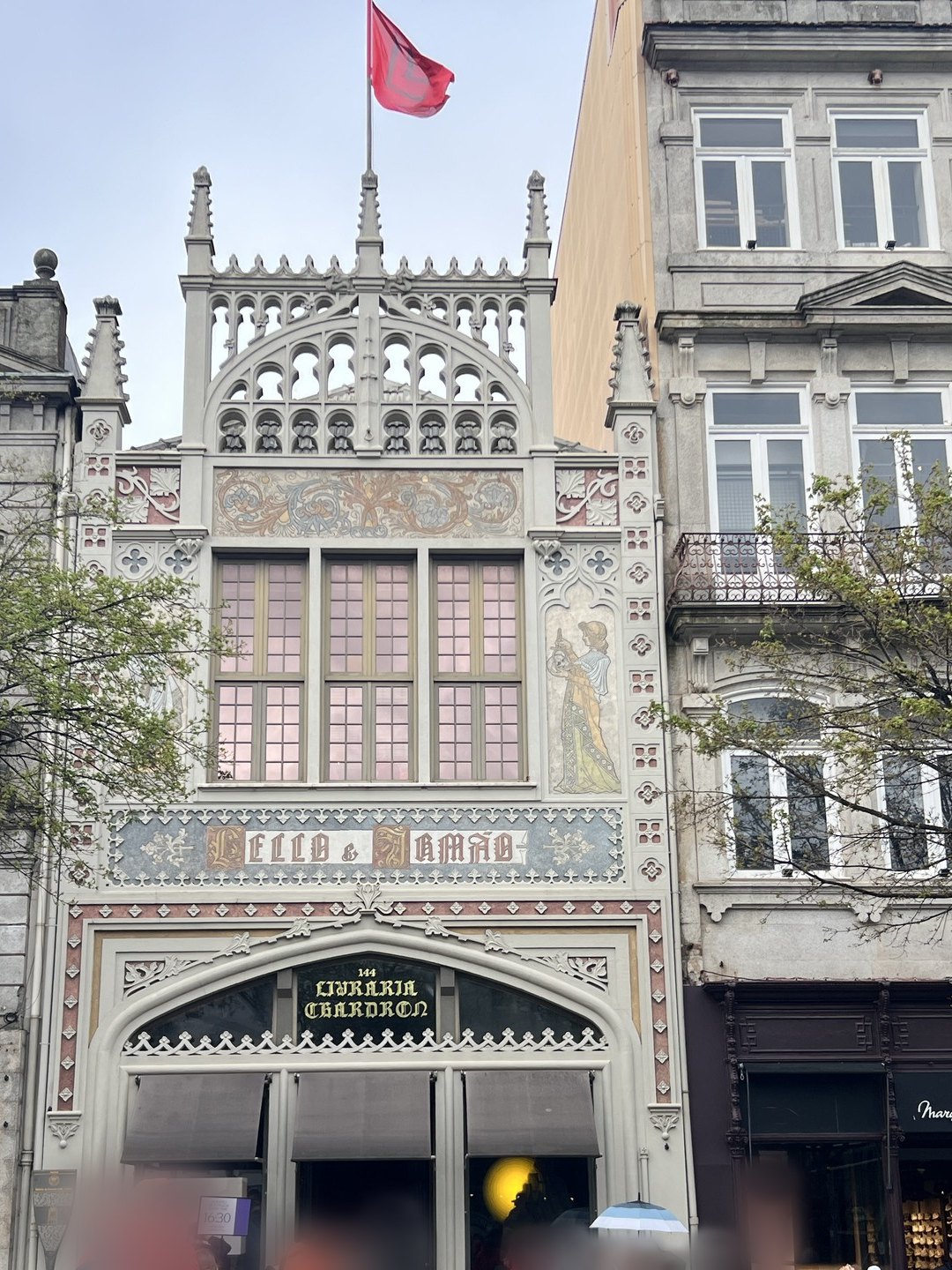
We walked past Livraria Lello too. The bookstore opened in 1906, and the architect, Francisco Xavier Esteves, mixed neo-Gothic style with Art Nouveau touches. Its signature is the staircase that splits in two at the back. It became famous for the story that it inspired Harry Potter, but J.K. Rowling wrote in a 2020 post that she had never been there. She did live in Porto in the 1990s. Lello began charging admission in 2015. According to the bookstore, the aim was to manage the flow of tourists and turn people who came to look into people who buy books.
When we went, a long timed-entry line stretched along the street. We decided that taking in the facade from outside was enough. I had felt the hush of an old, beautiful library several times at the Abbey Library of St. Gallen (Stiftsbibliothek St. Gallen) in Switzerland, so we spent that time walking more of the city instead.
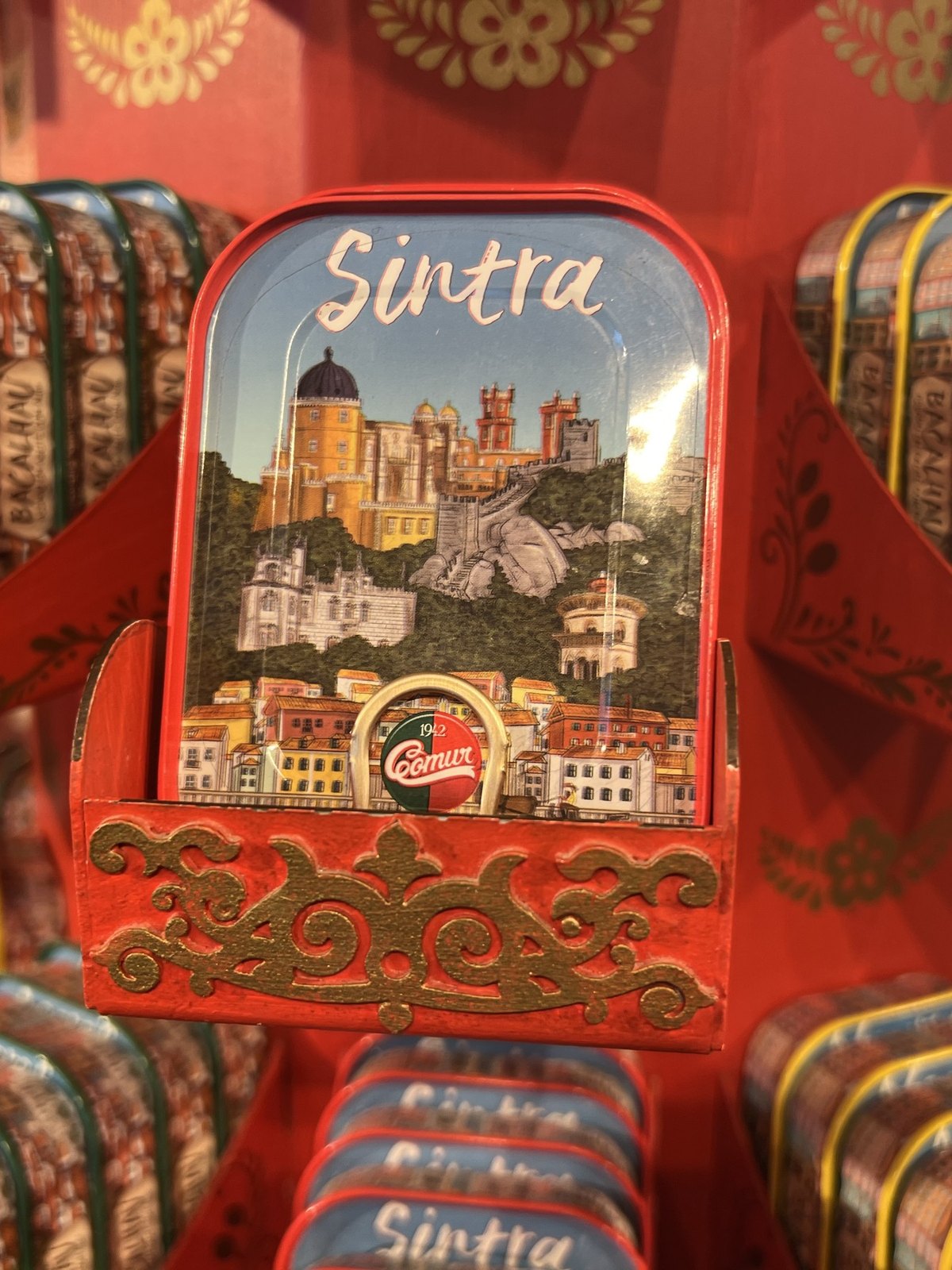
Nearby was a shop selling sardine tins as souvenirs. It is called O Mundo Fantástico da Sardinha Portuguesa (“The Fantastic World of the Portuguese Sardine”), and the same shop appears in other places around Portugal. The decor is circus-themed, with red shelves stacked with tins, and every tin is printed with a picture of a Portuguese landmark or a year. Canning spread across Portugal from the 1850s, and by 1912 Portugal was the world’s biggest exporter of canned fish. Many tins showed places we had passed, like Sintra and the Algarve, as well as sights in other cities, so it was fun to hunt for the ones we knew. The Sintra tin carried the logo of Comur, a cannery that opened in Murtosa in 1942. We bought nothing and only browsed, and later we picked up a few ordinary tins at a supermarket to taste.
Sardines in olive oil
We only browsed the tins in the shop, but tinned sardines are easy to find online too. These aren’t the same as the souvenir tins we saw.
How to get into Livraria Lello
You need a ticket to go inside Livraria Lello. When we were there, it was €8 per person. According to the official site, the ticket doubles as a book voucher, so if you buy a book, the ticket price comes off. Children up to age 3 are free, and it is open Monday to Sunday, 9:00 a.m. to 7:30 p.m. (checked October 2026). When we passed at about 4:40 p.m., the line was still long.
Seeing Lello without the line
The line was long, so we only saw it from outside. Some walking tours of the old town include a visit inside.
A kid in a puddle, and the tiles of São Bento Station
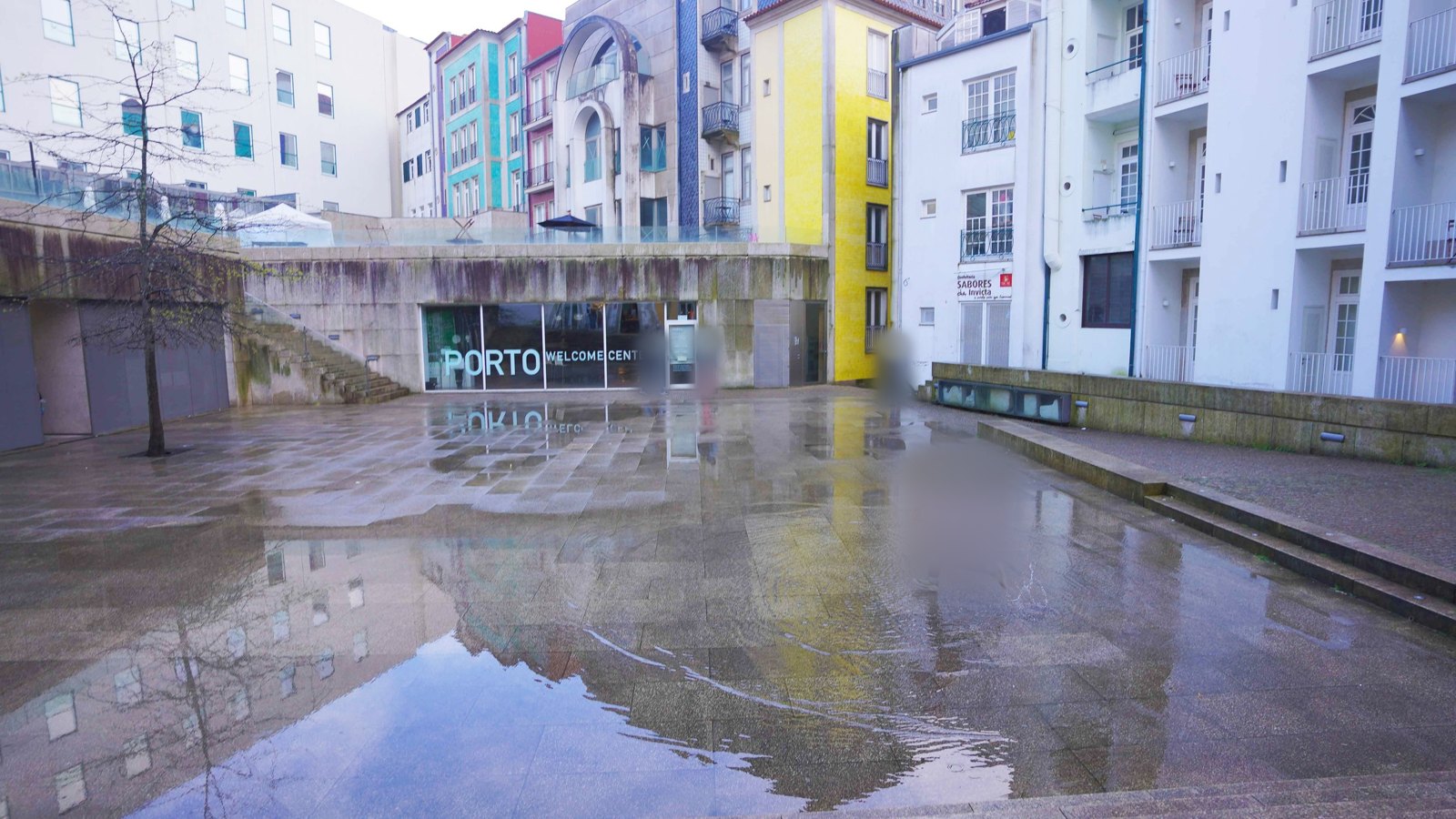
While we were traveling in the south, it was a warm 20°C (68°F) or so. Up in Porto the daytime high was about 14°C (57°F), which felt really chilly, and the weather kept changing. Our kid didn’t care. In a plaza in front of one of the buildings was a huge puddle, and our kid jumped straight in and splashed around. Shoes and clothes were soaked in no time, and since they were already wet, our kid kept running through it for a good while.
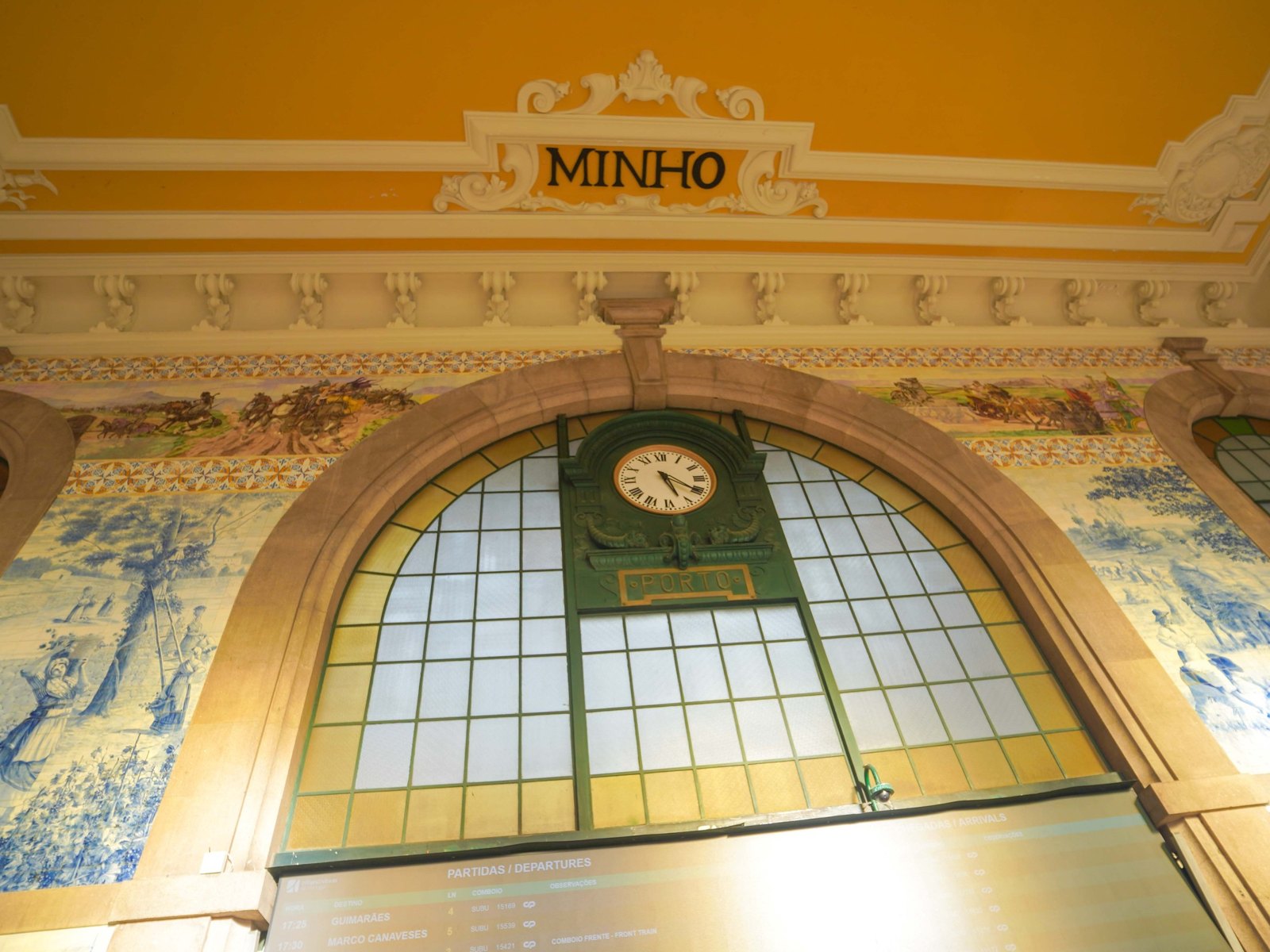
Nearby we stopped at São Bento Station (Estação de São Bento). It stands on the site of a monastery of the same name (São Bento da Avé Maria) and was designed by the architect José Marques da Silva. It opened on October 5, 1916. Blue azulejo scenes cover the walls of the main hall. The painter Jorge Colaço worked on about 20,000 tiles between 1905 and 1916. The panels run through Portuguese history, including the Battle of Valdevez in 1140, King John I’s entry into Porto and the conquest of Ceuta in 1415, along with country people harvesting grapes and the development of transport. In the afternoon light from the high windows, I stood looking up at the walls for a long while.
It was crowded and chaotic, but seeing the famous tile walls I had only heard about was wonderful. There was a lot of construction around the station and the squares, and we had to detour in places.
São Bento Station: good to know
- It sits in the middle of the old town, so it is easy to stop by on the way to Clérigos Church or the Ribeira waterfront. After the station we walked to the Dom Luís I Bridge.
- The main hall is always crowded with rail passengers and visitors. If you want photos without many people, aim up at the top of the walls.
The Dom Luís I Bridge’s upper deck, and weather that changed halfway across
Next we headed for the Dom Luís I Bridge (Ponte Luís I), the symbol of Porto. It is a two-deck iron bridge over the Douro River, designed by Théophile Seyrig, Eiffel’s former business partner, and built by the Belgian company Willebroeck. Construction began in 1881, and the upper deck opened on October 31, 1886. The single arch that spans the river is about 172 m (564 ft) wide.
Trams ran on the upper deck from 1908 to 1959, and since 2005 Metro line D has crossed it. There were tolls once, too: from 1886 to 1944 you had to pay to cross. The lower deck was closed to vehicles for repairs from October 2021 and reopened on April 14, 2023. Since then it has been open only to public transit, taxis, bicycles, emergency vehicles and pedestrians, rather than ordinary cars (as announced in 2023).
There were so many street stalls on the way that we kept stopping. At one stall we bought another wooden spinning top, this one engraved with our kid’s name. Our kid was deep into Beyblades at the time and collected tops all through the trip. It had gotten colder, so I held a hot coffee and ate churros, while our kid picked a cold slushie. Because our kid’s clothes were wet from the puddle, I had planned to turn back at the foot of the bridge. Then the sun came out warm, so we decided to cross after all.
The spinning tops our kid collected
Our kid was deep into Beyblades during the trip. These aren’t the same as the wooden top from the stall.
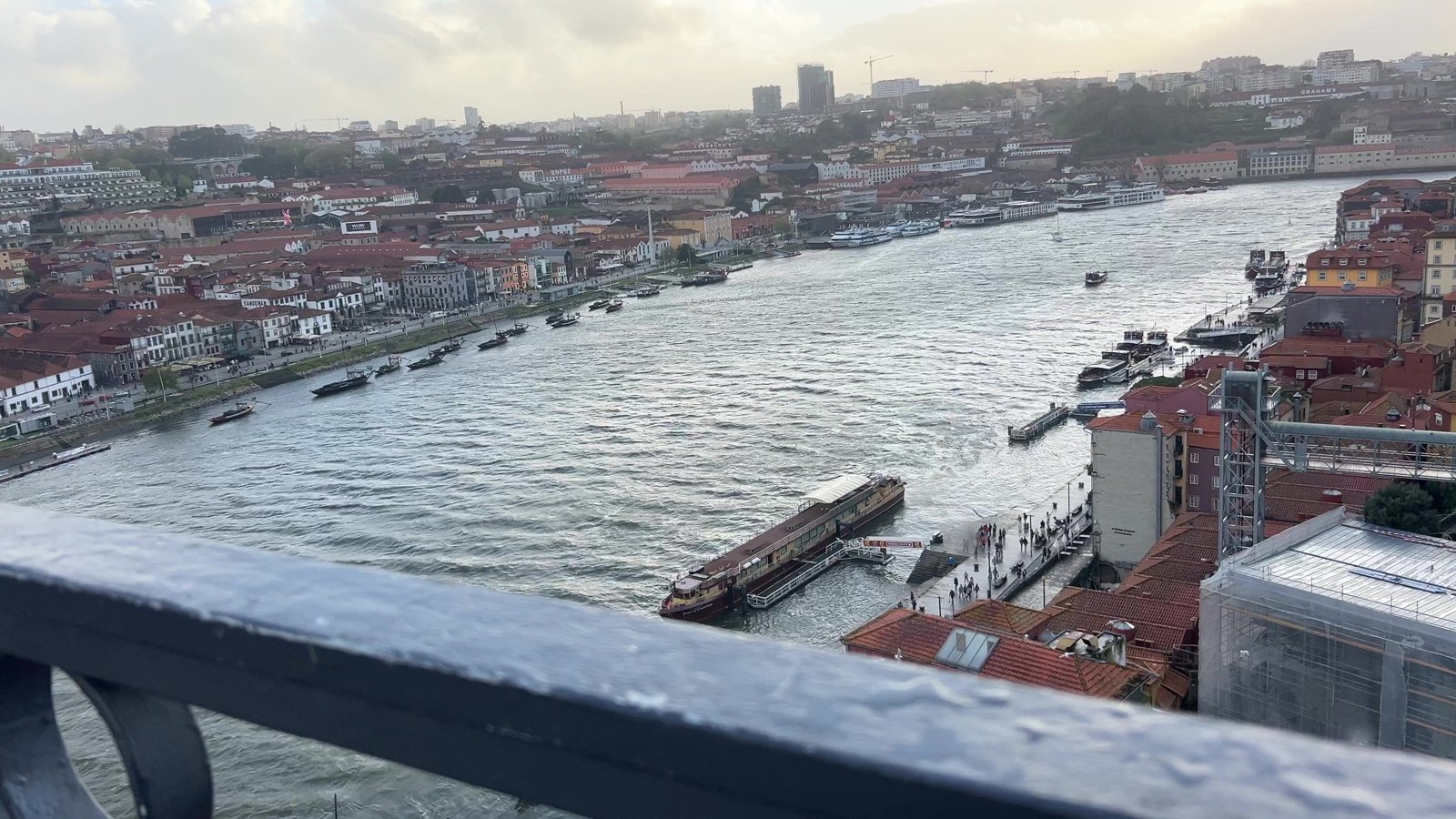
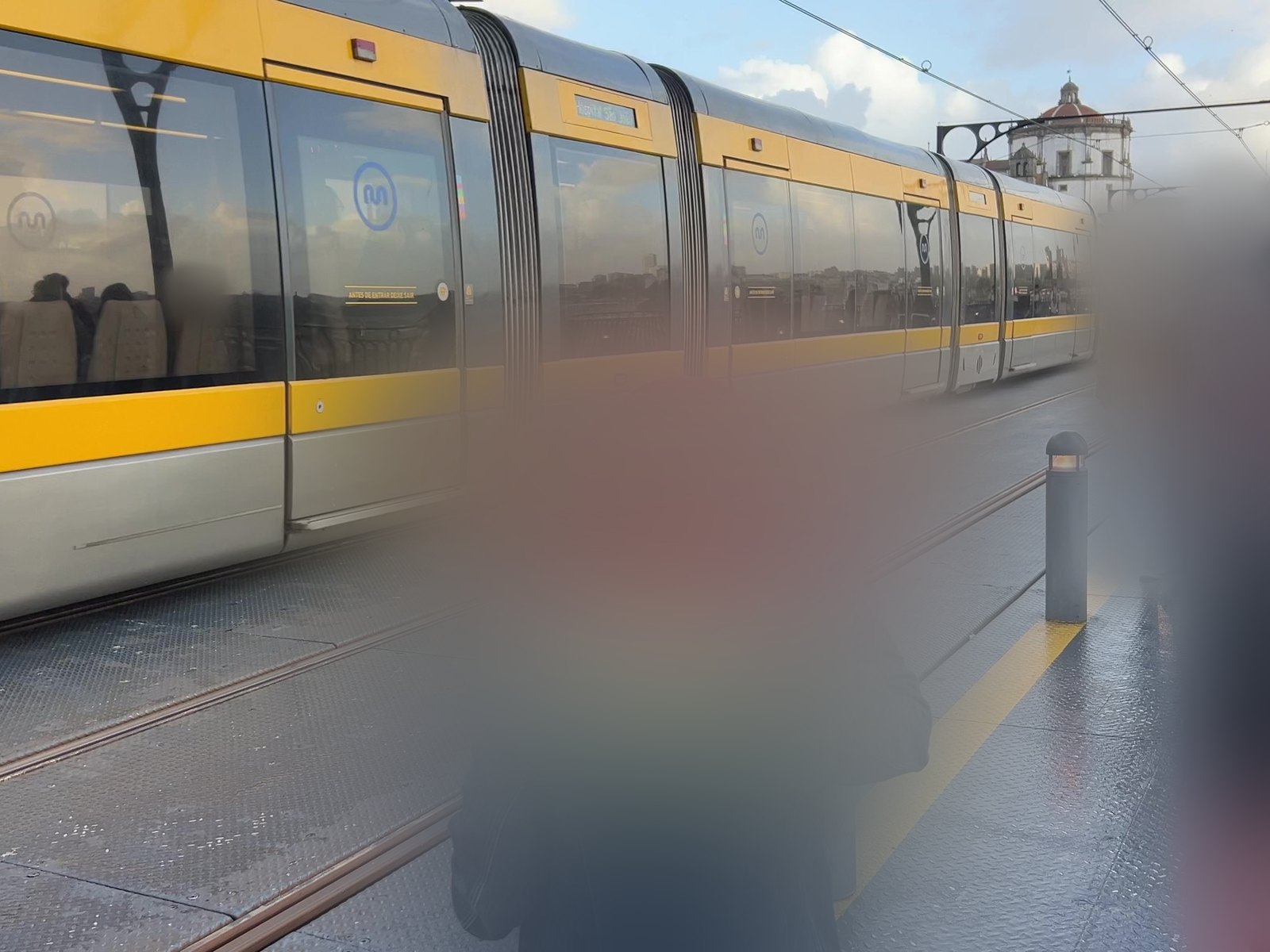
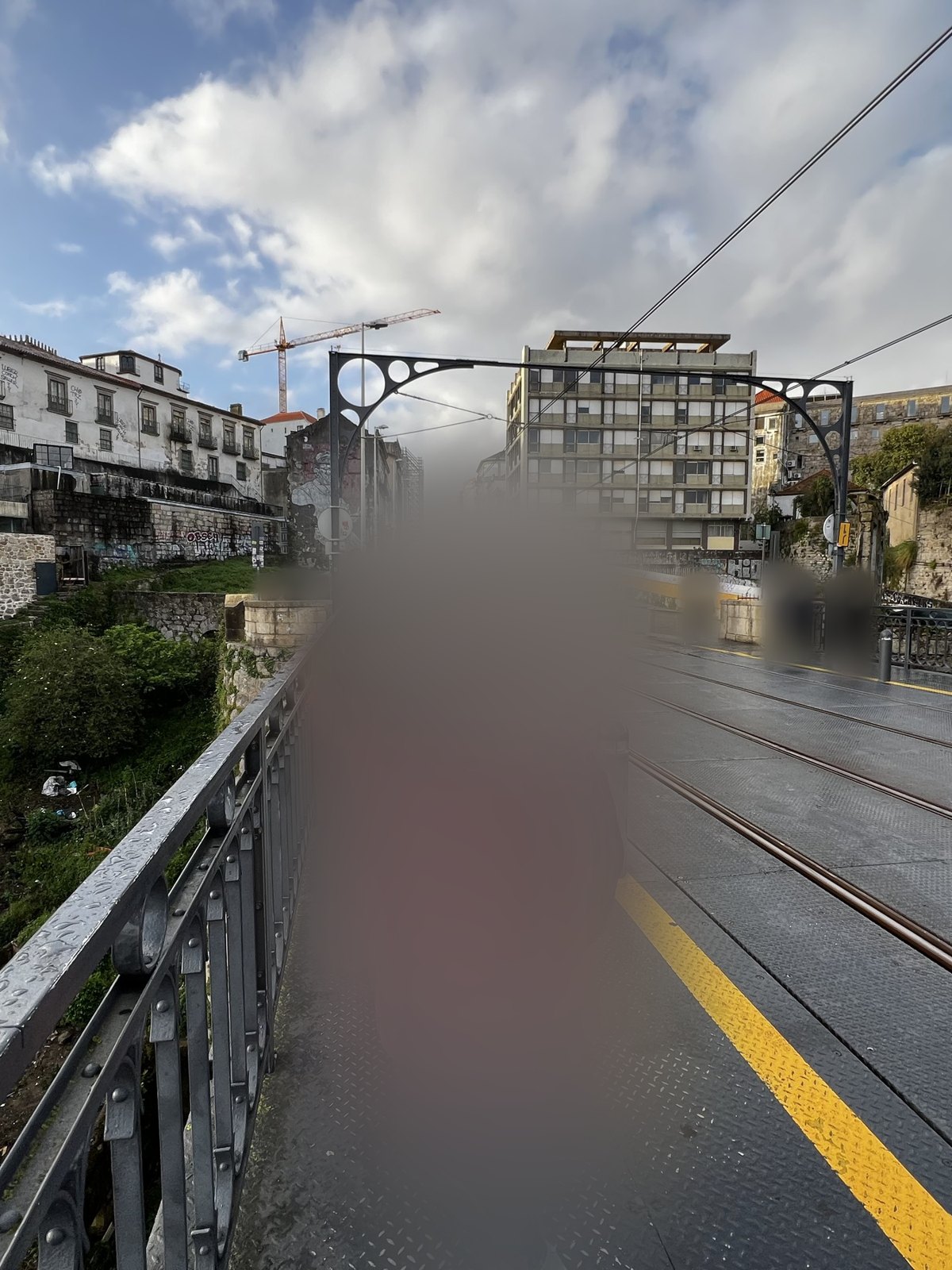
On the upper deck, the yellow metro runs right beside you. Ribeira, the district you see below the bridge, is a riverside port quarter that grew up inside the medieval walls. After a great fire in 1491 it was rebuilt with houses that had arcades on the ground floor, and when the gates and walls came down in 1821–1822, the houses opened toward the river. It declined after Leixões port opened in 1895, restoration began in the 1970s, and in 1996 it became part of the UNESCO World Heritage Site Historic Centre of Porto. On the other side, we could look down on the riverfront of Gaia (Vila Nova de Gaia).
We walked along, looking back and forth between Ribeira on the Porto side and the Gaia waterfront. But in the less than 400 m (1,300 ft) it takes to cross, the weather changed several times. The sky clouded over fast, and by the time we reached Gaia a storm was blowing in. All around us, umbrellas flipped inside out one after another. We had crossed the bridge, and our kid needed dry clothes, so we called a taxi and went straight back to the apartment.
Getting there
From São Bento Station, walk downhill and you reach the upper deck entrance. It is about 0.4 km (0.25 mi) in a straight line from the station, so about 10 minutes at an ordinary pace. We stopped at street stalls along the way and it took nearly 30 minutes. Metro line D runs on the upper deck, and the Gaia end leads up to the hilltop across the river. The lower deck connects the Ribeira waterfront directly to the Gaia waterfront.
How long we stayed
The bridge is under 400 m (1,300 ft) long, so crossing takes about 5 minutes at an ordinary pace. With stops for photos, we took about 15 minutes, from roughly 5:55 to 6:10 p.m.
Good to know
- On the upper deck, the metro runs alongside the walkway next to the railing.
- The bridge is over the river, so it is windy, and in March the weather can turn from sunny to stormy quickly enough to flip an umbrella. Put on a rain jacket or waterproof layer before you step onto the bridge (rain gear below).
A taxi over the Infante Dom Henrique Bridge, and a mall at night
Our taxi back to the apartment crossed the Infante Dom Henrique Bridge (Ponte Infante Dom Henrique). Through the window, the Dom Luís I Bridge we had just walked across hung over the river, and it looked so good that we decided to come back in a few days and walk across this bridge too.
After warming up at the apartment, we went out in the evening to NorteShopping, a big mall that stays open until 11 p.m. The clothes we had brought were not enough for Porto’s cold, so we bought a few warm layers.
What to wear for wind, rain and puddles
Late March in Porto was windy and wet, and cold enough that we bought extra clothes there. Our kid soaked shoes and clothes in that puddle. None of these are the same items we bought.
Before you go
Hours
| Place | Hours |
|---|---|
| Livraria Lello | Monday to Sunday, 9:00 a.m. – 7:30 p.m. (closed January 1, Easter Sunday, May 1, June 24 and December 25) |
Checked October 2026, based on the Livraria Lello official website
Costs for the day
| Place | What | Amount (USD) |
|---|---|---|
| Taxi (Bolt) | March 26, four rides total, two adults and one kid | 9.53 |
| Clothes (NorteShopping) | March 26, layers for the cold and a few other things | 207.87 |
Amounts charged to our card, tax included, March 2024 prices. The rental return and fuel are in the getting-around post, and the morning grocery run is in the food post
TermsWords used in this post
Portuguese tiles painted with pictures or patterns and fired. They cover building walls, churches and train stations.
The city across the Douro River from Porto. Port wine lodges line its waterfront.
The old port district along the Douro below the Dom Luís I Bridge, and the heart of Porto’s historic center
A Livraria Lello ticket doubles as a book voucher. Buy a book inside and the ticket price comes off.
Q&A at a glance
Should you cross the Dom Luís I Bridge on the upper or the lower deck?
You can walk both. The upper deck is high, so it gives you a view over Ribeira and the Gaia waterfront, and the metro passes right beside you. The lower deck connects the two waterfronts directly, which makes it handy for heading to the Gaia wine lodges. We crossed the upper deck on March 26 and the lower deck on the evening of the 28th.
Do you need a ticket to get into Livraria Lello?
Yes. The ticket doubles as a book voucher, so if you buy a book inside, the price comes off. You can book a time slot online in advance. The line was long, so we only looked at the facade from outside.
Is São Bento Station worth seeing if you aren’t taking a train?
The main hall alone was enough. Azulejo panels cover the hall, and like us you can see it without boarding a train. It sits in the middle of the old town, so it is easy to stop by while walking around, and when it is crowded, focus on the tiles higher up the walls.
What is the weather like in Porto in late March?
On March 26, the day we went, the high was 14°C (57°F) and the morning was 5°C (41°F), with about 20 mm (0.8 in) of rain. Sun can turn to a storm quickly, so bring a jacket and an umbrella that can take the wind.
Wrap-up
- Time spentFrom about 4 p.m. to a little after 6 p.m. in the old town and on the Dom Luís I Bridge
- CostSão Bento Station, the Dom Luís I Bridge and the university museum (when we visited) were free. What we spent is in the cost table above (March 2024 prices)
Our first afternoon in Porto began at a blue-tiled wall and went on to a kid jumping in a puddle, the painted walls of a train station and the upper deck of a bridge just before the storm. Our first impression of the city wasn’t far from the line in our kid’s diary: cute.
Planning your Porto trip
Where to stay in Porto, by type
We spent five nights in an apartment. Even within Porto, the setup differs by type of stay.
Planning a trip to Portugal?
Compare flights and rental cars here, and pick up a guidebook to read before you go.
Sources checked 10
- Patrimónios, Historic Centre of Porto, Luiz I Bridge and Monastery of Serra do Pilar UNESCO World Heritage site no. 755, listed in 1996 (checked October 2026)
- Dom Luís I Bridge Opening in 1886, design and builder, arch span, traffic by deck (checked October 2026)
- São Bento railway station Monastery site, opening date, azulejo artist, years and number of tiles (checked October 2026)
- Livraria Lello official website, FAQ Entry voucher, opening hours, free age (checked October 2026)
- Igreja do Carmo (Porto) Year the church was built, side-wall azulejos of 1912 (checked October 2026)
- University of Porto information (SIGARRA): how the main building has been used over time, and the founding of the museum (checked October 2026)
- Porto City Council, reopening of the lower deck of the Dom Luís I Bridge (2023)
- Observador, lower deck reopened April 14, 2023, and which vehicles may use it (checked October 2026)
- Infraestruturas de Portugal, lower-deck repairs, vehicle traffic stopped from October 14, 2021 (checked October 2026)
- OGIMET weather station daily summaries: Porto (08545), March 2024
Not in the list? Search it yourself
Places to stay nearby, on a map
Affiliate link: if you book through this search, the blog earns a commission at no extra cost to you. Results open in a new tab. About affiliate links
Discover more from Elsewhere, Mostly
Subscribe and get new posts sent straight to your inbox.