This post covers the third afternoon of a four-day road trip around the Gaspé Peninsula (three nights). Back from Bonaventure Island, we saw the Birthplace of Canada in downtown Gaspé (Gaspé), then fished into the fog until sunset from the Grande-Grave (Grande-Grave) wharf. This is the Grande-Grave, Forillon National Park (Parc national Forillon) stop, with fees and fishing rules.
- Route
- 3:00 p.m.Percé wharfback from the island
- 4:15 p.m.Gaspélate lunch
- 5:15 p.m.Birthplace of Canadathe square
- 6:10 p.m.Grande-Grave wharfuntil after sunset
- 11:15 p.m.Lodgingshared kitchen
- FeesBirthplace of Canada square: freeForillon National Park: free June 19–Sept. 7, 2026 (rest of peak season C$10 per adult, 17 and under free) Fees →
- LocationBirthplace of Canada 179 montée de Wakeham, GaspéGrande-Grave wharf southern sector of Forillon National Park, 30 minutes by car from Gaspé Map →
Contents
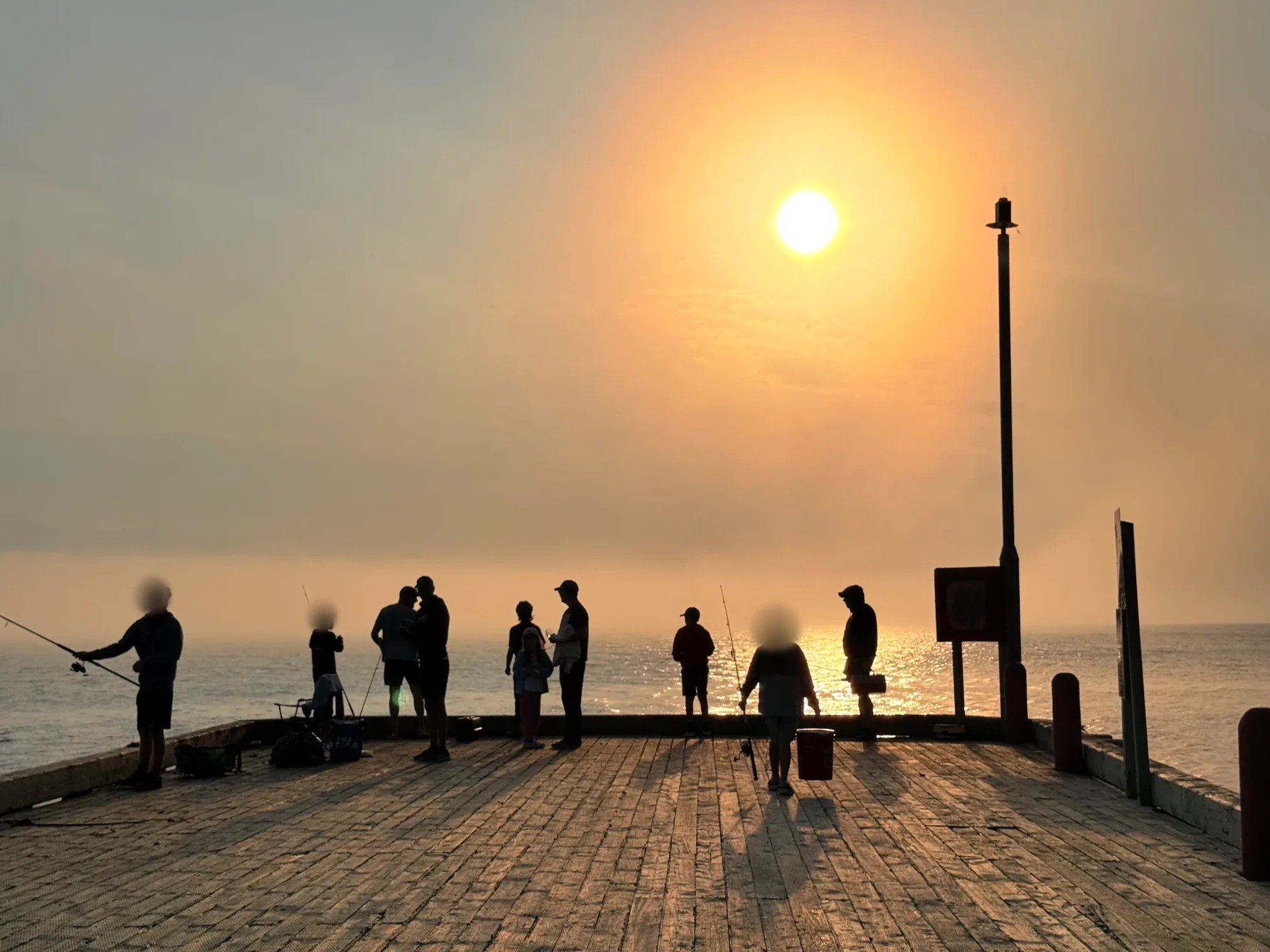
We spent the whole morning on Bonaventure Island and were back in Percé by 3 p.m. The rest of the day went to Gaspé and Forillon, farther up toward the tip of the Gaspé Peninsula. The coast road from Percé to Gaspé takes about an hour. Across the water, Percé Rock looked small.
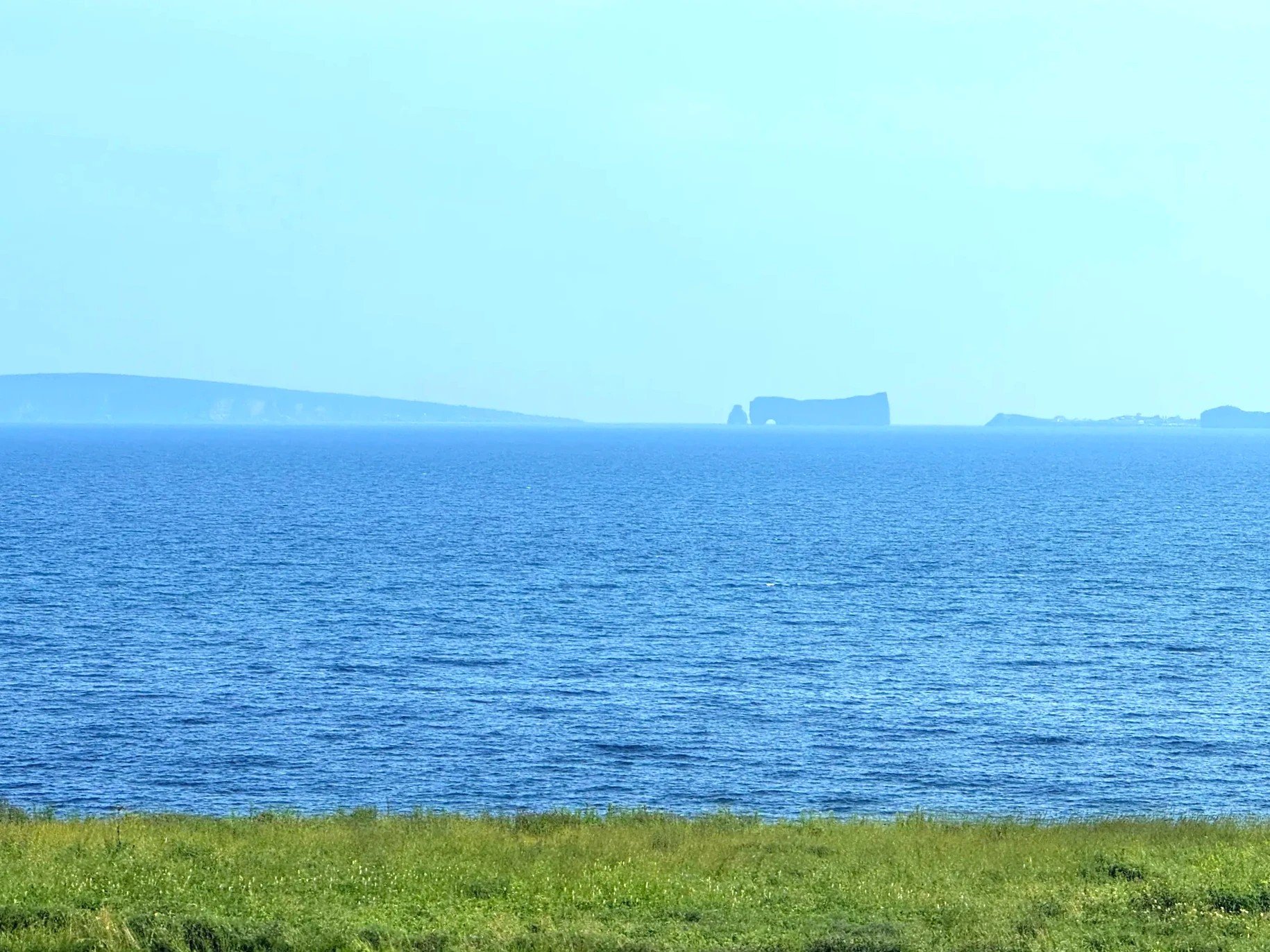
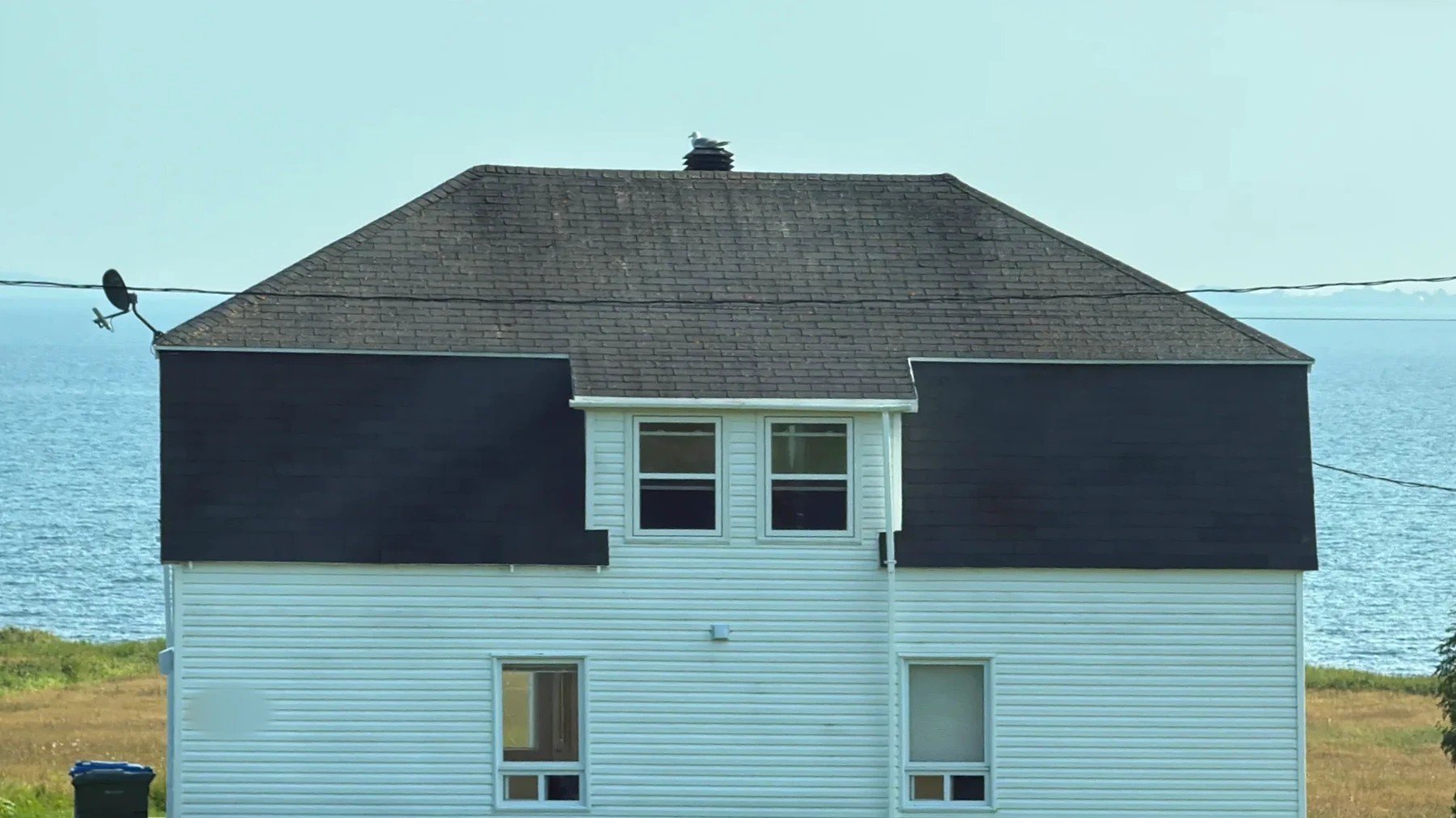
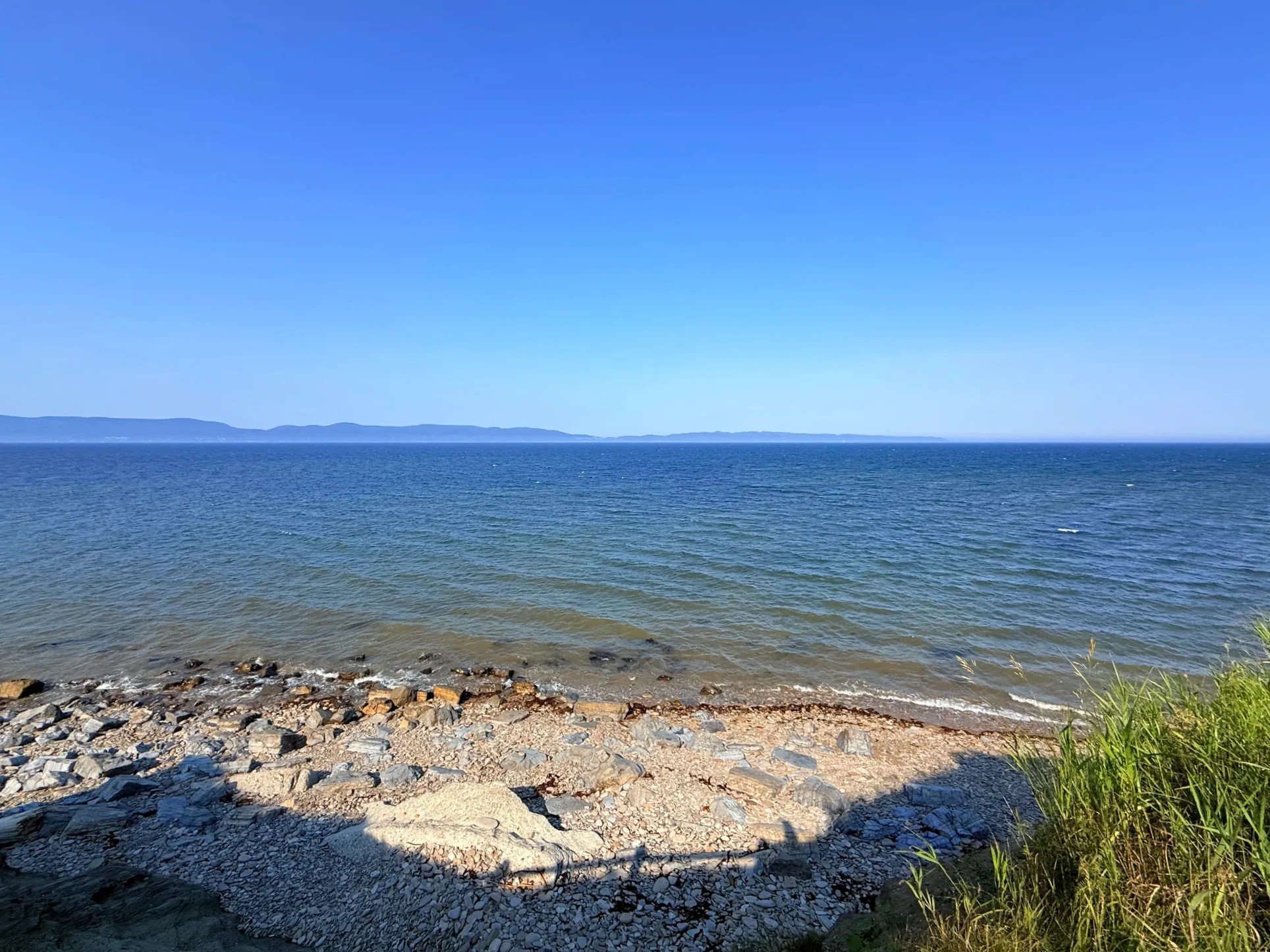
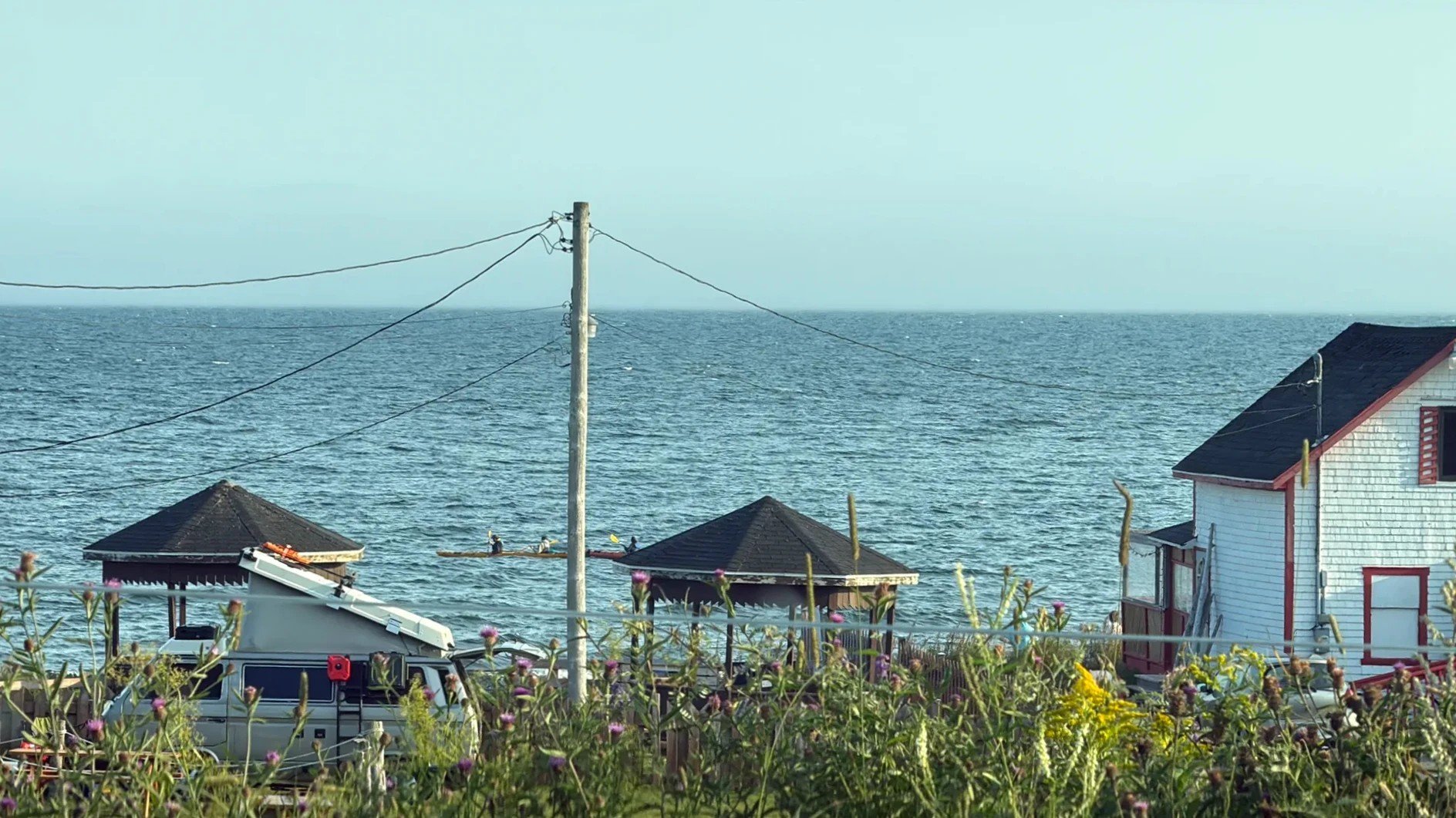
We stopped once by the sea. A white house stood by the road, and below it a beach of pebbles and rocks ran along the shore.
Gaspé: the Birthplace of Canada Berceau du Canada
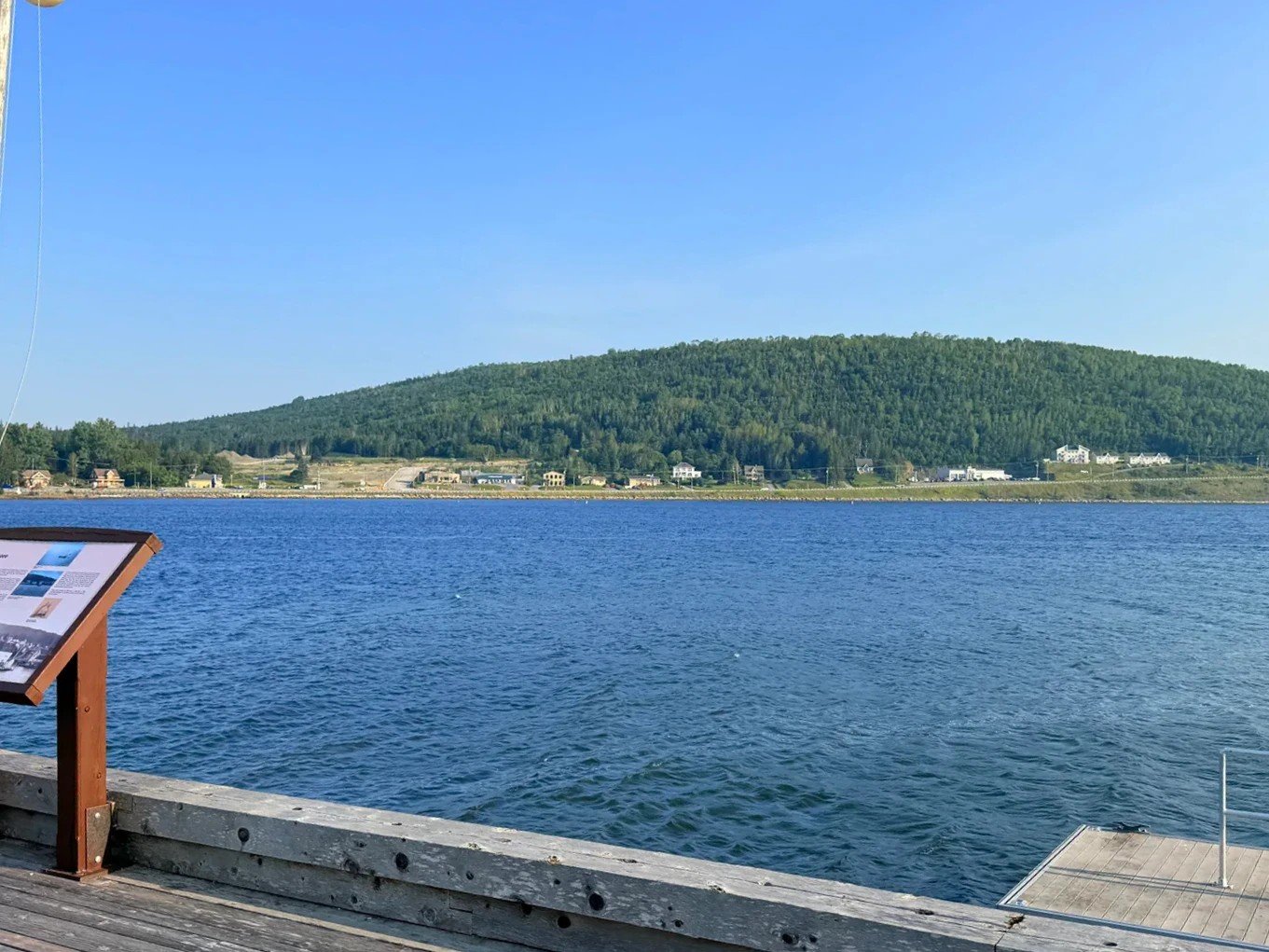
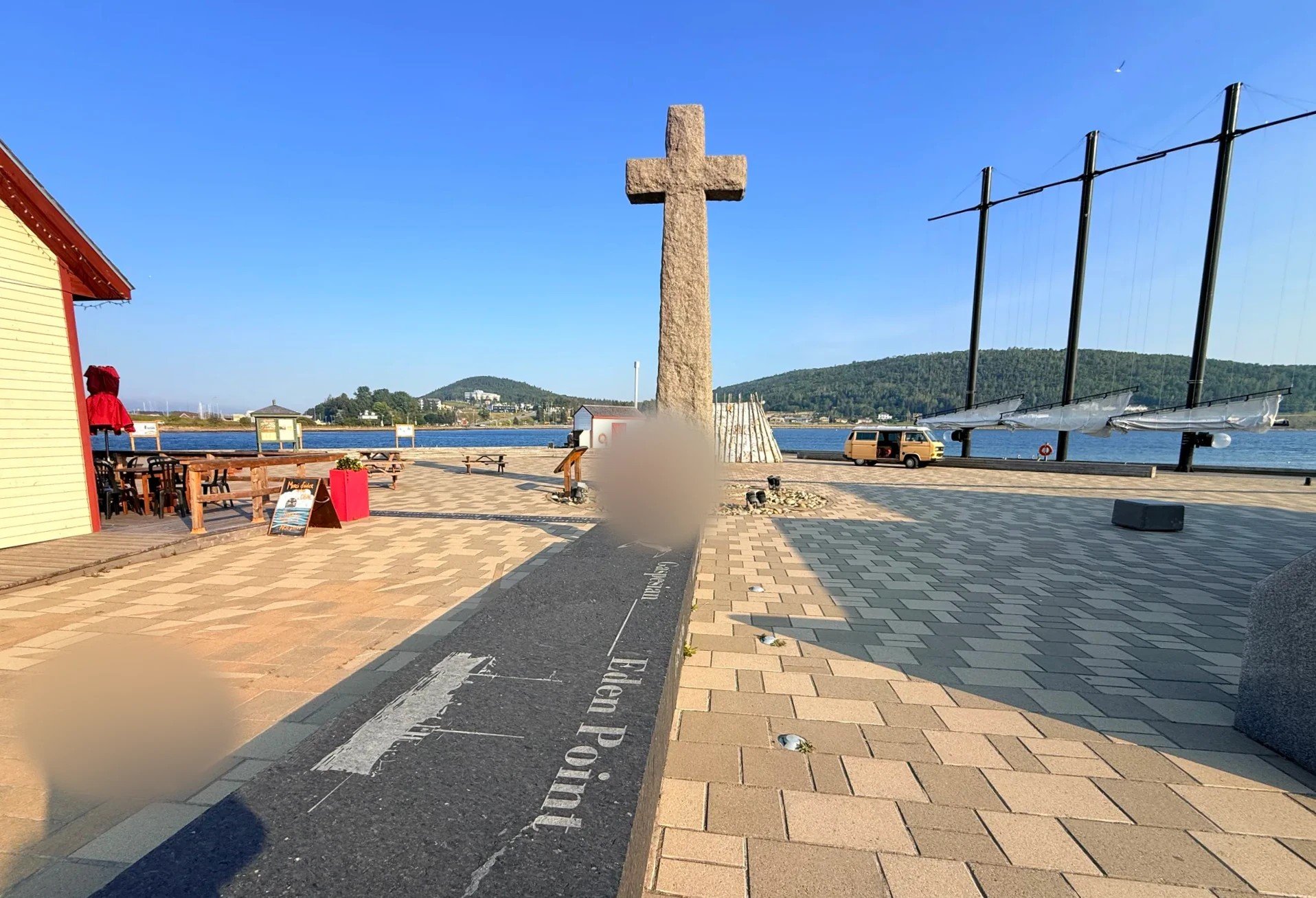
In downtown Gaspé we started with a late lunch at McDonald’s, then drove to the Birthplace of Canada (Gaspé, Berceau du Canada), a square on the waterfront at the mouth of the York River.
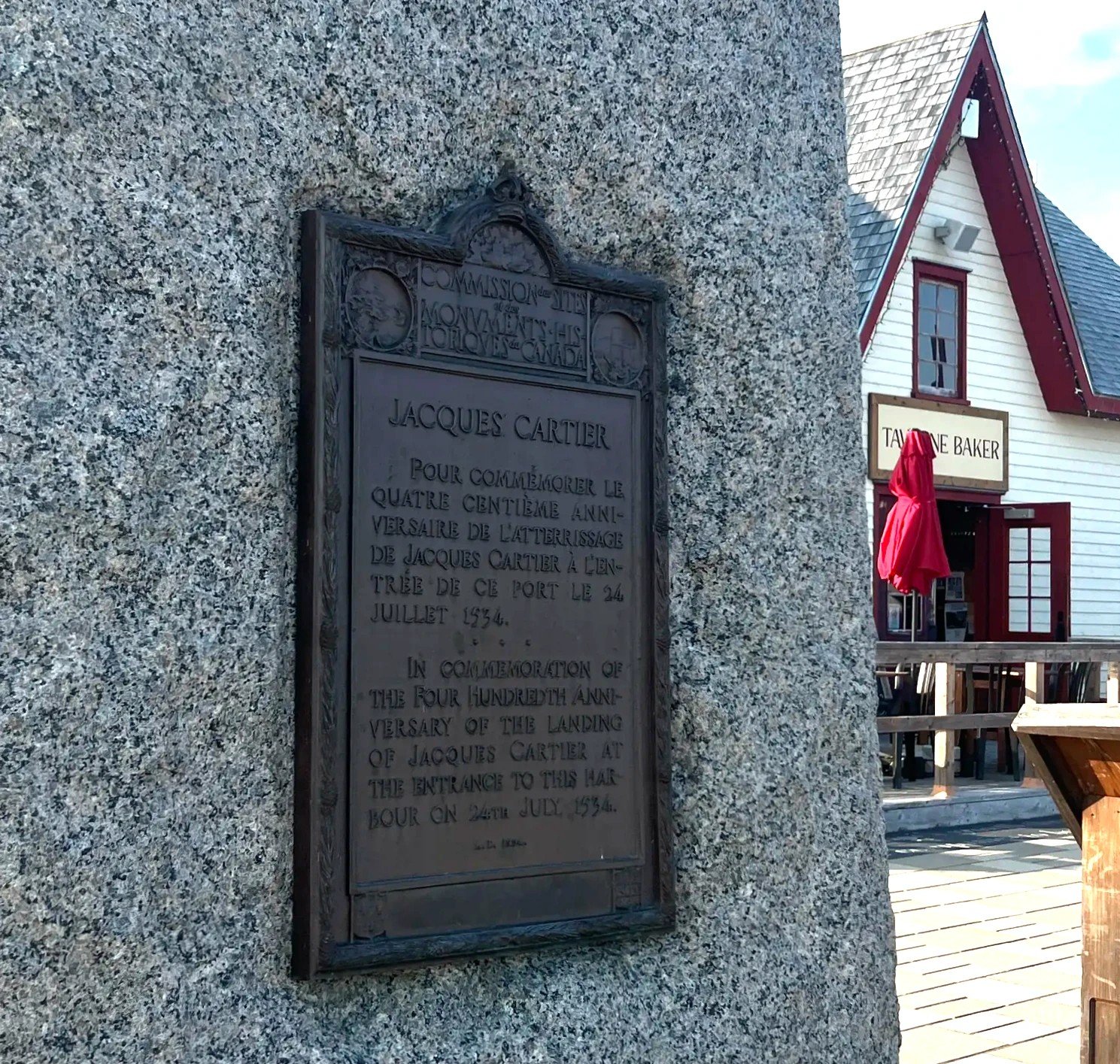
As the story goes, on July 24, 1534, Jacques Cartier planted a cross on Gaspé Bay and claimed the land in the name of the King of France. That is why Gaspé is called the cradle of Canada. The granite cross in the middle of the square went up in 1934, for the 400th anniversary. It was carved from a single block of stone and stands about 10 m (33 ft) tall. It was moved to its current spot in 2012 (Wikipedia).
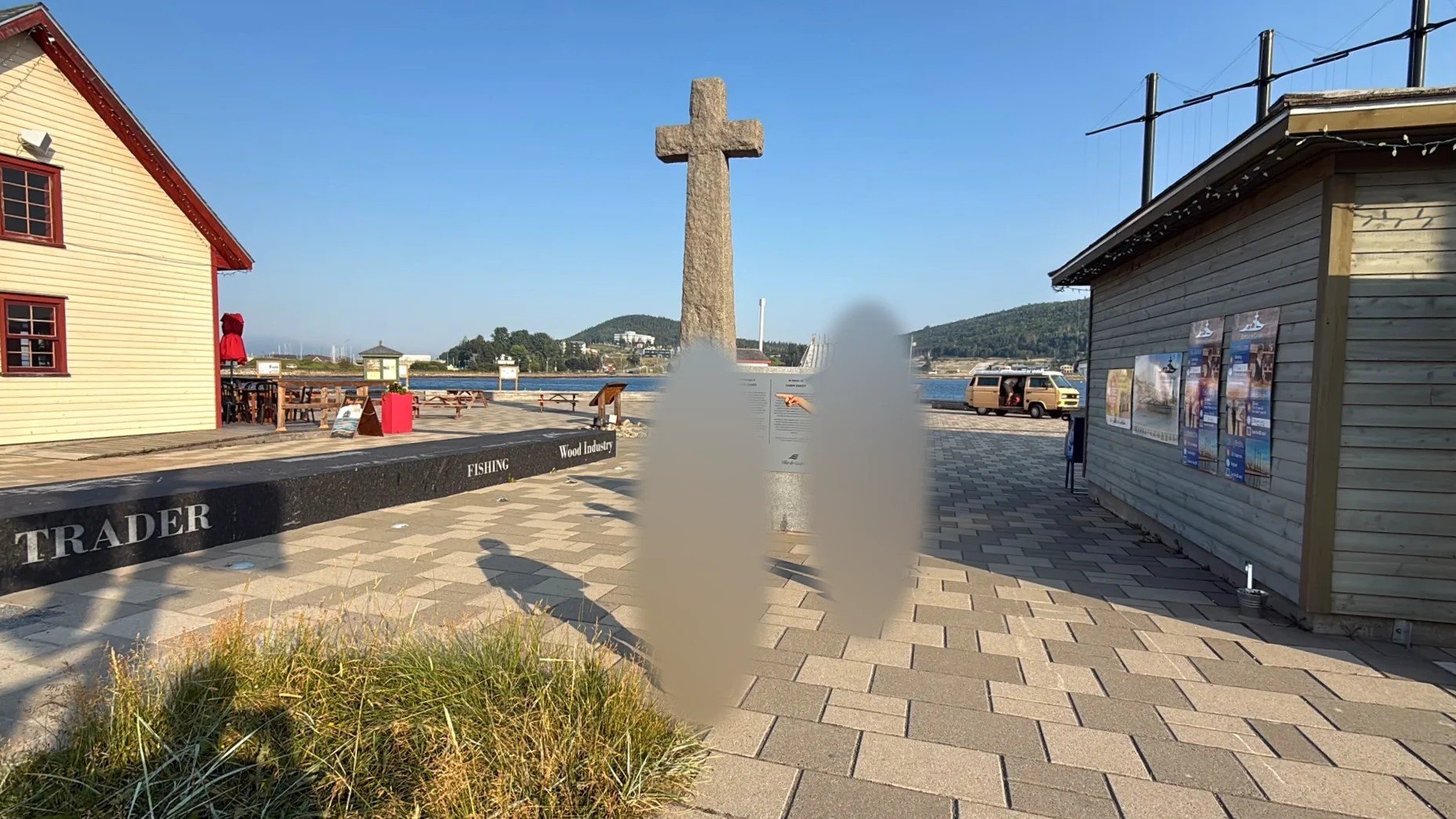
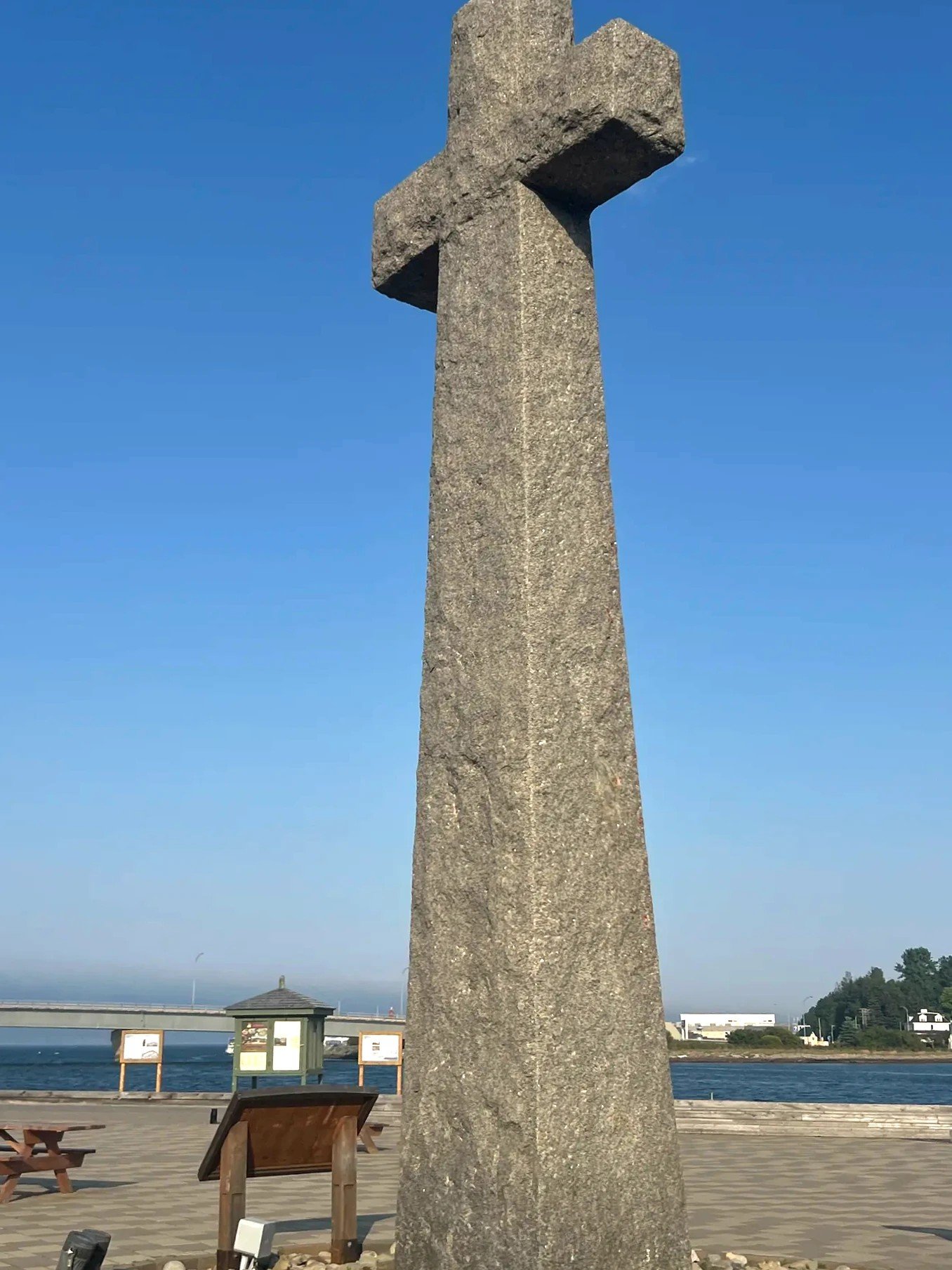
Around the square stand buildings that recreate the heart of Gaspé village as it was around 1900. One is original and six were rebuilt, among them a warehouse, a tavern, a store and a seaplane base (Québec Maritime). We walked the square and the waterfront and took pictures.
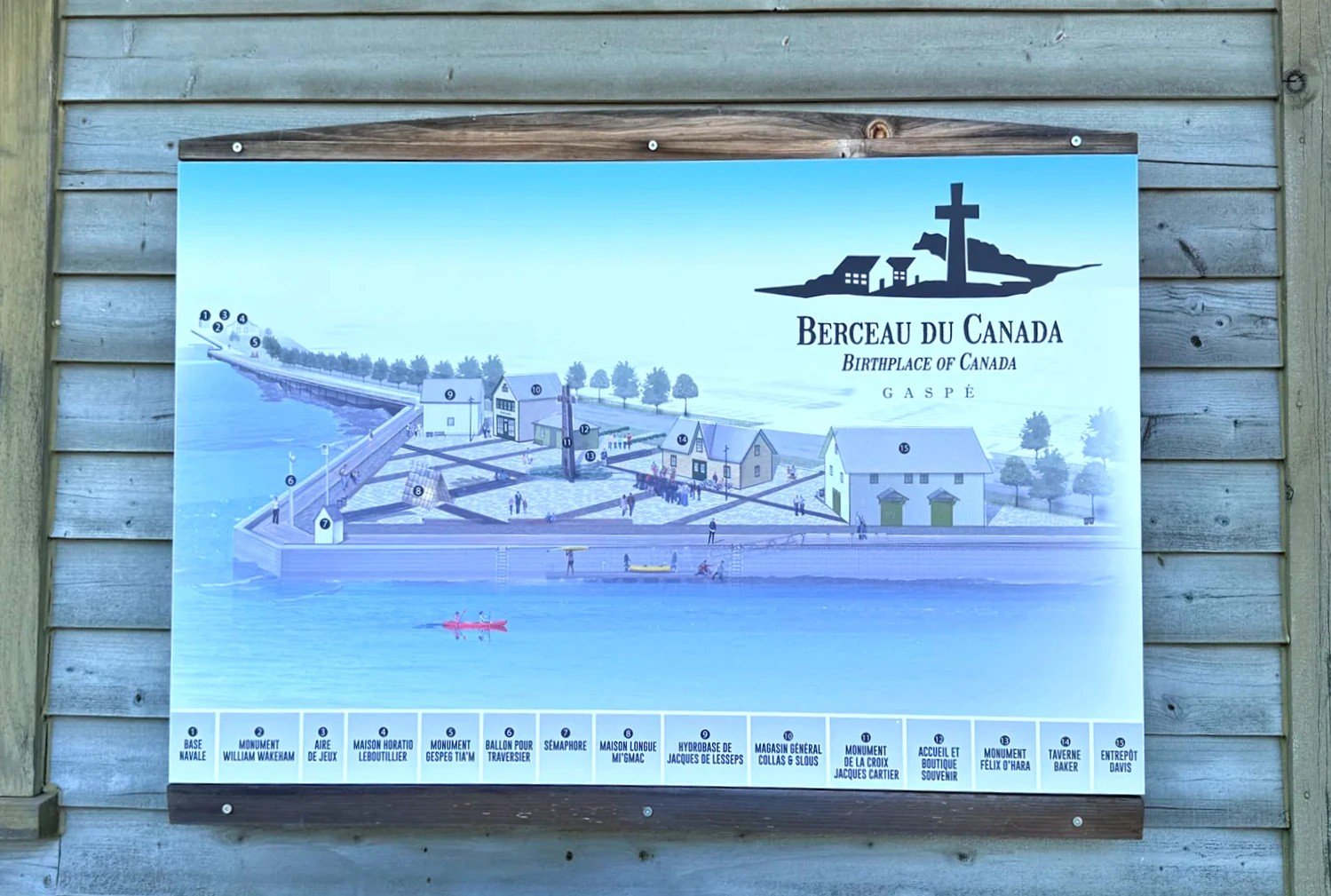
The name Gaspé is said to come from Gespeg, a word in the language of the Mi’gmaq (Mi’gmaq), who lived here first. It means "land’s end," and it is still the name of the town (Bonjour Québec).
On the base of the cross is a bronze plaque from the Historic Sites and Monuments Board of Canada. In French and English, it marks the 400th anniversary of Jacques Cartier’s landing at the entrance to this harbor on July 24, 1534.
Into Forillon National Park Parc national Forillon
From downtown Gaspé, Route 132 follows the north shore of Gaspé Bay. About 30 minutes later, you reach the southern sector of Forillon National Park. Once we were inside the park, forest closed in on both sides of the road, and every so often the sea showed through the trees.
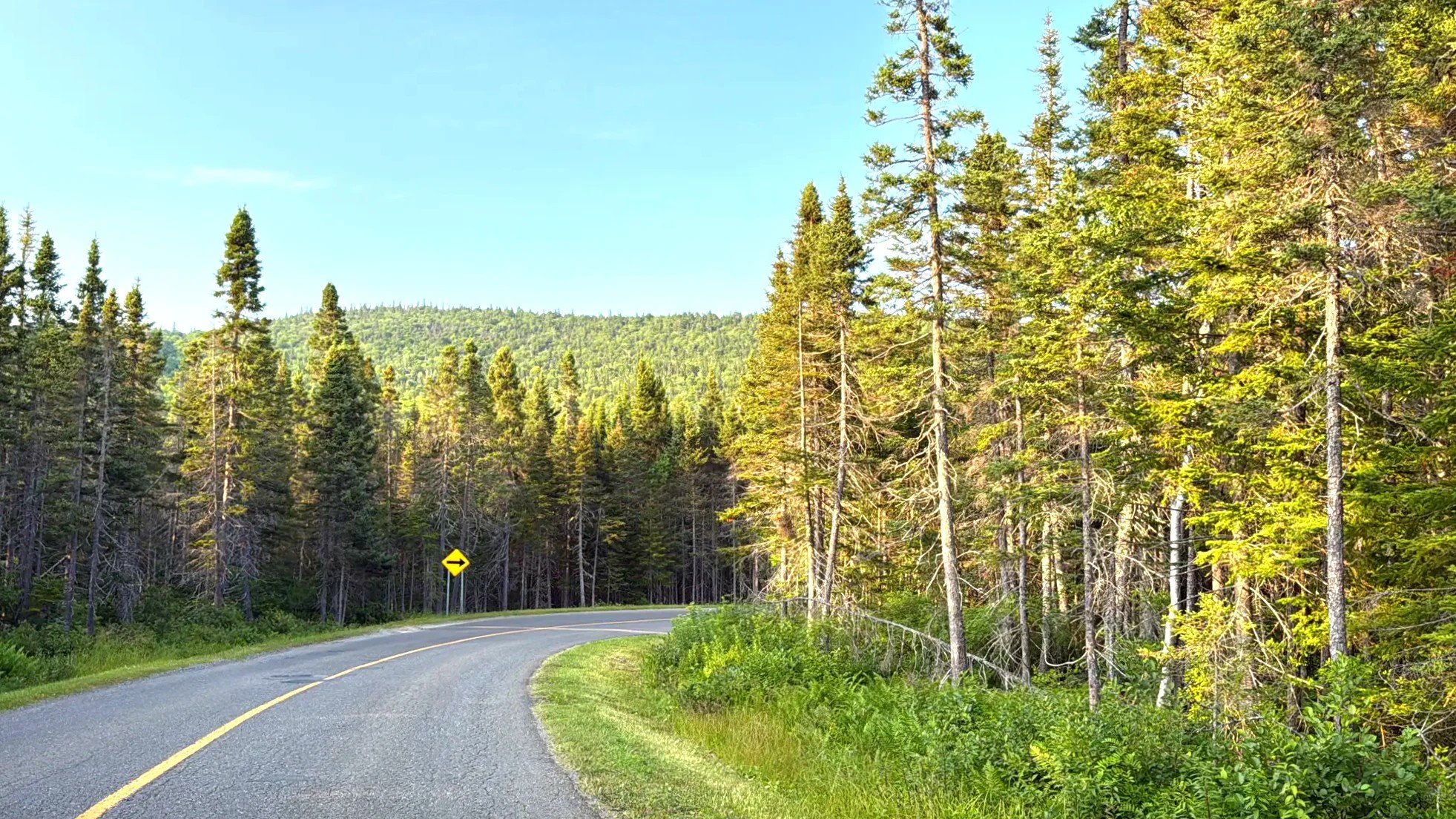
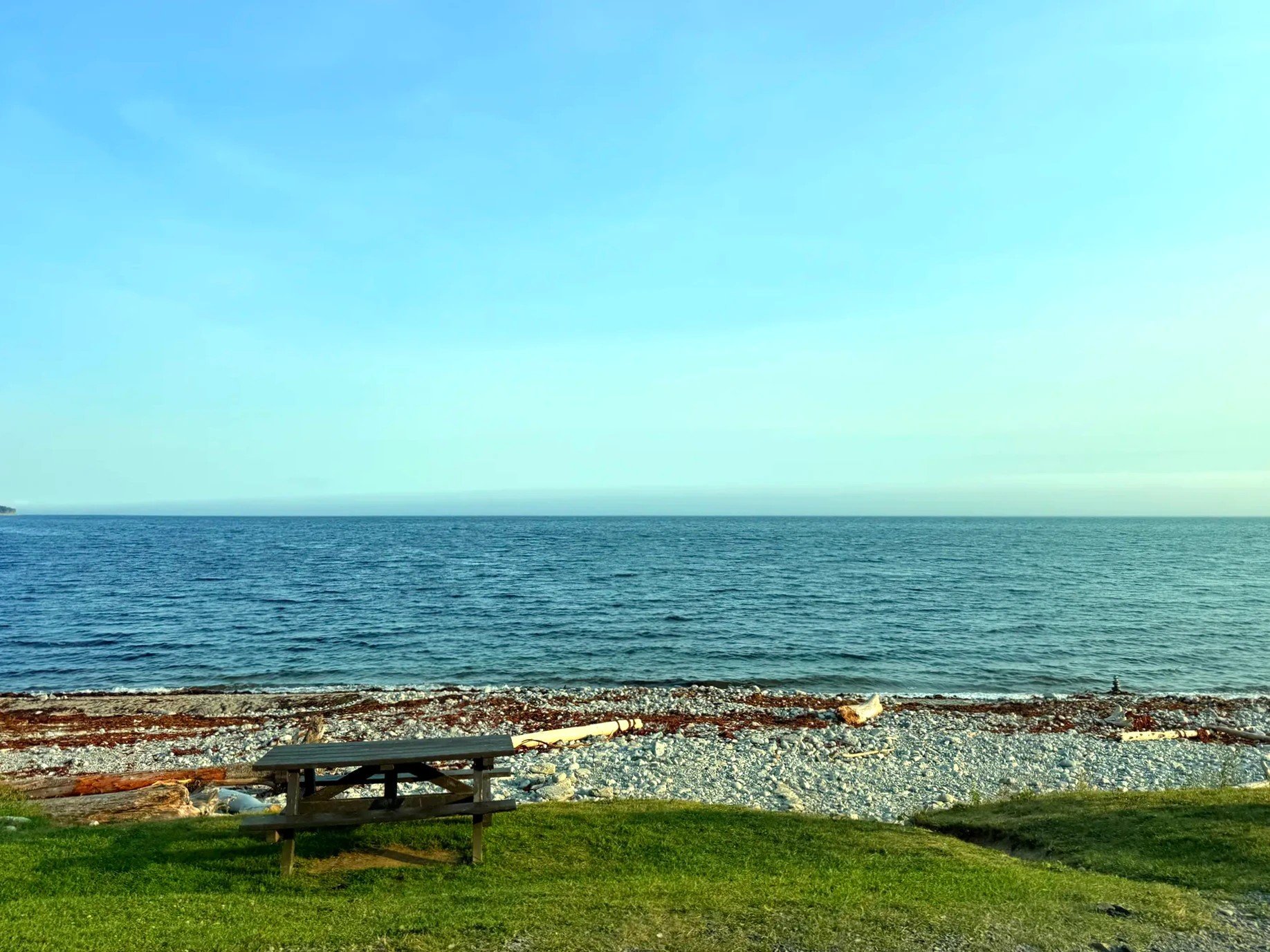
Forillon opened in 1970 as the first federal national park in Quebec. At 244 km² (94 sq mi), it isn’t large. It still fits forest, sea cliffs, salt marshes and dunes into one place, and it sits at the eastern end of the Appalachians, where the range runs into the sea (Wikipedia).
Before the park, this shore was a string of fishing villages. When the park was created in 1970, 225 families had to give up their homes and land and leave. In February 2011, Canada’s House of Commons adopted a motion formally apologizing to them. Parks Canada now works with an association of these families to restore the old houses at Grande-Grave and tell their story (Parks Canada).
Tour or car?
A three-day tour from Montreal, or driving yourself
Both reach Forillon. On each line, the yellow cell marked ✓ is the better deal.
| What | A Tour | B Your own car |
|---|---|---|
| Getting there | Bus from downtown Montreal (68 René-Lévesque O) at 6 a.m.; free pickup at hotels within 5 km (3 mi) | ✓ Rental car; you set the pace and the stops |
| Forillon | A one-hour stop on day 2 | ✓ Up to you; we were on the Grande-Grave wharf from about 6 p.m. until after dark |
| Lodging | ✓ 2 hotel nights included (up to 4 per room) | Book your own; we spent two nights in Sainte-Thérèse-de-Gaspé |
| Cancellation | ✓ Free cancellation (terms on the listing) | Depends on the rental company's terms |
| Good for | Travelers without a car who want to pay in dollars | Families who want to stop along the way and stay late at Forillon |
Grande-Grave wharf: sunset in the fog Quai de Grande-Grave
From the 19th century into the early 20th, Grande-Grave was a fishing village where cod was caught and dried. Today it is the park’s heritage area, with restored buildings such as the Hyman & Sons General Store (Hyman & Sons General Store). The "grave" in the name is an old word for the pebble beach where the cod was laid out to dry (Parks Canada).
In the late 1800s, about 400 people lived at Grande-Grave. Most were fishermen working for fishing companies from Jersey, in the Channel Islands. They salted and dried their catch into "Gaspé Cure" (Gaspé Cure) cod and shipped it to Italy, Spain and the West Indies (Québec Maritime). The Hyman store was built in 1864 as the home of fish merchant William Hyman; in 1918 its ground floor became the company store. Today it opens as an exhibit, stocked with goods of the period: canned food, medicine, dishes, fishing gear (Parks Canada).
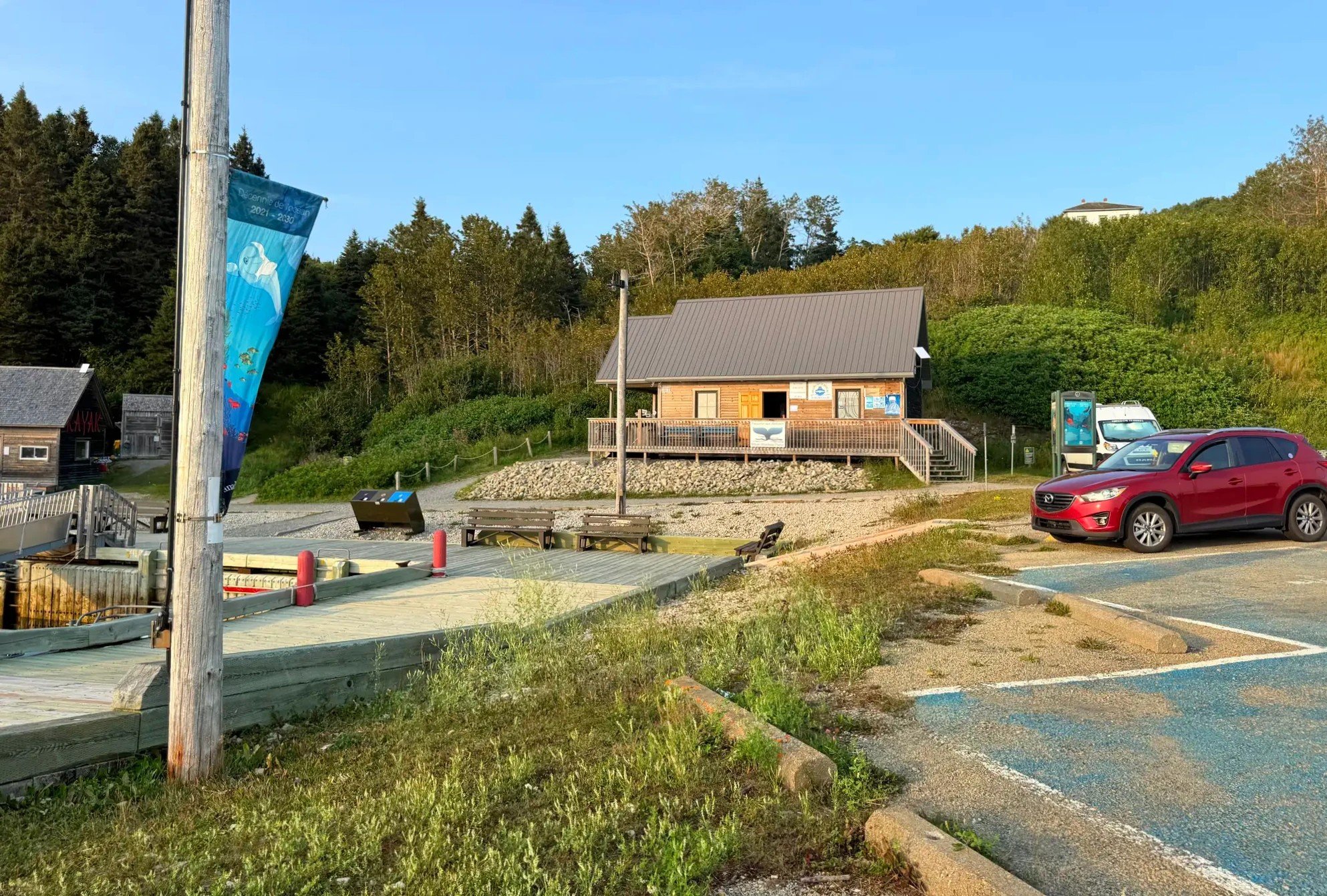
We reached the wharf at about 6:10 p.m., roughly an hour and a half before sunset, just as fog began to spread over the water. The sun hung round behind it. Many of people were already fishing off the end of the wharf, which the park lists as a fishing spot.
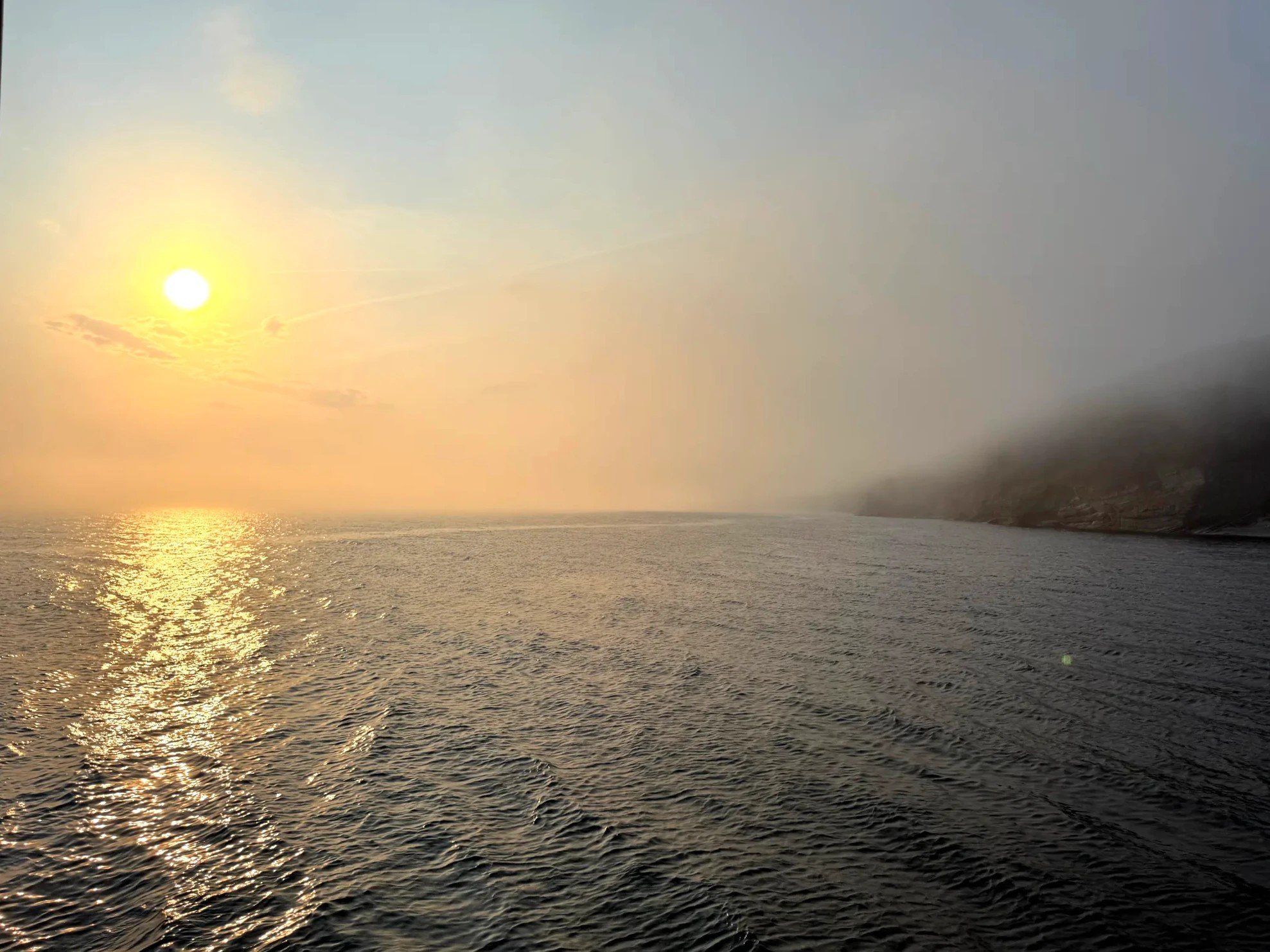
Inside the wharf, where the boats were tied up, a seal poked its head out of the water.
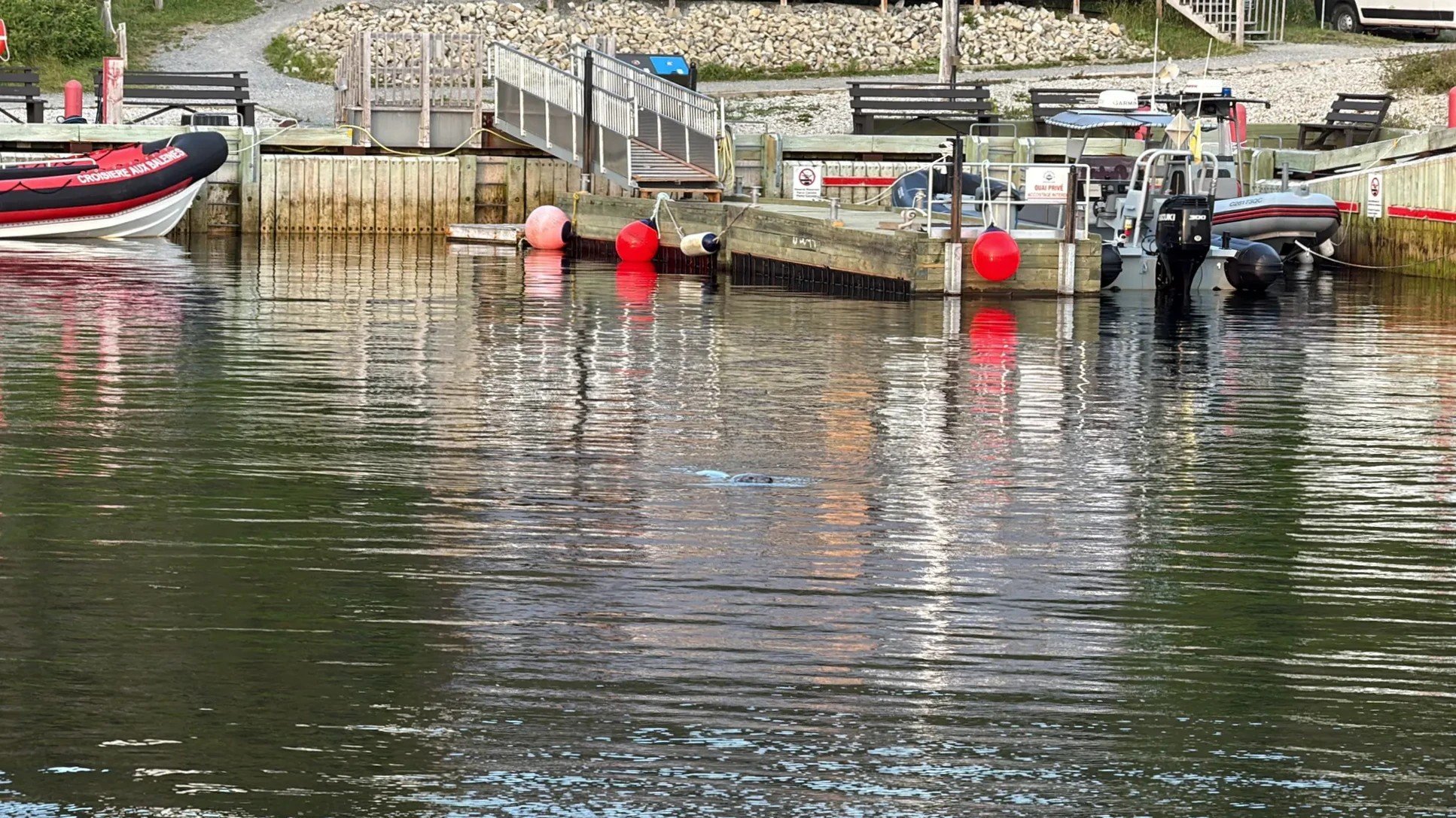
We fished until sunset and for a good while after. The seal kept moving around near the wharf in the fog. Around sunset we caught one small fish, our first catch of the trip. The scenery was lovely, and this is one of the places I remember most from the trip.
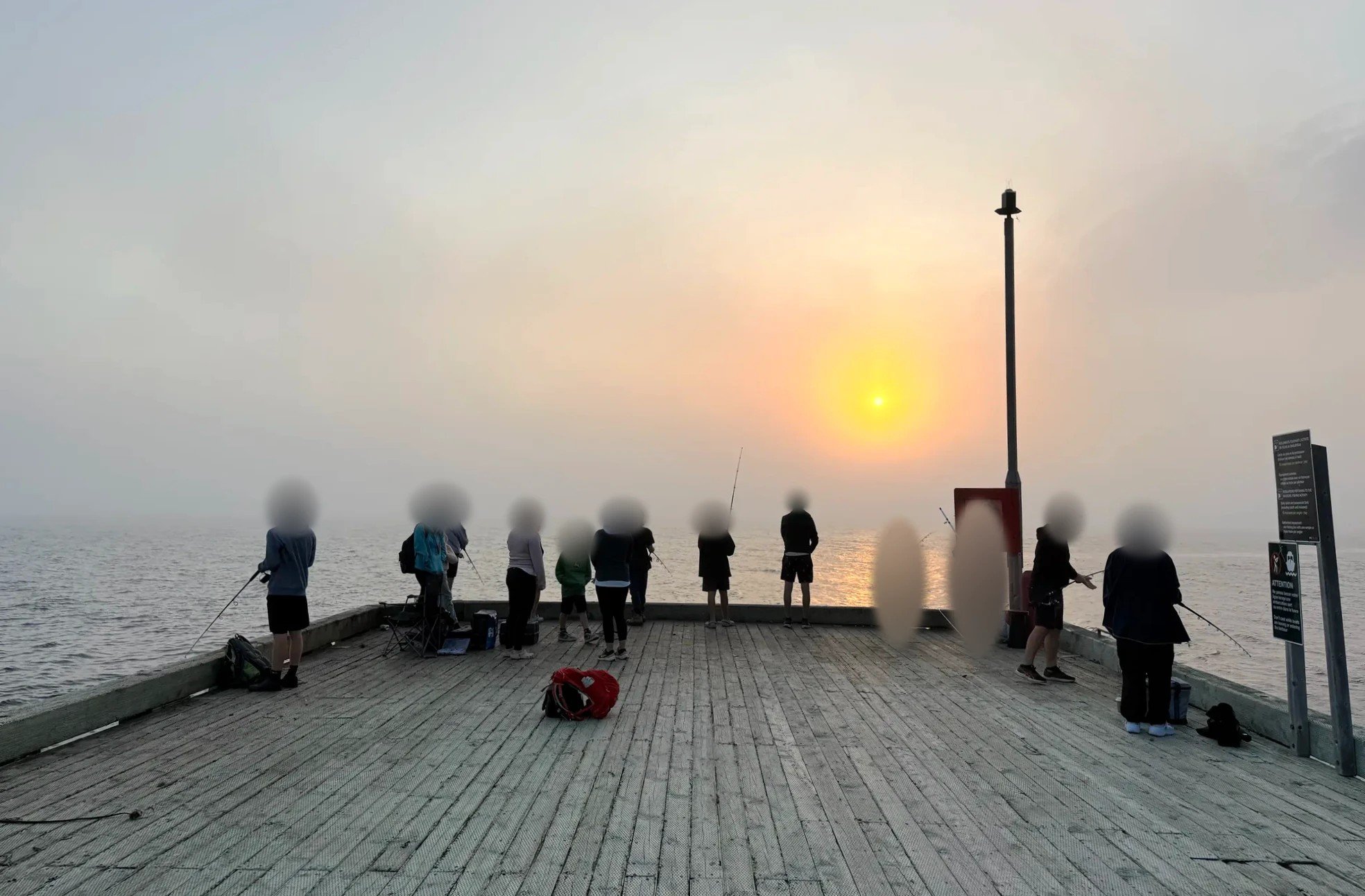
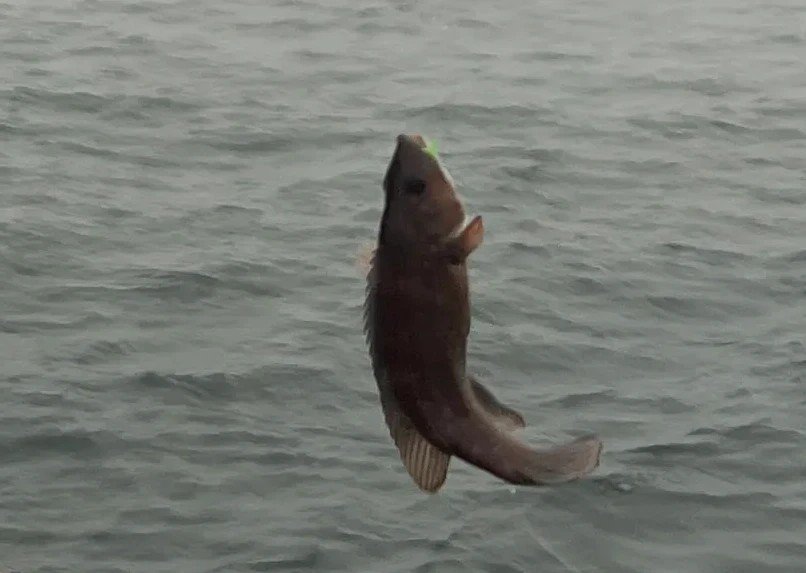
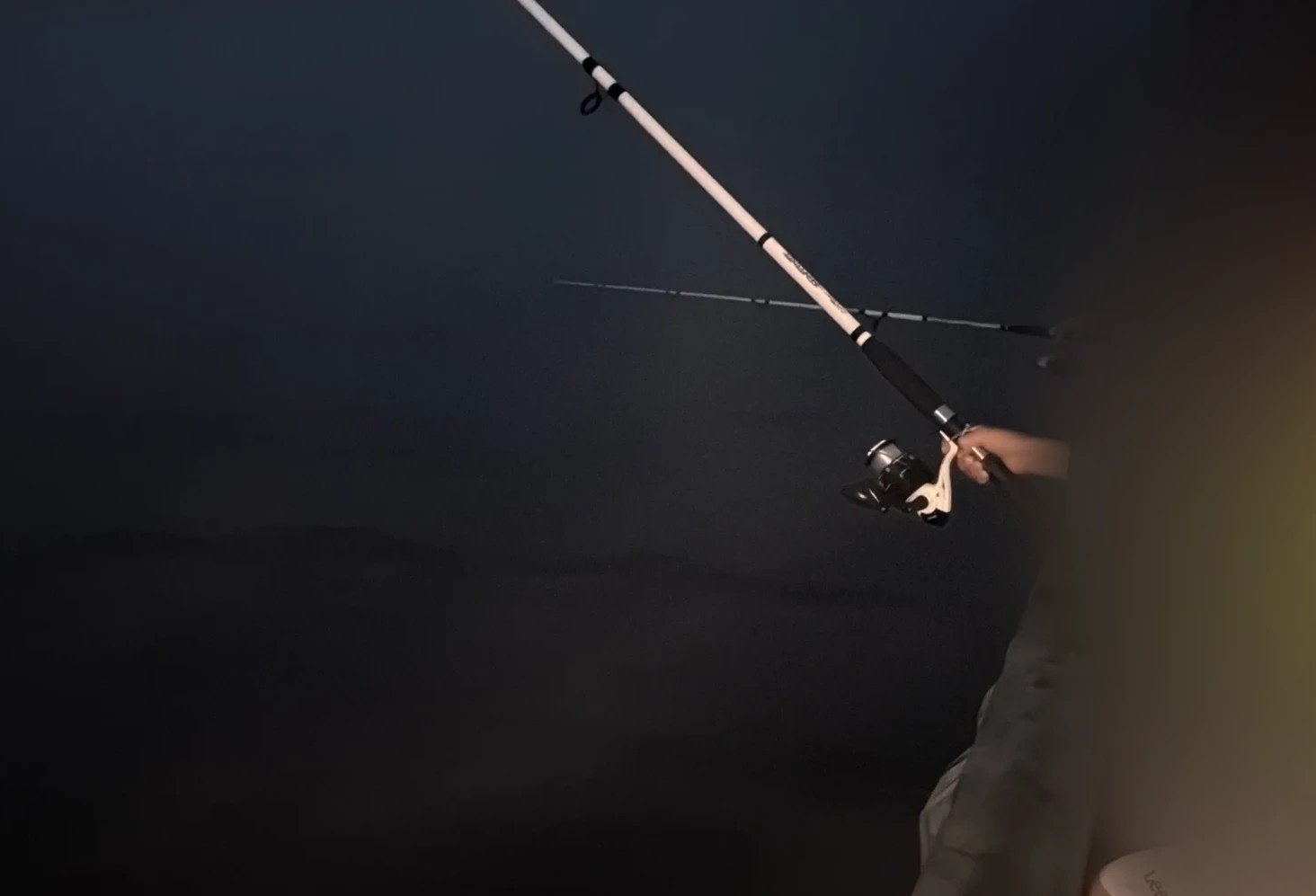
We left the wharf after dark, around 8:30 p.m.
Kids' binoculars for watching seals from the wharfView on Amazon
Whale cruises from the Grande-Grave wharf
The Grande-Grave wharf is also where whale cruises leave from. Croisières Baie de Gaspé (Croisières Baie de Gaspé), a park partner, runs them into Gaspé Bay and the Gulf of St. Lawrence (Parks Canada).
Fishing from the Grande-Grave wharf
LicenseSaltwater fishing, so no license is needed.
Mackerel10 per day, including fish you release; possession limit also 10
One hook or one treble hook per line (Parks Canada)
Striped bass3 per day, 50–65 cm (20–26 in) only. No natural bait.
Rod rentalCap Aventure, a park partner, rents rods at Grande-Grave (Parks Canada). Check prices and hours on site.
SafetyDon’t cast into the channel boats use, and when the end of the wharf is crowded, look behind you before you cast, and don’t cast when divers are in the water.
Rules as of October 2026 (Parks Canada: fishing in Forillon).
Fishing gear
Mackerel jigs to bring
Late dinner in the shared kitchen
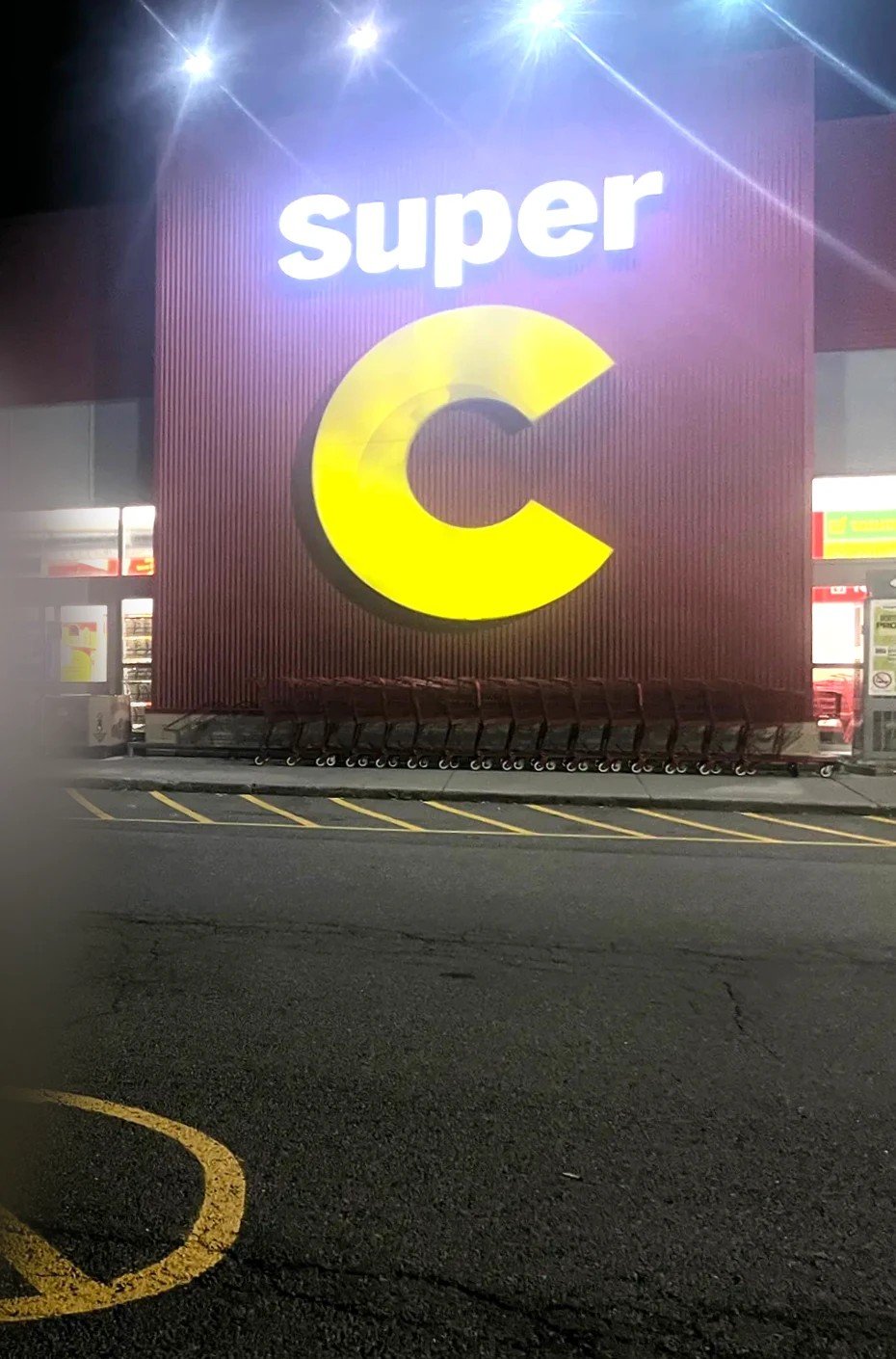
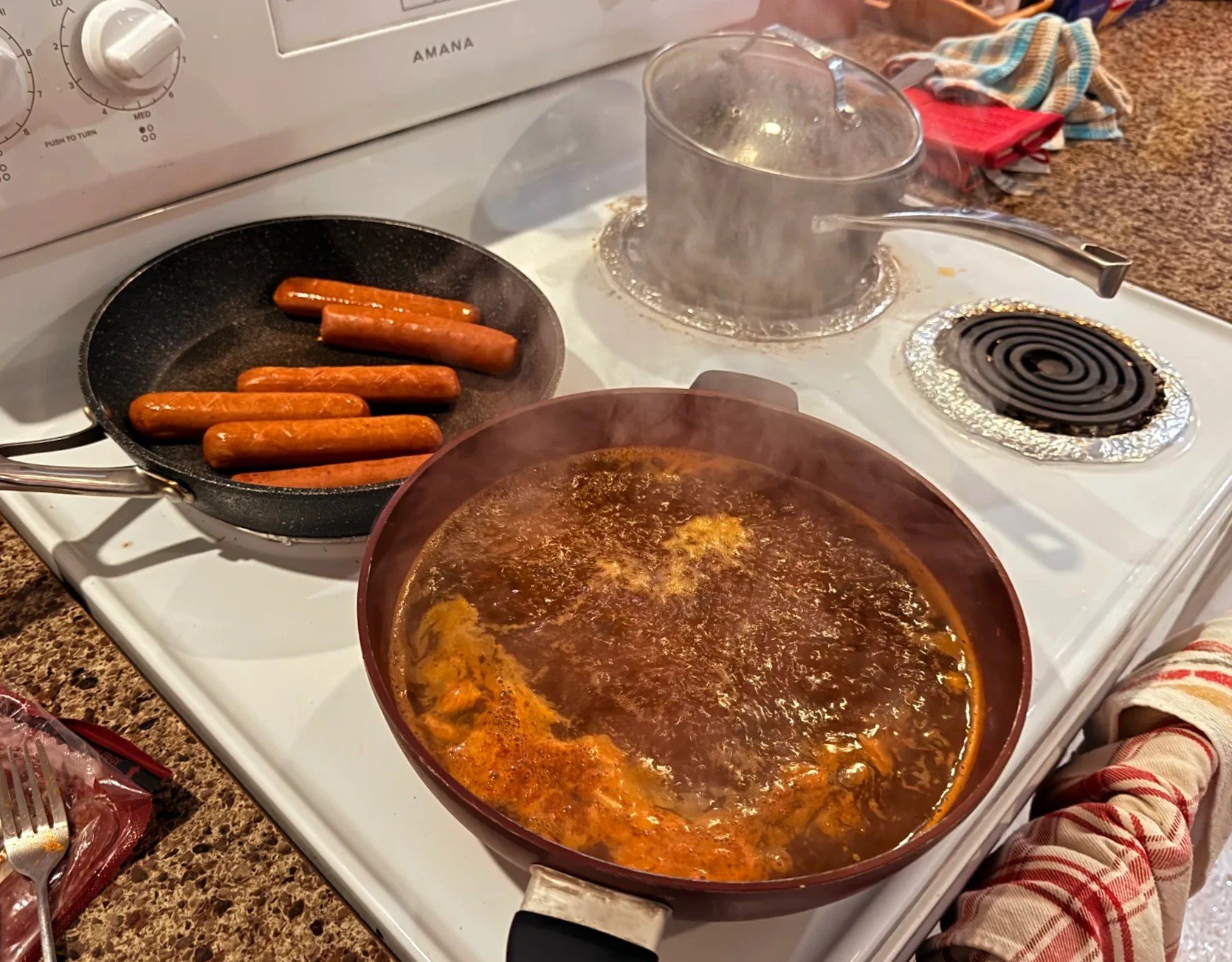
After dark we drove back into Gaspé and bought sausages at Super C, a supermarket. Our lodging, Le 125, is in Sainte-Thérèse-de-Gaspé, southwest of Percé, and it was past 11 p.m. when we got back. We grilled the sausages and made instant noodles in the outdoor shared kitchen for a late dinner.
Staying near Gaspé
In Gaspé town
We booked Le 125, where we stayed, by contacting them directly rather than through a booking site. If you’re leaving Grande-Grave late, a place on the Gaspé side is closer.
Good to know
Forillon National Park fees
June 19–Sept. 7, 2026Free entry under the Canada Strong Pass
Rest of peak seasonAdults C$10, seniors C$8.75, families C$19.50, 17 and under free
Off-seasonAdults C$7.25
Where to buyDay and season passes are sold only at the park’s entrance kiosks.
Fees checked with Parks Canada on October 28, 2026. Forillon is a federal national park, so a Sépaq annual pass (for Quebec’s provincial park network) doesn’t get you in.
Timing
Percé to Gaspé is about an hour, and Gaspé to Grande-Grave another 30 minutes. If you add Gaspé and Grande-Grave to the afternoon after Bonaventure Island, you reach the wharf around 6 p.m., roughly an hour and a half before sunset. In early August the sun sets around 7:40 p.m., which gives you a little over an hour and a half on the wharf until sunset.
If you have more time
Hyman store exhibitAt the start of the Grande-Grave trail. Open June 19 to September 6 in 2026. Hours aren’t posted on the park site yet; in earlier years it was 10 a.m. to 5 p.m.
Whale cruiseLeaves from the Grande-Grave wharf. Up to seven kinds of whales and dolphins are said to be seen in Gaspé Bay and the Gulf of St. Lawrence. The cruise company says up to six in the park.
Land’s End trailPast the Cap Gaspé lighthouse to the very tip of the peninsula, Bout du monde ("land’s end"). 8 km (5 mi) round trip, close to three hours
Hours and distances from Historic Places Days, Plein air à la carte and a StoryMap (citing AllTrails).
TermsWords used in this post
The waterfront square in Gaspé where Jacques Cartier is said to have raised a cross in 1534
The site of a former fishing village in the southern part of Forillon National Park
FAQ
Do I need a license to fish from the Grande-Grave wharf?
No. It’s saltwater fishing, so no license is required. Inside the park you still have to follow the daily limits for mackerel and the daily and size limits for striped bass.
What if I don’t have a fishing rod?
You can rent one from Cap Aventure at Grande-Grave. We bought our gear the day before at Canadian Tire, a Canadian hardware and outdoor chain, in Paspébiac.
Does the Birthplace of Canada charge admission?
The square and the waterfront are free to walk around. The exhibits and guided interpretation inside the buildings have their own season and fees.
Recap
Time on the roadLeft Percé at 3 p.m., back at our lodging at 11:15 p.m.
Birthplace of CanadaAbout 30 minutes, from 5:15 p.m.
Grande-Grave wharf6:10–8:30 p.m.
Grande-Grave is one of the places we remember most from this trip. We fished from a wharf in the fog while a seal moved around nearby, and we caught the trip’s first fish there.
Map and getting there
On the map below, No. 6 is Gaspé and No. 7 is Grande-Grave in Forillon.
The lines are simplified and don’t follow the actual roads.
Getting around
This is a road trip
We drove a loop of the peninsula from Montreal. If you’re flying in, land in Montreal and rent a car to drive the same route.
What we needed
Gear
Fishing gearBought the day before at Canadian Tire in Paspébiac
Sources
- Wikipedia: Cross of Gaspé
- Québec Maritime: Birthplace of Canada
- Parks Canada: Grande-Grave
- Parks Canada: fishing in Forillon
- Parks Canada: Forillon fees
Not in the list? Search it yourself
Places to stay nearby, on a map
Affiliate link: if you book through this search, the blog earns a commission at no extra cost to you. Results open in a new tab. About affiliate links
Discover more from Elsewhere, Mostly
Subscribe and get new posts sent straight to your inbox.