Winter Grand Circle in December, part 9: Thursday night, December 23, to Friday evening, December 24, 2021
Zion in December, the wet way: we came in over snowy roads to a night at Zion Lodge, then spent the next day in rain gear on the Emerald Pools Trail, with waterfalls pouring off the cliffs, and on the Riverside Walk along the river
- This postNight seven and day eight of a counterclockwise winter Grand Circle road trip by rental car in December. After a snowy drive from Bryce Canyon, we spent the night at Zion Lodge inside Zion National Park. The next day it rained on and off from morning to evening. We stopped at the visitor center, drove back up the canyon road, walked the Emerald Pools Trail from in front of the lodge, then took the shuttle to the far end of the canyon for the Riverside Walk. In the evening we left the park, had dinner at an In-N-Out near St. George in southwestern Utah and drove on to Las Vegas.
- LocationSouthwestern Utah, about three hours’ drive northeast of Las Vegas and about two hours from Bryce Canyon.
- Date and weatherDecember 24, rain from the morning on. Around 12:30 p.m. a little blue sky showed between the clouds; the rain came back in the afternoon, mixed with something like sleet. It never got cold enough to drop below freezing.
- StopsZion Lodge one night, breakfast and the gift shopZion Canyon Visitor Center 20 minutesRoadside near Canyon Junction a 10-minute stopEmerald Pools Trail to the Lower Emerald Pool falls, 2½ hoursRiverside Walk 1 hour 15 minutes, turned back before the endIn-N-Out near St. George dinner, 40 minutes
- EntryWe used our annual national parks pass. As of October 2026, entry is $35 per vehicle (valid seven days), and starting in 2026, non-US residents 16 and older pay an extra $100 per person. With an annual pass, there’s no surcharge.
- BookingsZion Lodge was the only thing we booked ahead. Without a car, there’s a Bryce and Zion day tour from Las Vegas
- Where we stayedZion Lodge, inside Zion National Park
- WhoThe three of us: my wife, our kid and me
- RouteFriday, December 24
- Zion LodgeStayBreakfastRed Rock Grill, gift shop
- 🚗 Scenic Drive, 10 min
- Visitor centerSight20 minPark map
- 🚗 Back up the Scenic Drive
- Emerald Pools TrailWalk2½ hrsStarts across from the lodge
- 🚌 Shuttle, 15 min
- Riverside WalkWalk1 hr 15 minStarts at the Temple of Sinawava
- 🚗 Route 9 and I-15, 1 hr 15 min
- In-N-Out near St. GeorgeDinner40 minThen on to Las Vegas
Contents
A rainy night arrival at Zion Lodge
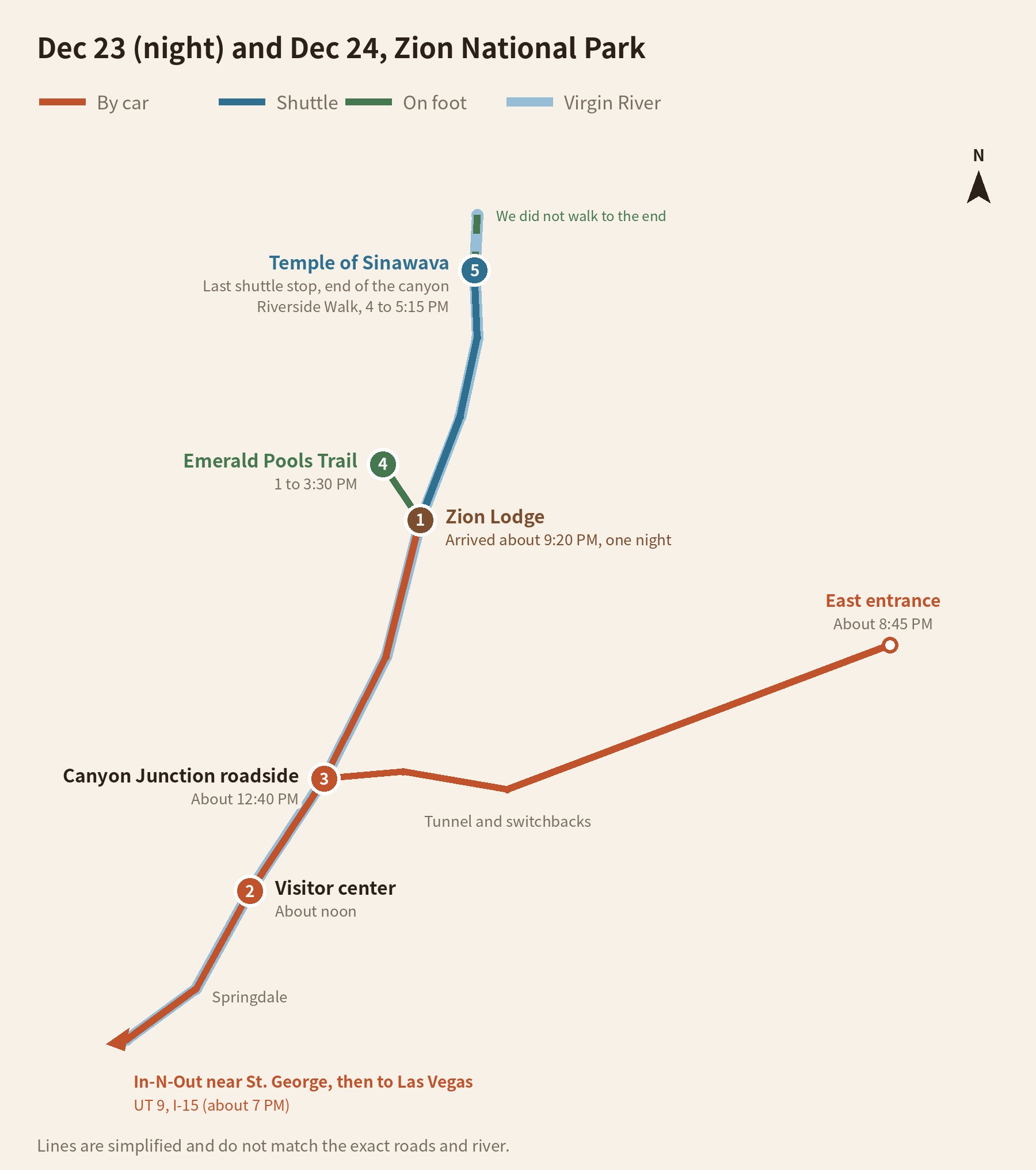
After more than two hours on snowy roads from Bryce Canyon, we came through the east entrance of Zion National Park around 8:45 p.m. A roadside sign read “Ice Road Ahead, Proceed with Caution.” From the east entrance, the road runs through a tunnel and down a series of switchbacks to Canyon Junction on the canyon floor. From there, the Zion Canyon Scenic Drive heads north to Zion Lodge. By the time we got down into the canyon, the snow had turned to rain.
Lodge guests can drive the Scenic Drive as far as the lodge and park in a designated spot, even during periods when it’s closed to other private vehicles. That’s why we booked our Zion night inside the park. We pulled up in front of the lodge around 9:20 p.m.
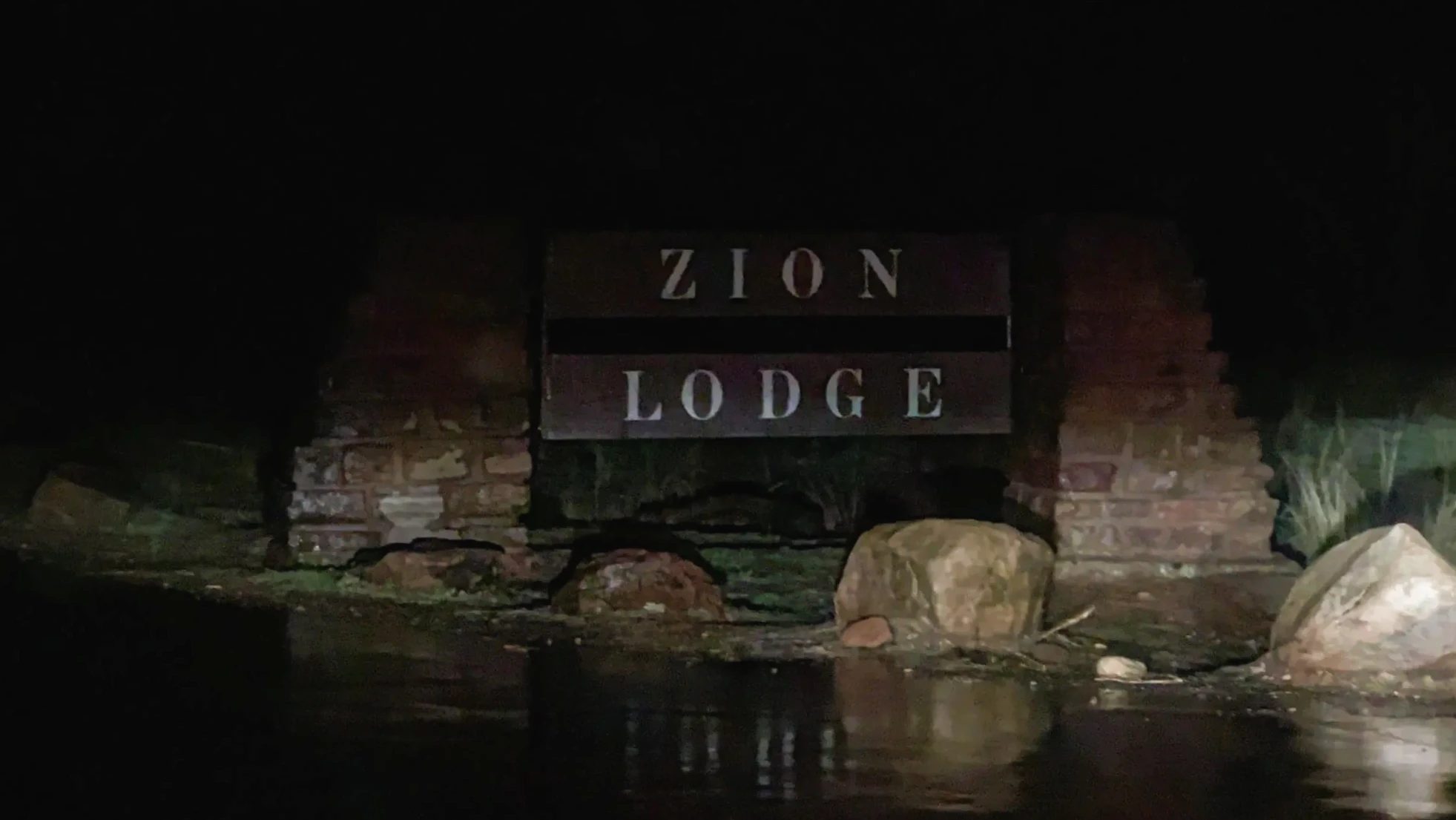
It was so dark we could barely see where we were going. After checking in and dropping our bags in the room, we headed out with a headlamp and some cash to get drinks from the vending machine. The headlamp we’d packed earned its place that night.
What Zion Lodge is like
Zion Lodge sits in the middle of the canyon, right by a shuttle stop and the Emerald Pools trailhead. When the railroad reached Cedar City in 1923, the railroad company built lodging in the park. Gilbert Stanley Underwood, who designed several national park lodges, kept it small to suit the narrow canyon, and it opened in May 1925. The main lodge burned in January 1966, but a new building went up and the lodge reopened 108 days later.
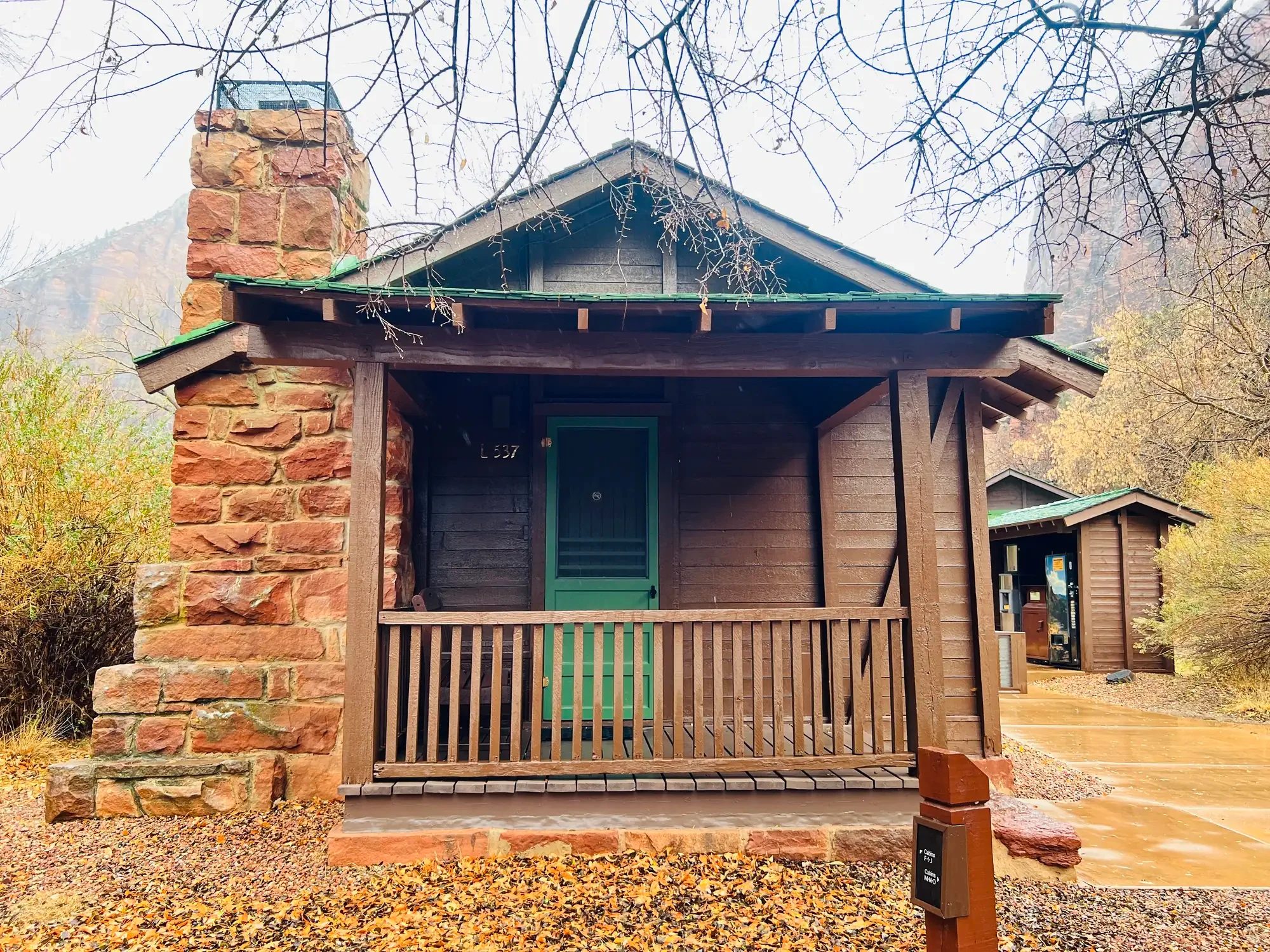
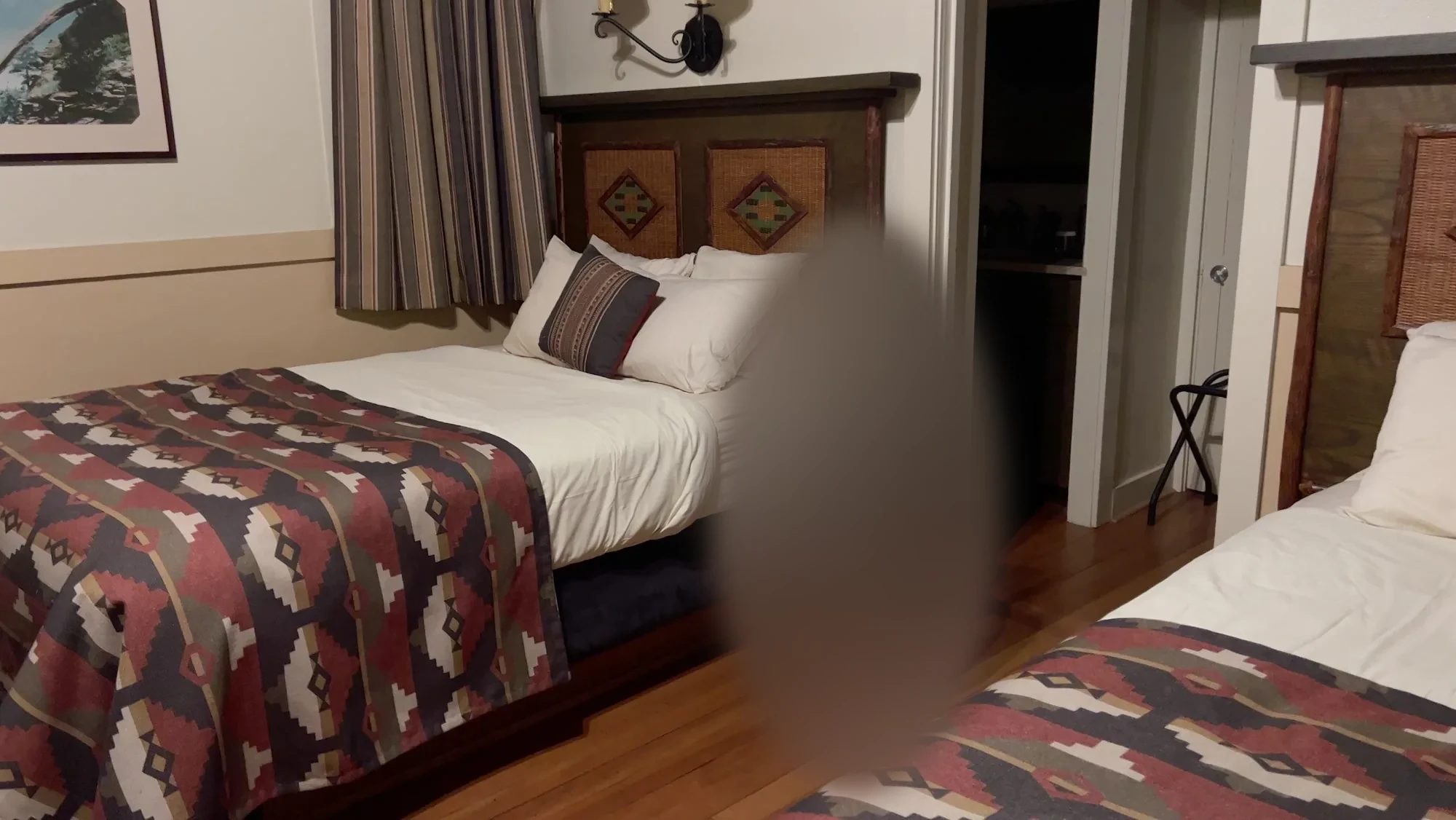
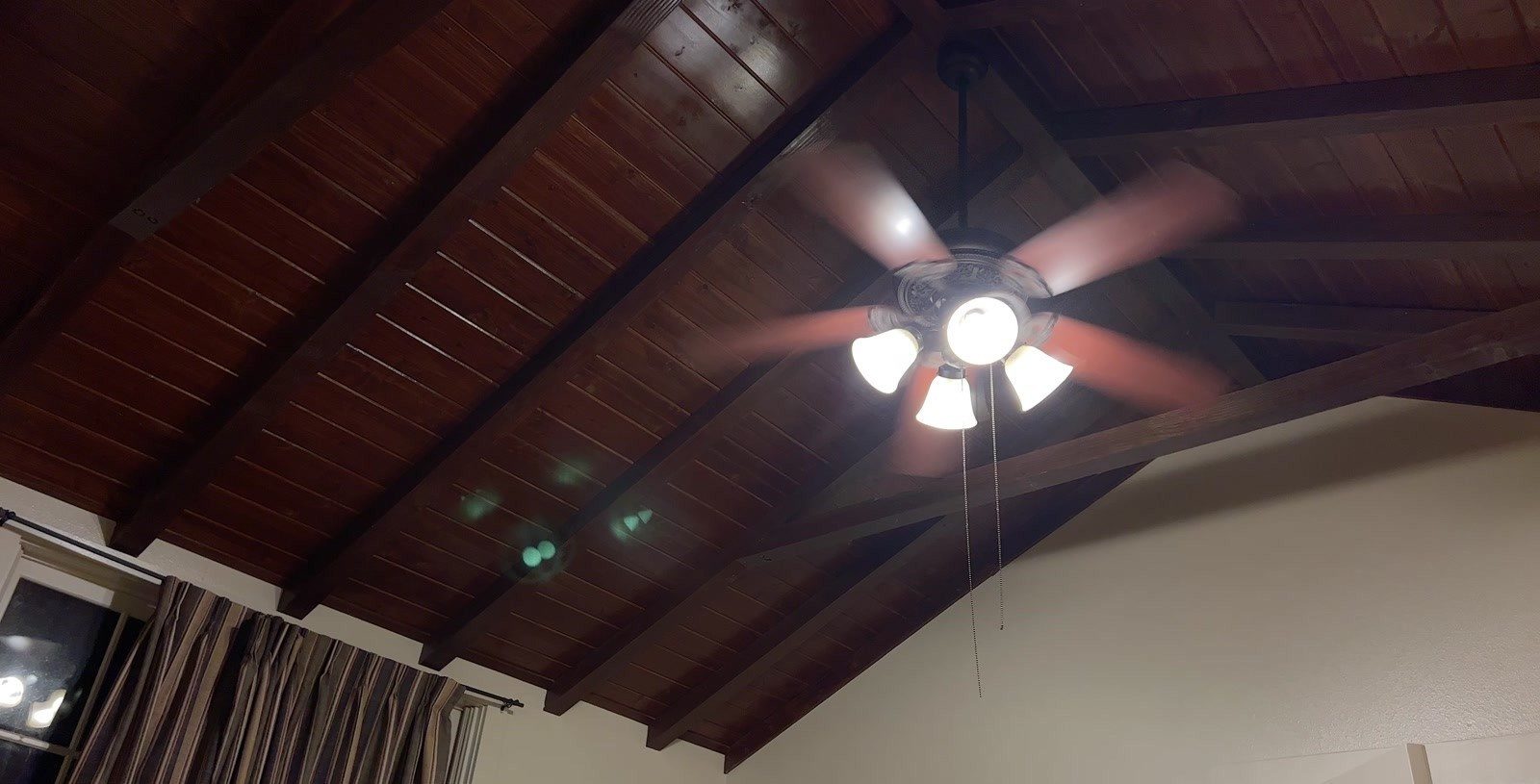
The main lodge holds the restaurant and the gift shop, and guest buildings and cabins with stone chimneys are scattered around it. Our room was fine. The soundproofing wasn’t great, though, which may just come with staying in a lodge. If you’re sensitive to noise, factor that in before you book.
Inside the park
Where we stayed
Breakfast at the lodge on a wet morning
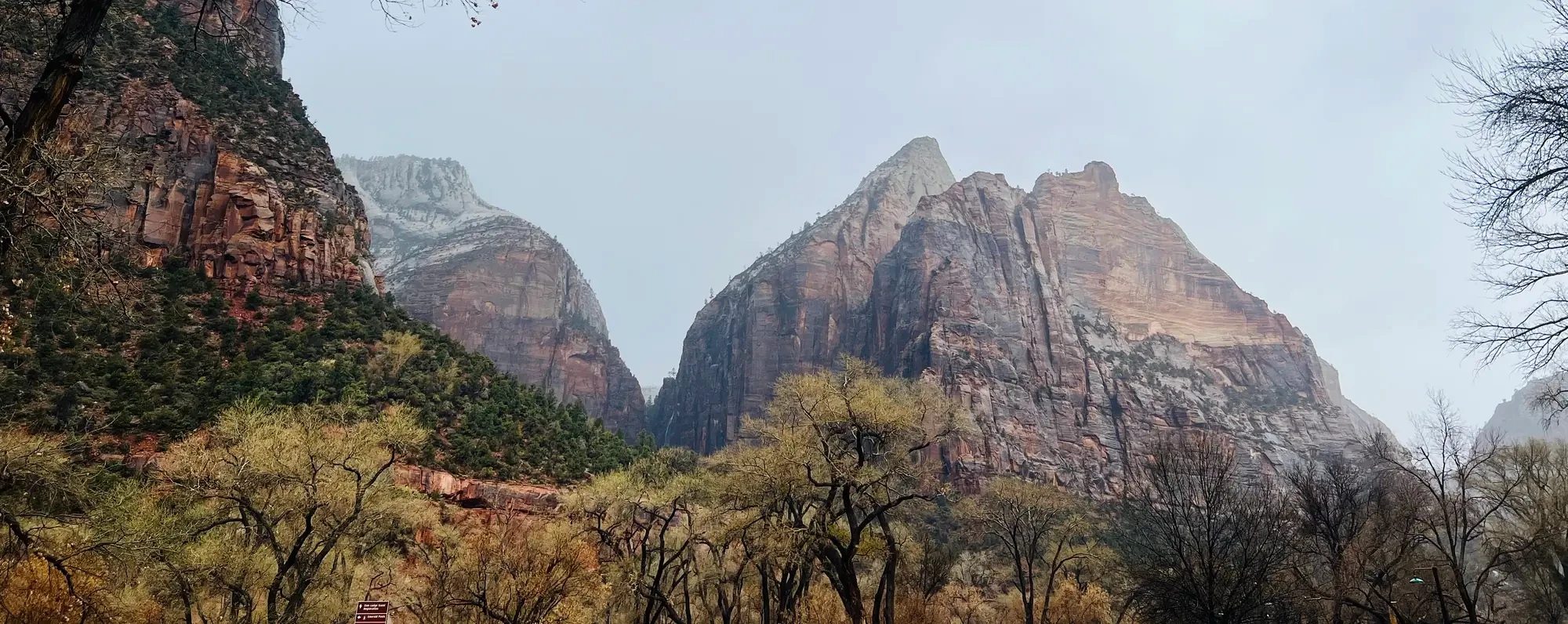
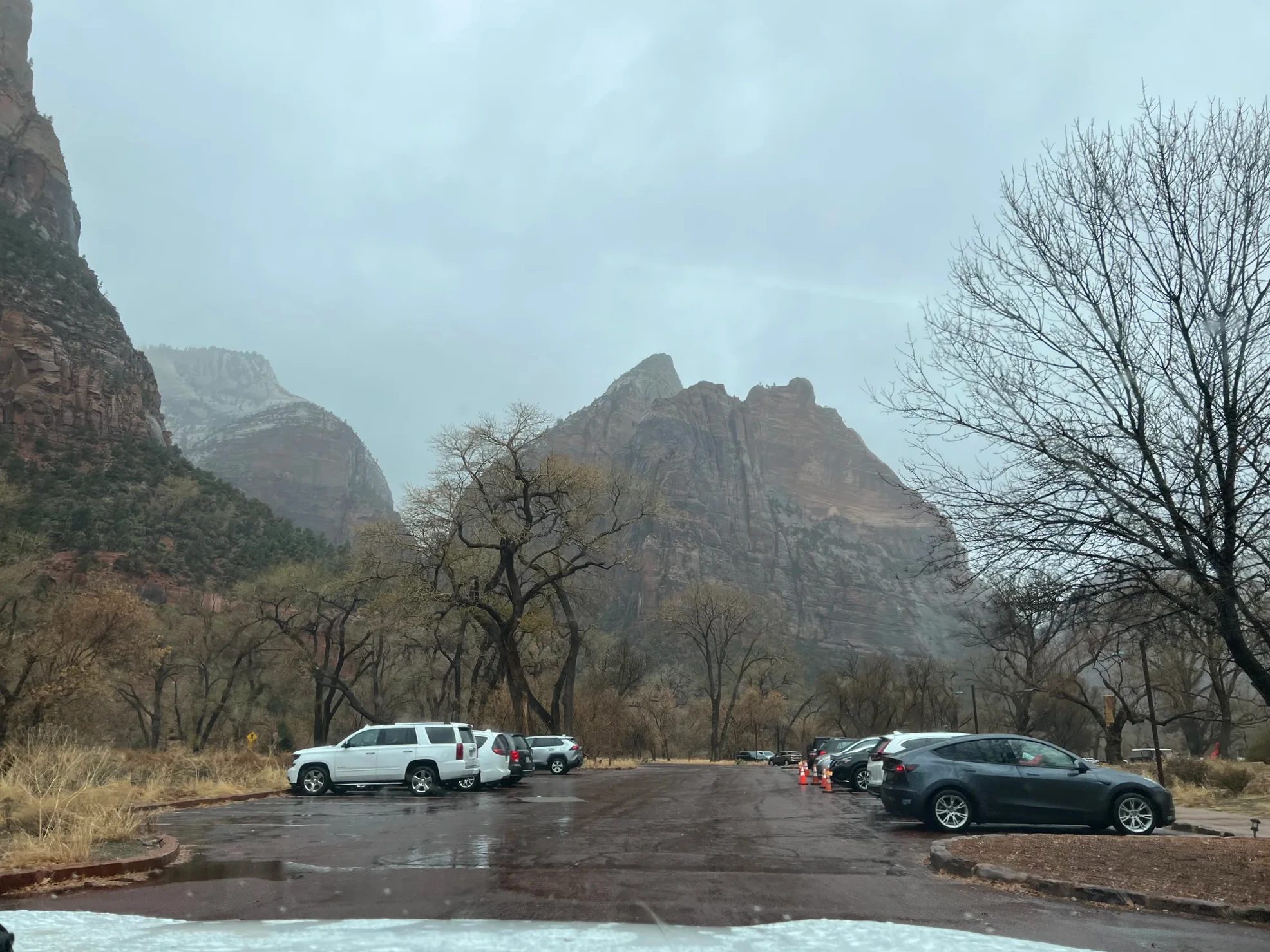
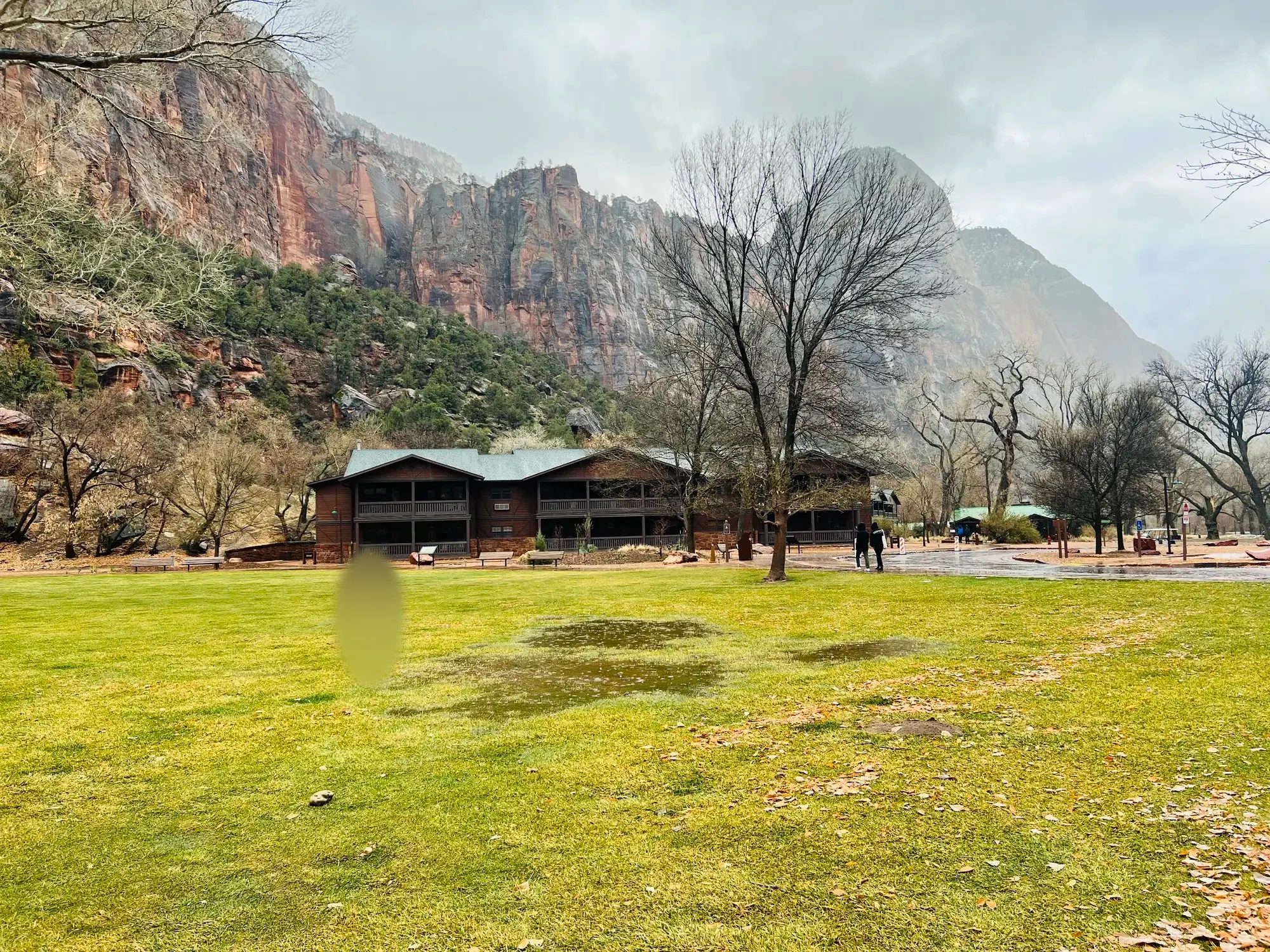
In the morning, the window showed what the dark had hidden: a huge rock mountain rising right in front of the lodge. The rain kept coming, so for once we took our time in the room and didn’t head out until about 10 a.m. Above the wet red dirt paths and the cabin roofs, clouds hung halfway up the rock.
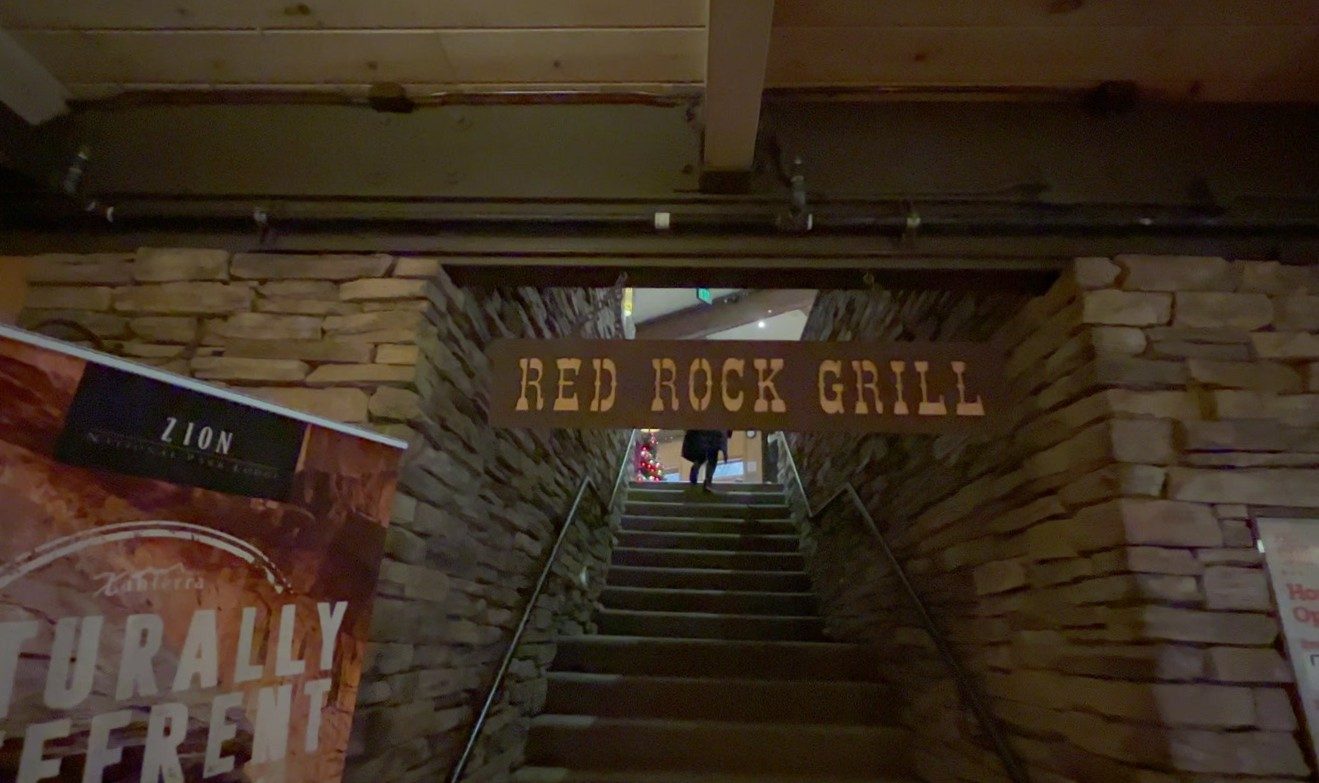
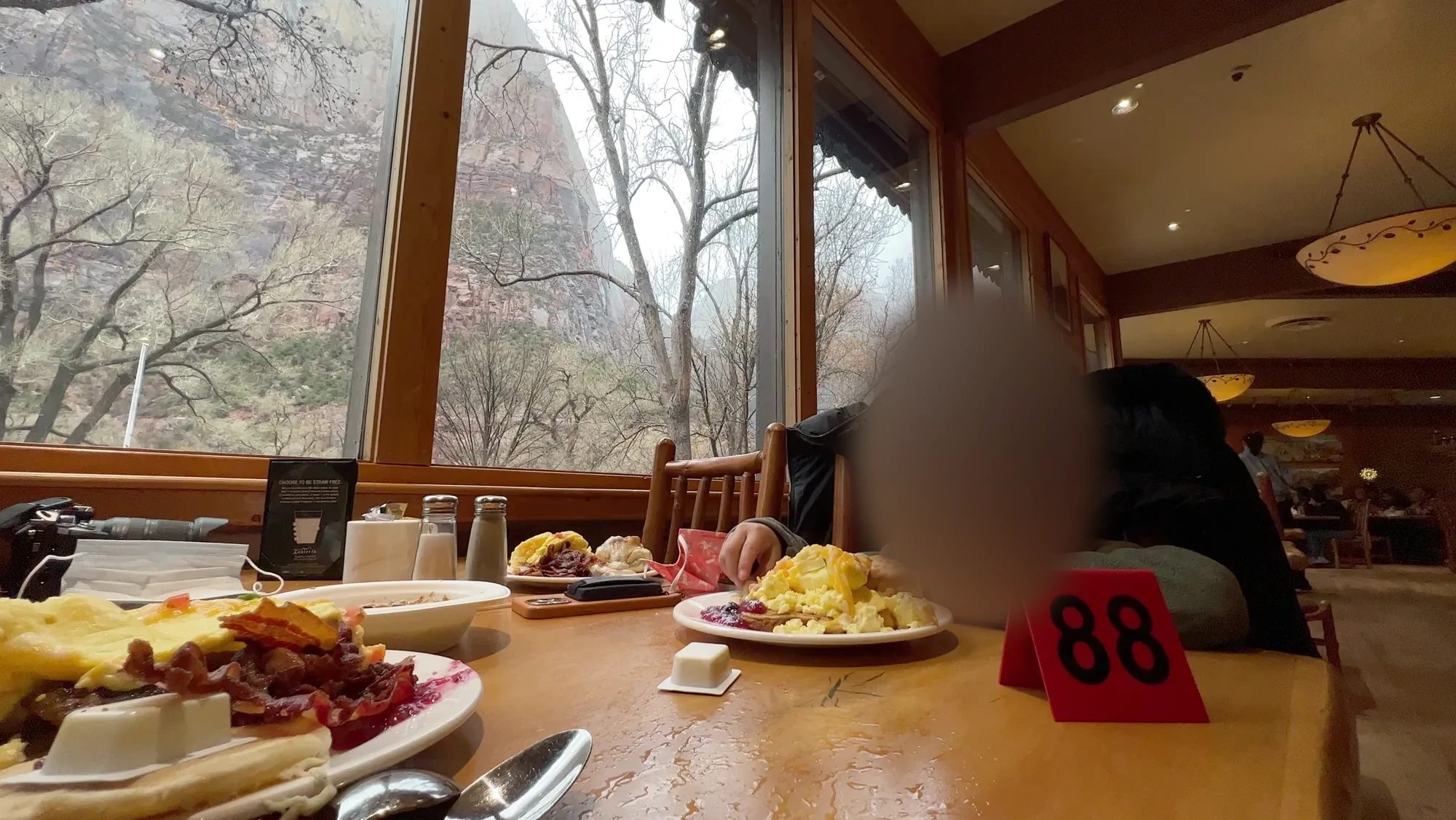
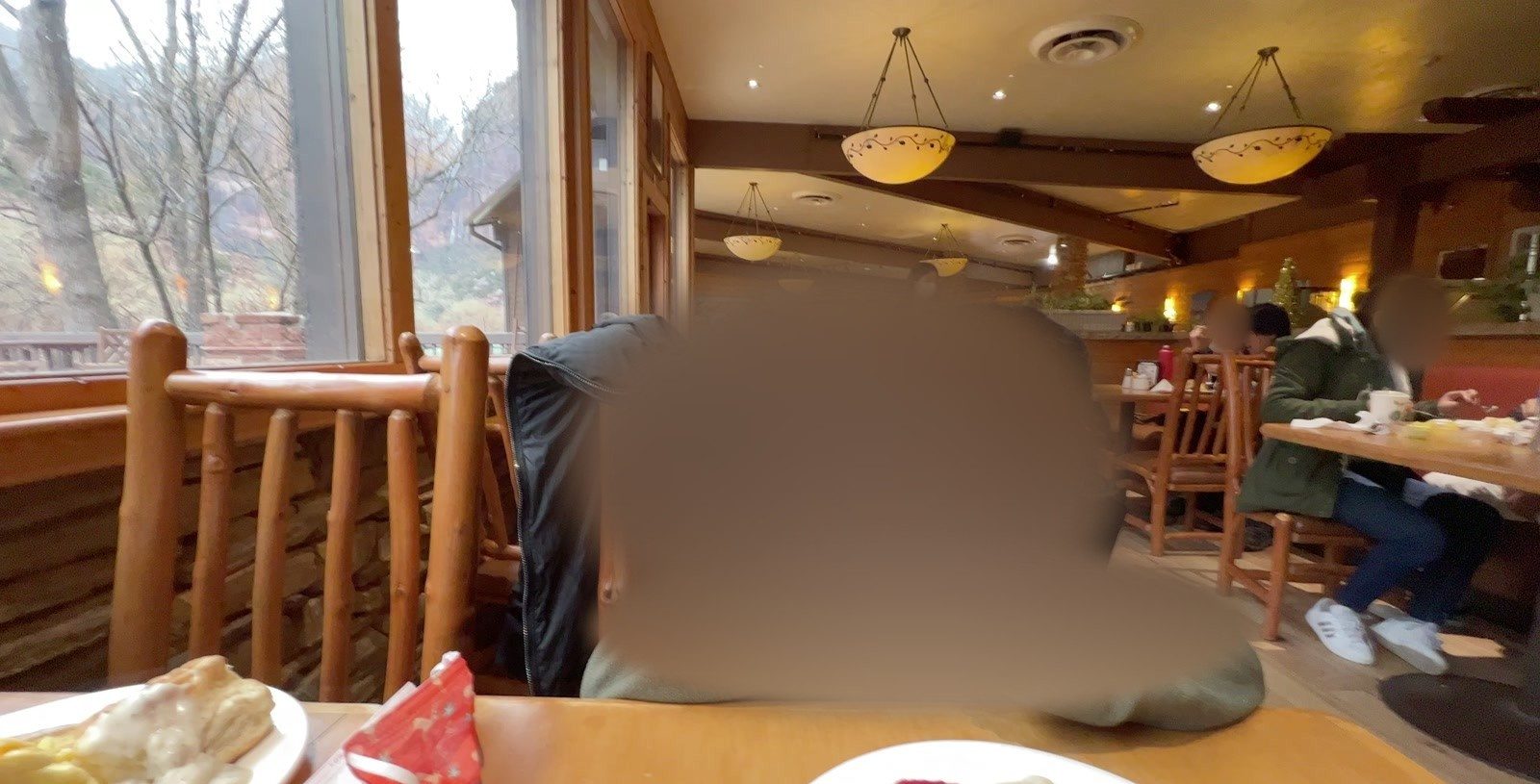
We ate breakfast at the Red Rock Grill in the main lodge building, a dining room with big windows looking out on the canyon. The breakfast buffet was generous and good, and we ate well before the day’s walking. Inside the park, this restaurant and the seasonal Castle Dome Café are the only two places to buy food.
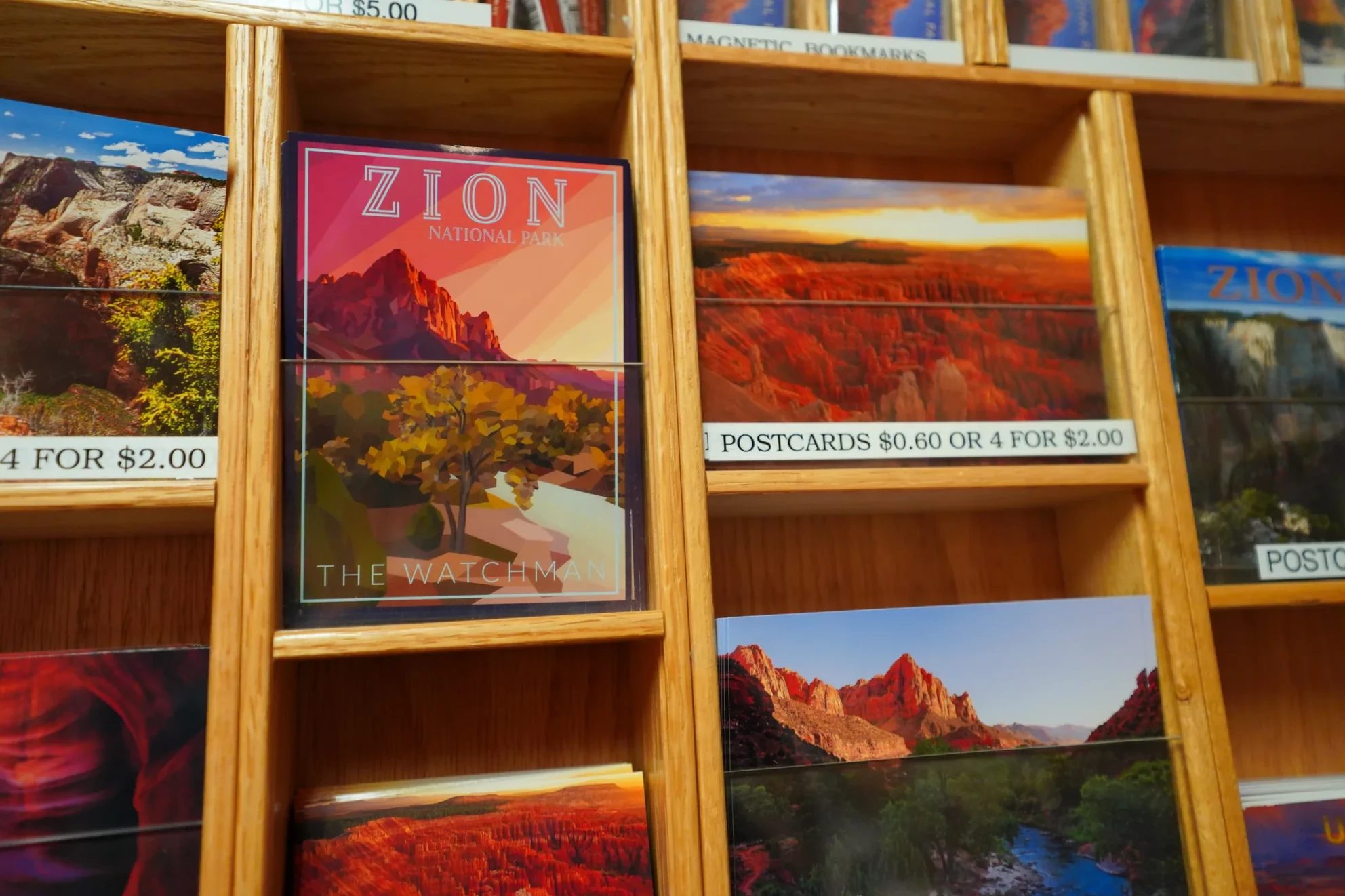
After breakfast we stopped in the lodge gift shop. It looked like rain all day, so we bought a hiking rain jacket there and put it on. The racks were packed with Zion postcards: $0.60 each, or four for $2.
What makes Zion different
Zion is a canyon the Virgin River cut into red sandstone. As the land here rose, the river carved straight down into hard rock, removing about 400 m (1,300 ft) over the last million years. That’s why the canyon walls stand so sheer, as if sliced with a knife. The walls are Navajo Sandstone, the hardened sand dunes of a Jurassic desert, more than 600 m (2,000 ft) thick in places. It sits one layer below the Entrada Sandstone we’d seen at Arches.
Pink and white bands run through the red, and dark streaks called desert varnish run down the cliff faces. If most of your Grand Circle so far has been looking down into the landscape, Zion is the place where you stand on the canyon floor and look up at the walls.
It felt different to us, too. Instead of looking down on carved canyons or rock spires, we had massive rock mountains rising right in front of us. The black streaks running down the red walls stayed with us as well.
The name is said to come from Isaac Behunin, a Mormon settler who farmed in the canyon in the 1860s and named it after the biblical Zion. The area became Mukuntuweap National Monument in 1909, was renamed Zion in 1918 and became a national park in 1919.
Visitor center, then back up the Scenic Drive
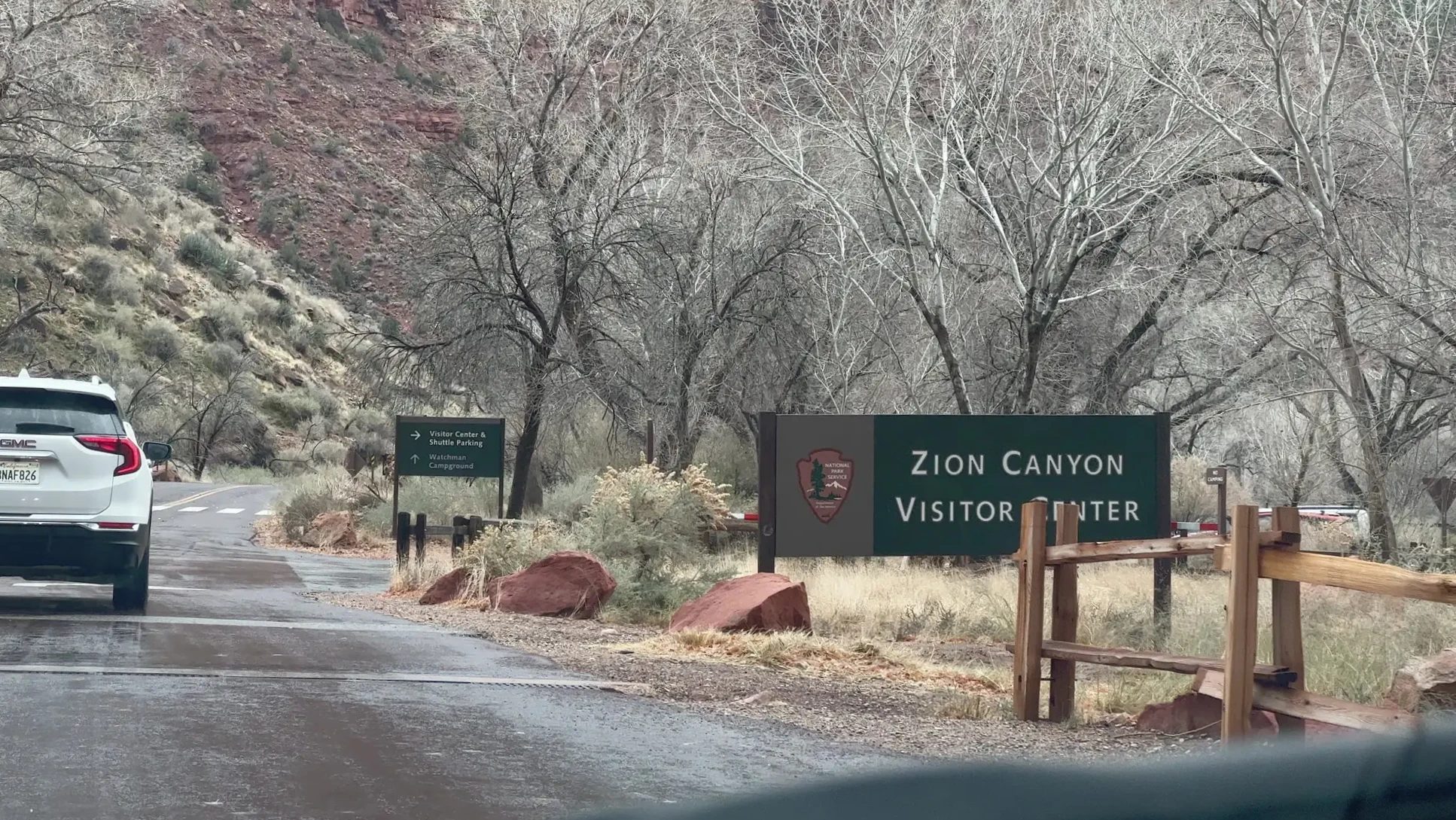
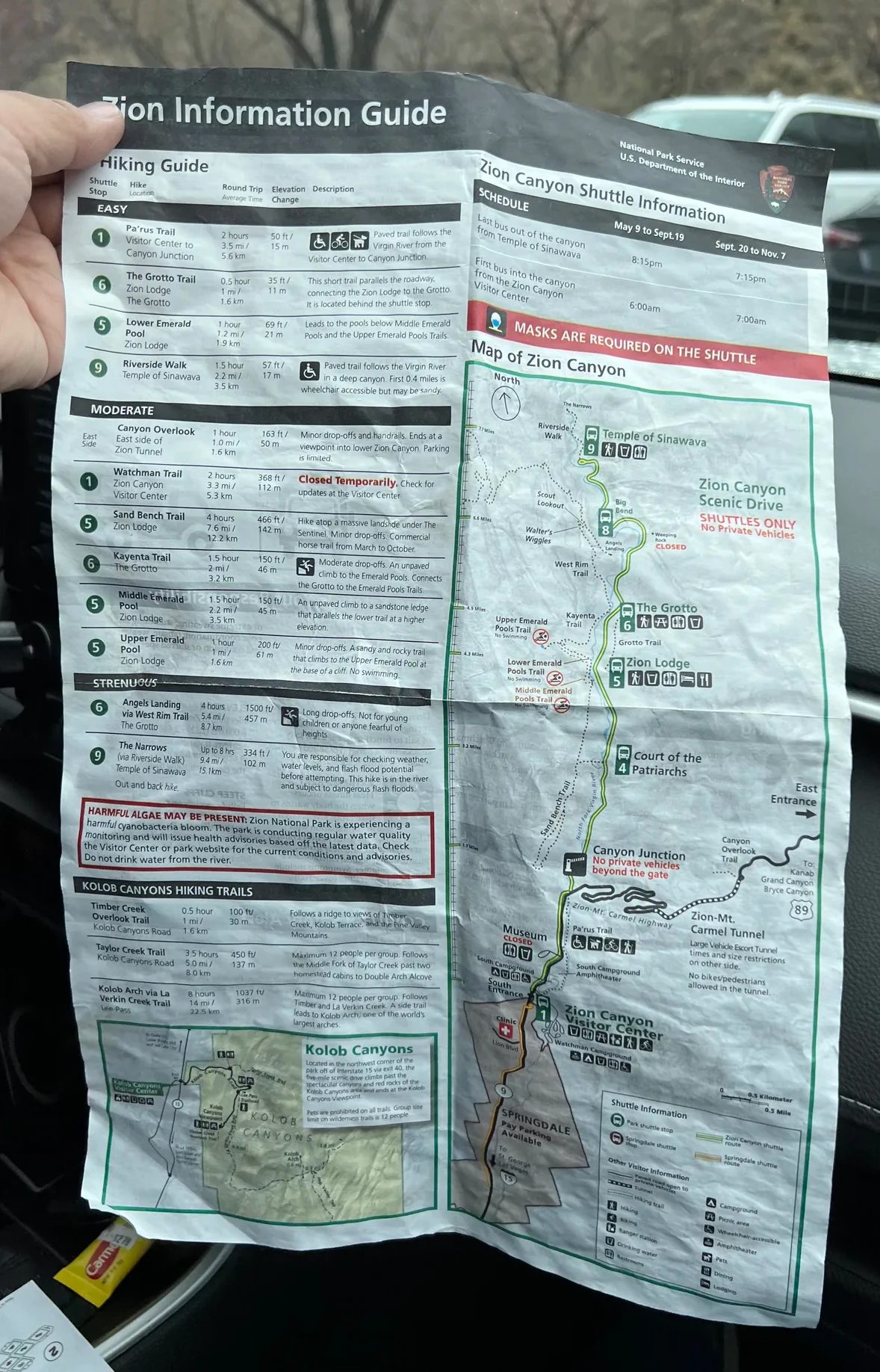
Around noon we drove down to the Zion Canyon Visitor Center near the canyon entrance. We picked up a park map, got a rough sense of the canyon’s layout and decided where to walk.
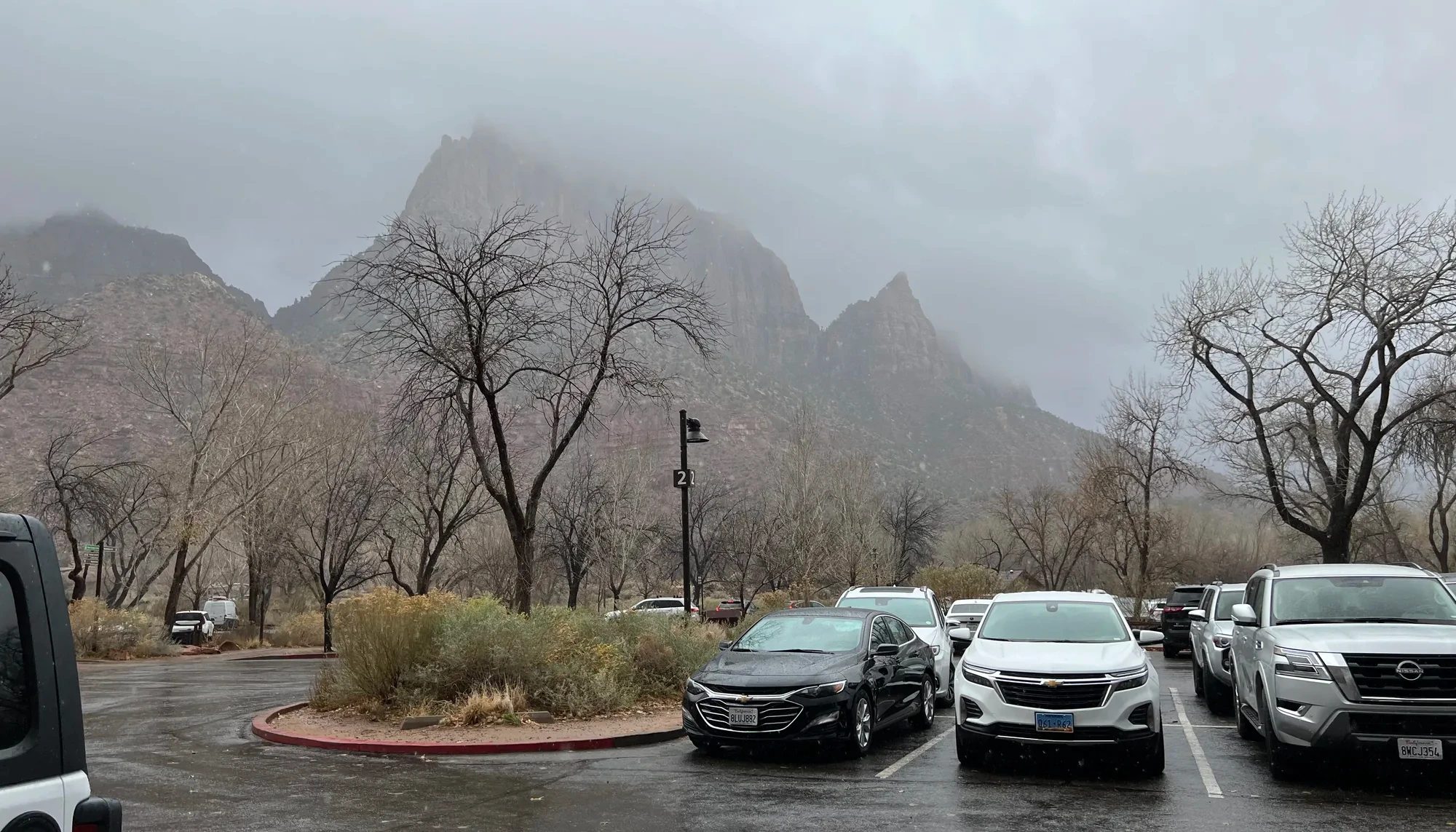
To get back, we drove up the Scenic Drive again. At about 12:40 p.m. we pulled over briefly by the road near Canyon Junction, where the Scenic Drive begins. The clouds lifted and the red rock mountains came out clearly, and our kid posed for a photo beside a roadside rock. It was the clearest the sky got all that rainy day.
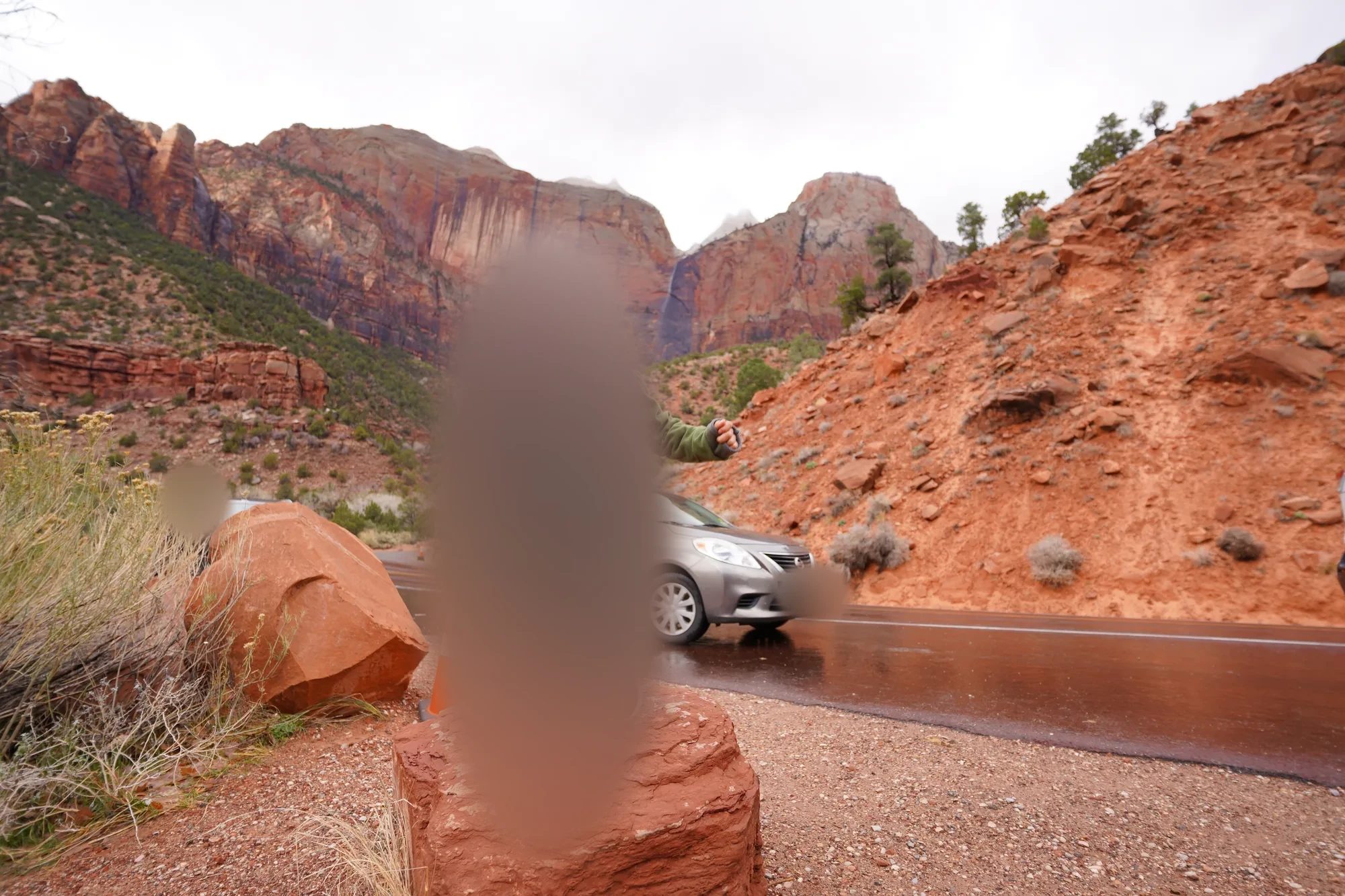
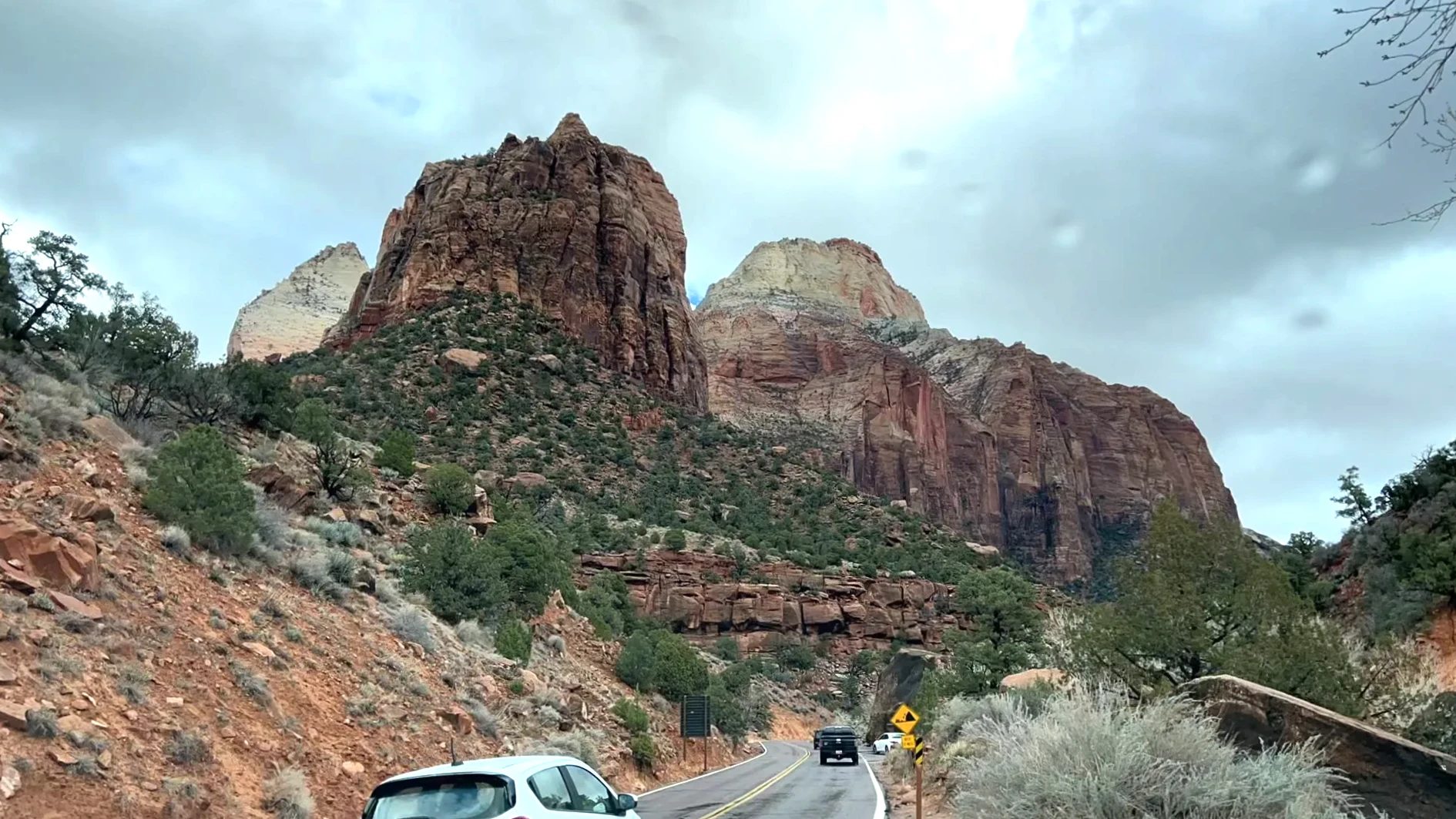
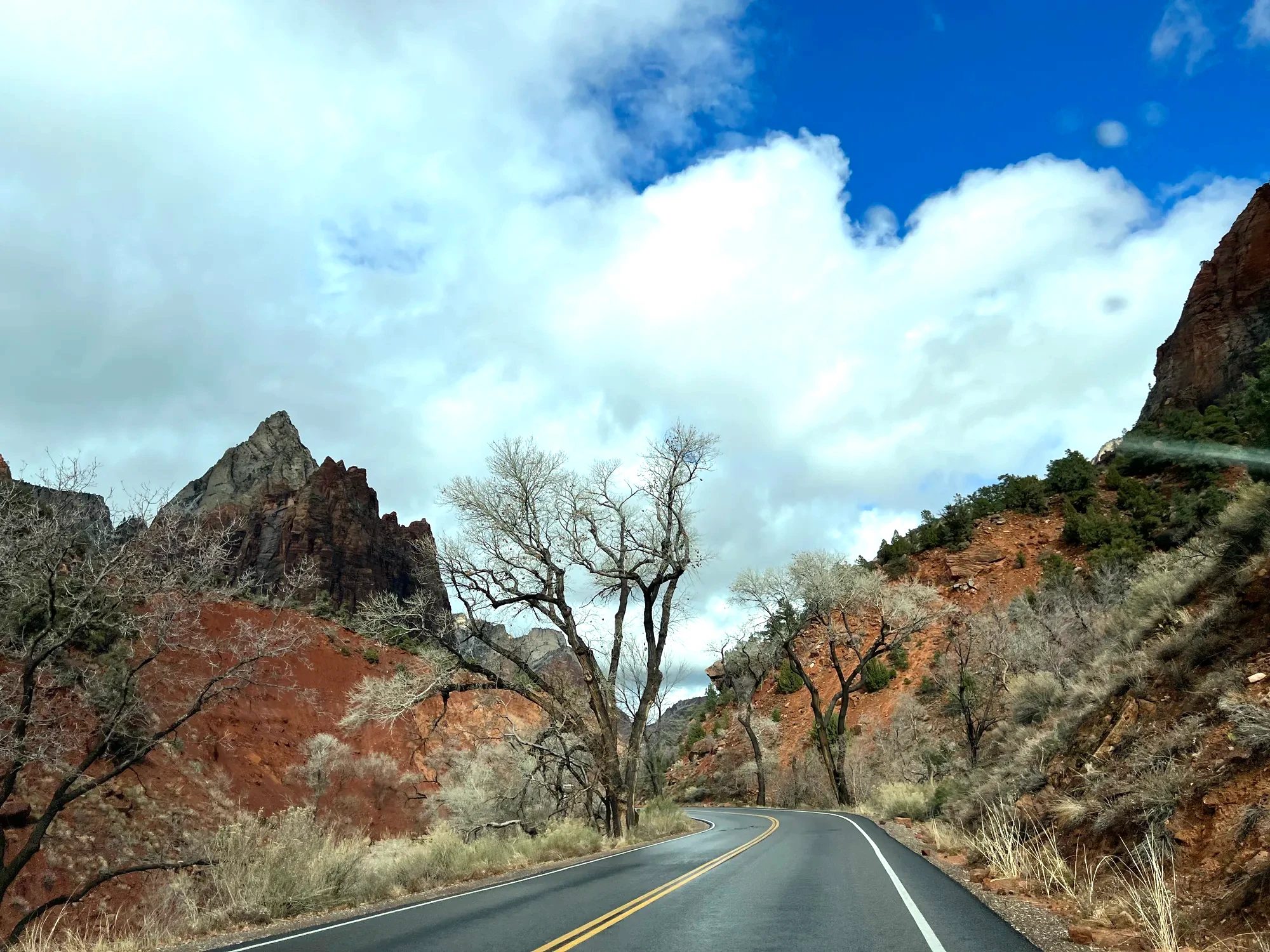
On the way up to the lodge we passed a shuttle bus. When the shuttle is running, private vehicles can’t go past Canyon Junction.
The Scenic Drive and the shuttle: 2021 vs. 2026
- When we went (2021)A holiday shuttle ran from December 23 to January 1, and during that time private vehicles couldn’t go past Canyon Junction.
- Winter 2026From November 29 to December 25 there’s no shuttle, so you can drive the Scenic Drive in your own car. From December 26 to January 2 the shuttle runs a reduced schedule, and cars can’t go in (as of October 2026).
- Lodge guestsEven during shuttle season, guests can drive to the lodge and park in the designated area. Beyond the lodge, you have to take the shuttle.
- Check firstThe shuttle schedule changes every year. Before you go, check that year’s dates on the park’s official shuttle page.
Emerald Pools Trail in the rain
Around 1 p.m. we left the car at the lodge and crossed the road to the Emerald Pools trailhead. Small white pellets, something like sleet, were scattered on the ground. The rain started again, so we pulled on our rain gear.
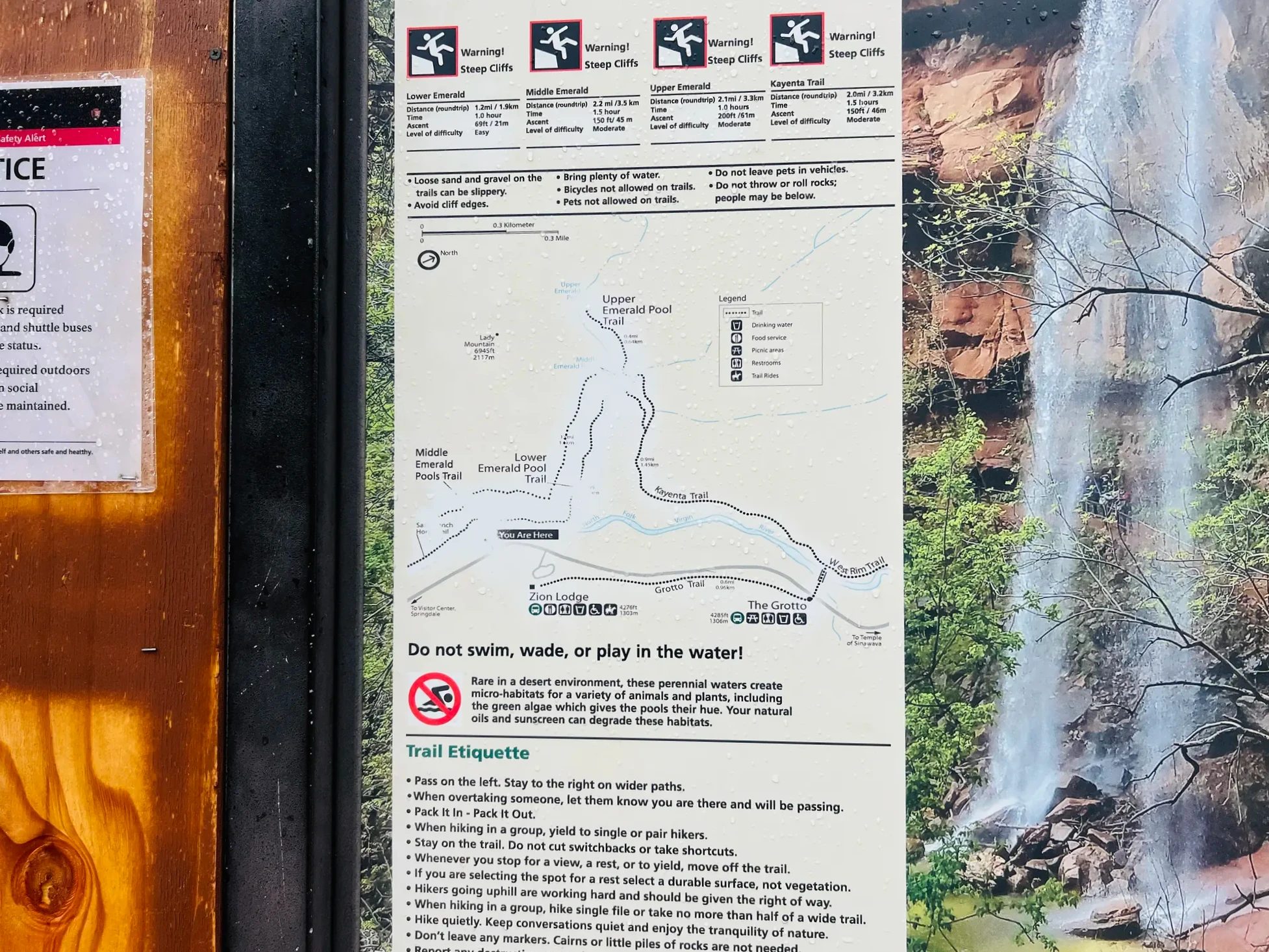
The Emerald Pools are three pools stacked in tiers below the canyon’s west wall. The lowest, Lower Emerald Pool, is an easy 1.9 km (1.2 mi) round trip that takes about an hour. Going on to the Middle Pool makes it 3.5 km (2.2 mi), and the Upper Pool climbs higher still. The National Park Service notes that some sections can ice over in winter. With our kid, we walked to the Lower Emerald Pool falls, went a little farther, then turned back. We didn’t go far.
Around 2 p.m. the falls came into view, several streams pouring off the top of the red cliff. The trail runs beneath an overhang where the cliff juts out like eaves, and the waterfall drops over it like a curtain. We got a little wet passing under it. Even in winter it wasn’t cold or unpleasant; if anything, it was refreshing. The kind of wet you don’t mind.
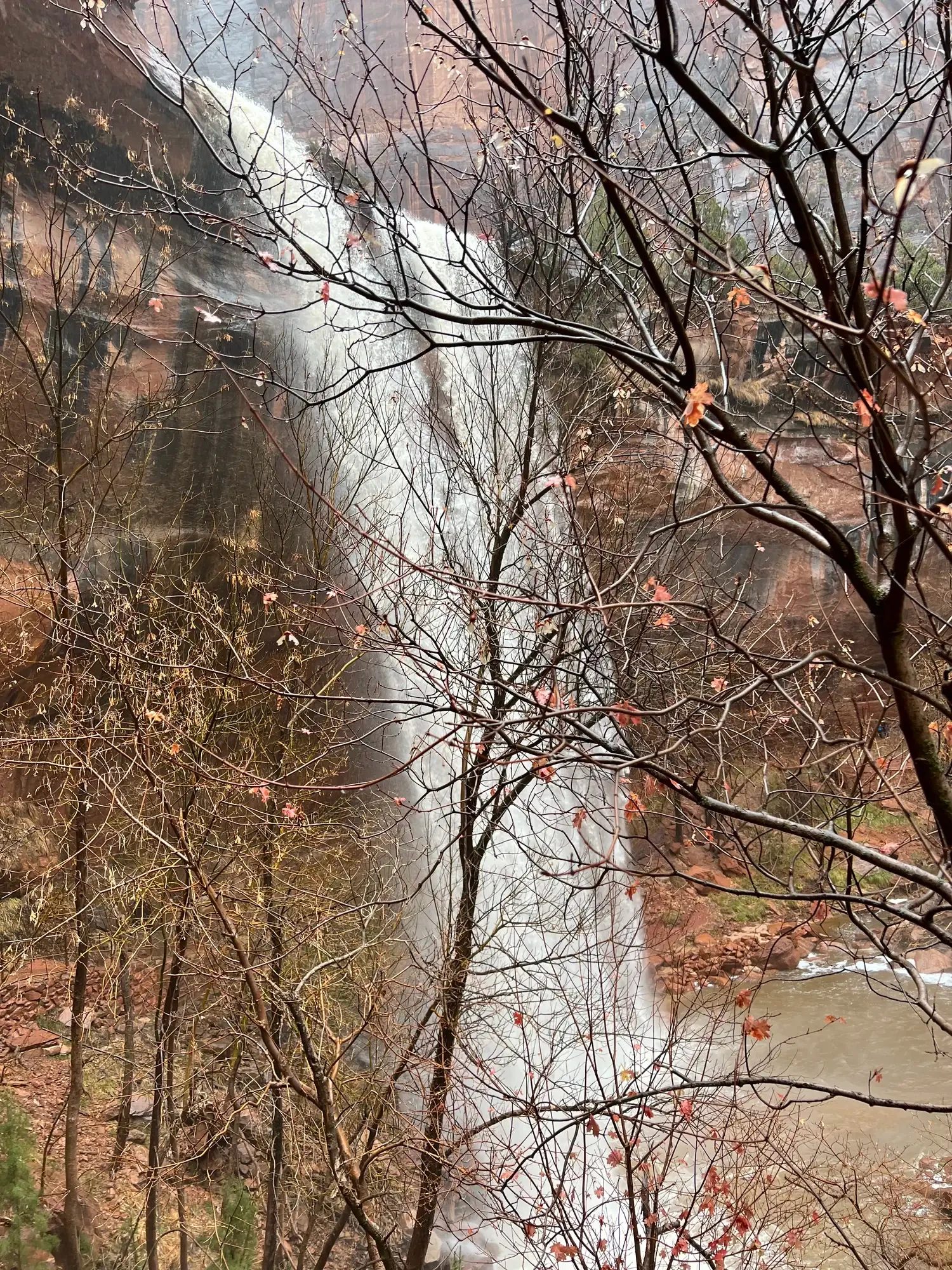
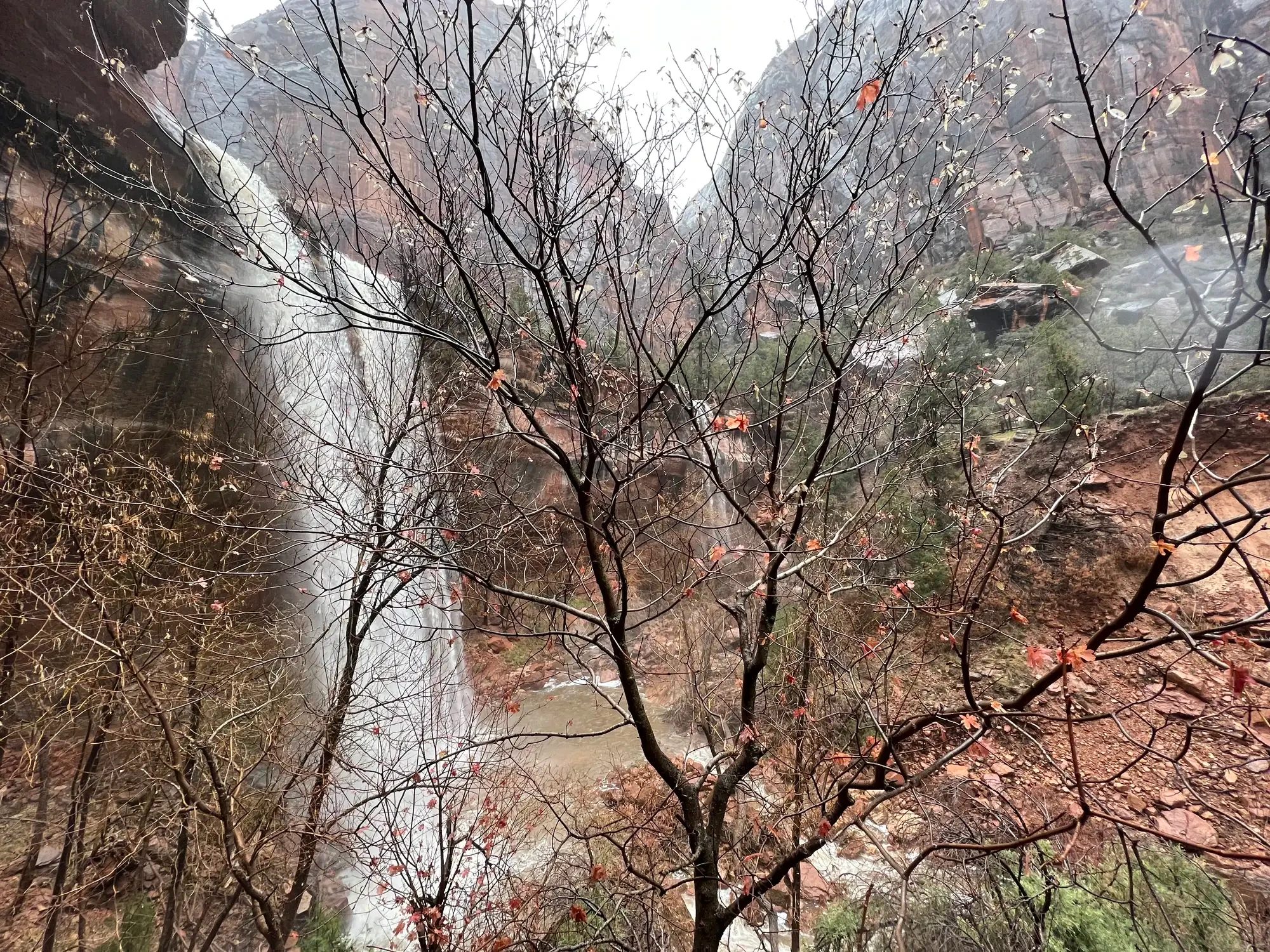
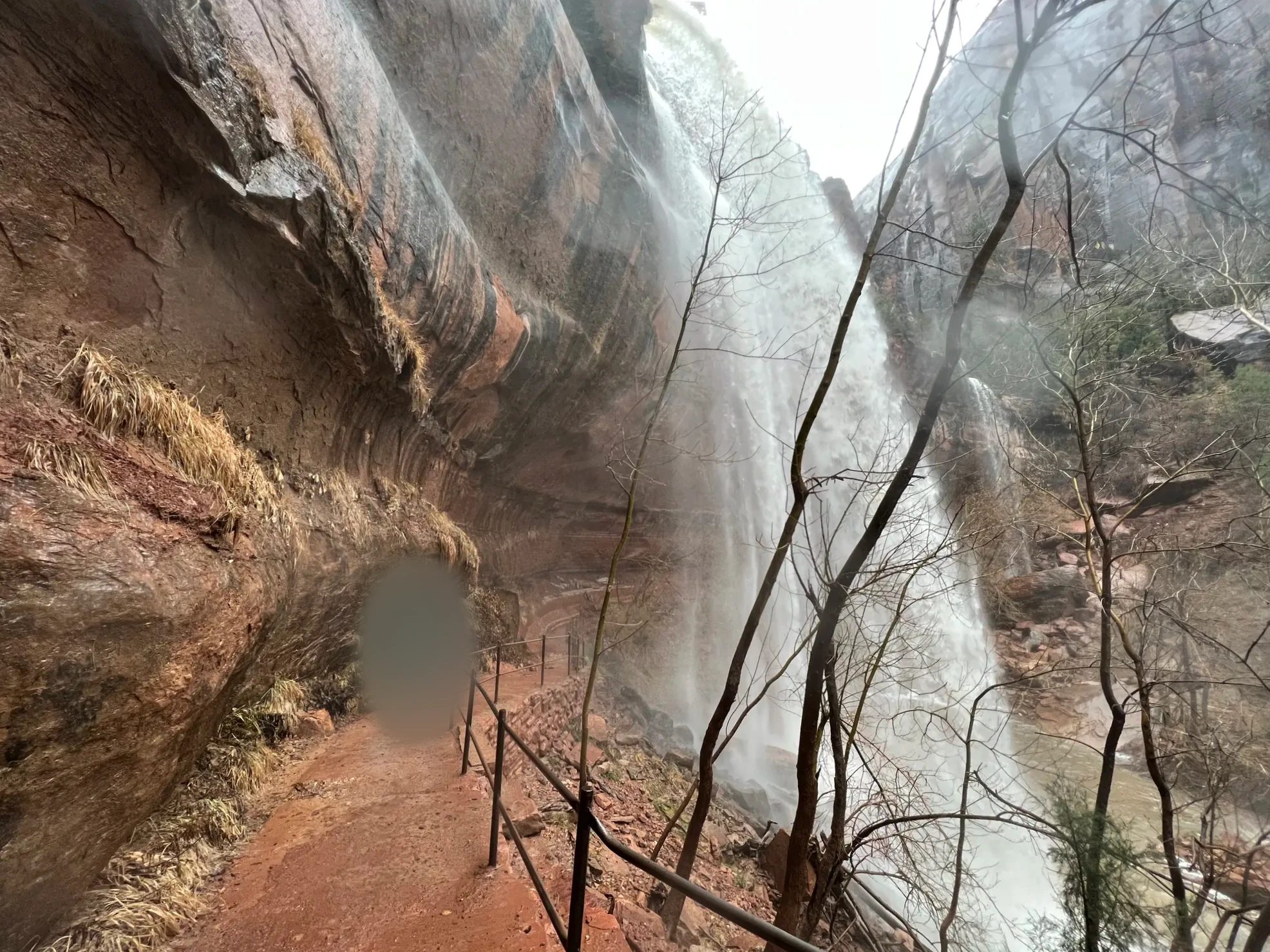
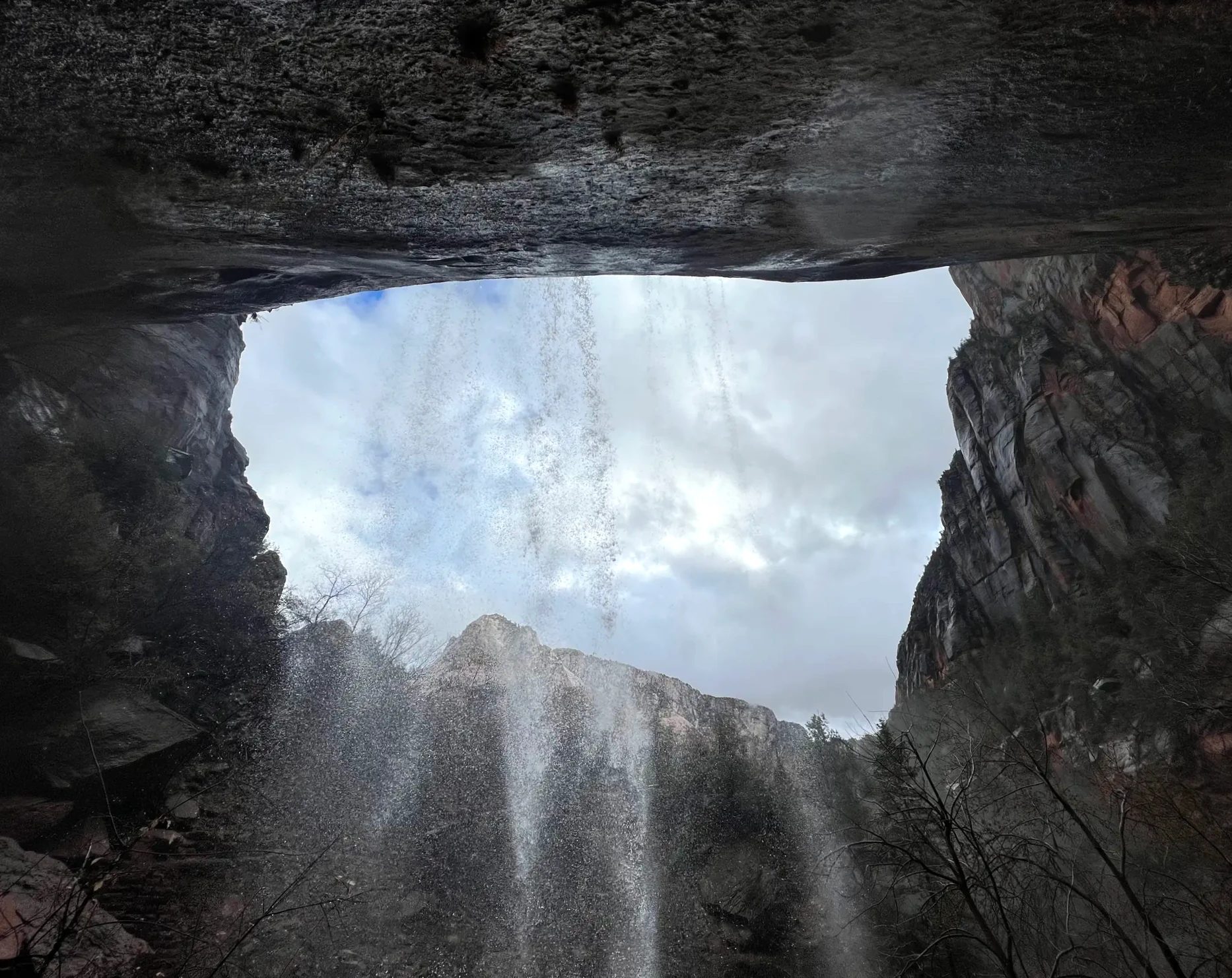
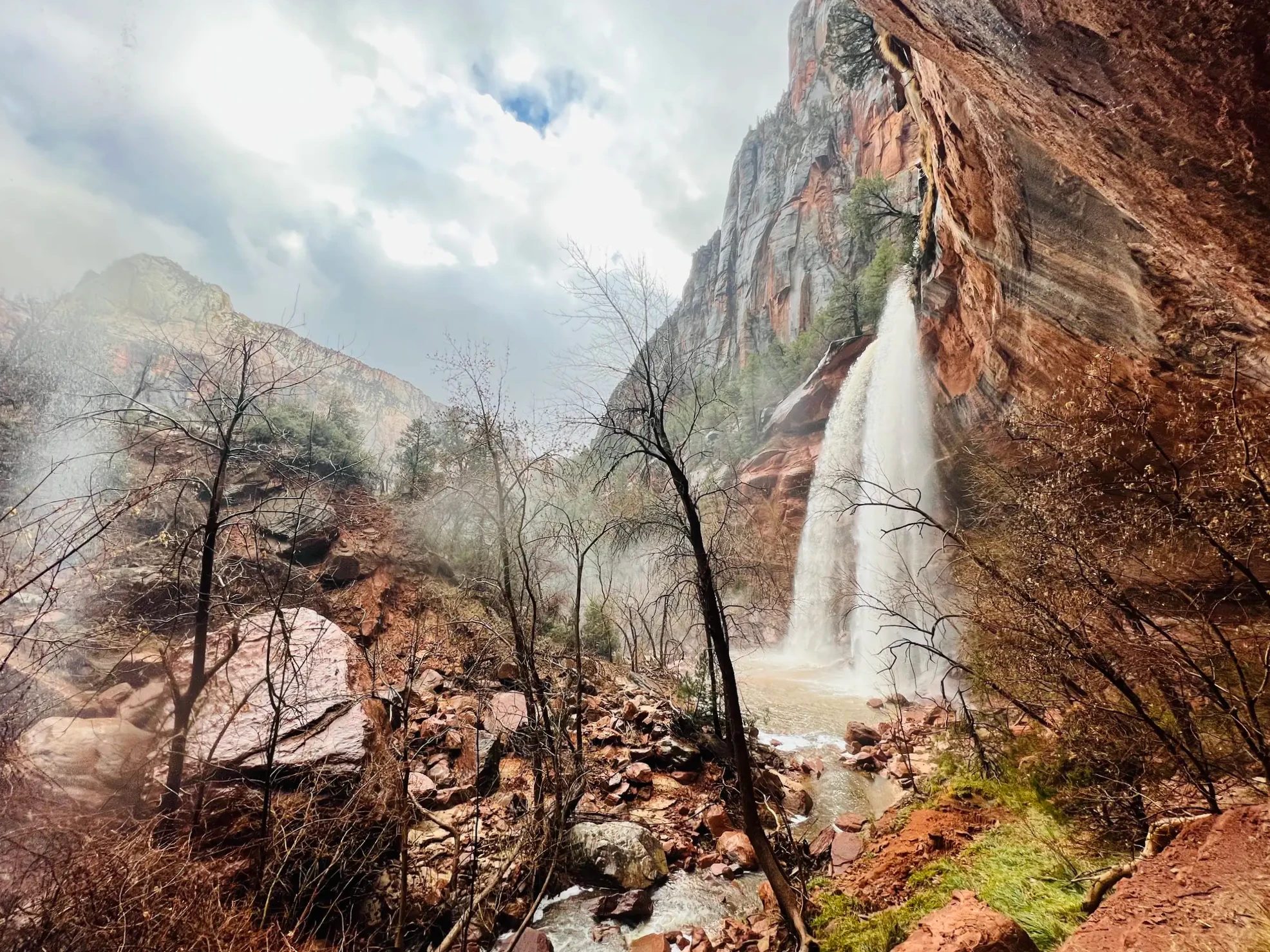
Past the falls, the trail comes out at the edge of the pool where the water from the cliff collects. Two streams fell from the top of the red cliff right in front of us, and green brush grew thick around the pool.
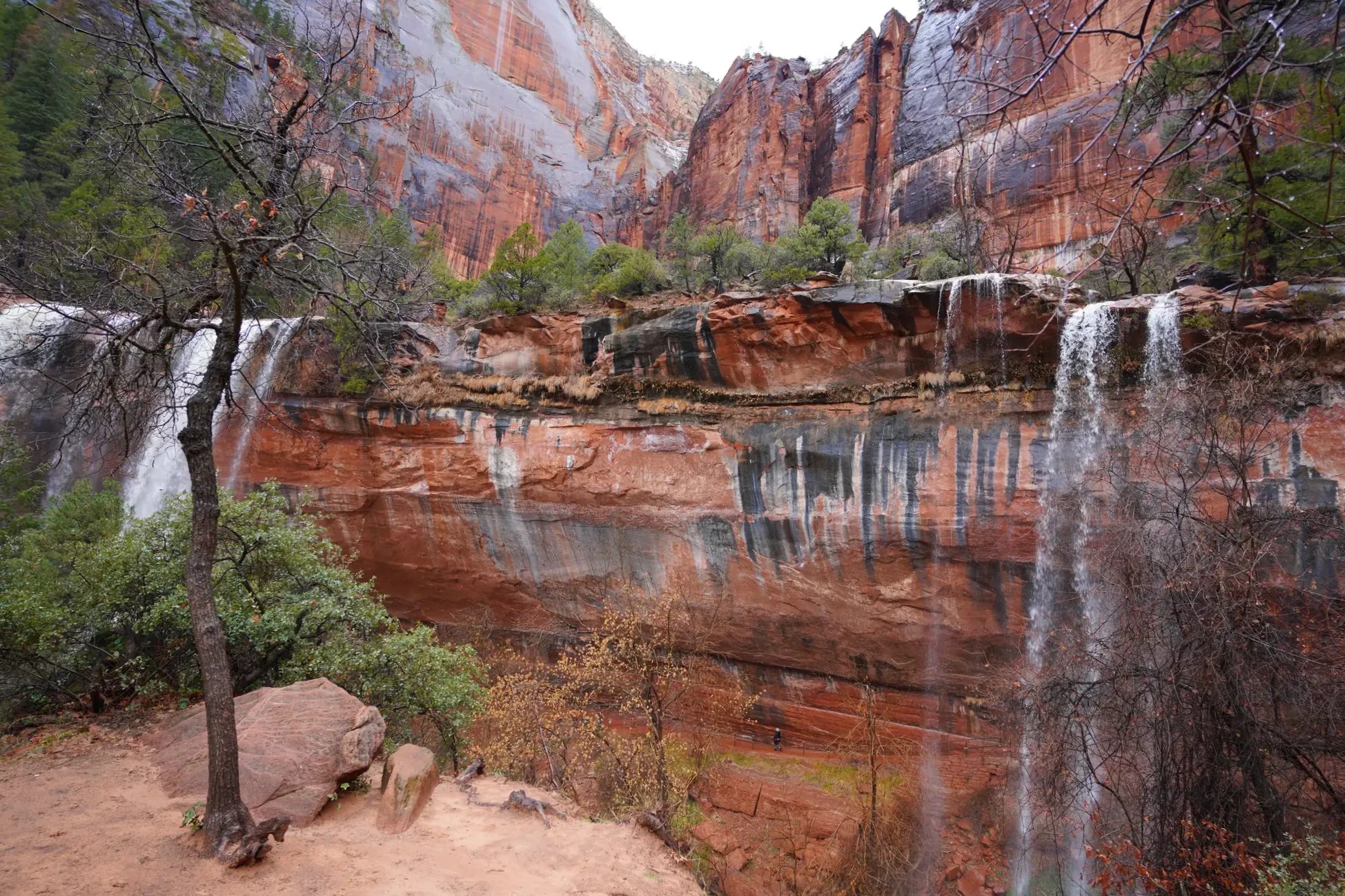
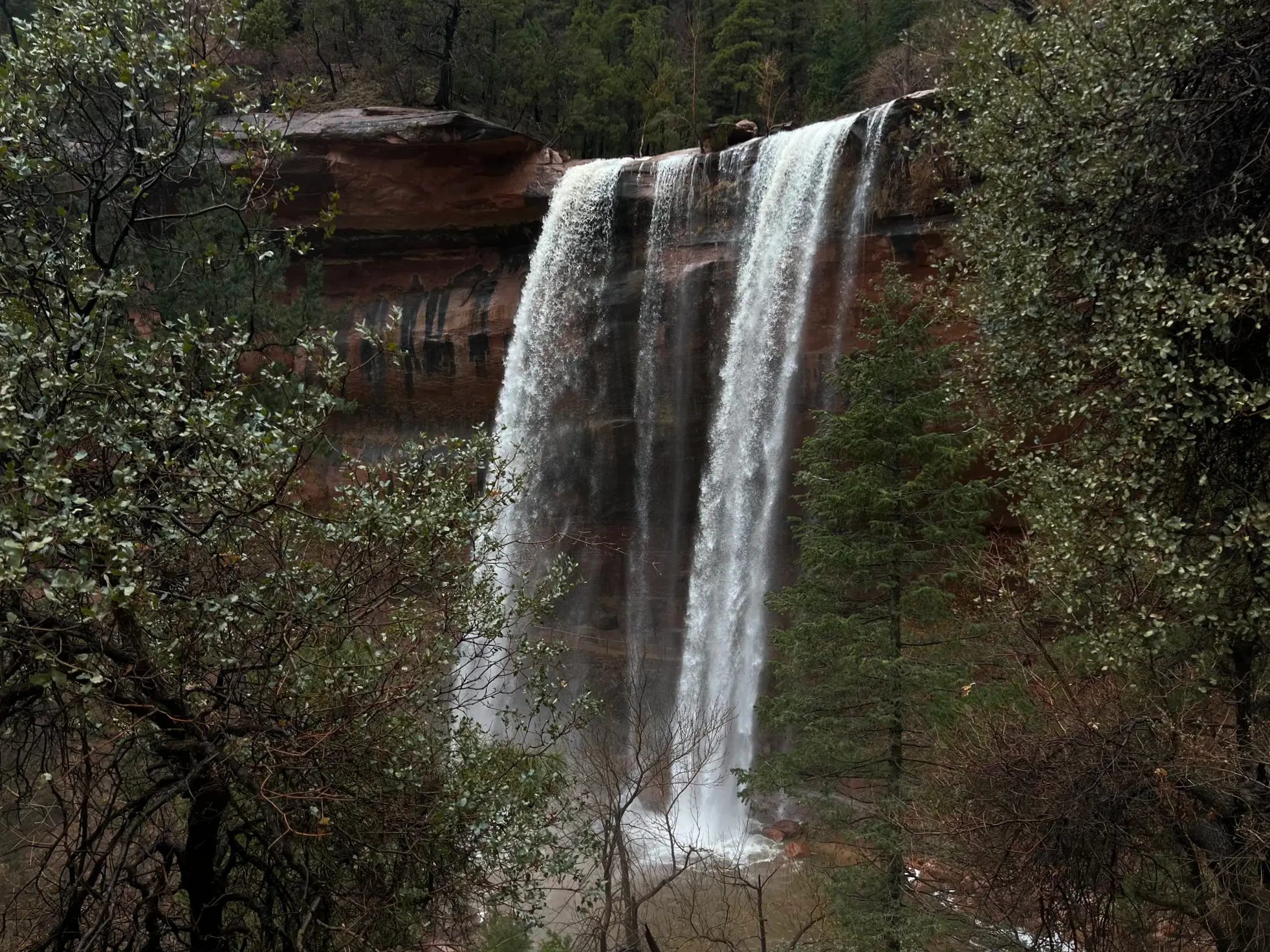
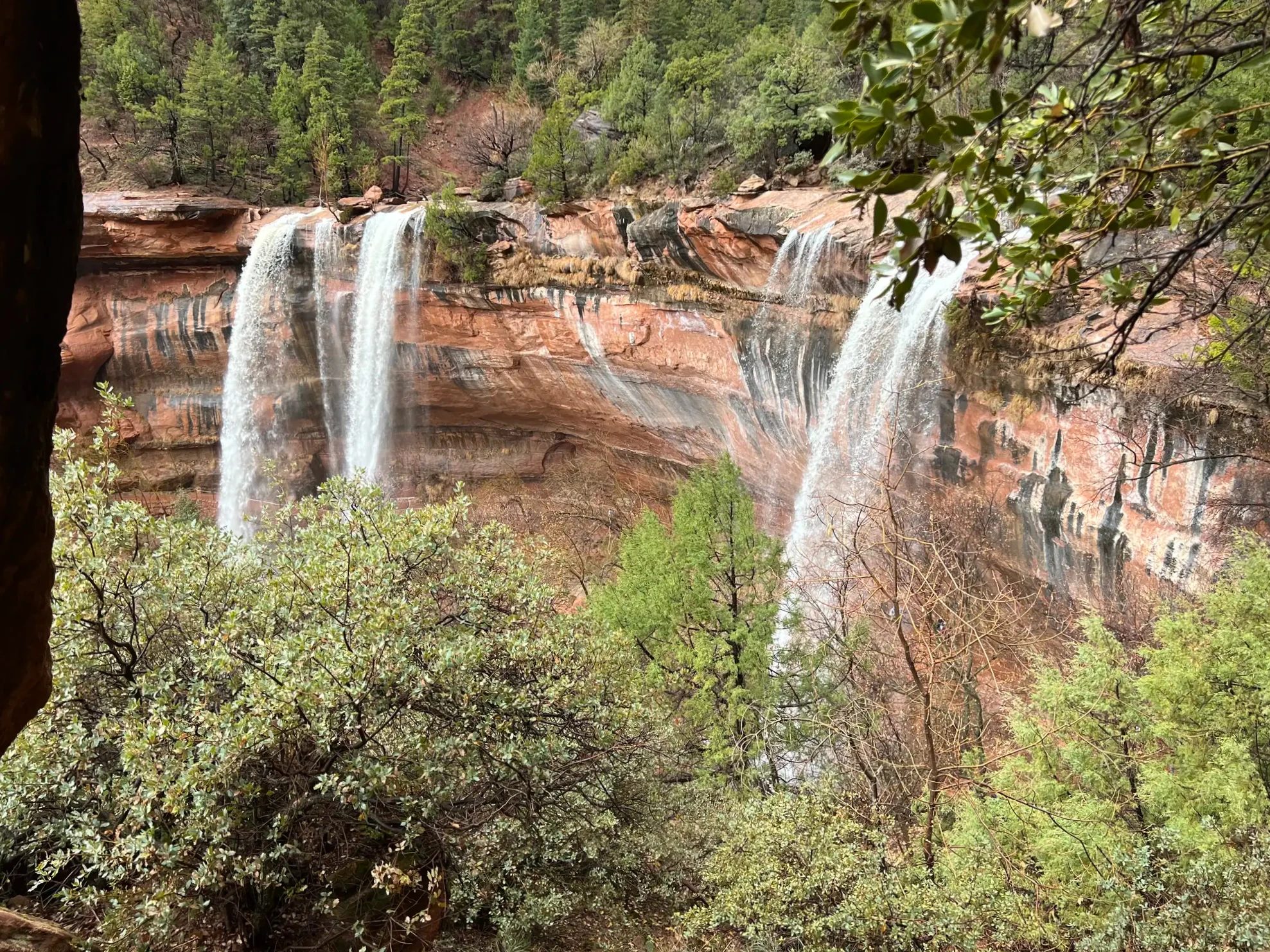
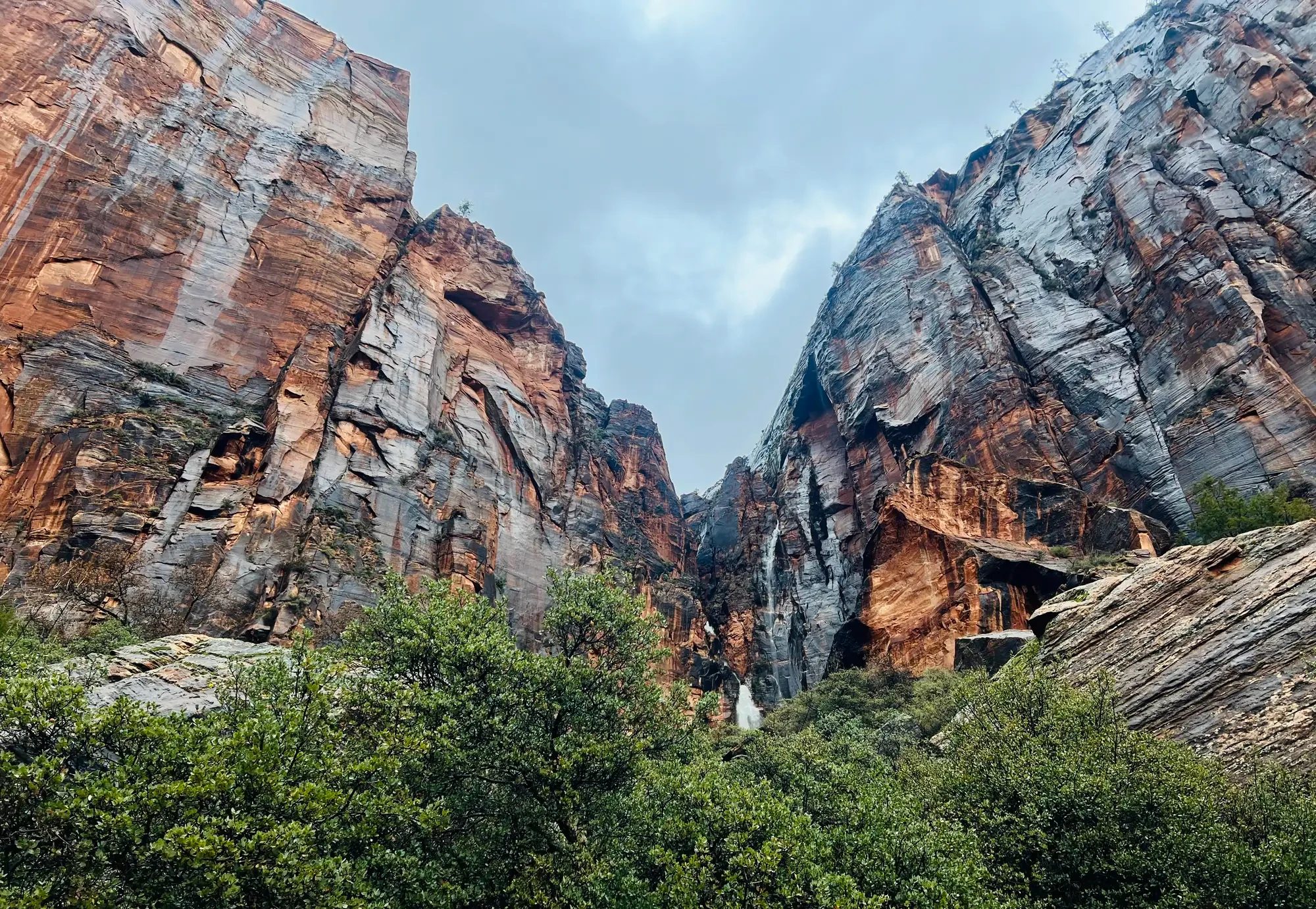
Water seeps out of Zion’s canyon walls in so many places because Navajo Sandstone holds water like a sponge. Rain and snow that fall on the plateau soak into the rock, then flow out through cracks in the cliffs.
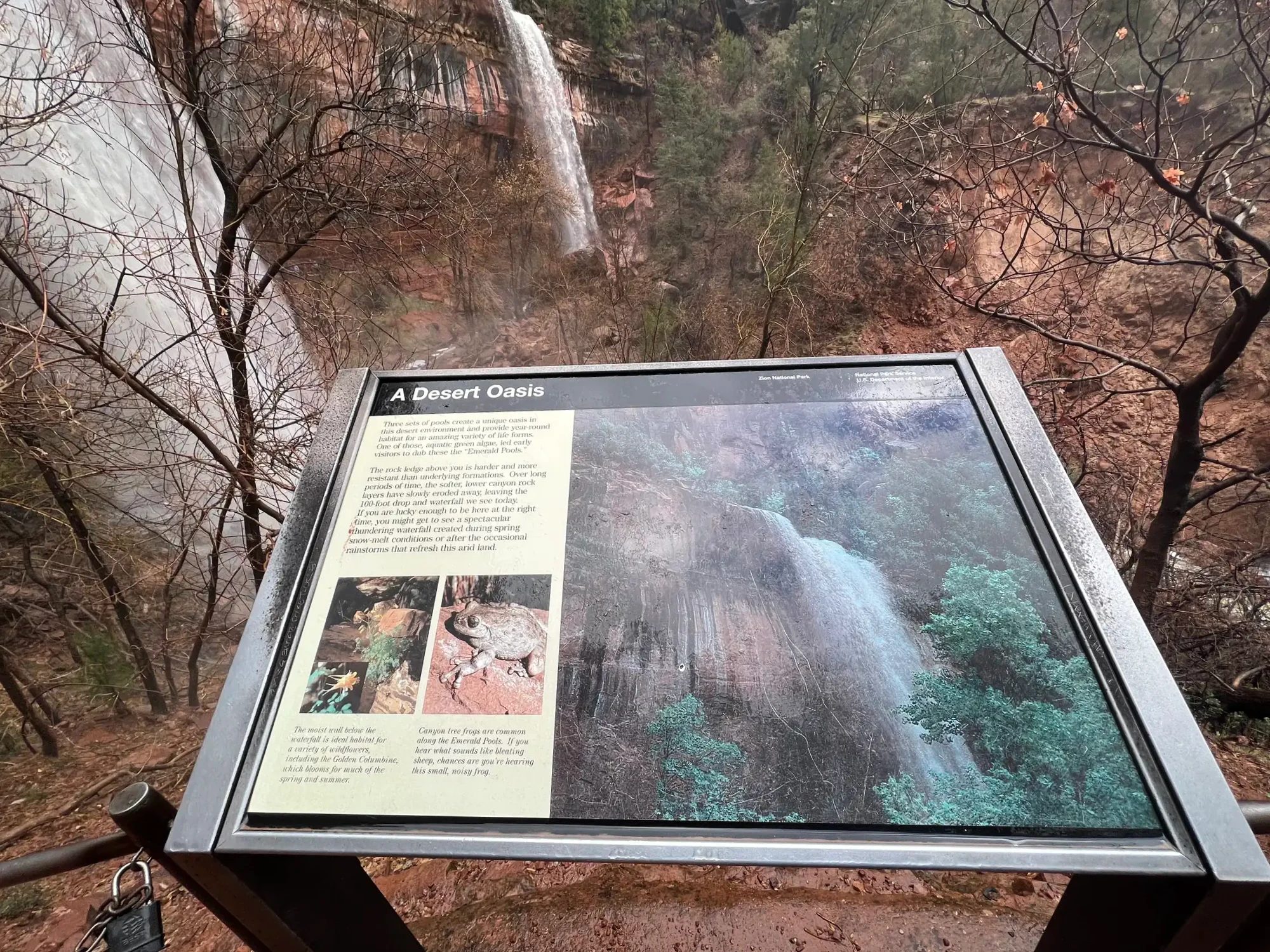
The sign was titled “A Desert Oasis.” It explained that there are three pools here, and that early visitors called them the Emerald Pools because of the green algae living in the water. Over a long time, a softer layer beneath the hard rock on top wore away, leaving a drop of about 30 m (100 ft). The sign also said the falls run much harder during spring snowmelt and after rain.
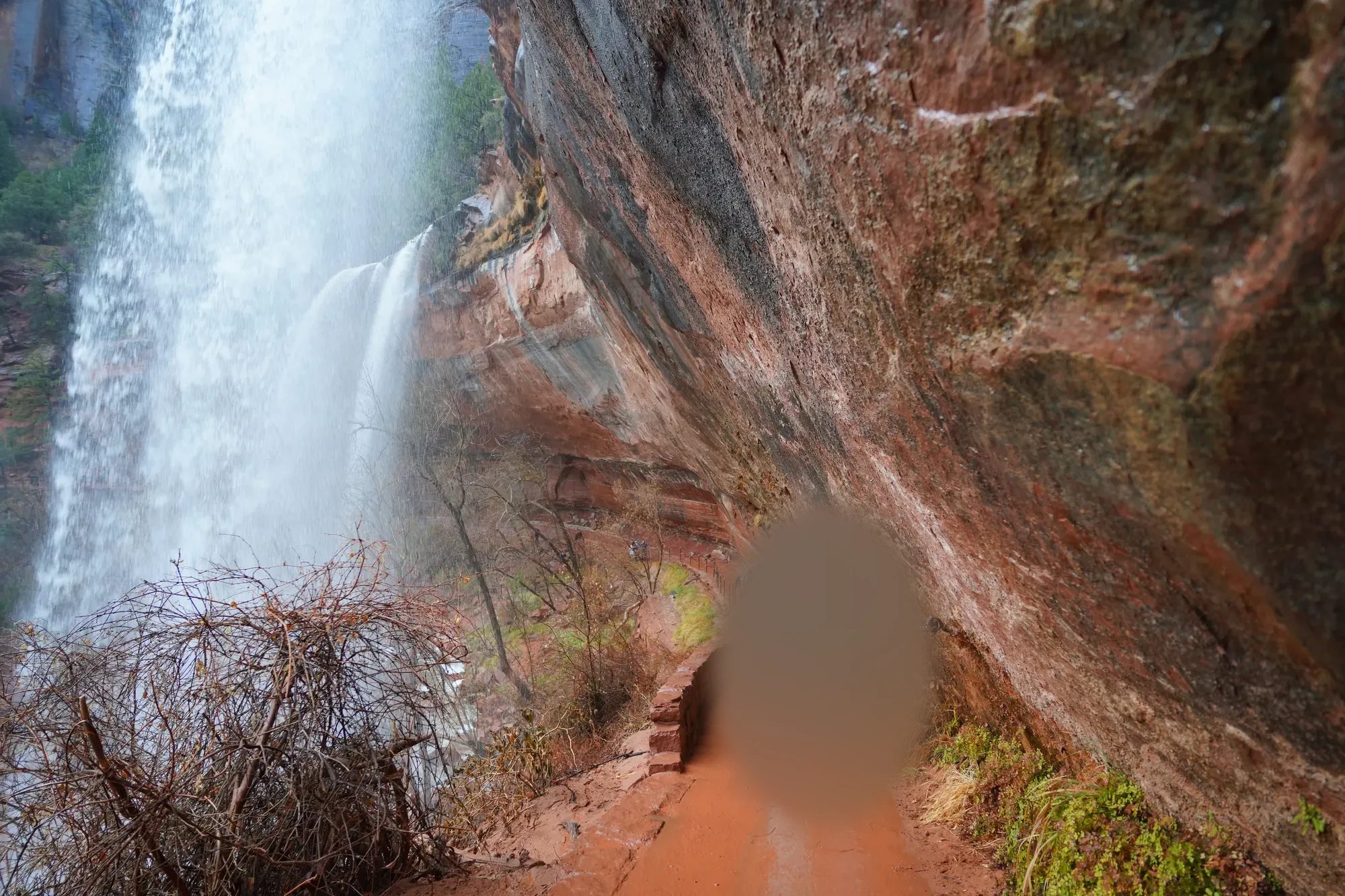
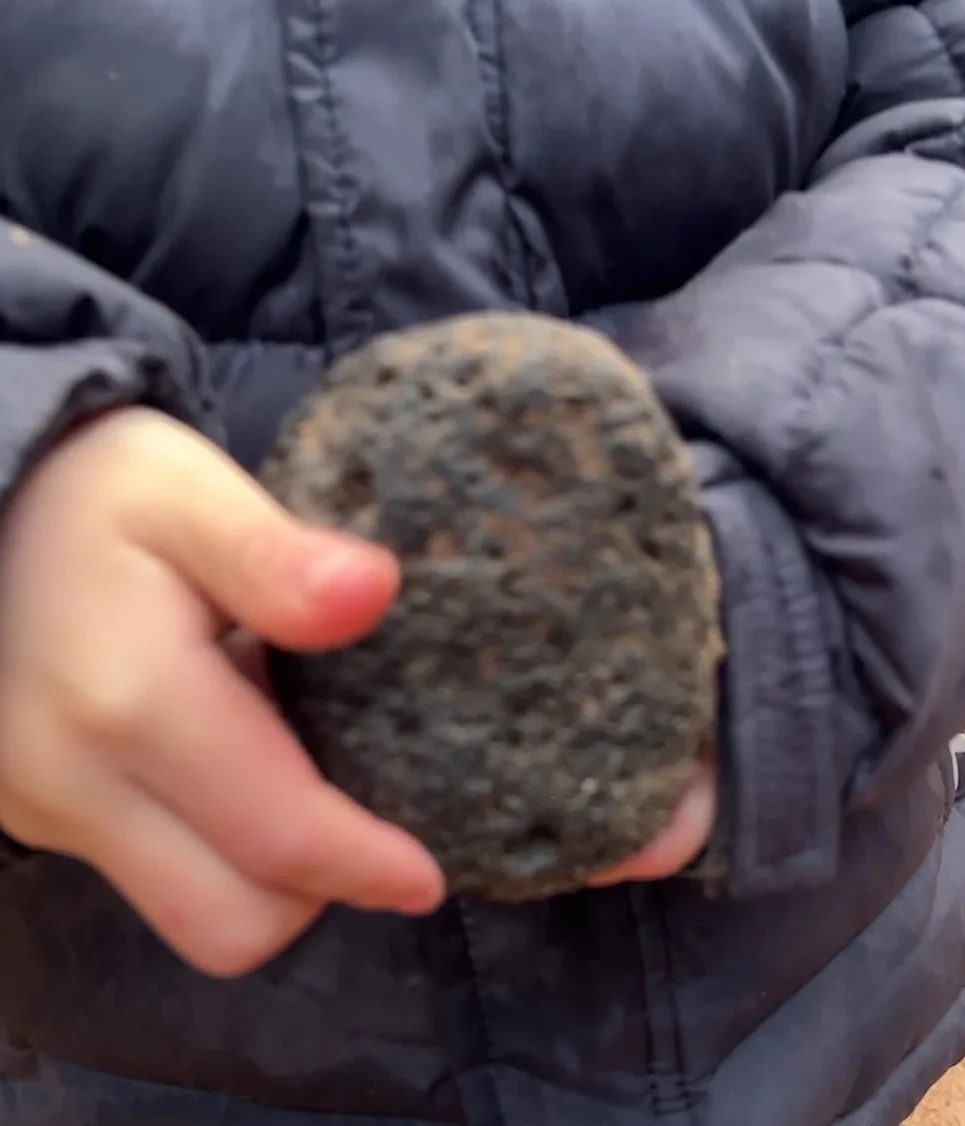
On the way back, our kid found a piece of black basalt, held it for a look, and left it where it was. The Zion area holds traces of lava that flowed several times over roughly 1.5 million years. Years later, our kid still remembers that rock.
We were back at the lodge around 3:30 p.m. Our kid found the puddles on the big lawn and splashed in them for a good while.
Shuttle to the Temple of Sinawava
A little before 4 p.m. we caught the shuttle at the stop in front of the lodge. Beyond the lodge, even guests can’t drive, so the shuttle is the only way in. Out the bus windows, the wet cliffs kept closing in and pulling away again.
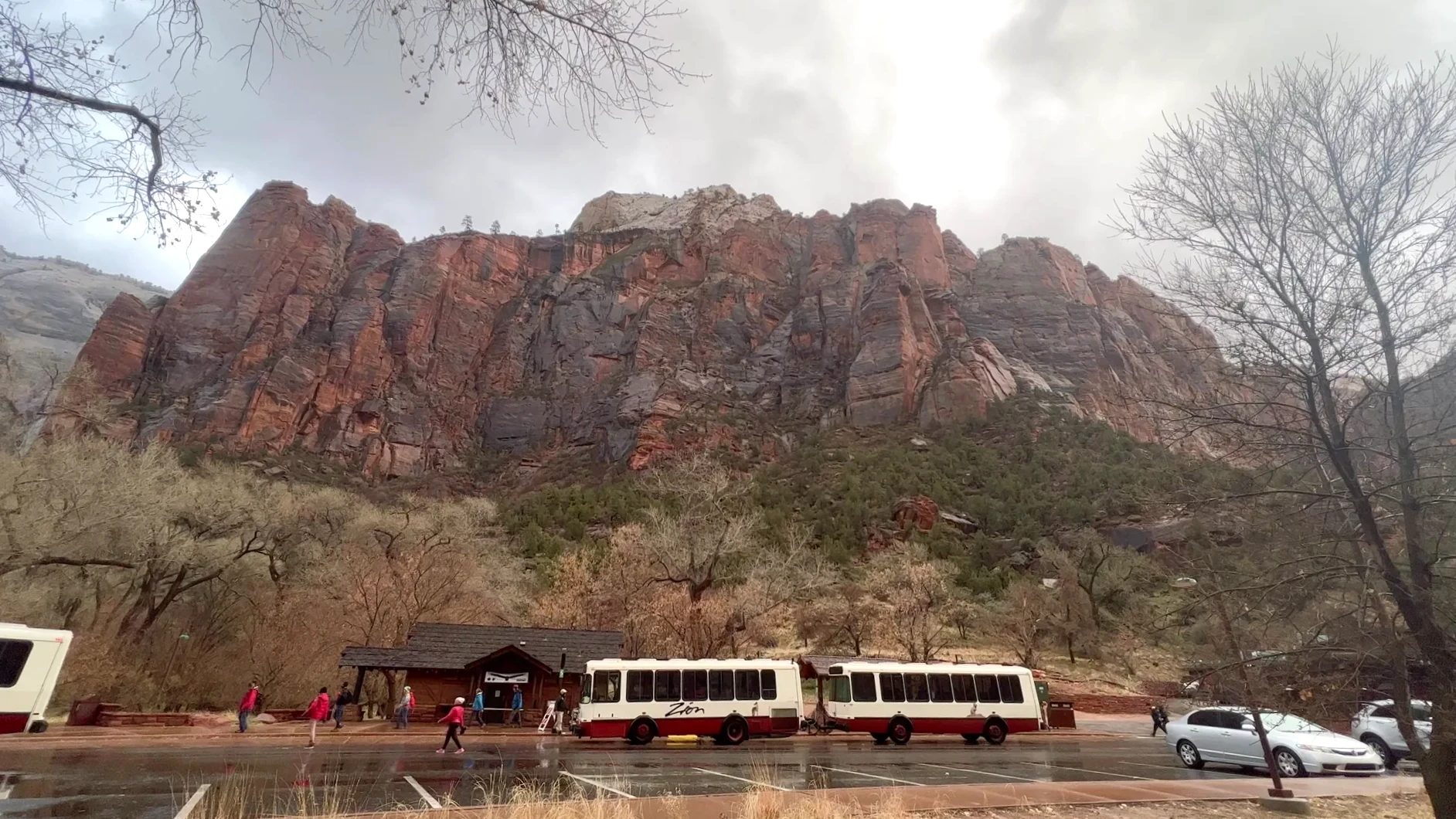
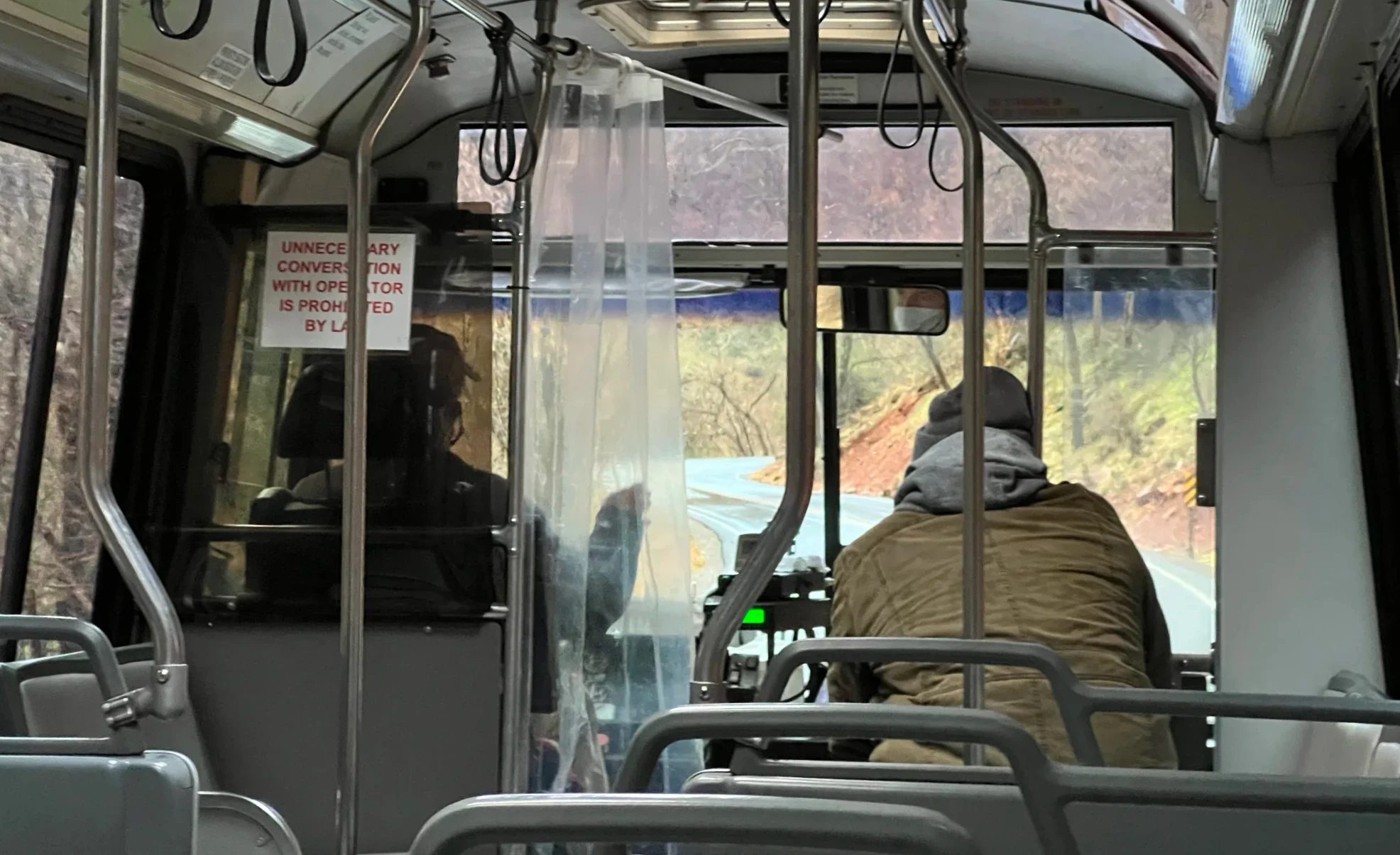
The last stop is the Temple of Sinawava. Despite the name, there’s no building; it’s what the end of the canyon is called, where tall cliffs curve around in a half circle. Sinawava is the name of the coyote god (or spirit) in Southern Paiute stories, and the name was reportedly given by a railroad publicist. These days, it’s enough to remember it as the last shuttle stop. This is where the Riverside Walk begins.
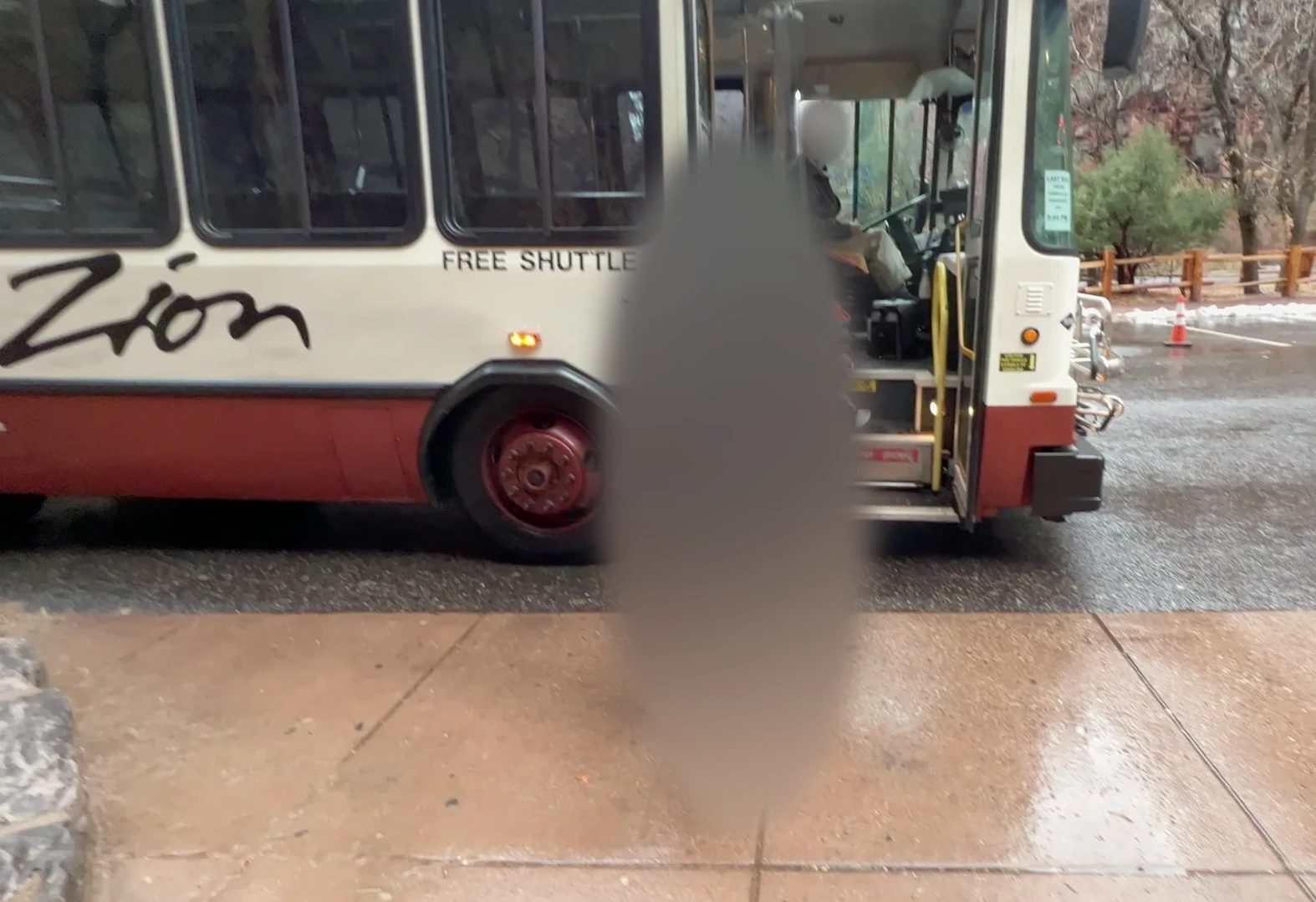
Riverside Walk along the Virgin River
We started the Riverside Walk around 4 p.m. It’s a paved path beside the Virgin River, 3.5 km (2.2 mi) round trip with almost no elevation change, so it’s easy going with a kid. Where the path ends, The Narrows begins: the route that continues upstream by wading the river itself.
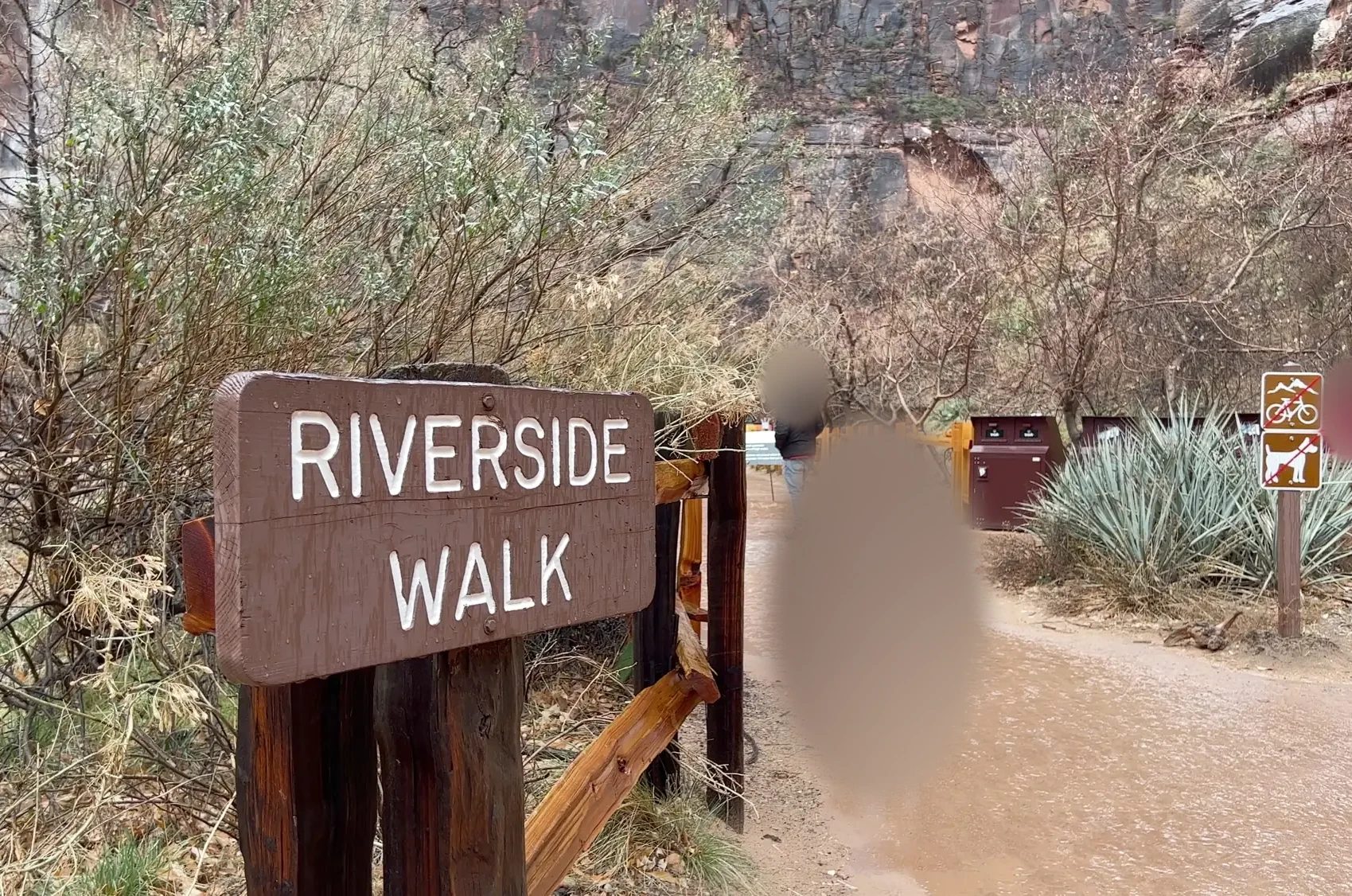
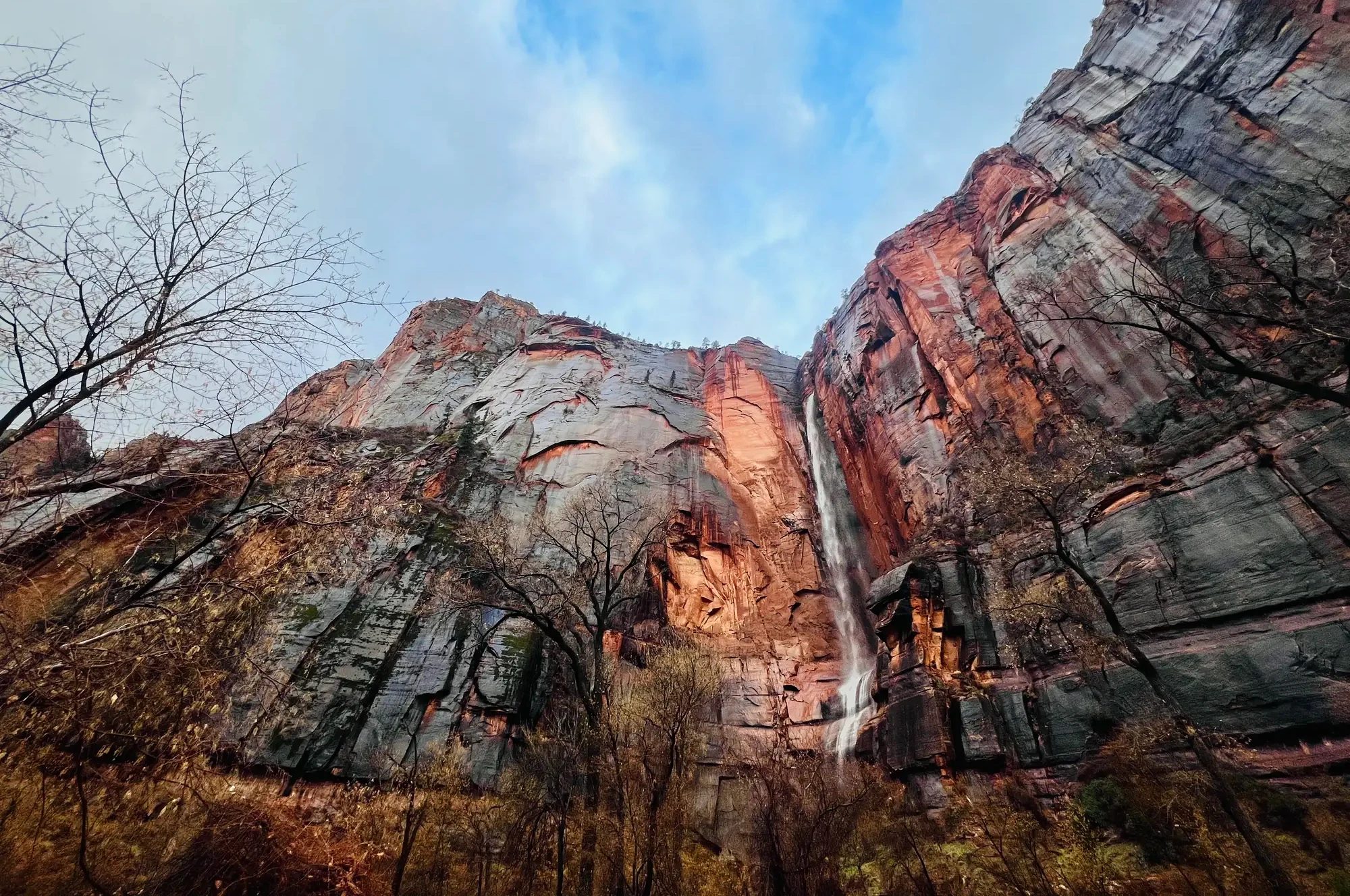
Thin waterfalls ran down the cliffs on both sides. Many falls like these on Zion’s walls reportedly flow for only a few days after heavy rain, then disappear. The cliffs were tall enough to hurt your neck looking up, and the river was high and running muddy. Signs along the way explained the landscape, and we read them one by one as we walked. Along the river we saw birds, the canyon and the falls.
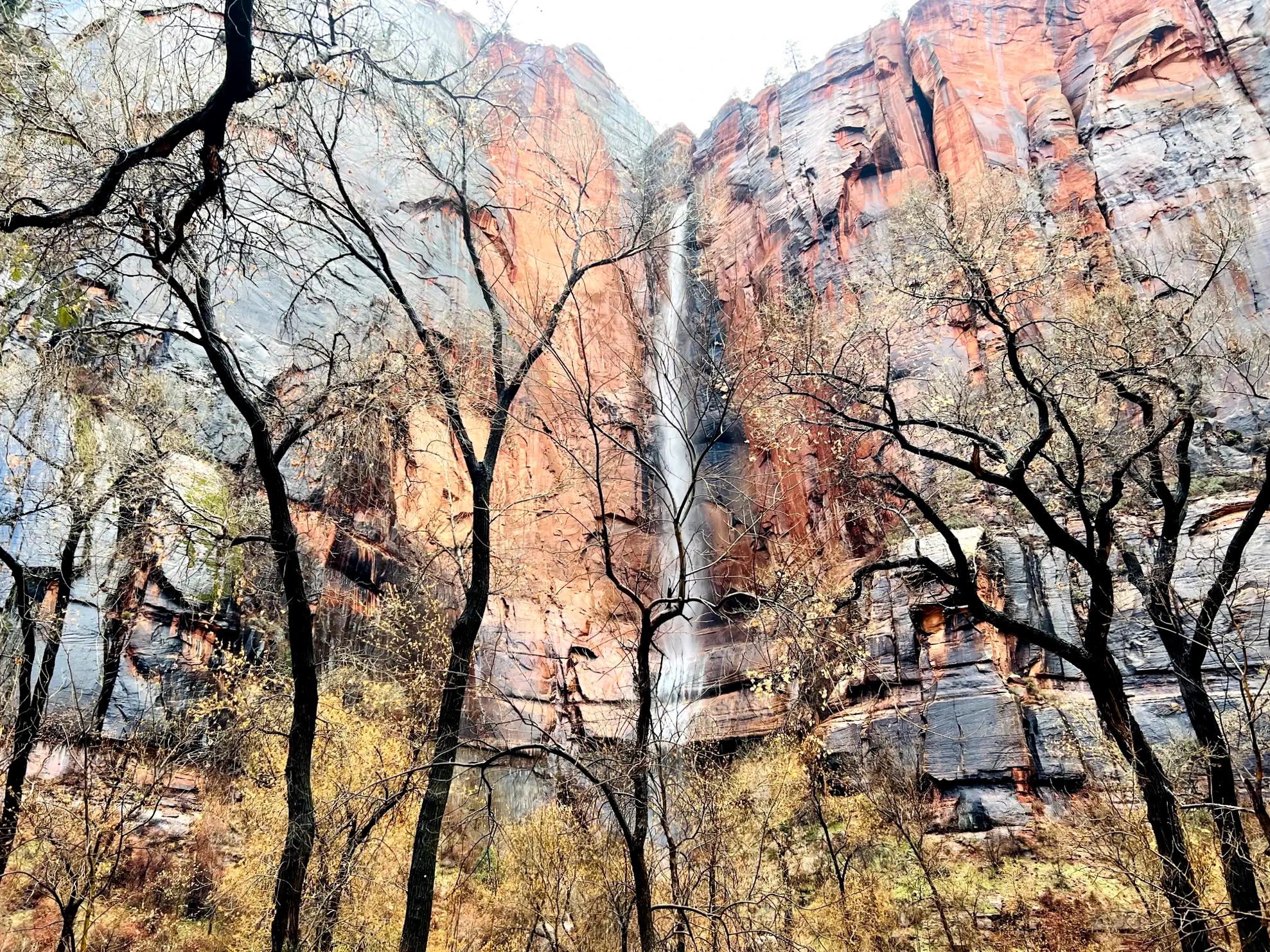
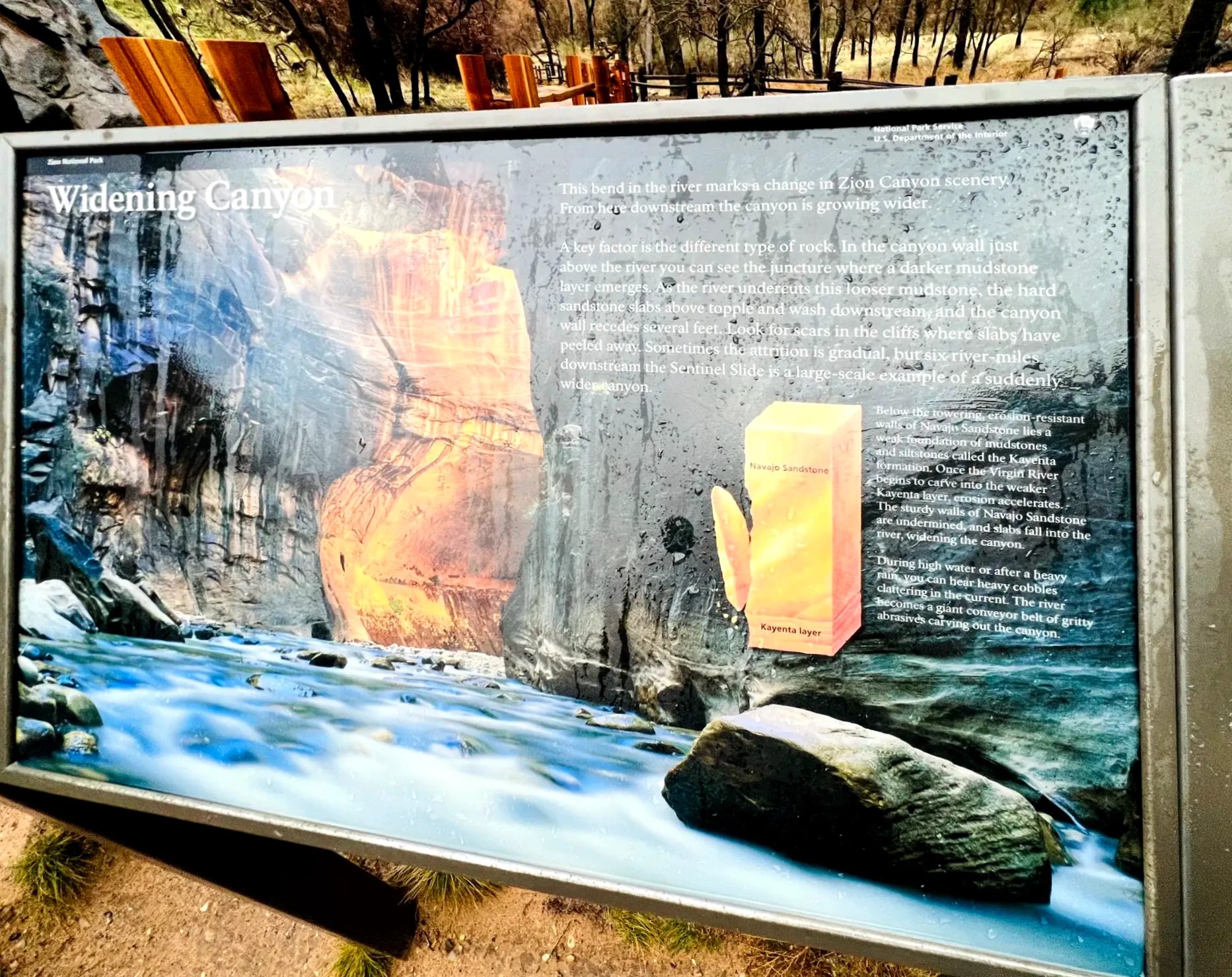
The “Widening Canyon” sign explains that the canyon gets wider downstream from this bend. Beneath the hard Navajo Sandstone walls lies the softer Kayenta Formation (mudstone); as the Virgin River cuts away at the bottom, slabs of sandstone above break off and the canyon widens. The sign also said that when the river is high or after heavy rain, you can hear large rocks tumbling along the riverbed.
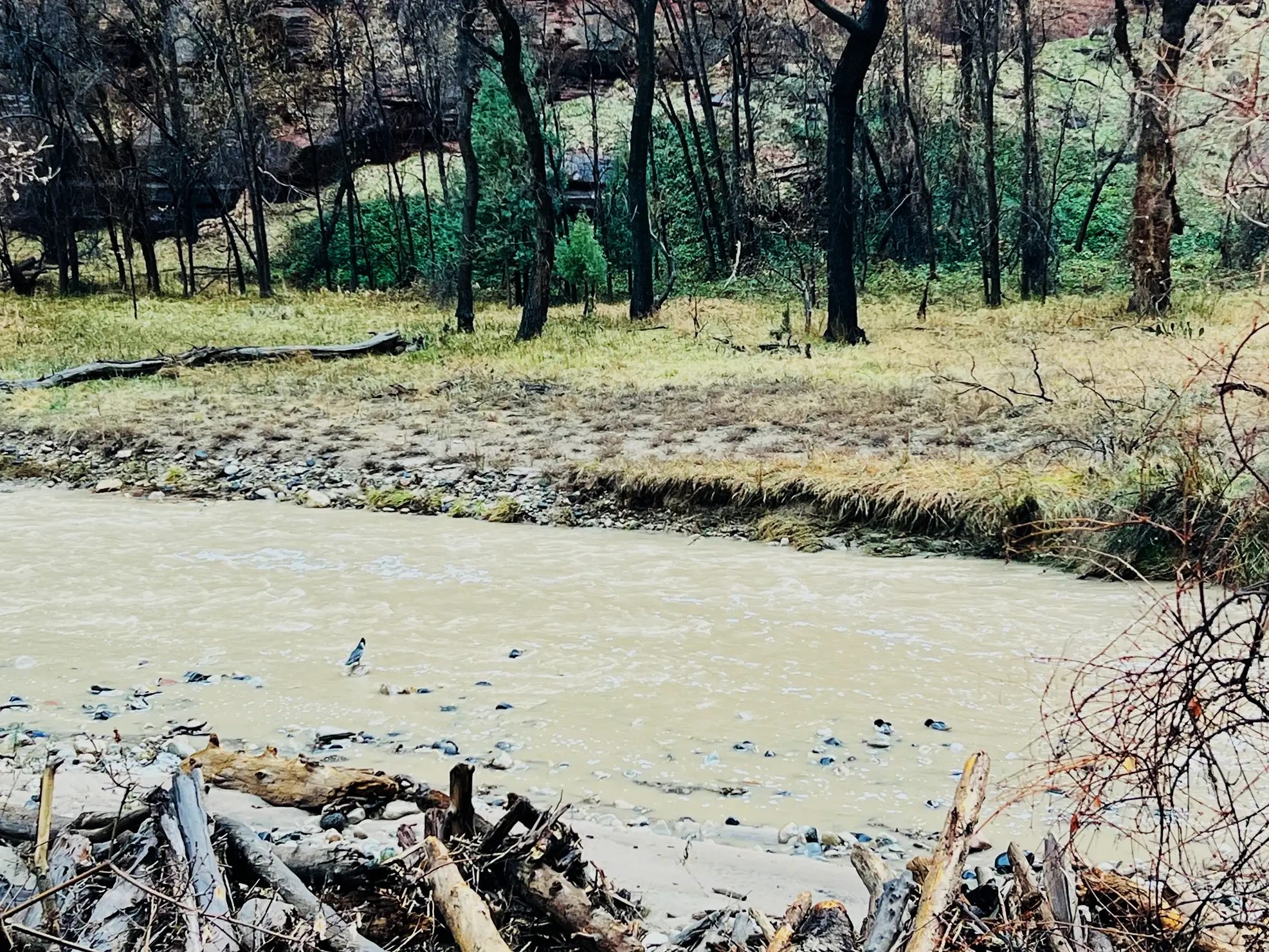
It was getting dark, so we turned back at about 5:15 p.m., before the end of the path. Since it was winter, we didn’t go into The Narrows. The river is very cold in winter, and the park closes The Narrows when the flow rises above 150 cubic feet per second (cfs) or when a flood warning is issued.
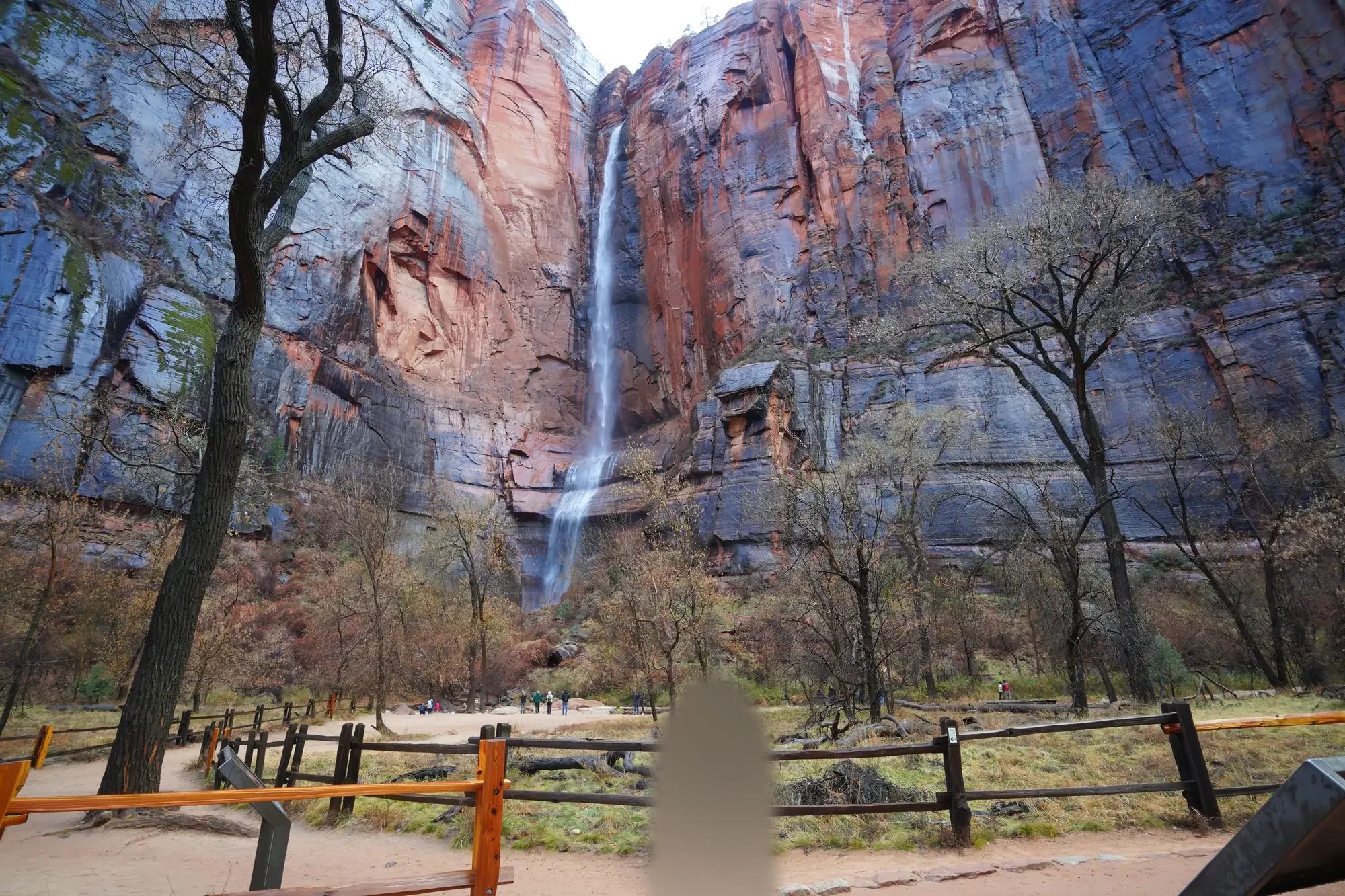
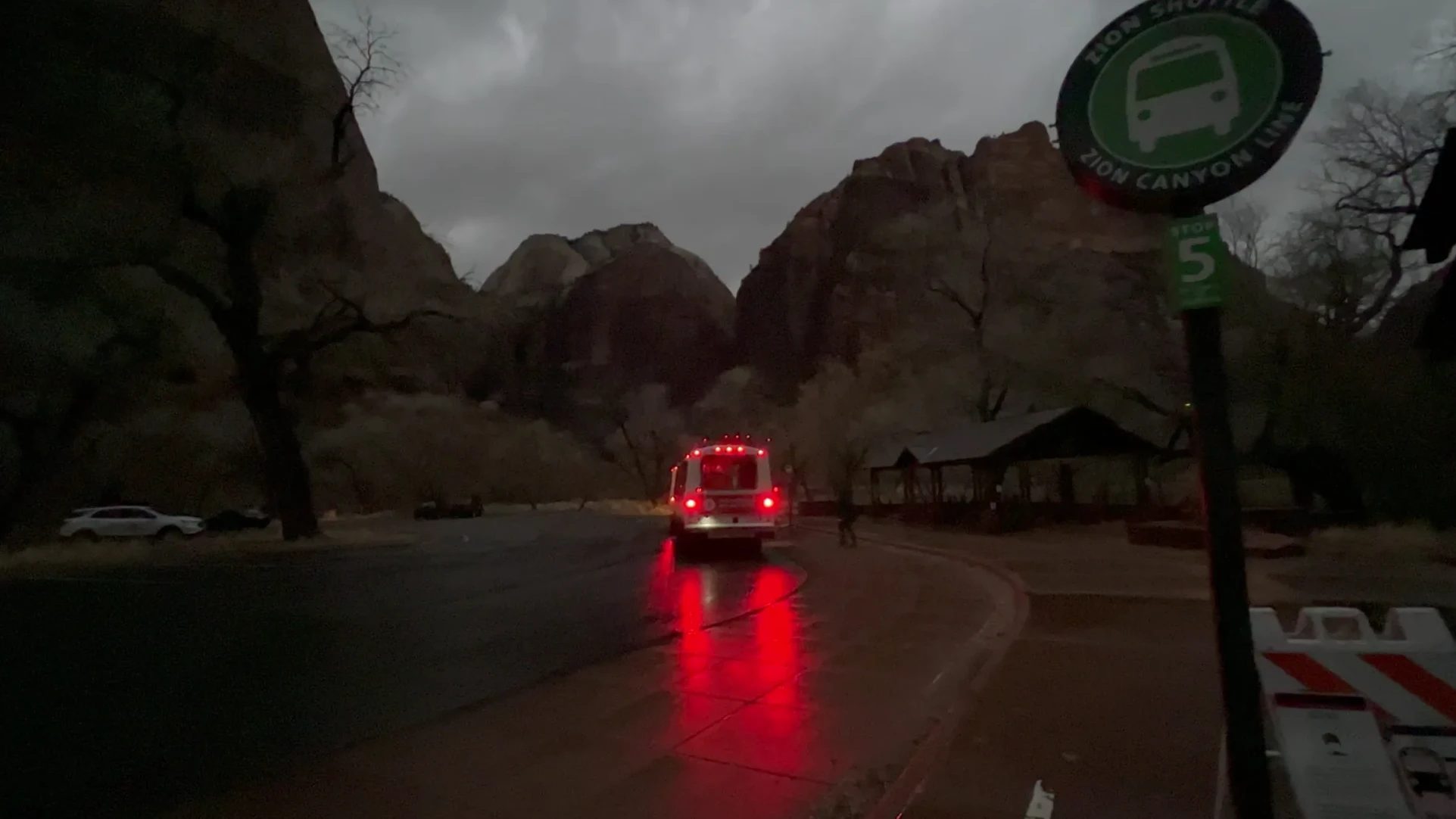
By the time the shuttle got us back to the lodge it was about 5:40 p.m., and beyond the stop sign the canyon was sinking into darkness.
In-N-Out, then on to Las Vegas
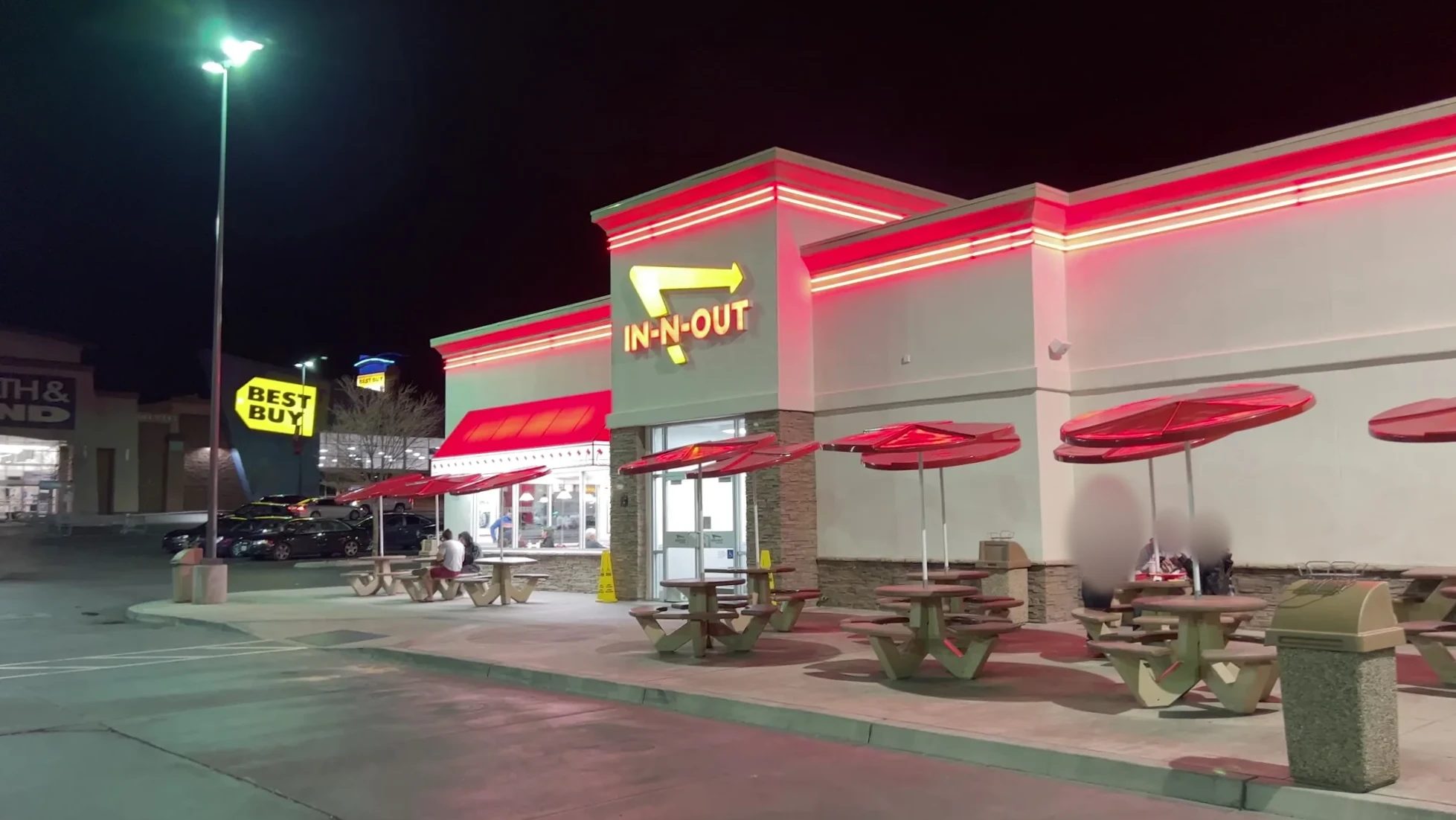
From the lodge we drove out of the park on Route 9 and headed west. Around 7 p.m., just before getting on I-15, we stopped at the In-N-Out Burger in Washington, a town right next to St. George, the city in Utah’s far southwest corner. It’s on the way from Zion to Las Vegas. On the first night of the trip, we’d eaten the same burgers after leaving the Las Vegas airport; now, near the end, we had them again. The burgers and fries were good.
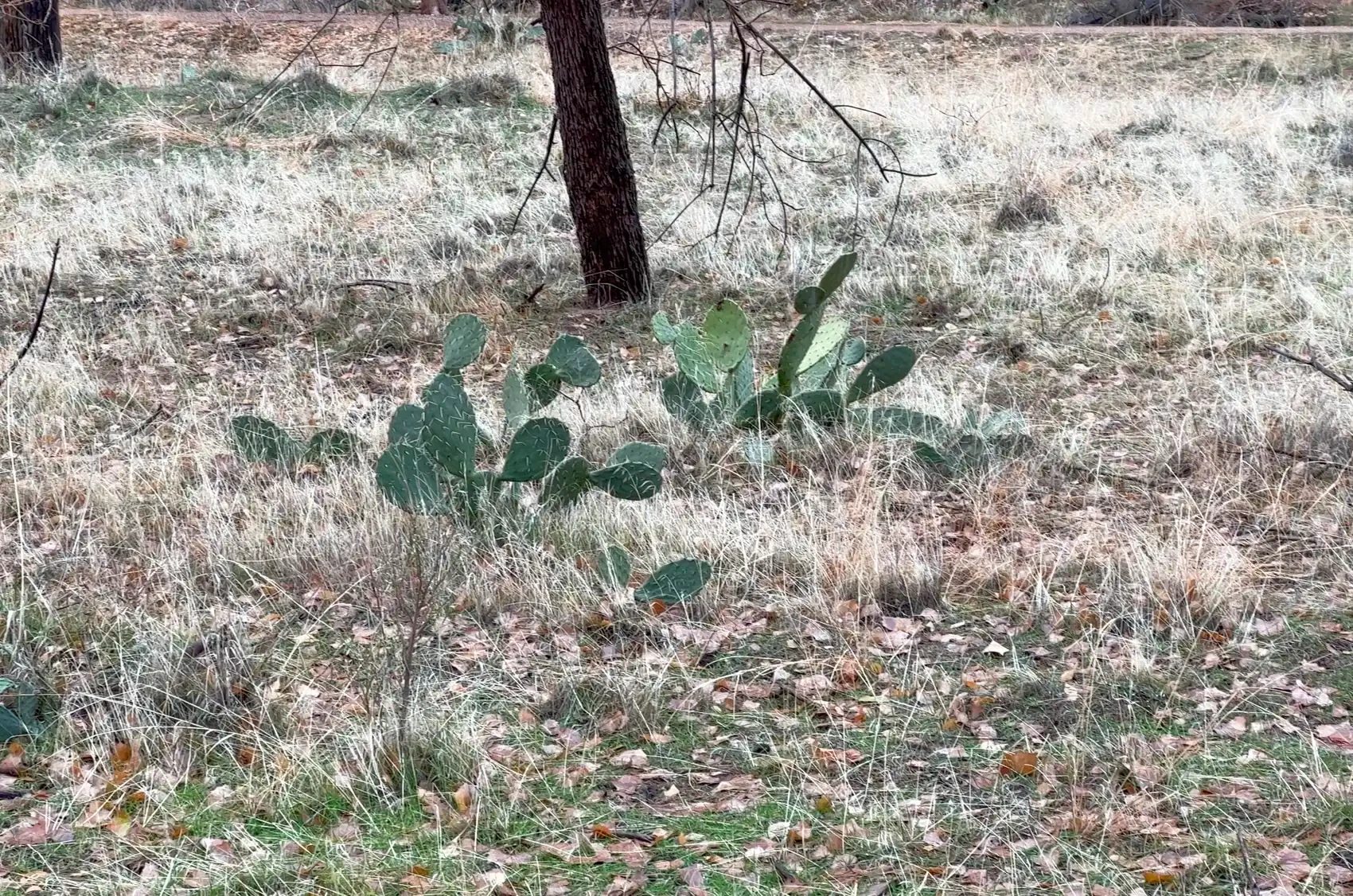
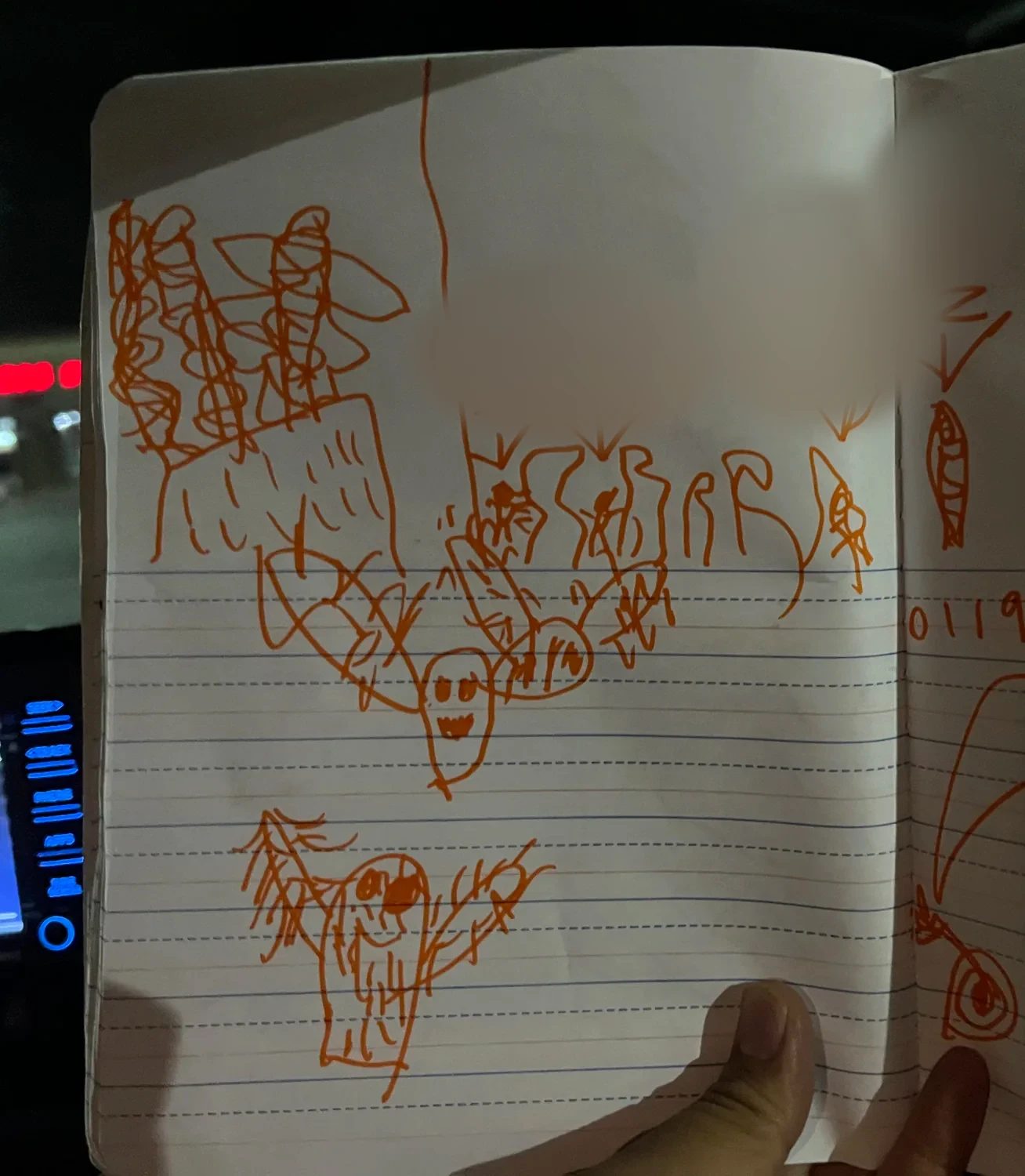
That day’s page in our kid’s journal had a cactus on it, drawn from things seen over several days in the West.
From here, I-15 runs south, briefly crossing the northwest corner of Arizona before entering Nevada. Nevada is one hour behind Utah, so our clocks went back an hour at the state line. We rolled into Las Vegas around 8:30 p.m. Nevada time. Christmas Eve in Las Vegas comes after the Death Valley post, in the last installment of the series.
Our day, hour by hour
It rained, but we still walked both trails, each a short stretch. These are our times with a kid along. Adults on their own would probably move a little faster.
| Place | Time | Time spent | Getting there |
|---|---|---|---|
| Arrive at Zion Lodge | Dec. 23, around 9:20 p.m. | One night | By car from the east entrance |
| Red Rock Grill, gift shop | 10–11:30 a.m. | 1½ hours | On foot |
| Zion Canyon Visitor Center | Noon–12:20 p.m. | 20 minutes | 10 minutes by car |
| Roadside near Canyon Junction | Around 12:40 p.m. | 10 minutes | By car |
| Emerald Pools Trail | 1–3:30 p.m. | 2½ hours | On foot from the lodge |
| Riverside Walk | 4–5:15 p.m. | 1 hour 15 minutes | 15 minutes by shuttle |
| In-N-Out near St. George | 7–7:40 p.m. | 40 minutes | 1 hour 15 minutes by car from the lodge |
| Arrive in Las Vegas | Around 8:30 p.m. (Nevada time) | Next post | About 2 hours on I-15 |
Visiting Zion in December
- Rain gear and non-slip shoesZion gets nearly half its yearly rain between December and March. On our day it rained on and off from morning to evening. With rain gear and shoes that grip, you can still walk the waterfall trails in the rain.
- Scenic Drive and shuttle scheduleIt changes every year. While the shuttle runs, private cars can’t go past Canyon Junction, so check the shuttle schedule for your dates first.
- Easy trailsThe Lower Emerald Pool and the Riverside Walk were manageable with a kid, even in winter. After rain or snow, though, some spots can be icy or slick.
- The Narrows and Angels LandingIn winter the river is cold enough that the Narrows is hard to do without gear. Angels Landing requires a permit in every season.
- SunsetOn our day the canyon was getting dark soon after 5 p.m. Start afternoon walks early.
- Arriving at nightFrom the east entrance to the lodge it’s a tunnel and switchbacks, so drive slowly after dark. The area around the lodge is very dark too; a headlamp helps.
FAQ
Can you drive in if you’re staying at Zion Lodge?
Yes. Even when the Scenic Drive is closed to private cars because the shuttle is running, Zion Lodge guests can drive up to the lodge and park in the designated area. Beyond the lodge, you take the shuttle. Lodge guests still need a park entrance pass or an annual pass.
Does the Zion shuttle run in winter?
It depends on the year. When we went in 2021, a holiday shuttle ran from December 23 to January 1. For winter 2026, there’s no shuttle from November 29 to December 25, and a reduced shuttle runs from December 26 to January 2 (as of October 2026). On days without the shuttle, you can drive the Scenic Drive in your own car.
How much is the Zion entrance fee?
$35 per vehicle, good for seven days (as of October 2026). Starting in 2026, visitors 16 and older who aren’t U.S. residents pay an extra $100 per person. With a national park annual pass, you get in with no extra fee. If you’re visiting several national parks on one trip, the annual pass is the better deal.
How long does the Emerald Pools Trail take?
The Lower Emerald Pool is 1.9 km (1.2 mi) round trip, about an hour. To the Middle Emerald Pool it’s 3.5 km (2.2 mi) round trip and about an hour and a half. We took about two and a half hours, walking slowly in the rain with our kid and stopping for photos.
How is the Riverside Walk different from the Narrows?
The Riverside Walk is a paved path, 3.5 km (2.2 mi) round trip, starting at the Temple of Sinawava shuttle stop. Where it ends, the Narrows begins: you walk upstream in the river itself. In winter the water is very cold, and the Narrows closes when the flow is high or a flash flood warning is in effect.
Can you hike Angels Landing in winter?
You need a permit for the chains section in every season. Permits are issued by lottery on recreation.gov, and winter (December through February) has both a seasonal lottery and a day-before lottery. We didn’t make it this time.
What can you do in Zion on a rainy day?
We put on rain gear and walked to the Lower Emerald Pool and along the Riverside Walk. With so many waterfalls running down the cliffs, there was plenty to see in the rain. If a flash flood warning is issued, though, trails inside the canyon can close, so check that day’s conditions at the visitor center.
Where should Zion fall on a Grand Circle trip?
We started in Las Vegas and drove the Grand Circle counterclockwise, so Zion came last. Plenty of people recommend going counterclockwise so Zion is the final highlight. It’s about three hours by car from Zion to Las Vegas, which also makes for an easy last day. If you’re staying in Las Vegas without a rental car, a Bryce and Zion day tour covers both parks in one day.
If we went back
Of all the stops on this trip, Zion is where the season and the weather disappointed us most. The rain kept starting and stopping, and I still think the red cliffs would have been more beautiful on a clear day. But trips rarely go to plan, and even in the rain we saw waterfalls pouring down the cliffs. In another season, I’d like to try the Narrows, where you walk in the river, and Angels Landing, known for its dizzying views. We left a lot undone here, which also makes Zion the place we have the most reasons to go back to.
Without a car
Zion day tour from Las Vegas
Where to stay
Staying outside the park in Springdale
We drove into Zion on a rainy night at the end of a snowy road, and it stayed with us as the place where we spent a whole day walking in rain gear.
Related posts
| Type | Post |
|---|---|
| Full itinerary | A 10-day winter Grand Circle road trip Route, lodging and bookings for all 15 stops |
| Previous | Bryce Canyon National Park in December From snowy Sunrise Point to Sunset Point and the Navajo Loop |
| Next | A Death Valley day trip from Las Vegas Zabriskie Point, the Mesquite Flat dunes and Artist’s Palette on Christmas Day |
Location and getting there
Coming from the east, Route 9 takes you through the east entrance, then down through the tunnel and switchbacks to Canyon Junction. Coming from the south, you pass through Springdale and enter at the south entrance, with the visitor center right inside. From Canyon Junction, the Scenic Drive runs north to Zion Lodge; the Emerald Pools Trail starts across the road from the lodge. The Riverside Walk starts at the Temple of Sinawava stop at the end of the Scenic Drive. For Las Vegas, take Route 9 west out of the park, then I-15 south.
What we needed for this trip
Bookings
- Zion LodgeEven arriving late at night, we could drive all the way to the lodge. The next morning we walked straight out to the trail.See Zion Lodge on Expedia
- Rental carWe picked it up at the Las Vegas airport and drove it for nine days. From Zion it was about three hours back to Las Vegas.Rental cars at Las Vegas airport on Trip.com
What to pack
- National park annual passWe used it for national park entry on the Grand Circle. Starting in 2026, it also covers the nonresident surcharge.
- Waterproof jacket or rain gearIt rained all day, so we bought one at the lodge gift shop. If we’d packed our own, we could have started walking in the morning.Waterproof rain jackets on Amazon
- HeadlampThe grounds were pitch dark when we arrived at night, and we used it to walk to the vending machine.Headlamps on Amazon
- A little cashFor drinks from the lodge vending machine that night.
- Shoes with good gripWe walked on wet red-dirt paths and over rock under the waterfalls.Waterproof hiking shoes on Amazon
Getting there
Flights to Las Vegas
We flew into Las Vegas (LAS) and drove the Grand Circle loop in a rental car.
Sources
- Zion Lodge: shuttle system and guest vehicles (accessed October 24, 2026)
- National Park Service: 2021 fall and winter shuttle schedule, 2026 shuttle schedule
- National Park Service: Zion 2025–26 winter guide (trail distances, precipitation) (accessed October 24, 2026)
- National Park Service: Zion entrance fees (accessed October 24, 2026)
- National Park Service: history of Zion Lodge
- National Park Service: Zion geology
- National Parks Traveler: Zion history
- National Park Service: The Narrows, Angels Landing permits
Not in the list? Search it yourself
Places to stay nearby, on a map
Affiliate link: if you book through this search, the blog earns a commission at no extra cost to you. Results open in a new tab. About affiliate links
Discover more from Elsewhere, Mostly
Subscribe and get new posts sent straight to your inbox.